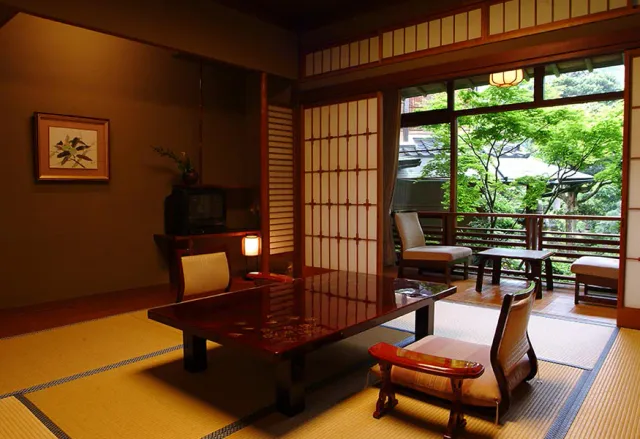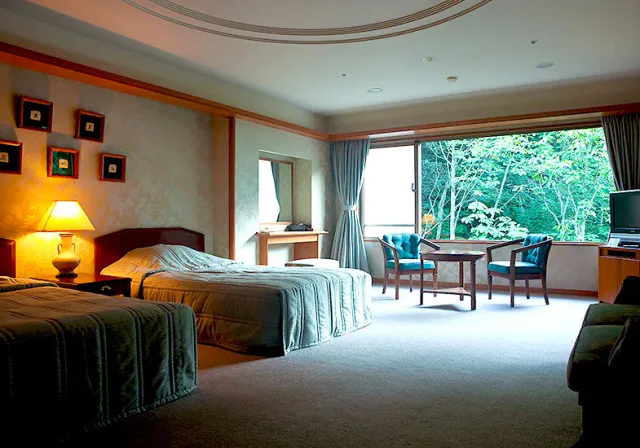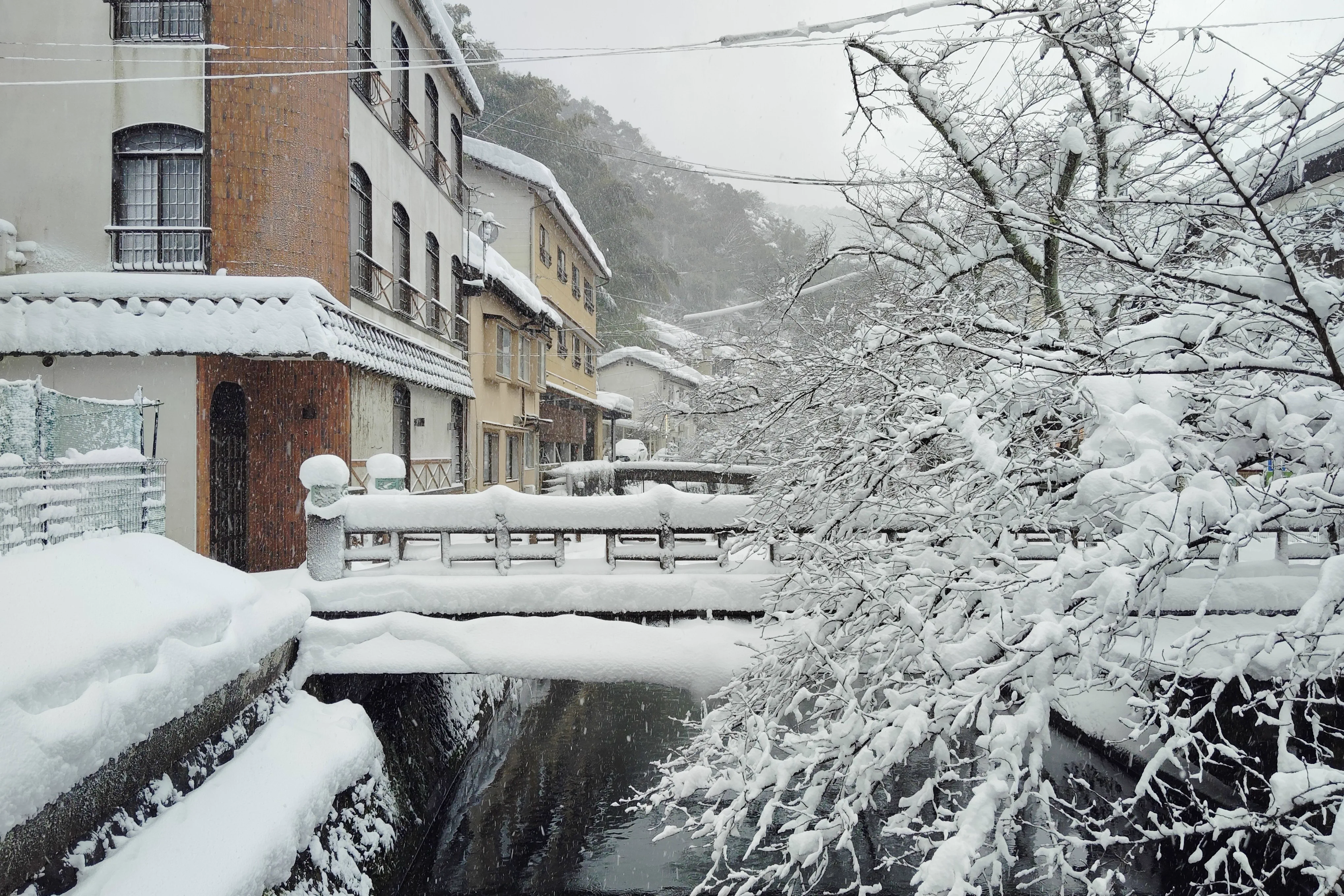
Kinosaki Onsen is compact enough for a satisfying single ryokan night. A second night changes the trip only if you use the day between check-ins and checkouts: to slow down, explore the Toyooka area, or avoid squeezing a side trip around a train. Bathing alone does not automatically need two nights, particularly while some of the town’s public baths are closed for renovation.
One night can cover a ryokan dinner, an evening walk in yukata, public baths and another bath before departure. The key is reaching town before the dinner window rather than arriving with only an hour to spare. If Kinosaki sits between Kyoto and your next hotel, plan the train and luggage move together. Guests interested mainly in the public baths or the ryokan dinner can fit both into that stay when the afternoon arrival is protected.
Two nights earn their price through a full intervening day. You could spend it without watching a checkout clock, take a trip to Izushi or Takeno, or simply allow a winter day to unfold slowly. A second dinner and room night cost money and consume a night you might use elsewhere in Japan, so name the activity or rest that you actually want before reserving.
Kono-yu is scheduled to remain closed through October 30, 2026, and Satono-yu remains under renovation. Other bathhouses have their own weekly closing days. Check the operating calendar for the dates of your stay and ask the ryokan about dinner time and station pickup; those details affect the choice more than a generic one-night rule.
One night covers the core stay when the afternoon is free
A ryokan dinner and several baths are the main event, with an early afternoon arrival: one night gives both evening and morning time.
Your itinerary has only 10–14 days and Kinosaki is a single onsen stop: one night often protects another city day.
You want a whole day without a train or checkout deadline: book two nights and use the middle day freely.
Izushi, Takeno or Genbudo has a real place in the plan: two nights let Kinosaki remain the base.
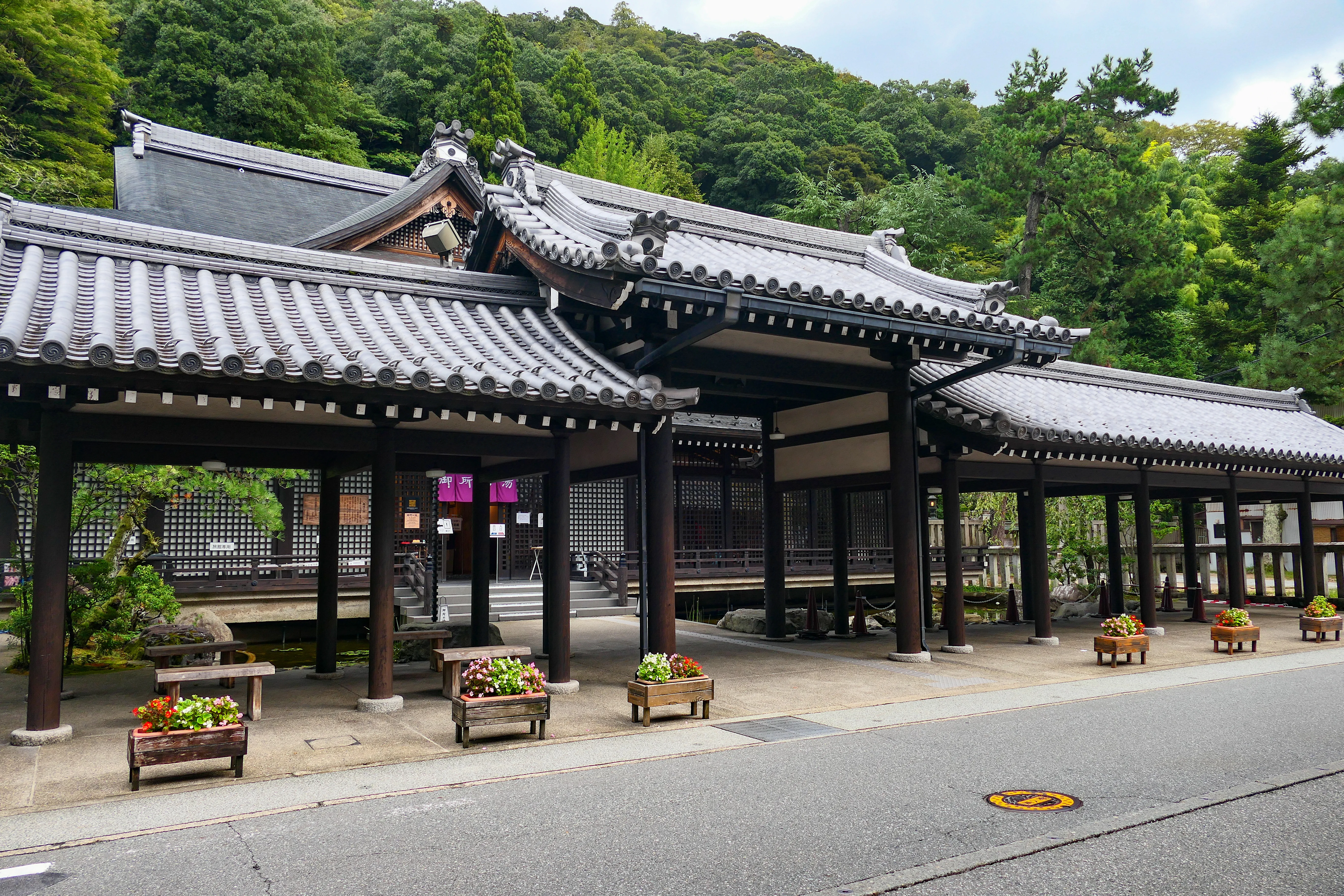
Goshono-yu in Kinosaki Onsen. Photograph and attribution retained from the original Wikimedia Commons file.
Your checkout morning is still part of the bath plan
Guests at participating Kinosaki accommodation receive the Yumepa pass at check-in. The town’s ryokan guidance says it remains usable at the public bathhouses until 13:00 on checkout day. That gives a one-night visitor more than an evening slot: there may be time for a bath before dinner, a later stroll to another bathhouse and a morning visit after breakfast. Confirm the pass arrangement with your property.
A useful first-day sequence is to arrive early enough to leave the suitcase, walk through town, check in and bathe before the ryokan meal. Keep the evening unhurried; the value of staying in town includes going back out after dinner without a train to catch. The following morning can hold a final bath or short riverside walk before departure. This is a full onsen visit even though the room booking says one night.
The timing becomes much less forgiving with a late arrival. The ryokan shuttle normally follows limited-express arrivals between about 12:30 and 18:00, while a traditional dinner may be served around early evening; exact arrangements belong to the property. If your train reaches the station near mealtime, there may be little chance to settle in or enjoy a bath first. Ask the ryokan for its latest dinner check-in and pickup procedure before buying the rail ticket.
A second night creates a day without a train deadline
On the middle day, there is no need to move bags, fit a bath around check-in or watch for the last departure to another city. You can choose the bathhouses open that day, go for a longer walk, take a local outing, or spend more time at the ryokan. That empty stretch is the concrete product bought by the extra night; it is useful when the rest of the trip has many early starts.
A long-haul traveller moving quickly through Tokyo, Kyoto and Osaka may value a day with nothing scheduled beyond food and baths. Winter weather can make that pause especially welcome. The case for two nights is not a fixed number of attractions; it is the ability to keep the whole day in one place and decide later how much to do.
If you have little interest in another bath or nearby excursion, the second day may simply repeat the first evening. Kinosaki’s centre is small and easy to walk. Paying for a second ryokan dinner because two nights sounds more “complete” can be poor value if the next destination needs the time more. Consider whether a late morning departure after one night already gives you enough of the town.
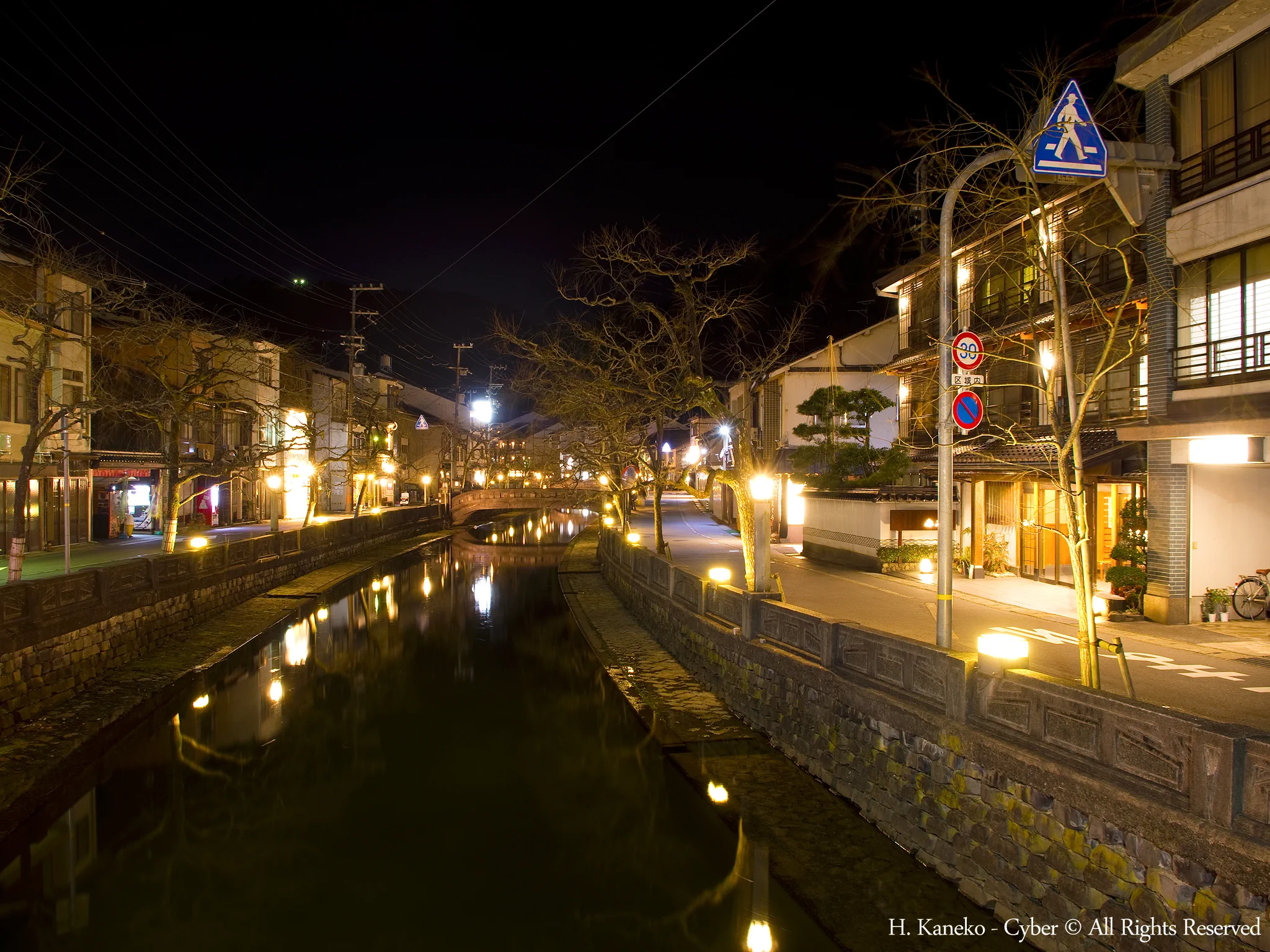
Kinosaki’s night streets. The original Wikimedia Commons / Panoramio attribution and licence accompany this image.
The Toyooka area gives the middle day a destination
Kinosaki can serve as a base for places beyond its bathhouses. The local itinerary collection includes Izushi’s castle-town streets and soba, Takeno’s coast and the Genbudo area. Each is a different kind of day from a yukata walk around the Otani River. A two-night booking lets you return to the same room and bath after that outing, rather than packing again before departure.
For Izushi, account for the bus journey and return service before promising yourself an afternoon bath. Takeno can be a coast-focused outing, while Genbudo is a shorter excursion for someone interested in the basalt caves. Choose one direction for the day and read its transport details; trying to stitch several scattered Toyooka stops together may squander the relaxed pace that justified staying longer.
Not every excursion should return to Kinosaki. If the beach and surrounding coast are the principal reason for the trip, a Takeno overnight may fit better than treating it as a hurried add-on from an onsen hotel. Use the Kinosaki room for a day you can actually begin and end there comfortably, especially if dinner at the ryokan has a fixed serving time.
The public baths do not require a completion checklist
Kono-yu’s published renovation runs from May 11 through October 30, 2026. Satono-yu has been closed for renovation since April 2024. The other bathhouses keep different hours and weekly rest days. These schedules mean that the number available during your visit can be smaller than the familiar “seven baths” description. A two-night booking cannot reopen a closed bathhouse.
Select a few baths that fit your actual day, including their closing days, and allow time between visits. A guest’s Yumepa pass covers public-bath entry during its validity, while a day visitor can buy a pass separately. The value of the ryokan stay lies in the accommodation and the easy evening or morning access, not in collecting every bathhouse stamp. Renovations and hours can change, so use the live bath information close to departure.
The Otani River runs through central Kinosaki. Original Wikimedia Commons image credit and licence retained.
The suitcase can determine whether one night feels easy
The Ryokan Service Center stands across from Kinosaki Onsen Station. Its guidance says it can hold bags and may transfer them to a ryokan, sometimes for a small fee. That helps an early arrival wander before check-in. Still, a large case remains another item to move when leaving the next morning, so a one-night stop works better if your luggage plan is made before the rail day.
If Kinosaki lies between two staffed city hotels, sending the large suitcase onward and taking a small overnight bag can avoid another check-in and bus journey with the case. The Japan luggage forwarding guide sets out the receiving-hotel and delivery-time checks. Keep what you need for the ryokan, weather and following day in hand; forwarding helps only when the courier can reach the next property on time.
The extra night has to compete with the rest of Japan
A short first trip may contain Tokyo, Kyoto and Osaka plus one rural stay. Giving Kinosaki a second night then removes a night from another city or adds another hotel change elsewhere. On a longer trip, the same two-night pause may fit naturally. Compare what you would do on Kinosaki’s middle day with the plan you would lose by staying.
Map the full 10, 12 or 14 day Japan itinerary before fixing this stop. If the sacrifice falls on the Kansai portion, the Kyoto vs Osaka stay comparison can reveal which base day would disappear. The useful question is not whether Kinosaki has enough appeal in isolation; it is whether the second ryokan day outranks the best use of that night on your actual route.
The travellers who gain from each length of stay
Choose a single night when the ryokan meal, riverside town and a few baths are the objective, especially on a tighter itinerary. An arrival in early afternoon lets the evening breathe, and the checkout morning provides another bath window. This is also a good format for a first hot-spring town visit if you are unsure how much time you want to spend bathing.
Two nights suit someone who wants a genuine pause, can use a Toyooka side trip, or prefers not to pair winter travel with a quick departure. The extra night is easier to defend when the rest of the journey is long enough to absorb it. It can also help a group that moves slowly, provided they would enjoy the quiet middle day rather than feel stranded in a small town.
If every stop on the route already feels rushed, examine the number of destinations before adding nights to each one. Kinosaki rewards a slow pace, but extending it does not fix an overfull itinerary elsewhere. The second day should feel like a choice you welcome, with either a local plan or comfortable time left open.
The booking decision
For a first visit focused on ryokan dinner, yukata streets and public baths, one night is usually sufficient when you arrive before the late afternoon. Protect the meal time, use the Yumepa pass during its valid window and keep departure late enough for breakfast and perhaps another bath. The schedule, rather than the room-night count alone, makes that visit work.
Reserve two nights when you want an unbroken day in town, a specific Izushi, Takeno or Genbudo outing, or a winter rest that deserves space. Check which baths will actually be open and how the side trip returns before committing. If you cannot find a good use for the middle day, the first-night ryokan experience may be the better purchase.
Compare bookable locations for the night: Kinosaki ryokan and hotels
More on the route
Kyoto Station vs Shijo Kawaramachi With Older Parents
Bath, ryokan and excursion details
Related guides: Hakone 1 Night or 2 Nights: Which Stay Is Worth It? · Tokyu Stay Hida-Takayama Musubi no Yu: Which Room Works for Two Suitcases and Three Nights? · La'gent Stay Hakodate Ekimae: Is a 1-Minute Station Hotel with Overnight Onsen Worth It? · Shimoda vs Shuzenji Onsen: Which Two-Night Izu Base Is Better? · Noboribetsu vs Jozankei: Which Onsen Stay Fits Your Hokkaido Trip? · Nikko vs Kinugawa Onsen: Where Should You Stay for One or Two Nights? · Ueda or Bessho Onsen: Where Should You Stay for Two Nights? · La Vista Furano Hills: Is a Small Room Worth It for a One-Night Furano Stay? · HIYORI Ocean Resort Okinawa: Is a 56m² Suite Worth It for a 3-Night Onna Stay? · Tokyu Stay Hakodate Asaichi Akarinoyu: Is It Worth Staying Three Nights?
Biei Day Trip or Overnight? When Staying One Night Is Worth It
Where to Stay in Kamakura or Fujisawa: The Best Base for Two Nights, With Enoshima as the Wild Card