
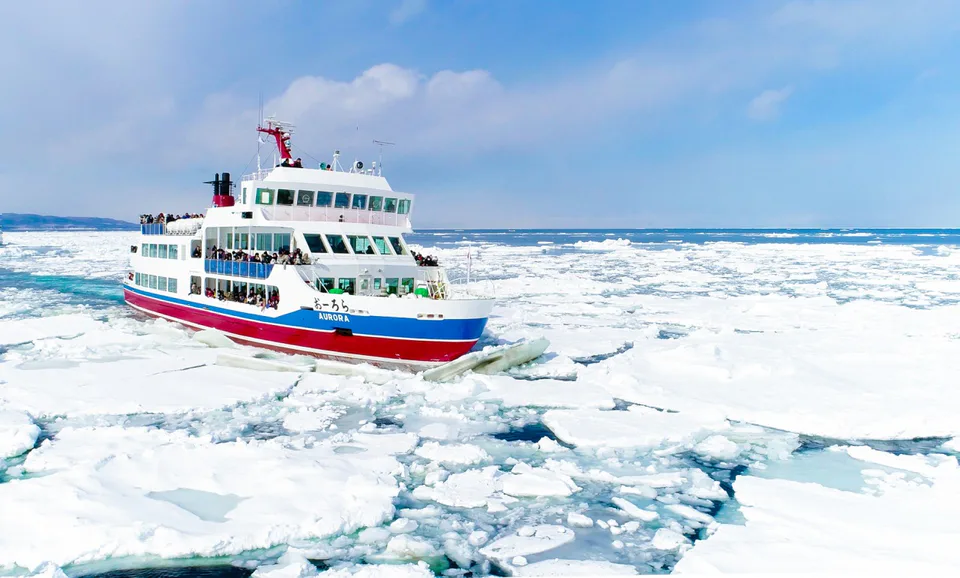
Walking on drift ice near Utoro is a reason to travel across Hokkaido only if the physical contact with sea ice is the point. A coastal view or an Abashiri icebreaker cruise can satisfy a photography goal with fewer equipment and eligibility constraints. SHINRA's guided walk asks more: a correctly fitted dry suit, a place in a group, transport to Utoro and sea ice that is safe enough for the intended route. The ninety-minute tour is the smallest part of that logistical decision.
For an overseas visitor, two nights in Utoro usually provide a more resilient shape than one rushed night: arrive and settle, take the walk on the middle day, then depart. That does not guarantee walkable ice or a replacement tour if the first booking is cancelled. It does mean a late bus is less likely to consume the entire reason for travelling east, and a changed tour can leave time for another Shiretoko winter activity. A single-night dash saves accommodation cost at the price of much tighter margins.
↔ Scroll table left or right
What matters most | Consider first | Constraint to plan around |
Physically standing on moving sea ice | SHINRA guided walk | Suit fit and ice conditions determine whether the route can proceed. |
Seeing and photographing ice | Coastal viewpoint or sightseeing boat | The view is less tactile but has fewer participant restrictions. |
Only one vulnerable night in the east | Protect the rest of the Utoro stay | One delay can consume a tour-only detour. |
06:30 walking session | Sleep in Utoro beforehand | A same-time arriving bus leaves no margin. |
Large suitcase on a transfer day | Store it outside the guide shuttle | The published pickup rule permits only hand-carry baggage. |
Participant near a suit or mobility limit | Resolve eligibility before strict bookings | A dry suit must fit; uneven ice changes the physical route. |
Standing on ice or watching it from shore?
SHINRA's guided activity uses a dry suit so participants can move on floating sea ice under a guide's direction. The attraction is tactile: feeling the ice, stepping over uneven pieces and experiencing an environment that a photograph cannot fully describe. It also calls for group movement and confidence on shifting, slippery ground. Those demands are part of the product, not unfortunate side effects of an otherwise ordinary sightseeing stop.
If the desired outcome is simply to see the white sea and take pictures, a viewpoint or boat has a lower participation burden. The Abashiri Aurora cruise comparison involves its own weather and transport uncertainty, but it does not depend on fitting into SHINRA's walking suit or crossing broken ice. Decide whether the walking component adds enough value for the extra constraints before choosing the more distant or more expensive route.
One test helps: if the guided walk were cancelled, would you still want the Utoro stay? If the answer is yes because the winter coast, wildlife or other activities are worthwhile, the tour can be an ambitious addition. If the answer is no, give the booking more protection than a one-night stop between long transfers. The wider winter Hokkaido itinerary may also show that this eastern detour displaces a different part of the trip.
The suit limits are booking conditions
SHINRA's current activity page lists a season from 1 February through 31 March and approximately ninety minutes per outing. It offers 06:30–08:00 through 15 March, plus 09:30–11:00, 13:00–14:30 and 15:30–17:00 sessions. Participants must be elementary-school age or older, 130–190 cm tall, at most 99 kg and no older than 74. The weight figure replaces the 110 kg stated in an earlier version of this article; the live operator listing is the controlling source.
These are dry-suit and activity rules, not a broad fitness suggestion. SHINRA asks for each person's accurate height and weight during booking and says dummy details can invalidate a reservation. Its 2026 booking notice also warned about intermediaries, mismatched participant details and ineligible guests. That notice belongs to the previous winter, so look for the reservation terms attached to the season you actually choose rather than copying an old opening date.
When a participant is close to 130 cm, 190 cm, 99 kg or the age boundary, resolve eligibility with the operator before purchasing flights or a strict hotel rate. The same goes for mobility concerns: SHINRA describes uneven moving ice, slipping and group travel under a guide. Do not assume a near-fit suit will be accepted at check-in or that a calmer shore route will be available as an alternative on demand.
A 06:30 booking starts the night before
The earliest session leaves the rest of a Utoro day open, but it is a poor match for a bus scheduled to arrive at the same hour. SHINRA explicitly warns that winter transport and taxis are limited and that a delayed bus can mean the group departs before you arrive. Its published bus examples still carry a 2026-season warning and have not been updated for a later winter. Use them as a caution about timing, not as a timetable for the trip you are planning.
For the first session, sort travellers into three cases:
Already sleeping in Utoro: the early session can work when the meeting-point or pickup journey is confirmed.
Arriving from Abashiri or another distant base that morning: the departure is vulnerable to one late winter bus.
Self-driving: only sensible when the driver is comfortable with eastern-Hokkaido winter roads and can arrive with genuine spare time.
Seasonal eastern-Hokkaido buses can change between winters. Check the services published for your own dates and work backwards from the meeting time. A car-free seven-day Hokkaido route shows how easily a distant attraction can dominate a day. If the only connection arrives minutes before the tour, sleeping locally is a more coherent solution than hoping the road runs perfectly.
A tour place is not automatically a shuttle place
The current meeting location is Roadside Station Utoro Shirietoku. Depending on where the ice is workable, people with their own vehicle may be asked to follow the guide's car from that point. If following is unsuitable, request a pickup arrangement during booking rather than expecting an automatic transfer at the roadside station. The exact field location is condition-dependent and can change after the meeting.
SHINRA's last published winter booking notice describes pickup within the Utoro district, from accommodation or local facilities. It also states two separate limitations. The notice is dated for winter 2026, so confirm that the same pickup area and luggage rule apply to a later booking. A place in the walking group alone does not confirm a seat in the transfer vehicle.
The last published winter shuttle rule allowed only small hand-carry baggage; store larger cases at the hotel or a locker.
A walking place can remain open after the small pickup vehicle has filled, so reserve transport separately when needed.
A traveller checking out with a large suitcase has three linked needs: confirmed tour space, confirmed small-vehicle pickup where needed, and somewhere to store the bag. This is why a tour placed between hotel changes can become awkward even when the walking slot is still available. If the main group is travelling by bus, give the pickup and baggage questions the same attention as the activity ticket.
Keep large baggage out of the ice-walk day
A suit fitting and moving-ice walk do not benefit from a suitcase. With a two-night Utoro base, leave full luggage at the hotel and carry only the layers and small items needed for the outing. On checkout day, confirm hotel storage or a usable locker first. SHINRA's previous winter shuttle notice allowed small hand-carry baggage only; carrying the larger bag to the meeting point is not a safe assumption about transport.
On a longer Japan itinerary, the luggage forwarding guide can help separate the main case from a smaller Utoro overnight bag. Do not dispatch the case blindly: delivery to a remote area may take longer than a city transfer. The sending and receiving hotels need to confirm timing, storage and acceptance. A two-night stay makes that handoff easier to plan than a single night between long transport legs.
Wear layers that work inside the dry suit
SHINRA provides the specialist dry suit and gloves. Under it, the operator recommends fleece or a sweater with adjustable long-sleeved layers; a hood can crowd the neck seal. Wear trousers rather than a skirt, and consider long socks so trouser legs do not ride up when the suit goes on. The suit includes its own footwear. A warm hat that covers the ears is still useful outside, while bulky ski outerwear is removed before dressing in the suit.
Keep your hands available for balance on uneven ice. SHINRA allows some cameras or phones at the user's risk only in secure waterproof, hands-free carrying arrangements, and the guide may restrict photography when conditions demand it. A dry suit does not eliminate wind chill, waiting time or different cold tolerance. Dry layers for afterward and a hotel base nearby are more useful than stacking another long outdoor commitment immediately after the session.
The published season is a window, not guaranteed ice
Drift ice moves with wind, current and temperature. SHINRA says an outing can be limited to the coast, take a different route or be cancelled when ice or weather does not permit the intended walk. The guide leads the group because ice can overlap, fracture and become slippery. A date within February or March is therefore eligibility to book a possible experience, not a promise of a solid field of sea ice at the meeting point.
The operator describes ice typically reaching the coast from late January into early February, but the arrival and departure dates differ each winter. Old season photographs or reports cannot prove a future day's footing. Build the Utoro visit so the coast and other plans still have value if the walk becomes shorter, stays near shore or cannot go ahead. The Abashiri boat option has its own condition-dependent operation, so it is an alternative goal rather than a guaranteed rescue.
A good second-day backup may be a snowshoe outing, wildlife-focused sightseeing or simply time with Shiretoko's winter shoreline. A weak itinerary has one prepaid walk between two lengthy travel days and no other reason to be in Utoro. The Hokkaido winter non-ski activities guide helps identify an activity that still feels worthwhile if the coast behaves differently from the photographs.
The best session is the one your transport can support
06:30 can work well after a local overnight and with a confirmed route from the accommodation to the meeting point. It is a fragile first activity for someone trying to arrive from a distant base the same morning. The early finish is an advantage only when the beginning of the day is secure.
09:30 gives a dedicated Utoro day more breathing room: breakfast and a modest local delay may fit before departure, while the afternoon remains open. It does not guarantee better ice than dawn. Choose it for the shape of the day and the group's readiness, not for an invented difference in natural conditions.
13:00 may fit a slow morning or a short local activity. It should not be attached to a tight same-day departure, because the operator says the finish time can move with conditions and group progress. A later bus or flight needs more buffer than the ninety-minute listed duration.
15:30 leaves little margin before dinner and evening transport. It is easiest when you will sleep in Utoro again after the outing. Light and scenery may appeal, but there is no basis to promise the late session has better ice. If the trip's only exit is that evening, prefer a time that protects it.
The session comparison is about timetable risk. Ice conditions are controlled by nature and the guide's safety decision. Tour start times are controlled by the operator's schedule. Keeping those separate prevents a traveller from interpreting a preferred morning slot as a guarantee of the coast's state.
Two local nights create room for the unknowns
On the first day, reach Utoro with enough time to settle, review the booking message and confirm whether you will meet at the roadside station or use pickup. Leave large baggage at the hotel. If the route from Memanbetsu or elsewhere is slow, the overnight protects the walk from being lost to a late arrival. The Hokkaido winter road guide is relevant for anyone considering a rental car instead of the limited bus network.
Keep the middle day for the booked walk and a flexible second activity. A shortened or cancelled tour can still leave time for snowshoeing or another Utoro-based plan if one is available. Do not promise yourself a replacement session; operator capacity and ice may not allow it. The value of the second night is that the rest of the Shiretoko stay can survive a change.
Depart on the third day with margin for the winter road and the next connection. A remote bus immediately before the most important flight of the holiday gives any delay too much power. If a later eastern-Hokkaido stop is planned, arrange its connection as a separate travel block rather than treating the ninety-minute walk as the full time required for Utoro.
Before adding the two nights, compare the five-, seven- and ten-day Hokkaido winter routes with a no-car winter itinerary. Utoro is far enough east that it changes the architecture of the holiday. A traveller primarily skiing in western Hokkaido should count what the detour removes, rather than describing it as one extra attraction.
When a different winter day makes more sense
Choose a different activity if a traveller cannot meet the suit limits, moving uneven ice sounds unpleasant, or the holiday cannot absorb a cancellation. A western-Hokkaido base can offer a Niseko snowmobile day without crossing the island. Someone seeking a bath and easier transport may prefer the Noboribetsu and Jozankei comparison. These are different experiences, but they avoid the particular combination of dry-suit fit and mobile sea ice.
For the traveller who wants to stand on sea ice, those substitutes may not satisfy the same interest. That specificity is why SHINRA's walk can justify an Utoro stay. It is also why the transport and physical requirements should be settled before a strict accommodation booking. A photo-only goal does not need to carry the same planning burden.
The Utoro plan that gives the walk room
Book when touching and moving across sea ice is central to the trip, everyone meets the current suit criteria and the group is willing to accept a changed route or cancellation. Sleep in Utoro before 06:30, secure the meeting or pickup arrangement, and keep large luggage at the accommodation. A two-night stay gives the eastern-Hokkaido journey a purpose beyond one condition-dependent session.
If there is room for only one fragile night and the walk is the sole reason for travelling east, reconsider the detour or choose a visual ice experience with fewer participation constraints. The aim is not to promise perfect sea ice; no itinerary can do that. It is to leave Utoro with a worthwhile winter visit even if the operator must change what happens on the coast.
Compare Utoro stays for a two-night ice-walk plan.
Tour and transport details
SHINRA walk dates and eligibility · 2026 booking and pickup notice · clothing and winter-bus guidance.
Related guides: Hokkaido Winter Activities Without Skiing: Ice Fishing, Dog Sledding and Drift Ice · Lake Towada vs Oirase Stream in Autumn: Stay, Walk and Transport · Niseko Ski Trip Guide 2026–27: Transport, Areas, Passes and Budget · Yame Tea Experience: Hoshino, Tea Fields or a Factory Tour? · HOTEL COLLECTIVE Naha Review: Kokusai Street, 30m² Rooms and a 7-Minute Monorail Walk · Tateyama Kurobe Traverse or Round Trip? Transport, Luggage and Where to Stay · Kyoto Autumn Illumination 2026: Temples, Tickets, Transport and Hotels · Hokkaido Winter Driving Guide: Snow Roads, Whiteouts, Parking and Emergency Plans · Sapporo Private Ski Lessons: Don’t Compare Hours Alone — Check Gear, Lift Passes and Transfers · Hotel Gracery Sapporo vs Hotel Emion Sapporo: Winter Luggage, Bath or Shorter Walk?