
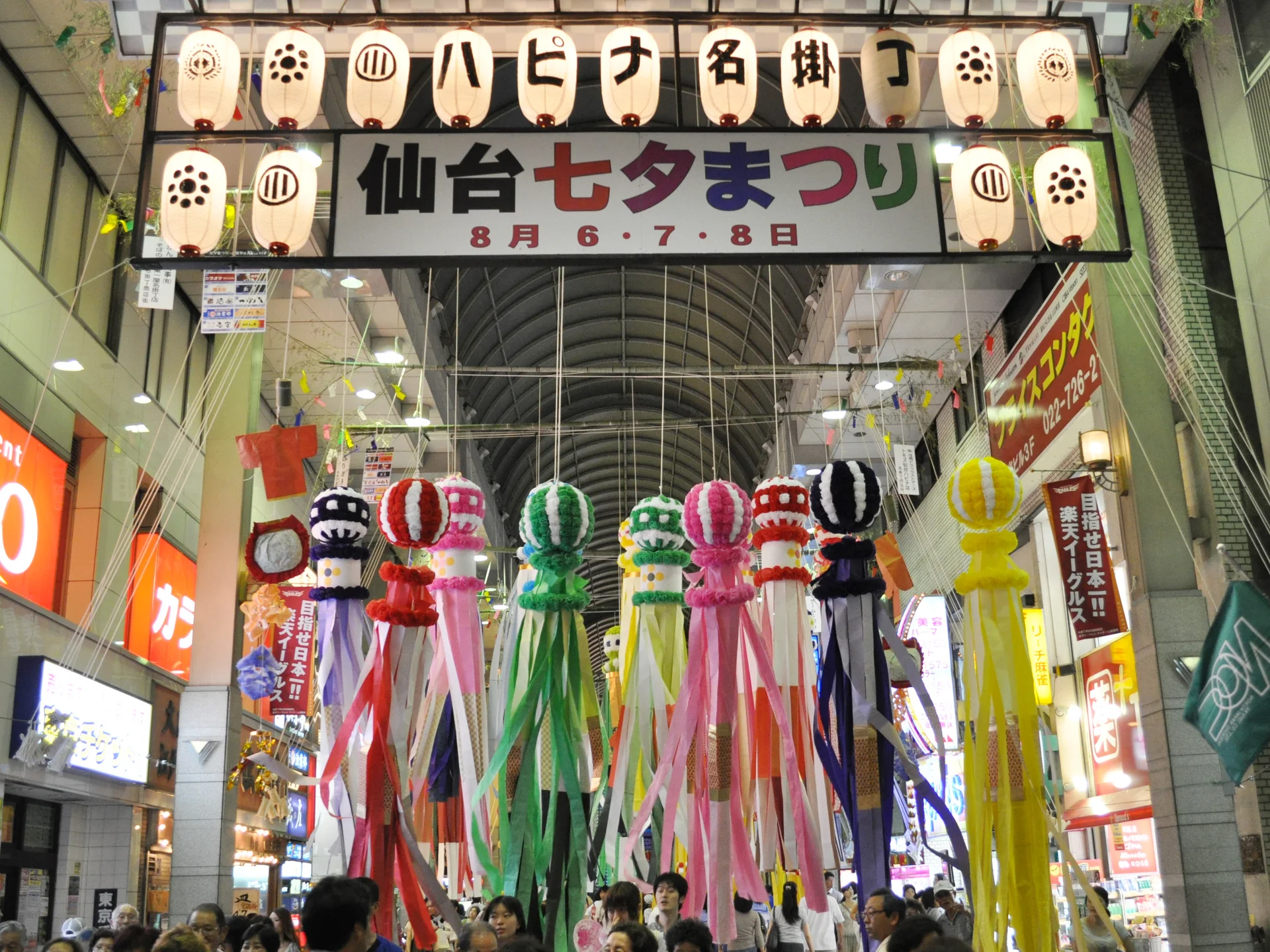
The 2026 Sendai Tanabata trip had two distinct dates to solve. On 5 August, the 57th fireworks event ran from 19:30 to 20:30 around Aobayama Park and the Hirose River, with roughly 16,000 launches. The hanging decorations and downtown festival followed on 6–8 August. Someone with only one night needed to choose between a concentrated evening show and time among the shopping arcades; a ticket or hotel booked for the wrong night could not deliver both. These dates are now past, but the same separation is useful when planning a future edition after its programme is announced.
For a route connecting several northern summer events, the Tohoku festival week shows the overnight pressure between Sendai, Aomori, Akita and Morioka. That wider sequence should be fixed before a fireworks-night room is booked.
The two dates call for different hotel and walking plans
One available night and a wish to see the streamers: use 6, 7 or 8 August; the fireworks on the fifth did not substitute for the main display streets.
Arrival on 5 August with two nights: watch the riverfront fireworks after checking in, then give the next day to the shopping arcades.
First Sendai festival visit: a central hotel reduces the evening return and permits an afternoon break from heat and crowds.
Downtown route complete by late afternoon: consider Aobayama only if another transfer and a later return still appeal.
One hour by the river, three days in the arcades
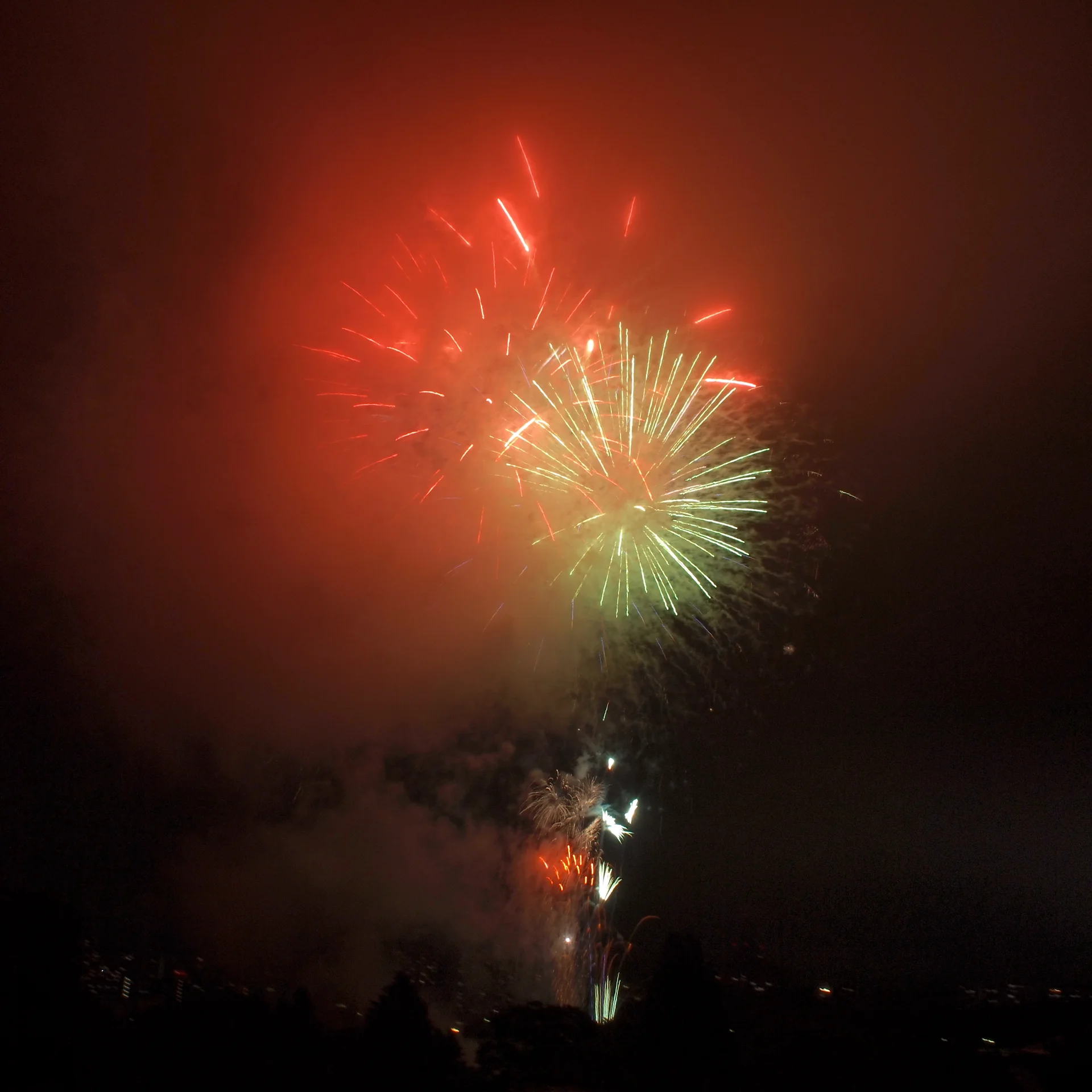
The firework site brought people together for a specific hour, so travel towards Aobayama and the crowded return mattered. Downtown Tanabata was a slower walk under bamboo and paper streamers in central shopping streets. Treating 5 August as another full arcade day would have misallocated the trip: the main hanging displays belonged to 6–8 August. A visitor interested chiefly in decorations gained more from one of those three days than from a fireworks-only night. The street decorations are assembled for the festival itself, with the main displays put up from the morning of 6 August. That is why an arrival on the fifth should be planned as a fireworks evening and hotel check-in, not as an early look at the completed shopping-street display. The seven traditional decoration forms include streamers and other pieces with different meanings; time spent examining individual shopfronts tells you more than a fast walk to a single photo point. The route rewards a slow first pass and a shorter return to any display the group particularly likes.
The departure crowd after a firework show deserves its own margin; the Omagari return journey gives a useful comparison for that transport problem. The summer festival comparison helps distinguish decoration walks from dance, parades and pyrotechnics when choosing only one summer event. A fireworks crowd also moves differently from an arcade crowd. After the hour-long show, many people try to leave the river area at once; a visitor changing trains that night needs to allow for the walk away from the viewing site before even reaching a platform. A central hotel can turn that night into a walk or one manageable local journey, but it still needs a realistic route. On a one-night visit, arriving on 6 August avoids spending that only evening on a display that was never the main Tanabata street event.
A station-side beginning keeps the arcade walk simple
From Sendai Station, Chuo-dori provided the least complicated first entry to the decorated arcades. Shops, food and indoor rests were on the same walk. For the longer choice between an arcade day, a hotel break and Matsushima, follow the Sendai route and Matsushima itinerary instead of compressing those three into one afternoon. The festival map identifies decoration streets, information points, first-aid places and transport stops, so it is useful for more than finding the nearest streamer. At Sendai Station, decide whether the first aim is a full walk west through Chuo-dori or a shorter look followed by a break. The covered streets make pauses easier, but they do not remove summer heat or crowding at entrances. A traveller with a stroller or large bag should locate the hotel or storage first and begin the decorative walk without carrying the whole travel load.
Continue through Ichibancho instead of doubling back
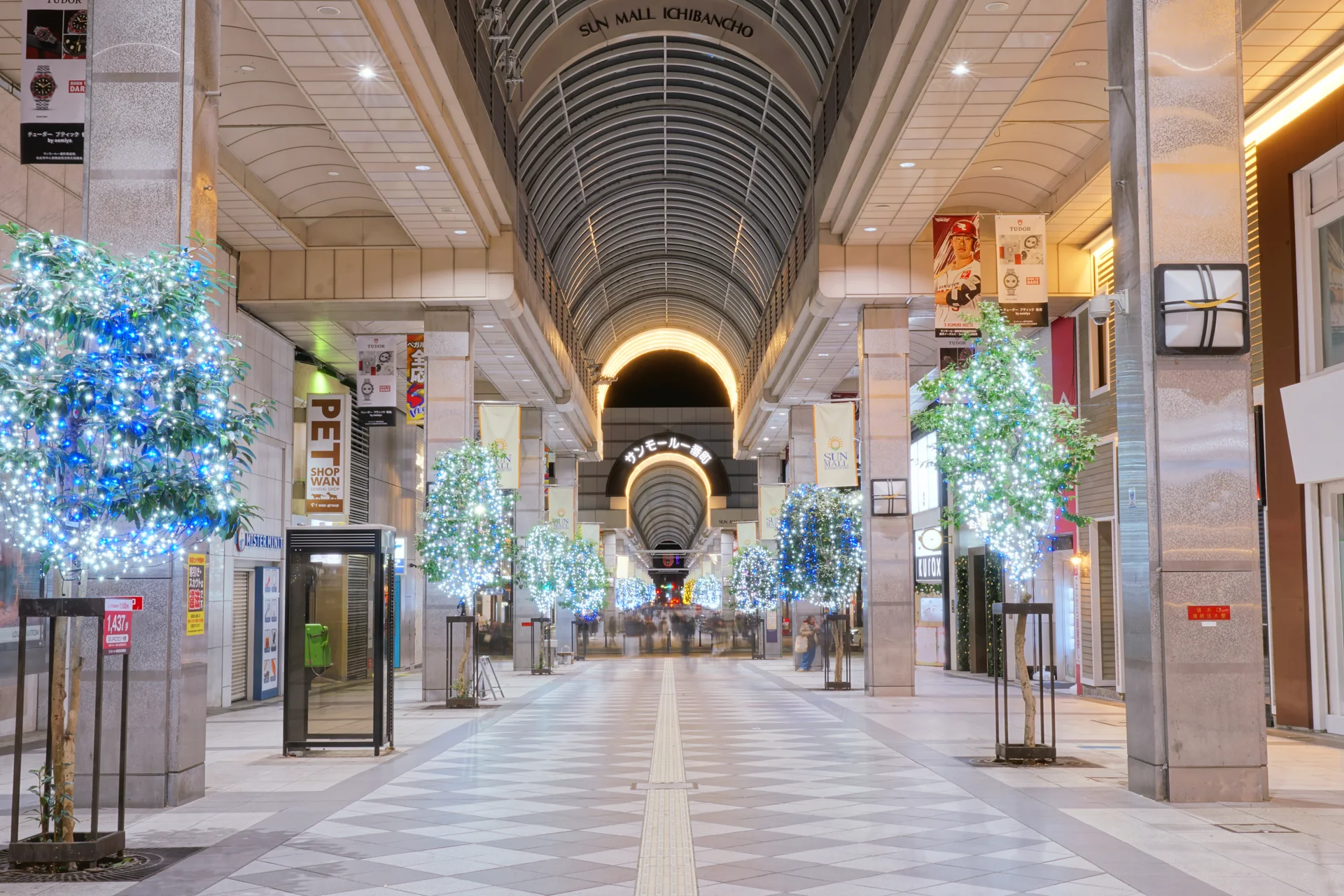
A route through Chuo-dori followed by Ichibancho lets the crowd set the pace. That order also leaves shops and food stops on the way, with a different walk or one rail ride available for the return. Repeating the same arcade in reverse can be pleasant if there is time; it is a poor requirement for a hot afternoon or a tired group. The image here shows Sun Mall Ichibancho dressed in winter lights, illustrating the covered street rather than claiming it depicts the summer festival. Ichibancho gives the walk a second rhythm. Decoration groups are judged, and prize labels can draw people to particular displays after the results are announced. That is a reason to leave time to stop rather than setting an artificial end-to-end walking target. A second pass is worthwhile only if it adds a different stretch or a specific display; otherwise continue to lunch, a cooling break or the hotel. The winter image on this page is a view of the same covered street space, not evidence of what the 2026 paper decorations looked like.
A visitor who had finished the downtown displays could use the arcades or Aobayama evening route to judge whether Aobayama merited another transfer that evening.
A central room earns its price during the hottest hours
Hotel location was less about prestige than about access to a real pause. A room in central Sendai made it possible to leave bags, step out of the midday heat and return to the streamers later without arranging a taxi after a crowded evening. The cheapest distant room could cost its saving in extra transfers when the route was repeated. Visitors who planned to watch the 5 August fireworks also needed to think through the return from the riverfront, not just the outward walk to the viewing area. For a family or anyone who struggles in the heat, the hotel break should be scheduled before tiredness dictates it. A station-area room makes a late arrival and next-day rail departure easier; a room nearer the arcades may make midday retreat shorter. Neither label is enough by itself: draw the route from the exact entrance to Chuo-dori, Ichibancho and the station. On the fireworks evening, check the walk back from the chosen viewing area separately. A low nightly price can lose its advantage if the party must repeat a long street-to-room transfer.
The luggage forwarding guide is useful if bags must move between hotels before the festival walk. When a hotel requires local buses, the Japan bus boarding guide explains why the boarding door and fare method should be checked for that service rather than assumed from Tokyo or Kyoto habits.
Give Matsushima its own half-day
Matsushima was the add-on most likely to crowd out the festival itself. Trying to fit a bay excursion between a morning under the decorations and an evening return put lunch, rail delays and a heat break into the same narrow window. The previous afternoon or the next morning offered a cleaner half-day. If Sendai had only one festival day, keeping the city-centre circuit intact was the stronger choice. Matsushima works better when given its own daylight window, especially if the group wants to cross the bayfront rather than merely tick off a train stop. On a two-night 2026 pattern, the first full morning belonged to the streamers; the bay could follow on the next morning before an onward train. On a shorter visit, choose one priority and let the other go. A bay excursion has its own station approach, walking and return interval, and squeezing those into the hottest part of a festival day leaves little room for the decorations.
How two nights could cover both events
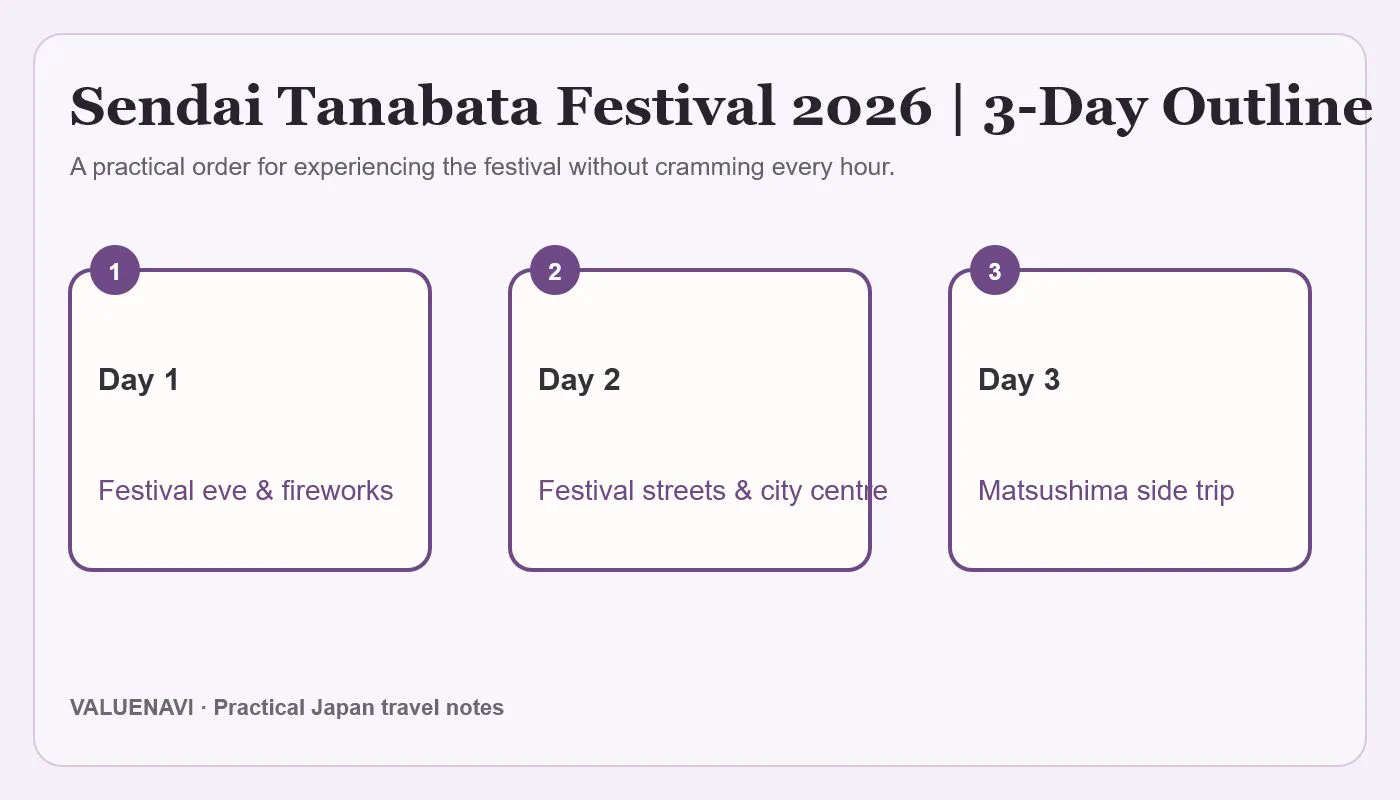
5 August: reach the hotel with time to settle in; the fireworks were scheduled for 19:30–20:30 near Aobayama Park and the Hirose River.
6 August: enter the shopping streets from the Sendai Station side, work through Chuo-dori and Ichibancho, and use the hotel as a midday reset.
7 or 8 August: reserve a separate Matsushima half-day if desired, revisit missed streamers or continue the wider rail itinerary without another compulsory night programme.
A two-night Sendai stop could begin on 5 August with check-in before the 19:30 fireworks, continue on 6 August with the arcades and a hotel rest, then leave the next half-day for Matsushima or anything missed downtown. Arriving directly from Aomori Nebuta or Akita Kanto could make that afternoon rest more valuable than one extra sight. The same applied after Morioka Sansa Odori. The two nights also reduce the pressure of linking every Tohoku festival on consecutive evenings. A traveller arriving from Aomori, Akita or Morioka still needs the rail arrival, hotel check-in and a route to the 19:30 fireworks; a nominally short train ride alone does not solve the final two steps. If arrival is too late for an unhurried riverfront approach, skip that show and use the following day for Tanabata instead. A later departure after the arcade day makes Matsushima or another Sendai sight an option rather than an obligation.
Weather and fatigue change the evening choice
A rainy day still allowed an arcade route, with slower entrances and slippery pavement. The rainy-day itinerary guide gives broader choices for moving or shortening activities elsewhere in the Japan trip. Covered arcades provide some shelter during rain, but umbrellas, wet paper edges and slower pedestrian flow can change the pace. The 2026 festival map also marks information and first-aid points that are useful if the group needs a pause. Fireworks have a different weather dependency and should be judged against the event announcement for that evening. Keep the hotel and the next rail departure as fixed points, then shorten the walking loop rather than trying to preserve every stop in poor conditions.
After dinner, unfinished streamers argued for another downtown pass. If the main streets were already covered, the Aobayama evening comparison laid out the transfer and payoff of leaving the centre.
The useful lesson from the 2026 dates
For a first visit, one proper day in the central decorations and a room that made an afternoon break possible were the safest commitments. The August 5 fireworks rewarded an additional evening; Matsushima and Aobayama belonged after the core route. If the festival was only one stop on a longer holiday, the Japan trip-planning sequence helps prevent that single week from causing unnecessary hotel moves.
Routes that expand the Sendai stay
Aomori Nebuta vs Hirosaki Neputa
Other festival and first-trip context
Festival and fireworks dates
Other seasonal decisions: Kawagoe Festival overnight choice · Nikko and Okunikko in autumn · USJ Halloween with children · Katakai fireworks dates · Kishiwada Danjiri districts · Tohoku autumn hotel bases · Sawara autumn festival · ten-day autumn leaves route · Kochi Yosakoi viewing.
More Japan route ideas
The fireworks return and first train help choose the district; compare Sendai Station stays for the festival nights.