
An early Fushimi Inari climb does not require a room beside Kyoto Station. Hotel Keihan Kyoto Grande is a short walk from the station's Hachijo side and puts JR Inari Station on a simple local train route. THE GATE HOTEL Kyoto Takasegawa is near Gion-Shijo Station, where the Keihan line reaches Fushimi-Inari Station without first crossing Kyoto Station. Either can work before the crowds. The hotel decision changes when you add the previous evening and the next day: Keihan Grande suits an arrival, departure or rail-heavy itinerary, while Gate Takasegawa makes a Kawaramachi and Gion evening easier. Check the first suitable service for the actual date instead of treating one station name as proof of a dawn advantage.
JapanLayer hotel assessment by dimension
↔ Scroll table left or right
| Hotel | Access | Space | Comfort | Cleanliness | Neighbourhood | Service | Value |
|---|---|---|---|---|---|---|---|
| Hotel Keihan Kyoto Grande | 9.2/10 | Insufficient evidence | Insufficient evidence | 8.7/10 | Insufficient evidence | 8.8/10 | Insufficient evidence |
| THE GATE HOTEL Kyoto Takasegawa | 9.5/10 | Insufficient evidence | Insufficient evidence | 9.6/10 | Insufficient evidence | 9.4/10 | Insufficient evidence |
Two practical routes to the shrine
↔ Scroll table left or right
| Booking factor | Keihan Kyoto Grande | Gate Takasegawa |
|---|---|---|
| First rail leg | Kyoto Station to JR Inari | Gion-Shijo to Keihan Fushimi-Inari |
| After the climb | Return to a Kyoto Station base | Return to Kawaramachi and Gion-Shijo |
| Named twin choice | 23 m² standard or 25 m² superior twin | Essential Hollywood Twin within the 23–36 m² range |
| Departure advantage | Shorter transfer to Shinkansen and JR services | More useful central Kyoto evening location |
Swipe to compare the hotels
Two rail lines reach different shrine-side stations
From Kyoto Station, the JR Nara Line goes to Inari Station, immediately by the Fushimi Inari Taisha approach. Hotel Keihan Kyoto Grande stands near Kyoto Station's Hachijo East Exit, so its useful morning sequence is room, Hachijo-side station entry, JR platform, Inari. It is an efficient route, but the large station still takes time to navigate. The Fushimi Inari walking guide helps distinguish the lower torii paths from a full summit climb; those are different time commitments even when the train ride is short.
From Gate Takasegawa, walk to Keihan Gion-Shijo and use a train that actually stops at Fushimi-Inari Station. The station is a short walk from the shrine approach. The hotel lists about five minutes to Gion-Shijo Exit 4 and about three minutes to Hankyu Kyoto-Kawaramachi's Kiyamachi North Exit. Neither is the same as being at Kyoto Station. A traveller who assumes the train must start at Kyoto Station could make an unnecessary cross-city detour. The Tofukuji, Fushimi Inari and Uji day route helps evaluate how the Keihan-side approach fits a longer southeastern Kyoto day.
Service pattern is as important as geography. Some faster trains on a line do not stop at every small station, and first departures vary. For a climb beginning before or near sunrise, check the actual rail timetable and walking route; if you intend to arrive before trains serve you, price a taxi and confirm a safe, sensible drop-off point. A predawn climb also needs practical preparation: light, shoes and an honest estimate of how far you will go. Neither hotel turns the mountain route into a quick photo stop. The Kyoto one-day itinerary can help avoid cramming a full summit climb into an already full day.
If the priority is simply seeing the lower torii before tour groups, you may not need a predawn departure. A reasonably early train from either hotel can put you at the shrine before the busiest middle of the day. The difference between leaving the room at 6:30 and 7:00 may matter less than whether you eat breakfast first and whether your group moves quickly. If you intend the entire loop up Mount Inari, start early for your own pace and daylight, then choose the hotel for the rest of the stay. The Kyoto autumn crowd guide offers a wider view of when timing changes the visit.
Keihan Grande makes a rail arrival and departure simpler
Hotel Keihan Kyoto Grande is advertised about a minute from Kyoto Station's Hachijo East Exit. That is the south side of the station, close to a Shinkansen arrival, the JR Nara Line and transport out of Kyoto. The exact platform walk is longer than the hotel-to-exit figure, but a traveller with cases need not cross the city to check in. This makes Keihan Grande especially useful if the shrine morning sits between a late Kyoto arrival and an afternoon train onward. The Kyoto Station versus Gion hotel comparison explains the wider station-area trade.
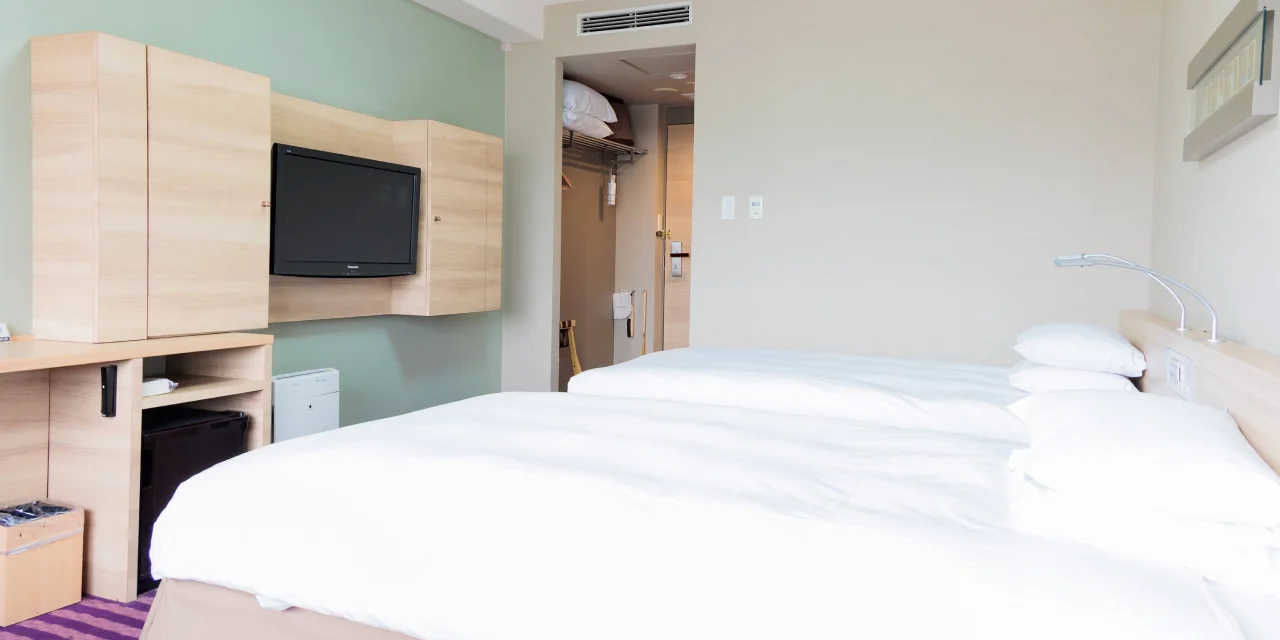
The hotel's standard Twin Room is 23 square metres with two 110-centimetre beds and a listed capacity of two to three; a third guest uses an added bed. Its Casual Twin is 19 square metres, while a Superior Twin is 25 square metres. Those labels should not be treated as interchangeable. Two adults returning from a long climb may prefer the larger bathroom arrangement of a named Superior Twin or the basic 23-square-metre room rather than a cheaper, tighter Casual Twin. Check the actual room and bed plan. The Kyoto seniors' station-versus-Kawaramachi guide is useful when walking distance after the climb carries extra weight.
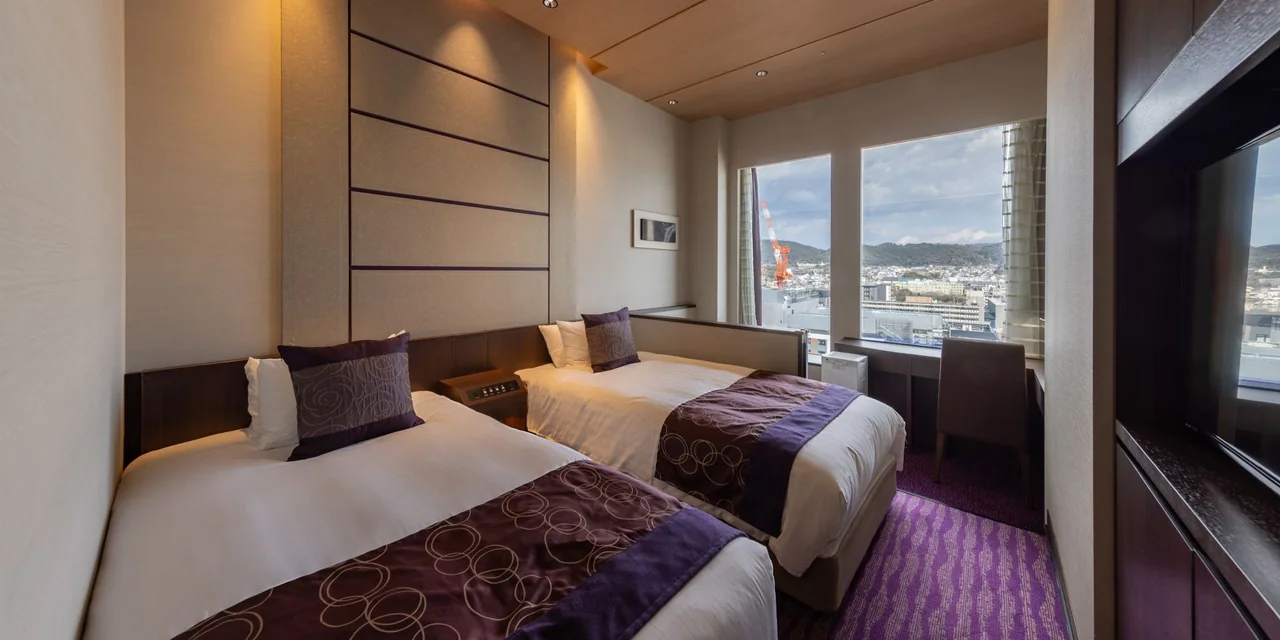
Keihan Grande's 13th-floor Superior categories include both a twin with a washing area in the bath and a semi-separated bath version. These are different room layouts. A view or upper-floor lounge is relevant only if the rate includes it and you will use it; a departure at dawn may leave little time for a paid breakfast or lounge. The hotel lists check-in at 3 p.m. and checkout at 11 a.m. A traveller returning from Fushimi Inari at 10:30 should not expect enough time for a shower, packing and checkout without planning the pace. Hotel luggage storage can help after checkout, but the room will no longer be available. The Kyoto hotel guide for busy autumn dates can help assess whether paying for an extra night or a later departure is worthwhile.
Families should price the real occupancy. The standard twin's third person needs an extra bed, and a four-person family may be better suited to the hotel's 38-square-metre Family Room or 28-square-metre Casual Fourth, depending on bed count and price. A child-sharing-bed rule is not the same as four beds. The hotel lists a connecting-room option for larger groups; confirm that the exact rooms connect in the booking, rather than assuming that any two rooms can be joined. The Kyoto Station family-area guide helps judge whether the station location is worth choosing over a more atmospheric neighbourhood for the entire family stay.
Keihan Grande's public areas and laundry can matter on a multi-night rail itinerary. The hotel has an indoor free space and laundry facilities, useful if you return with wet clothes after a rainy climb. Those facilities are not a guarantee of immediate machine availability. If you only stay one night, the practical win remains the station-side route and correctly sized room. The Tokyo–Kyoto–Osaka luggage transfer guide may help if the climb falls on a moving day and you want to keep large cases out of the shrine visit.
Gate Takasegawa trades station access for the Kyoto evening
Gate Takasegawa is in the Kawaramachi and Takase River district, close to Gion-Shijo and Kyoto-Kawaramachi. That makes dinner and an evening walk more immediate than from a Kyoto Station room. If the shrine is one early outing within several nights of central Kyoto, those evenings may outweigh a marginally different morning rail route. You can return from Fushimi-Inari via the Keihan line and still be near the hotel without a second cross-city trip. The things-to-do-in-Kyoto guide gives a broader sense of where your later hours may take you.
An evening tea ceremony booking in central Kyoto can also make Gate's location more useful, depending on the venue. Check the address before assuming that every cultural activity takes place in Gion.
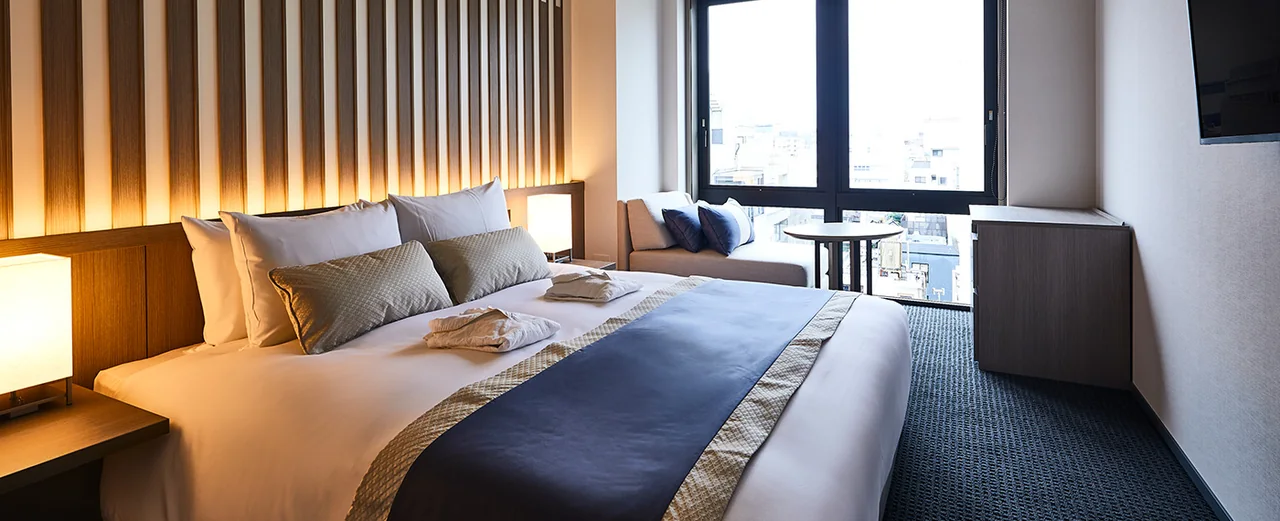
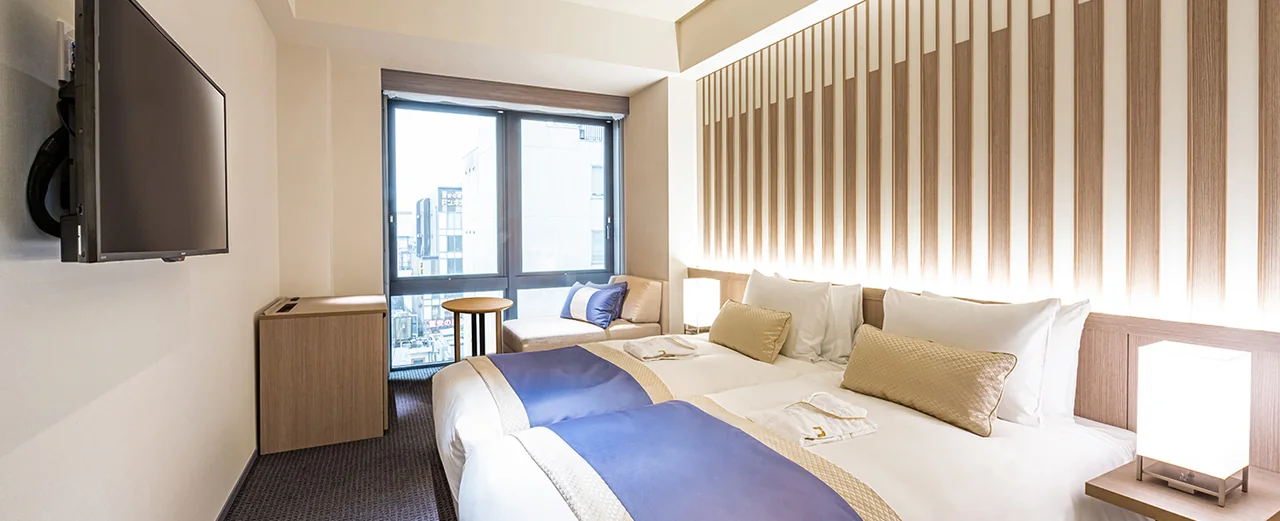
Gate has two distinct room environments: a modern Main building and the renovated former Rissei elementary school Schoolhouse. They are not just two names for the same corridor. The hotel lists Main Essential rooms across 23 to 36 square metres with double, Hollywood twin, triple and accessible configurations. Classy rooms are 38 square metres, while Schoolhouse categories have their own layouts and heritage character. A generic entry-level quote does not promise a particular building, view or floor. Select the named category and building if those details are part of the reason to pay more. The Kyoto autumn hotels guide helps test whether a neighbourhood premium is justified in peak season.
For two travellers climbing together, a Main Essential Hollywood Twin can provide separate sleeping spaces without buying a suite, but the 23-to-36-square-metre category range is too broad to assume one fixed room size. Gate's Modest room is specified for one person. A couple should not compare that solo rate with Keihan Grande's twin. A larger Classy room may be attractive if the group will rest there after climbing, yet a view is category-specific. Confirm the room's building, size, bed layout and breakfast before booking. The Kyoto Station versus Gion hotel guide is a better area comparison than star counts.
The Schoolhouse setting can be a meaningful part of the stay if you will spend time in the building. It is less relevant to someone leaving early, returning late and using the room only to sleep. Gate's central location may also bring more street activity than a quieter station-side room, although actual noise depends on room position and glazing; neither can be asserted for every room. If sleep before a dawn climb is crucial, choose the actual room position when the booking offers that information and avoid assuming that historic architecture or a central address guarantees quiet. The Kyoto Gion evening route can help decide whether the neighbourhood itself is worth the room premium.
The morning after the climb changes the room value
Consider a couple staying two nights in Kyoto after arriving by Shinkansen. They want Fushimi Inari at opening light, then Tofukuji and Uji. Keihan Grande lets them drop bags after the incoming train and reach JR Inari easily the next morning. Gate Takasegawa offers a Keihan-side route that may better connect the shrine, Tofukuji and Uji in one corridor, plus a more useful central Kyoto evening. The right booking depends on which rail services you choose and where dinner ends, not a blanket claim that Kyoto Station is nearest to every shrine. The Tofukuji–Inari–Uji route is the appropriate day plan to check.
Now consider a family with an afternoon Shinkansen on the shrine day. A full summit climb can take several hours at the group's pace. The 11 a.m. Keihan Grande checkout may be too early for a comfortable return and shower; Gate's own checkout and luggage conditions must also be checked for the selected rate. If the group plans to hike only to the lower viewpoints, a morning return is more plausible. A paid late checkout or extra hotel night may be worth more than a slight station advantage. The Kyoto one-day itinerary can help choose a shorter Fushimi Inari stop within a travel day.
For a solo traveller who wants quiet early shrine photographs and then a day in Higashiyama, Gate can reduce the evening return after sightseeing. For someone leaving Kyoto for Osaka immediately after the shrine, Keihan Grande may avoid carrying luggage back across central Kyoto. If the next destination is Kinosaki, luggage forwarding or a station locker may matter more than either room's view. The Kyoto-to-Kinosaki luggage guide gives a practical way to assess that departure.
The season can affect the value of an early start. Autumn colour and peak travel weeks increase demand around Kyoto; a refundable room can be useful if the exact date or weather shifts. Fushimi Inari's paths are open over a long day, but darkness, rain and slippery steps change the wisdom of pushing to the summit. A hotel booking should not be tied to a claim of guaranteed sunrise, crowd level or foliage colour. The Kyoto November leaves guide helps position the climb within the rest of an autumn itinerary.
If an autumn illumination is booked for the same evening, compare its exit location with the last rail journey back to the room. A wet-weather Kyoto Aquarium visit instead may favour the station-side hotel, but only if that is the actual replacement plan.
Compare the complete booking, not the first room price
Price Keihan Grande's named twin and Gate's named Main or Schoolhouse room for the same guests and dates. Include breakfast only if the departure time lets you eat it. A dawn climber might prefer a light meal bought the evening before, but check food storage and the group's needs rather than assuming breakfast is unnecessary. Check whether the package requires advance payment and when cancellation becomes costly. Gate can be a more expensive purchase if its location and room character are the draw; that premium is wasted if you spend every evening on a train to another district. Keihan Grande can be poor value if you repeatedly pay taxis to return from central Kyoto dinners.
Mark three points on the map: the hotel entrance, the rail platform you will use at dawn, and the place you expect to finish the day. Gate's walk to Gion-Shijo and Keihan Grande's walk to Kyoto Station are each short only to the named entrances. Platform access, the final station near Fushimi Inari and the return leg make the useful difference. If you are not sure about the shrine hike length, keep the second half of the day flexible. The Fushimi Inari guide separates a lower-path visit from the full ascent so the hotel decision rests on a real schedule.
Book Keihan Grande if the visit is bracketed by a Shinkansen or other Kyoto Station rail journey, or if you want the JR Inari route and a station-area base. Book Gate Takasegawa if you will use the Gion-Shijo Keihan route and spend the rest of the stay around Kawaramachi, Gion or the eastern city. In both cases, verify the first train, named room, guests, bed arrangement and checkout time on your date. A good Fushimi Inari morning comes from enough time on the mountain; the room should make the rest of the day easier as well.
Updated 4 October 2026. Rail services and hotel room conditions vary by travel date.