
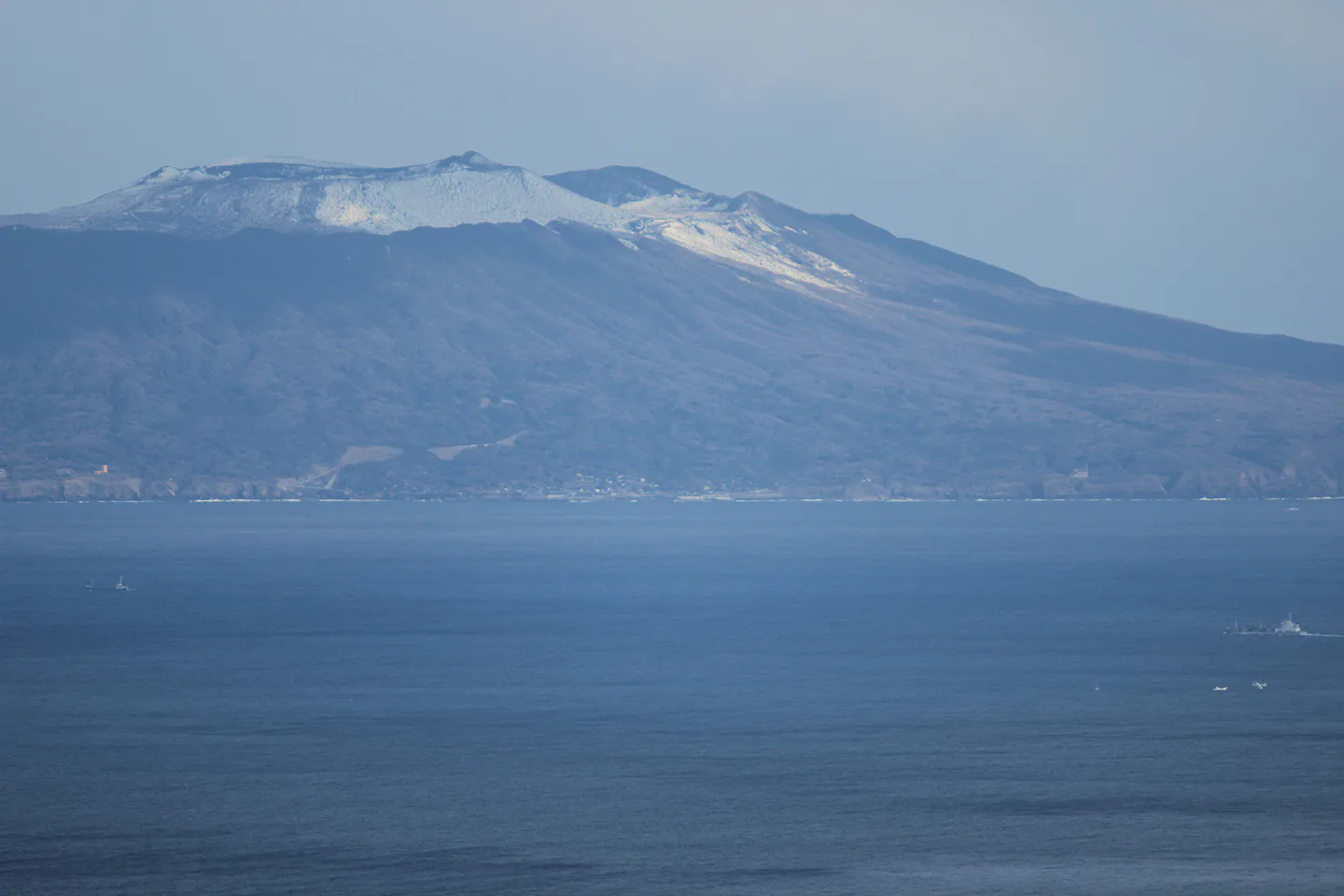
Izu Oshima is close enough to Tokyo for a jetfoil day trip, but the island is too large for a car-free visitor to treat every sight as part of the same short loop. For a first visit centred on Mount Mihara and Motomachi, sleep in Tokyo and travel out and back by fast boat. A night aboard a passenger ship buys an earlier island morning if you can sleep at sea. Book an island hotel when the second day has a purpose of its own, such as Habu Port, the southern coast or a slower hiking plan.
There is an immediate date complication. From 9 through 28 October 2026, Tokai Kisen is operating a replacement schedule while several vessels are out of service. In that period the published Tokyo jetfoil leaves at 07:40, reaches Oshima at 09:25, and its Tokyo-bound counterpart leaves Oshima at 14:55. The Friday-night replacement passenger ship leaves Tokyo at 23:00 and reaches Oshima at 05:30 on Saturday. Those are not the summer times or ship types quoted in older trip descriptions. From 29 October onward the operator lists a different timetable. Select the travel date first, then decide whether the island hours justify the fare and sleep trade-off.
↔ Scroll table left or right
| Trip pattern | Time gained | Useful island scope | Constraint |
|---|---|---|---|
| Morning jetfoil and afternoon jetfoil | A normal Tokyo night and a compact island visit. | Mount Mihara plus Motomachi if bus connections work. | Weather, bus waits and the afternoon return narrow the day. |
| Night ship out and jetfoil back | An early arrival before the morning jetfoil. | Longer hike or second activity if you can function after sleeping aboard. | Night service and ship accommodation differ by date and replacement period. |
| One night on the island | Two separate sightseeing windows. | Mihara on one day; Habu or southern coast on the other. | Hotel move and exposure to another day of sea conditions. |
| Large suitcase in tow | No sightseeing benefit. | Leave it in Tokyo or forward it onward. | Jetfoil baggage rules and island buses make it awkward. |
What the October replacement sailings allow
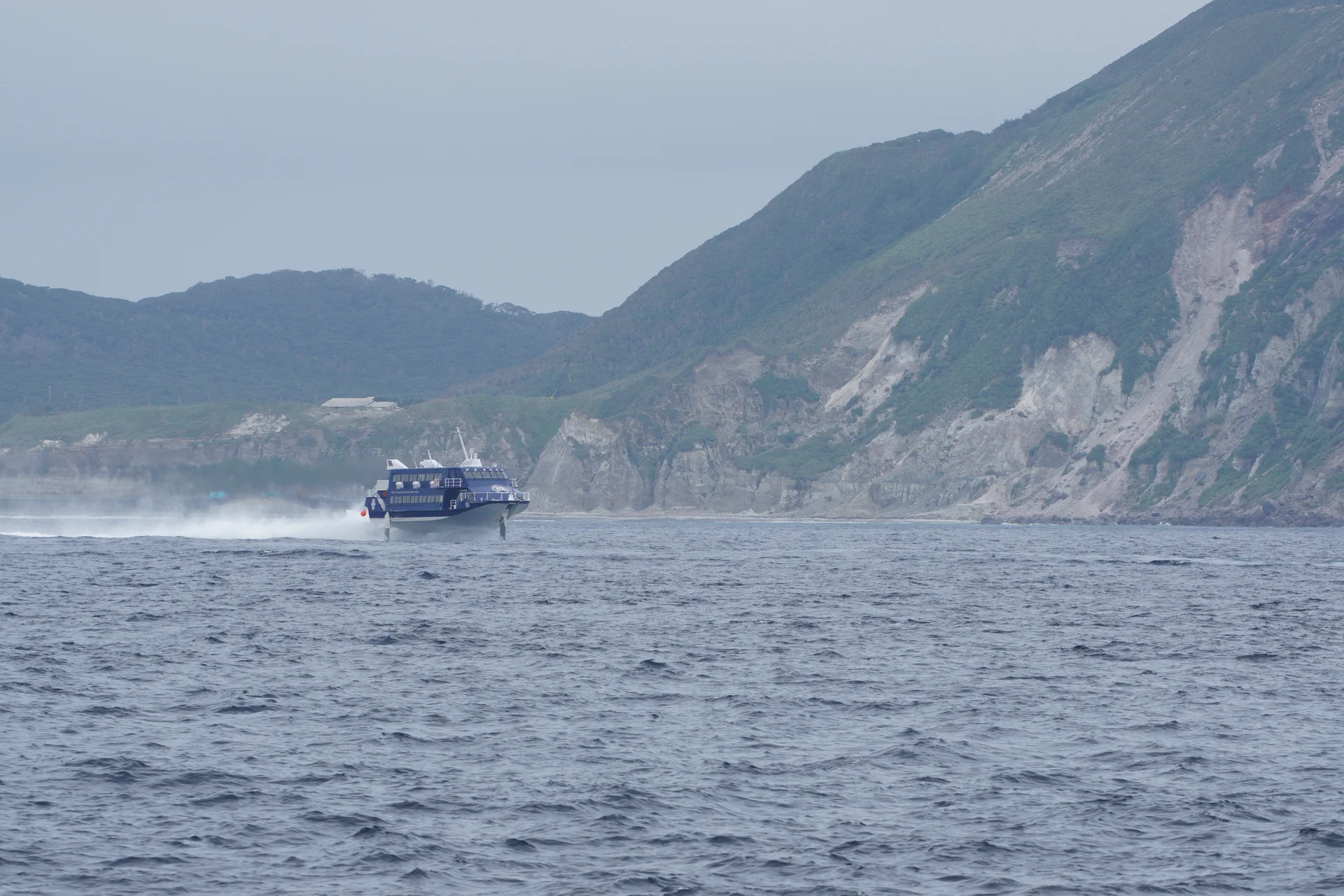
For 9–28 October, the operator's replacement table shows a daily 07:40 Tokyo–Oshima jetfoil, arriving 09:25, and an Oshima–Tokyo jetfoil at 14:55, arriving 16:40. A 09:25 arrival and 14:55 departure give five and a half hours between boat movements. They do not give five and a half hours on the mountain: disembarking, the bus journey, walking, lunch and reboarding all use that window. A day trip can still work, but it needs a narrower objective than the summer version of this page implied.
The same replacement table shows a Friday 23:00 Tokyo passenger-ship departure reaching Oshima at 05:30 the next morning. That early arrival is valuable only if the onward bus and your stamina cooperate. The operator says replacement ships differ in size and facilities; Kuroshio Maru, for example, has no restaurant or shower room, and no checked-baggage reception is available on several replacement Oshima services. Do not buy the old overnight-ship idea as though a familiar cabin and service pattern were guaranteed for these October dates. The date-specific sailing table and same-day operating status are the practical starting points.
The original summer comparison described jetfoils reaching Oshima around 09:35–10:00 and a large passenger ship arriving around 06:00. The overnight boat then offered roughly three and a half to four extra island hours. Under the October replacement, the Friday-night 05:30 arrival is almost four hours ahead of the 09:25 jetfoil, but the exact sailing availability is more restrictive. After 28 October, neither set of times should be copied blindly. Nikko day trip versus overnight shows the same need to compare usable hours rather than merely count nights, although rail gives a different disruption risk.
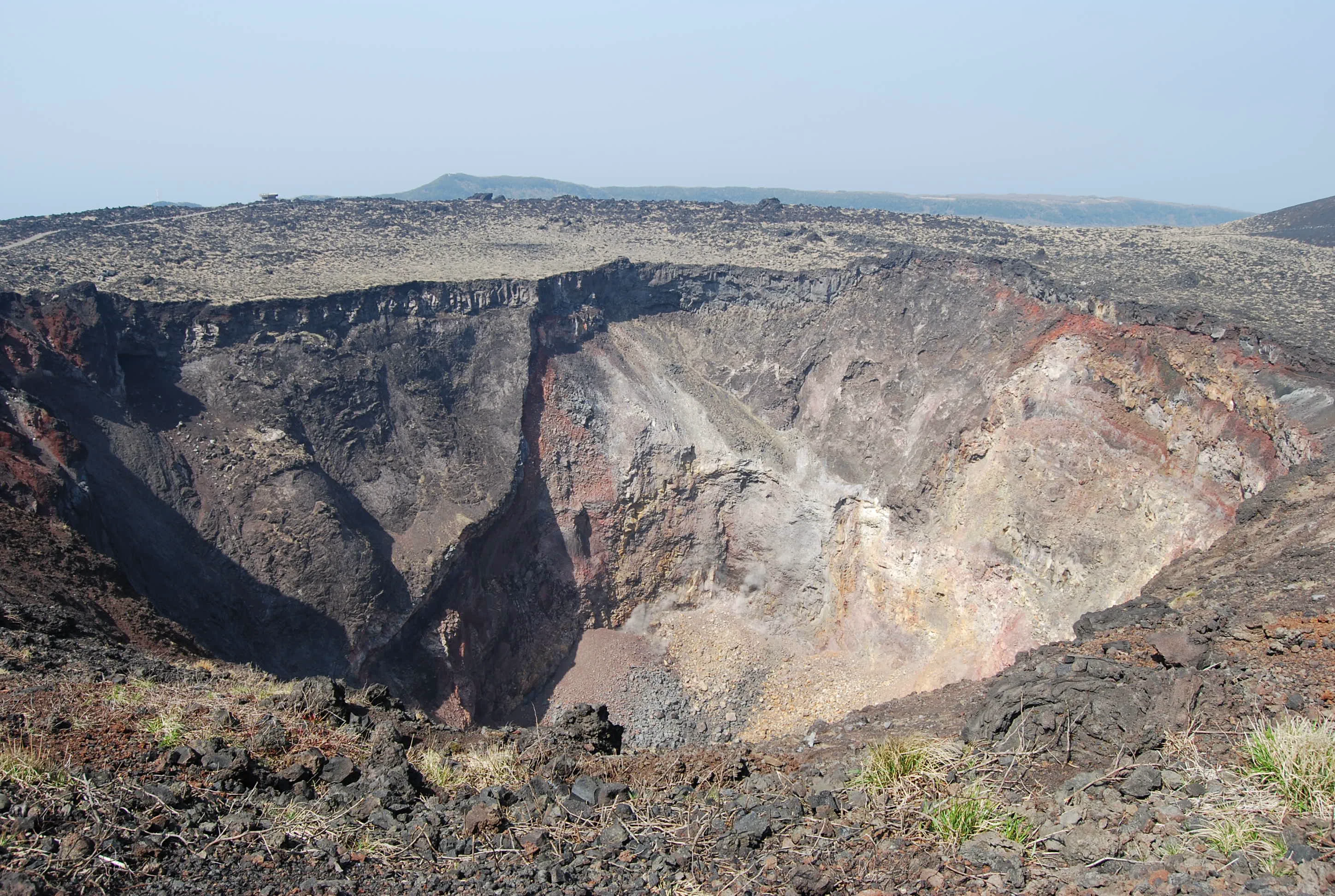
Mount Mihara fills more of a day than the crossing does
Tokai Kisen markets the jetfoil as the faster sea crossing, around one hour and forty-five minutes from Tokyo to Oshima in the current replacement example. The time saved on water does not remove island transport. The tourism association lists the bus from Motomachi Port to the Mihara summit entrance at about 36 minutes. The summit walk and crater circuit can take about two and a half hours before a meal, bus wait or return-port margin. A car-free guest who hopes to hike should build the day around the mountain bus first, then see what remains near the port.
Motomachi, its coastal views and an onsen can be a sensible companion to Mihara when the actual sailing and bus times allow it. Habu Port and the southern coast are a second island zone; adding them to a same-day volcano plan without a car makes every connection consequential. The island is roughly 90 square kilometres with a road circuit of about 52 kilometres. Its scale is easier to underestimate on a small map than at a bus stop. The Fuji day-or-night comparison is a useful parallel: a mountain objective expands to fill the window you give it.
During July and August 2026 the island's organised sightseeing bus was suspended, although ordinary route buses continued. That was a summer-specific restriction, not a year-round instruction. In October the route-bus timetable and the day's arrival port are the relevant checks. If no suitable bus connects with your boat and hike, a taxi may solve the transfer but changes the trip cost. Do not assume a hop-on circuit will appear at the pier. A rail-based Tokyo nature day is simpler to rearrange if the Oshima transport chain looks too tight.
A shipboard night is a sleep decision
The old fare-and-hours argument for leaving Takeshiba late was real in summer: an approximately 23:00 departure and 06:00 island arrival gave more morning than a jetfoil arrival near 10:00. The value of those hours depends on being awake enough to use them. A standard Tokyo bed and a passenger-ship second-class space are different purchases. A guest who cannot sleep while a vessel moves may spend the extra morning recovering rather than walking the crater. Parents should make the same calculation for children; a nominally longer island visit can deliver less useful time if the whole party arrives tired.
Oshima Bus has described connecting early-arrival services to parts of the island when the large night ship comes in. That is useful, but it is not permission to plan the entire morning from a generic summer chart. For an October replacement sailing, confirm the specific vessel, port and bus connection. Friday's overnight arrival pattern also means the option is not interchangeable with an arbitrary weekday jetfoil excursion. A couple who sleep well aboard and want a second island activity can make it work. Someone mainly interested in Mihara and Motomachi may get a better day by starting rested from Tokyo.
If a shipboard night is appealing for the journey itself, compare the actual accommodation class and facilities rather than only the lowest fare. During the 9–28 October replacement period some services use different vessels with different amenities, and the operator states checked baggage is unavailable on named replacement Oshima sailings. Otaru's overnight question has no marine crossing, but it similarly separates evening value from simply adding a room key.
October fares change the older arithmetic
The article's August 2026 fare snapshot used ¥12,300 one way for a jetfoil and ¥8,220 for second class on the large passenger ship. That made two jetfoil legs ¥24,600, versus ¥20,520 for a second-class night ship out and a jetfoil back: a ¥4,080 transport difference. September's published fares then fell to ¥10,430 and ¥6,430 respectively. Those figures explain the former comparison but are historical prices, not the amount to budget for October.
Tokai Kisen's October 2026 Tokyo–Oshima table lists ¥9,530 per adult one way for the jetfoil and ¥5,890 for passenger-ship second class, including the published fuel adjustment. Two ordinary-price jetfoil legs therefore total ¥19,060; a second-class passenger-ship leg plus one jetfoil totals ¥15,420, a ¥3,640 difference before any applicable promotion or vessel-specific condition. The cheaper pattern still replaces a hotel bed with transport accommodation. A higher class or a Tokyo hotel night retained while you travel can change the full trip cost. Check the exact sailing and fare at booking, especially under the October substitute service.
One dated offer, the October 2026 Oshima round-trip jetfoil product, has its own conditions including a morning Oshima-to-Tokyo return. It cannot simply be inserted into this afternoon-return comparison. If a quoted discount seems to make the day trip dramatically cheaper, check which sailings it permits. The trip with the lowest ticket total may leave the island too early for the hike you actually want. The Fuji tour transport comparison illustrates why a ticket price alone is not a day plan.
When an island hotel earns its second day
An Oshima overnight is strongest when the morning after the first hike has a defined destination. Day one can centre on Mihara and Motomachi; day two can reach Habu, the southern coast, a separate hiking area or a deliberately slow onsen and sunset sequence. The second day also gives space to see an island zone that a bus-based day trip cannot safely promise. If day two merely repeats Motomachi before returning, the hotel and bag move may add little.
The Izu Oshima Tourism Association's taxi reference has put Motomachi-to-Habu at roughly ¥5,500 for a medium vehicle. Treat that as an illustration of distance, not a fixed fare for every pickup. If your hotel offers port collection, ask whether it serves both main ports, whether advance booking is needed and how it learns the day's operating port. A Motomachi address is attractive for food and town access but cannot force the boat to dock there.
One night gives more time to adapt the island sightseeing order, but it does not guarantee a return boat in bad weather. If Tokyo holds an international flight or a non-movable event the next day, put Oshima earlier in the trip rather than assuming the island room insures the connection. Nara's day-or-night choice and Biei's overnight case are useful comparisons when deciding whether a second geography truly needs another hotel.
The departure port can change on the day
Oshima's main passenger ports are Motomachi on the west and Okada to the north. The ferry operator warns that the actual port can be chosen by sea conditions and that the two travel directions need not use the same port. This matters as soon as you try to match a bus to a trailhead or hotel. A screenshot of a Motomachi route is not enough if the morning boat lands at Okada. Confirm the day's port and ship first, then open the bus schedule for the resulting route.
The operator normally makes high-speed-jetfoil decisions around 06:00, while large-ship decisions can come later, with final information around 17:00 in the older guidance. Conditions can alter timing as well as cause outright cancellation. Typhoon-disrupted days in August 2026 produced examples of afternoon departures brought forward by hours and days when jetfoils were cancelled while another vessel followed an altered plan. A Tokyo dinner, concert or flight scheduled tightly after the island return carries more risk than the advertised arrival time reveals.
Tokai Kisen's cancellation rules can allow a no-fee change or refund when the operator cancels, depending on how the ticket was purchased. That does not pay for an unexpected hotel stay, and the operator says passengers bear lodging costs if forced to remain on the island. Build a return margin that can survive a changed port, early departure or cancelled sailing. For a short Tokyo trip with little spare time, Kamakura by rail or Hakone versus Kawaguchiko may be easier to recover when the weather turns.
Leave the large case on the mainland
Tokai Kisen's jetfoil allowance is two pieces per person free when the combined baggage meets its stated size and weight rules: each piece's three sides total no more than 120 cm and the two pieces together weigh no more than 20 kg. A larger or heavier allowed item costs ¥1,200 one way, while a piece exceeding the 200 cm total-size or 30 kg upper limit cannot go aboard. The large ship has a different baggage system, but October replacement sailings restrict checked-baggage reception. More generous ship capacity would still not make a full-size case convenient on island buses.
For a side trip from a Tokyo stay, keep the main suitcase in the same hotel and carry a day bag. If Oshima falls between two hotel cities, consider forwarding the large case to the next hotel. The island then becomes a visit rather than a sequence of bag-storage problems. Tokyo luggage storage placement is relevant if you are checking out of the mainland hotel before going to Takeshiba.
That same luggage logic favours a day trip or night-ship excursion while retaining a Tokyo room, even when it appears to cost more than a bare ferry ticket. It may save an island hotel check-in and keep the main bag off the bus. A family with multiple large cases should compare the whole movement, not just the per-person crossing fare. Nagasaki from Fukuoka shows a similar base-versus-extra-hotel decision with rail rather than sea exposure.
Three workable outlines
A rested volcano day: sleep in Tokyo, take a morning jetfoil, use the matching port-to-Mihara bus, give the summit and crater circuit their time, then keep the remaining island block near Motomachi before the afternoon boat. This is the default for a first car-free visit when the dated timetable offers enough bus connection margin. It deliberately gives up Habu and the southern coast. Mito and Oarai without a car is another reminder that the final local connection can determine the day.
An early-arrival ship day: leave Takeshiba on an available night sailing, arrive before the jetfoil crowd and return by afternoon jetfoil. The extra morning can support a slower Mihara walk or a second activity. For 9–28 October 2026 this must be matched to the Friday replacement overnight sailing and its actual vessel, not a generic nightly large-ship assumption. The pattern is a good purchase only when shipboard sleep works for the party.
A two-zone island stay: use a jetfoil or an available passenger ship to reach Oshima, spend the first day around Mihara and Motomachi, sleep on the island, then use the next day for Habu, the south or another named experience before returning. This is the strongest case for an island hotel. It also means accepting one more hotel move and checking another day's sea operations. Itoshima's coastal-night question is a useful analogy for deciding whether the second area warrants the stay.
I would not place Oshima immediately before a fixed international flight, nor use the island as a same-day prelude to a non-refundable Tokyo event. I would also skip the night sailing for anyone who already knows poor sleep makes a volcanic walk miserable. If the itinerary already contains multiple weather-sensitive outings, Tokyo's full-day planning method can help decide which one genuinely deserves the available day. An island visit should add something distinct, not overload the last flexible space in the trip.
The choice is therefore about which extra island hours have a clear use. For Mihara and Motomachi, choose the dated jetfoil day trip with enough bus margin. For a longer single day, use an available night ship only if its sleep conditions suit you. For Habu, the south or a deliberate evening on Oshima, consider a hotel night. Before paying, check the applicable sailing table, October or later monthly fare, and the day's Motomachi/Okada port. If staying on Oshima, compare island stays close to the second day's route, not merely the port you hope the boat will use.
Related island and day-trip routes
Japan luggage-forwarding guide · Tokai Kisen — timetable and · Tokai Kisen — August 2026 · Tokai Kisen — cancellation/operation decisions · Tokai Kisen — jetfoil baggage · Oshima Bus — 2026 route-bus · Oshima Bus — island transport · Izu Oshima Tourism Association — · Takayama Day Trip or Overnight · Rusutsu Day Trip or Overnight · Jozankei Autumn Leaves 2026: Day · Aso Day Trip or Overnight: · Oshima Island Fukuoka Day Trip: