
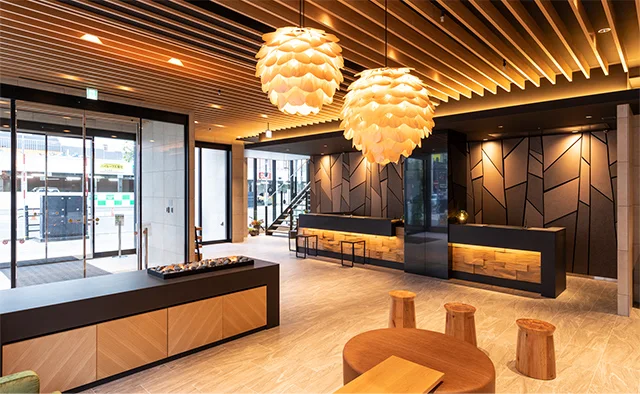
At Tokyu Stay Sapporo Odori, the 19 m² Superior Twin and 23 m² Residential Twin share the feature that draws many longer-stay travellers here: an in-room washer-dryer. Both also have two 1,100 mm beds and a microwave. For two adults staying four nights, the real question is whether another 4 m², a kitchenette and a separate bath and toilet will change what happens in the room each evening.
I would begin with the 23 m² room for two large suitcases, winter coats and several meals bought in. With cabin bags, restaurant dinners and little time in the room, I would compare the 19 m² room first. Neither answer compensates for the wrong neighbourhood: if most days start on JR trains, settle the Sapporo Station, Odori or Susukino base before paying for extra floor area.
What the four-square-metre upgrade actually changes
| Room or feature | Superior Twin | Residential Twin | Booking consequence |
|---|---|---|---|
| Published floor area | 19 m² | 23 m² | Residential adds 4 m², about 21% over Superior. It does not promise 4 m² of empty floor. |
| Occupancy and beds | Two people; two 1,100 × 2,000 mm beds | Two people; two 1,100 × 2,000 mm beds | Do not upgrade expecting wider beds or space for a third adult. |
| Laundry and reheating | In-room washer-dryer and microwave | In-room washer-dryer and microwave | A laundry load or a convenience-store meal does not, by itself, justify the larger room. |
| Cooking | No listed kitchenette | Kitchenette with electric cooker | Value this when you expect to prepare actual meals, not merely reheat food. |
| Bathroom arrangement | Combined layout | Separate bath and toilet | Useful when two people need those spaces at the same time. |
| Another adult | Not the right category | Not the right category | Compare the 26 m² Premier Twin, which is listed for up to three guests. |
Four square metres is roughly 2 m² more published room area per guest on a two-person booking. It is not a suitcase-clearance measurement. Bed footprints, furniture and the shape of the room matter, and the room listing does not guarantee that two 28-inch cases can remain open. I would use a practical test instead: will both cases, coats, shopping and tomorrow's clothes need to be accessible at once? If so, the smaller room may require daily repacking. If both travellers unpack into storage and close their cases, that cost shrinks.
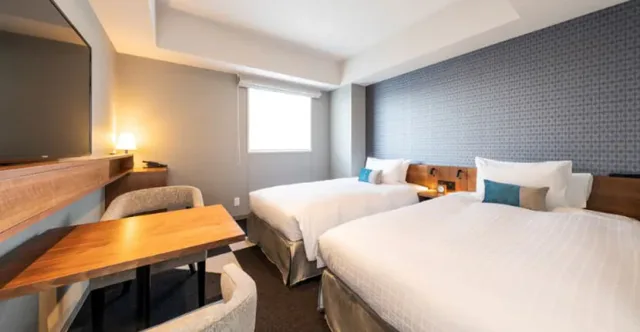
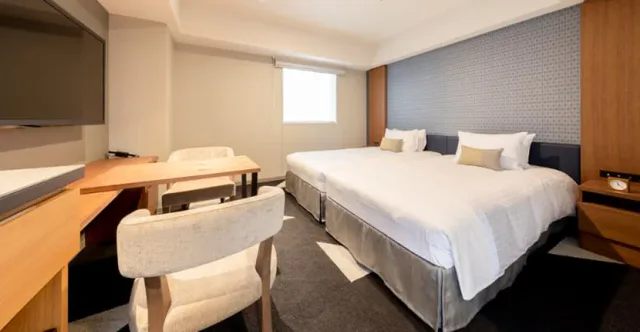
The two room photographs show why an area figure alone cannot settle this. The Superior Twin has its table and chairs close to the foot of the beds; the Residential Twin shows more of the seating and desk zone. Neither photograph measures the remaining circulation space once two suitcases are open. Use them to understand the furniture arrangement, then ask for the exact room type when comparing rates. A generic “Twin” label on a search result can hide the distinction that this whole booking decision depends on.
The extra floor area should be priced as a repeated-use benefit over four evenings, rather than as a vague “premium” feeling. A one-night stay after an Odori event puts far less pressure on the room. The five-to-seven-night Sapporo hotel comparison deals with the longer version of this decision.
Why laundry is a reason to choose the hotel, not the room upgrade
One wash around the second or third night can reduce the base layers carried on a winter trip. The same appliance is present in both Twin categories, so the saving on luggage is equal. If your only upgrade argument is “four nights means laundry,” keep the Superior Twin on the shortlist.
Think about the rest of the route as well. Carrying bulky luggage through several stops can be a bigger problem than fitting it into one Sapporo room; luggage forwarding may remove that problem before check-in. If the trip moves on to Hakodate, the Tokyu Stay Hakodate room decision belongs to that leg rather than being folded into a longer Sapporo booking.
Would you use the kitchenette twice?
The Residential Twin's kitchenette includes an electric cooker. This is useful when a snowy return, a late shopping night or dietary needs make a simple meal in the room genuinely preferable. If the plan is to eat out in Susukino every night, the cooker may stay untouched. Both rooms already have a microwave, so reheating alone does not separate them.
Before paying the four-night difference, name the meals you would prepare. Breakfast ingredients on two mornings, a late dinner and a lunch after a slow start form a plausible use case. “Maybe we will cook” does not. Travellers comparing apartment-style stays elsewhere can use the Osaka Honmachi long-stay guide or the Shinjuku Eastside room analysis, where the surrounding itinerary changes the value of eating in.
The Residential Twin also separates the bath and toilet. That helps when one guest showers while the other needs the toilet, especially on a shared early morning. It does not create two bathrooms. Couples who prepare sequentially may get little benefit; two travellers with the same departure time may use it every day.
Odori access on arrival is different from access every morning
| Movement | Route to test | What can still slow you down |
|---|---|---|
| Light luggage from Odori Station | Exit 2 and walk to the hotel. | Outdoor weather and the actual station exit used. |
| Several large bags | Pole Town toward Susukino, Tanukikoji 4-chome escalator, then the surface walk. | The final section is outdoors; this is not an underground-connected hotel. |
| JR day trip | Travel between Odori and Sapporo Station before the JR leg. | The transfer repeats on the return and can outweigh room-space gains. |
| Rental car arrival | Check the hotel lot and a nearby coin-parking fallback. | Twenty-four spaces cannot be reserved or guaranteed. |
With a light bag, the route from Odori Station uses Exit 2. With several or larger bags, walk through Pole Town toward Susukino, take the escalator at Tanukikoji 4-chome, then allow the roughly three-minute surface walk to the hotel. That route reduces the need to haul heavy bags up stairs. It does not make the hotel connected to the underground passage, and the last stretch can still have winter surfaces.
Arrival happens once; daily travel repeats. Four nights can mean up to eight exits and returns before day trips are counted. For evenings in Odori, Tanukikoji and Susukino, that local position can work well. If three mornings begin with JR day trips, the repeated transfer to Sapporo Station may matter more than the room's extra 4 m². Compare the Station-area hotels and Gracery versus Keio Prelia before committing to Odori.
A winter shopping itinerary can move that calculation back toward Odori. If you expect to return to the room between shopping and dinner, a base near Tanukikoji saves another loaded trip across town. That is a different argument from the four-square-metre upgrade: the location determines how often you can drop bags; the room determines whether those bags obstruct the evening once inside. The Sapporo shopping hotel guide compares these return routes without treating a nearby department store as proof of an easy winter walk.
Winter drivers have a different arrival constraint. The hotel lists 24 parking spaces at ¥2,000 per night, with height and width limits of 2.05 m and 1.8 m. A room booking does not reserve a space. If the lot fills, nearby coin parking is the fallback, with no affiliated overflow arrangement. Check the vehicle dimensions and an alternative before driving into central Sapporo; the separate Hokkaido winter driving guide covers road conditions and the wider route.
Breakfast and cleaning can change a four-night total
| Four-night pattern | Breakfast choice to compare | Reason |
|---|---|---|
| Four unhurried city mornings | Breakfast package against four room-only breakfasts | The 06:30 start and 09:30 last order can fit each morning. |
| Two early JR or airport departures | Room-only against a package covering all nights | Two breakfasts may be paid for but barely used. |
| Grocery breakfasts in Residential | Room-only plus actual food costs | The kitchenette only saves money if it replaces meals. |
| Late arrival then slower middle days | One buffet morning, other mornings planned separately | No need to give every morning the same treatment. |
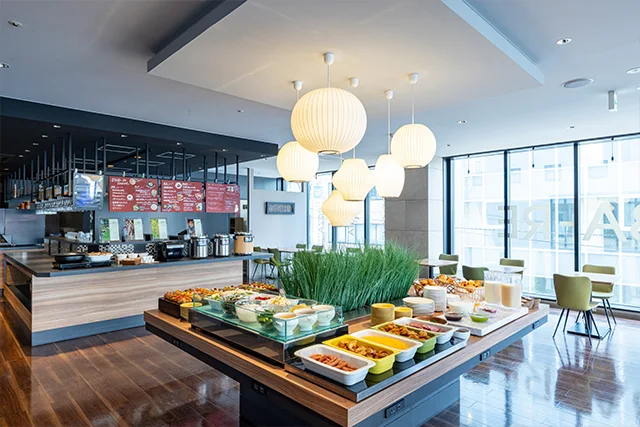
The Japanese and Western buffet runs 06:30–10:00, with last order at 09:30, and is listed at ¥2,100 including tax. A guest leaving early for a JR connection may get no useful breakfast that day. Compare room-only and breakfast-included totals on your exact dates, counting only the mornings you will actually eat at the hotel. An included breakfast is not worth four mornings of value if two departures occur before you can use it.
The cleaning pattern is closer to a long-stay hotel than a daily room reset. For multiple-night stays, simple cleaning on request covers towels, nightwear and trash. A stay of at least seven nights gets full room cleaning once a week. If fresh full housekeeping every day is essential, switching from Superior to Residential does not change that policy. If laundry and a more independent routine are part of the plan, both rooms serve it.
Plan the first and last morning separately from the middle of the stay. A late arrival may leave no time to buy breakfast supplies, making one buffet morning convenient even if the kitchenette will be used later. A checkout morning with a tightly timed train can make the same add-on poor value. For a four-night booking, compare breakfast-included and room-only quotes as totals rather than multiplying the menu price by four automatically. The room choice can stay the same while the meal package changes.
Those differences matter when comparing with a station hotel, not just when choosing between two rooms here. The Tokyu Stay, Solaria and Granbell four-night comparison puts laundry beside JR access and other hotel facilities. A traveller seeking a public bath could also compare ONSEN RYOKAN YUEN SAPPORO; a kitchenette is not a substitute for an onsen stay.
Our seven ratings for a four-night Odori stay
These scores reflect the hotel as a four-night Sapporo base. The room-category choice still matters: a 19 m² Superior Twin and a 23 m² Residential Twin do different jobs.
| Dimension | Our rating | The booking consequence |
|---|---|---|
| Location | The Tanukikoji position helps city evenings; repeated JR outings require a transfer to Sapporo Station. | |
| Room | The 23 m² Residential Twin adds a kitchenette and separate bath/toilet; the 19 m² room is tighter. | |
| Cleanliness | Strong current guest assessments, with the long-stay cleaning pattern made clear before booking. | |
| Service | Current guest feedback is strong; simplified cleaning is a published operating choice, not daily full housekeeping. | |
| Facilities | Both twins have a washer-dryer; the Residential Twin adds an electric cooker. | |
| Food | The 06:30 buffet costs ¥2,100; it loses value on an early JR connection. | |
| Value | The upgrade earns more when two cases, several meals in-room and different morning routines all recur. |
Our overall four-night read is 8.3/10 when the Odori area fits the itinerary. Travellers using JR most mornings should compare a station-area room before paying the Residential upgrade.
Seven checks before paying for Residential
| Decision dimension | What the room information establishes | When it changes the choice |
|---|---|---|
| Space | 23 m² versus 19 m² published area | Two large cases and winter layers remain in the room for four nights. |
| Beds and occupancy | Same two 1,100 mm beds, both for two guests | Neither room solves a three-adult booking; look at Premier Twin. |
| Laundry | Washer-dryer in both rooms | Supports lighter packing, without favouring Residential. |
| Food preparation | Microwave in both; electric cooker in Residential | Count meals you actually intend to prepare. |
| Bathroom timing | Residential separates bath and toilet | Useful if two guests get ready simultaneously. |
| Location and arrival | Odori access; large-bag route via Tanukikoji escalator; final outdoor walk | Repeated JR days can outweigh a better Odori room. |
| Whole-stay cost | Price varies by date and cancellation terms | Divide the exact upgrade total by two guests and four nights. |
Calculate the premium from two quotes with the same dates, two-adult occupancy, breakfast inclusion, taxes and cancellation deadline. The useful figure is (Residential total − Superior total) ÷ two people ÷ four nights. Keep the totals in yen. A dated dollar conversion gives false precision when exchange rates and room prices move.
For a traveller staying only one or two nights, carrying cabin bags and spending most hours out, the 19 m² room usually has the clearer job. For four nights with two large cases, a couple of cooked meals and simultaneous morning routines, the 23 m² room earns its premium in several separate ways. Neither room should be stretched to accommodate a third adult; compare the 26 m² Premier Twin. If the route should move to Asahikawa or Furano after two nights, decide that using the Hokkaido regional itinerary before buying more nights in Odori.
There is no fixed yen amount at which the upgrade becomes sensible for everyone. A traveller with two cases and four evenings in the room uses space repeatedly; a traveller out until late most nights pays for it but barely sees it. Likewise, a kitchenette has measurable value only against meals you would otherwise buy. Set those uses beside the quoted difference, then decide whether the premium is better spent on this room, another hotel's station access or the next stop in the trip. That makes the decision specific to the itinerary rather than a generic hotel rating.
Compare the exact room and cancellation terms
Search the Tokyu Stay Sapporo Odori rooms for your dates. Put Superior Twin and Residential Twin side by side with the same breakfast, tax and cancellation terms; then apply the per-person, per-night calculation above. A lower displayed rate for a non-refundable room is not a like-for-like upgrade price.
If your last night is built around a New Chitose departure, the Sapporo versus Chitose final-night choice may change the length of this booking. If you want the same laundry-led hotel style in another city, compare the Fukuoka Tenjin space-and-laundry trade-off separately; the price of a feature depends on the days spent in each city.
Room specifications and the current breakfast, access, cleaning and parking terms are listed on the room details and hotel information pages. Rates, inventory and operating details can change by stay date.