
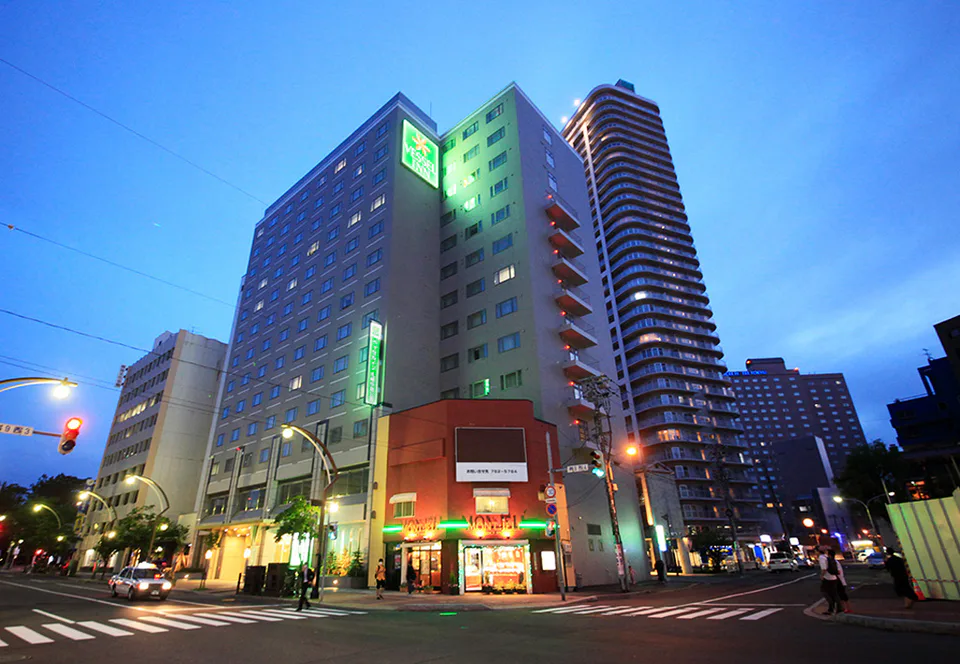
Vessel Inn Sapporo Nakajima Park makes the last stretch of an arrival unusually short: Nakajima-koen Station is roughly a minute away on foot. That helps most after you have reached the Namboku Line. From New Chitose Airport, a rail arrival still goes through JR Sapporo Station and a subway transfer; a suitcase-heavy trip with repeated intercity trains feels different from three nights spent around Susukino. Choose this hotel when its southern Sapporo position will pay you back on more days than it costs you at arrival.
For a two- to four-night city stay, I would put it on the shortlist when dinners end near Susukino, daytime plans use the subway, and the room or seafood breakfast is something you will actually use. I would move the search towards Sapporo Station if each morning begins with a JR train to Otaru or Asahikawa. The station trade-off is clearer beside the Gracery Sapporo room comparison and the Emion versus Keio Prelia luggage test. A one-minute walk at the destination cannot erase a transfer made twice daily.
The location wins after check-in, not necessarily on the airport run
The hotel faces a useful Namboku Line stop; Odori and Sapporo Station are on the same subway line, while the Susukino side of town is within an ordinary evening walk. The hotel's guide puts Susukino at about eight minutes on foot. Treat that as a normal-weather guide rather than a fixed winter promise. Pavements can be icy and the walking pace changes with bags or older relatives. If your whole trip rotates between several Hokkaido bases, settle the route first with the regional Hokkaido itinerary. There is little benefit in choosing a Sapporo hotel before deciding how many nights belong in Sapporo.
The predictable airport sequence is JR from New Chitose to Sapporo, then Namboku Line to Nakajima-koen. It is simple with one small case. Two heavy bags, a stroller or a group that splits up in a busy station can turn the transfer into the largest effort of the stay. Some direct airport buses reach the Nakajima-koen or Susukino area; their limited departures only help if one fits the flight you actually take. They are an alternative to compare, not a reason to assume the transfer vanishes. Travellers collecting a car later should make that a separate decision; winter driving conditions can make a rail-based arrival the calmer first day.
The closest station exit is Exit 2 in the hotel's access directions. It is not automatically the best route for somebody who needs a lift. With a wheelchair, stroller or cases you cannot carry upstairs, check the current station lift route and where it emerges before you leave the platform. This can add a street crossing even though the hotel remains close to the station. Offline maps help, but service changes and bus departures make a working connection useful; the Hokkaido connectivity guide compares the city and rural portions of the same trip.
| Journey | What you actually do | When it feels easy | Where the friction appears |
|---|---|---|---|
| Airport by rail | JR to Sapporo, Namboku Line to Nakajima-koen | Small bags and a single arrival | Subway transfer with winter luggage |
| Airport bus | Use a departure serving the Nakajima-koen or Susukino area | Its timetable matches your flight | Limited services and traffic variability |
| Evening in Susukino | Walk back or take one short subway ride | Repeated dinners in the southern centre | Ice can slow the walk |
| JR day trips | Return to Sapporo Station before boarding the train | One or two occasional rail days | The same connection repeats each morning and night |
Book by beds and bathroom layout, not the largest occupancy number
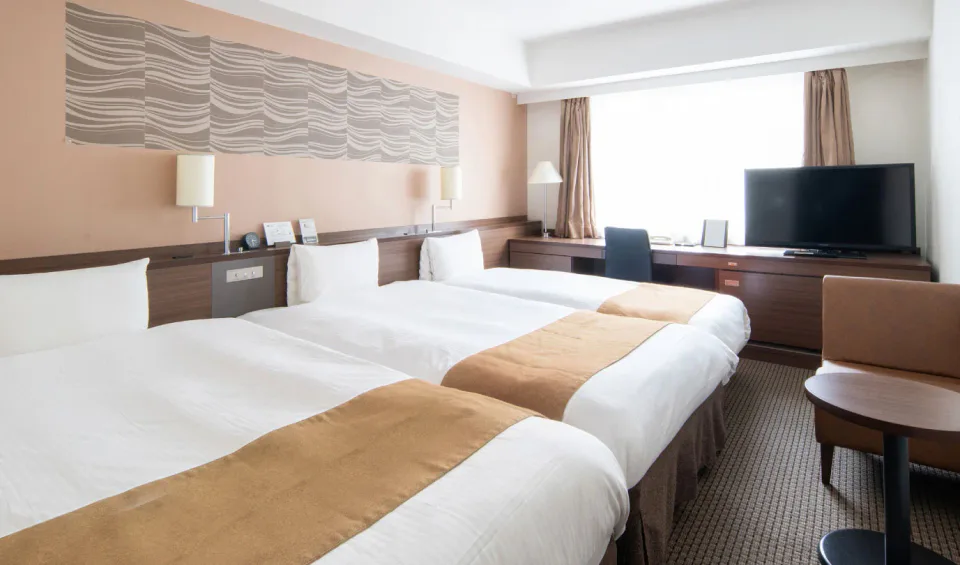
The 23–25 m² Standard Twin has two 120 cm beds and a combined bathroom. It is a sensible first comparison for two adults who are mainly sleeping here and can tolerate the single bathroom space. The published occupancy can be higher than two without adding beds. That makes the precise sleeping arrangement more important than the headline capacity, especially when travelling with children old enough to need their own space. The 21 m² Emion twin is a useful station-side benchmark for whether the extra floor area offsets an additional transfer.
The 28 m² Deluxe Twin still starts with two 120 cm beds, but the bath and toilet are separate. That change is practical on a three- or four-night stay: one person can prepare while the other uses the bathroom. There is also more tolerance for coats, boots and open luggage. It is not a published guarantee that two large 28-inch suitcases can lie open without crossing a walking line, so do not infer that from the floor area alone. A room photo shows an example, not a binding plan for every room. For a winter stay with repeated laundry or a public bath as the priority, compare the four-night Sapporo hotel choices before paying for size here.
The 42 m² Premier Room is the category to check for a group. Two adults have two 120 cm beds; a third brings one 90 cm bed and a fourth brings another. The room may be sold to five or six adults under its occupancy rules, but it does not supply five or six individual beds. The bath and toilet are separate. If everybody needs an individual sleeping surface, four beds is the meaningful ceiling. A family using the hotel's free bed-sharing policy faces a different calculation from four adults who all want their own bed. The Sapporo family-room comparison makes the bed-count question explicit.
| Room category | Published size and beds | Bathroom | Best booking test |
|---|---|---|---|
| Standard Twin | 23–25 m²; two 120 cm beds | Combined bath and toilet | Two adults or family sharing the existing beds |
| Deluxe Twin | 28 m²; two 120 cm beds, even when more guests are permitted | Separate bath and toilet | Two travellers on a longer stay with luggage |
| Premier Room | 42 m²; two 120 cm beds, plus up to two 90 cm beds according to guest count | Separate bath and toilet | Check four-bed arrangement rather than maximum occupancy |
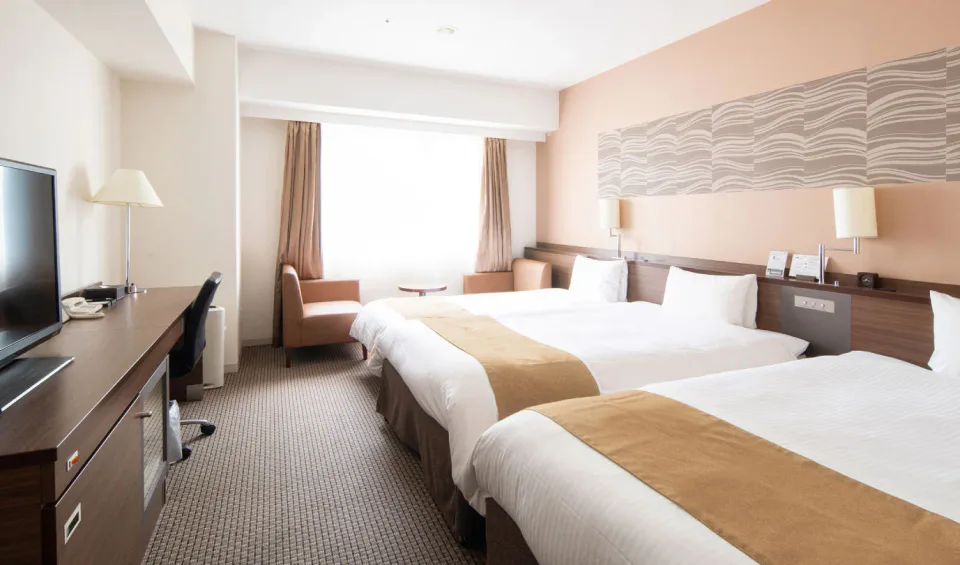
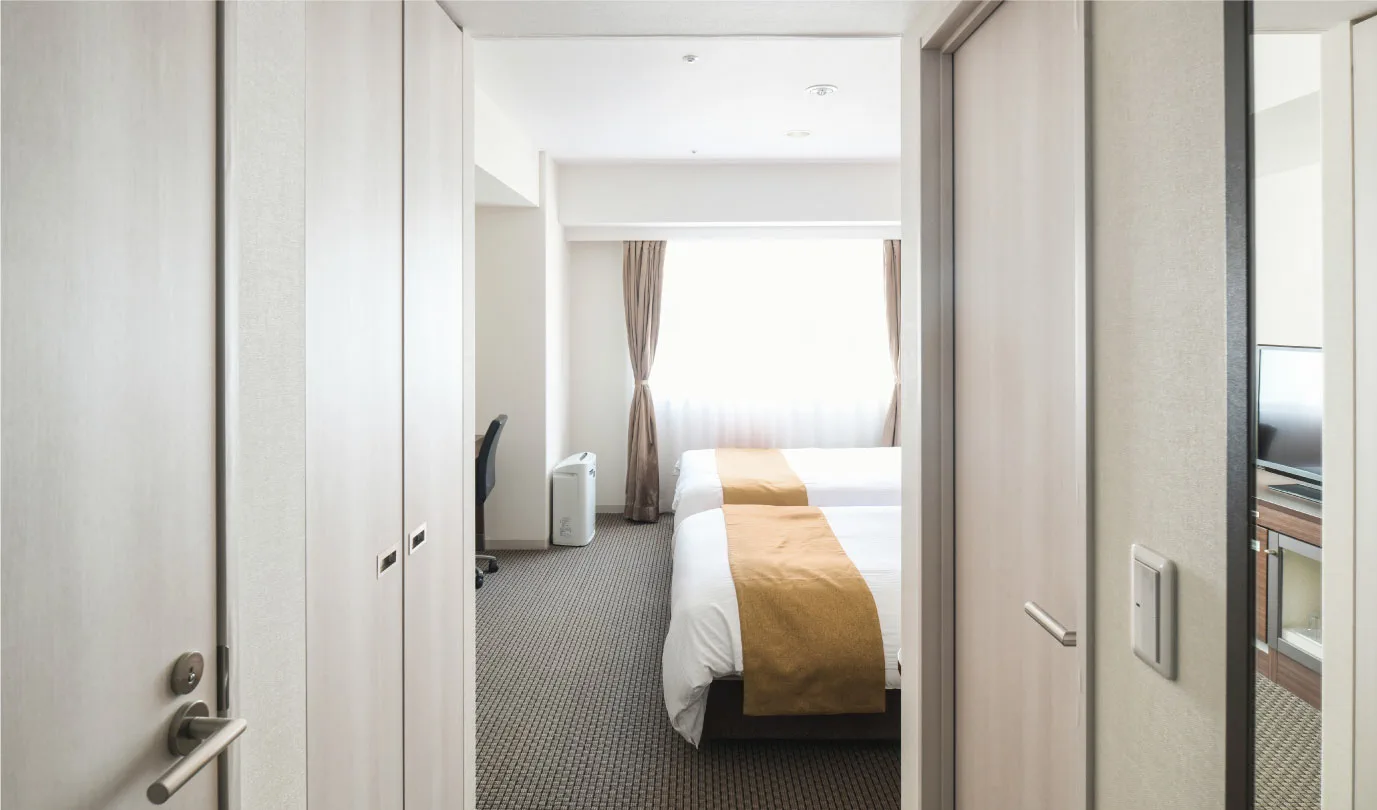
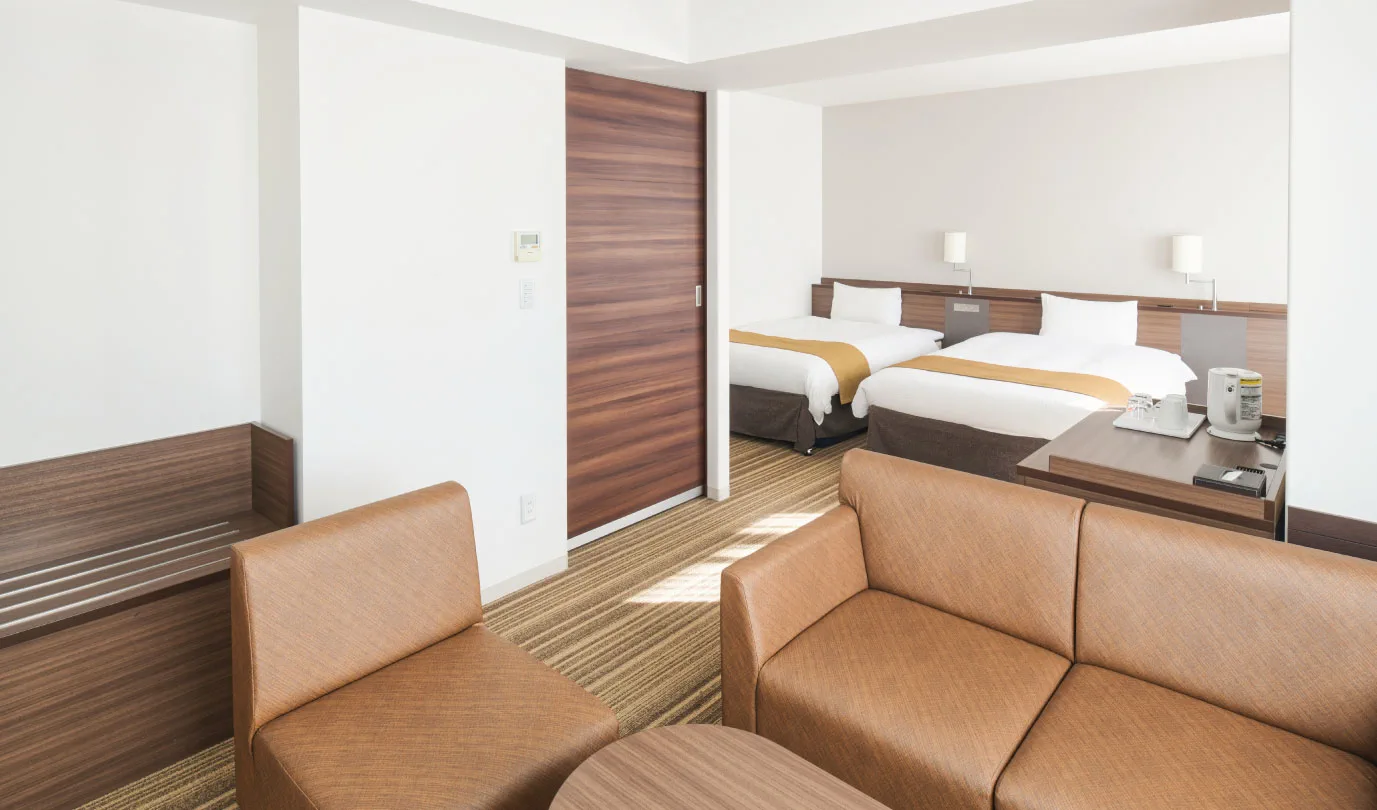
These room photographs show why the category matters more than a broad “twin” filter. The first has a compact two-bed working layout; the larger photographed room adds sitting space; the Premier view shows a lounge area set apart from the beds. Actual allocation and any extra-bed setup follow the booked category and party size. If the room is the main reason to pay more, compare the exact named category before checkout rather than treating every photo on a property's page as your booked room.
The breakfast changes value on November 3
Breakfast runs from 06:00 to 09:30 in the second-floor restaurant. The seafood counter rotates about eight choices, with salmon roe served daily, and the wider spread includes Hokkaido meat, vegetables, regional dishes and morning ramen. This is an unusually clear reason to choose the property if the itinerary leaves room for a real breakfast. It does not help on a day that requires departure at 06:00; opening at six is not the same as having time to sit down and eat before a distant train.
There is a dated price change to account for. Through reservations before November 3, 2026, the listed breakfast price for staying guests is ¥2,500 per adult and ¥1,300 for ages six to twelve; children five and under are free. For reservations from November 3, the listed amounts rise to ¥3,200 and ¥1,600 respectively, with the same free age group. For two adults across four mornings, that difference is ¥5,600. Compare the breakfast-inclusive room rate with the room-only rate for your actual dates and decide how many mornings you would use it. The ticket arrangement and final hotel total matter more than whether a review describes the spread enthusiastically.
One breakfast morning can sit alongside a later city day such as Sapporo Autumn Fest; a long excursion day may be better without prepaid breakfast. The Odori beer garden route is a summer example of why evenings, not breakfast alone, can favour this side of town. Neither seasonal event should be treated as open year-round. Since June 2026 the hotel has also offered a milk soft-serve welcome service for staying guests. It is a small addition to a stay that already fits; it should not decide the transport base.
Family policy and parking can change the real total
Children aged eighteen or younger can share an existing bed without an accommodation charge when staying with a parent or grandparent under the hotel's family policy. The child has no extra bed by default. A child who needs a separate bed is charged at the adult rate, and one adult with one child in a Twin Room is priced as two adults. Breakfast for bed-sharing children follows its own age rule; it is not included simply because the room stay is free. These conditions are capable of making a Standard Twin good value for one family and a poor fit for another. Count bodies, beds and breakfasts separately before comparing two offers.
For a self-drive trip, the hotel's multistory parking is first come, at ¥1,500 per night in the current access details. Height and size limits apply, and overflow parking is arranged and paid for by the guest. A large hire car or a late arrival should prompt a parking check before a room purchase. On a winter route with a car every day, the bigger decision is whether a city-centre base is worth repeated parking, not merely whether a bay exists. The six Hokkaido bases and five-day road and rail itinerary show trips where another overnight location may remove more travel than a different Sapporo hotel.
| Cost or rule | What to compare before booking | Why the cheapest headline may mislead |
|---|---|---|
| Breakfast | Meal inclusion, booking date and adult/child count | The listed price rises for reservations from November 3, 2026 |
| Children | Existing-bed sharing or independent bed | Free sharing does not create another bed or free breakfast |
| Parking | Vehicle dimensions, arrival time and overflow option | The first-come garage adds a nightly charge |
| Room | Named category, number of made-up beds and bathroom layout | Occupancy is not the same as bed count |
| Cancellation | Deadline and charge on the exact dated offer | The lowest rate may be less flexible |
Our seven Vessel Inn Nakajima Park ratings
These marks use an evening-led Sapporo stay with subway departures. Airport transfers, winter luggage and the actual bed count still need their own checks.
| Dimension | Our rating | The booking consequence |
|---|---|---|
| Location | Nakajima-koen is close and Susukino is walkable; the airport rail trip needs a change at Sapporo. | |
| Room | The 23–42 m² options vary in bathing layout and beds; occupancy alone does not promise another bed. | |
| Cleanliness | Current cleanliness signals are strong, though winter entry and luggage handling add practical friction. | |
| Service | Staff assessments are strong; verify the step-free station route for a heavy-case arrival. | |
| Facilities | Parking is first-come with a size limit and fee; room bathing has fewer extras than a bath-led hotel. | |
| Food | The 06:00–09:30 seafood breakfast is a material reason to choose the hotel on a free morning. | |
| Value | The bed-sharing policy can help families only when the reserved room is spacious enough. |
Our overall city-stay read is 8.5/10. A route with daily JR departures or large cases may justify paying for a station-front room instead.
The overall mark assumes a city stay with long evenings around Susukino. A JR-heavy itinerary would put more weight on the first and third rows than a city stay with long dinners in Susukino. Two adults who deliberately reserve the larger bathroom layout may care more about the fourth row. A family may save on bed-sharing but still decide that a room with one more real bed elsewhere is better. For a wider winter choice set, the five- to seven-night Sapporo comparison, GRANBELL hot-spring hotel and Sapporo Grand underground route test quite different ways to solve the same cold-weather day.
Three nights make the trade-off visible
Imagine arriving from the airport once, spending a full city day around Odori, and using a third day for a shorter outing before another Susukino dinner. After that initial transfer, the close subway stop and short evening walk recur. The breakfast has at least two usable mornings, and a Deluxe Twin's extra space and separate bathroom can pay back across the stay. For a side trip to Jozankei, check the dated bus route rather than assuming every excursion must begin at JR Sapporo Station.
Change only the itinerary: arrive late with two 28-inch cases, leave before breakfast for a train north on two mornings, and return near midnight. The hotel remains one minute from Nakajima-koen, yet the benefit is used mostly at bedtime while the transfer repeats. Furano's possible hotel bases show why some regional days deserve an overnight away from Sapporo rather than a daily commute. The seasonal Hokkaido route makes the same point: base changes can matter more than a breakfast award.
A family variant adds another question. Two adults and a younger child who shares one of the existing twin beds may use the policy comfortably. A group of four adults may need the Premier setup with two added 90 cm beds, not a cheaper twin that merely lists four occupants. If somebody needs to be close to lifts, solve the subway access route before deciding that the hotel's proximity eliminates stairs. For parent travel, the Sapporo hotels with parents guide keeps that distinction in view.
What I would compare before reserving
Use the same travel dates, party ages, named room category, bed setup, breakfast inclusion and cancellation deadline for each price. Check the total with the breakfast change where relevant and add parking only if you will actually bring a car. An apparent bargain in the Standard Twin is not comparable with a Deluxe Twin if a separate toilet is the reason you wanted to upgrade. A Premier room with four made-up beds is not comparable with a generic “sleeps six” search result. The room and meal fields should be visible on the final offer before you pay.
If this hotel fits, compare stays around Nakajima Park for your dates. Keep one Sapporo Station option beside it and count how many station transfers each itinerary would produce. The JR Tower Nikko versus GRANBELL choice and Yuen Sapporo public-bath stay are alternatives when direct JR access or a bath matters more than the Nakajima Park location.
For city-centred nights, this is a credible booking: near the subway, close to Susukino, with room sizes and breakfast that can add genuine value. For daily JR travel or a heavily loaded winter arrival, put a station-area hotel into the same comparison. That is the decision the one-minute claim cannot make on its own.
Compare this hotel on your exact dates with a Sapporo Station alternative. Keep the same room capacity and breakfast choice in both searches; the winter transfer matters more if JR is used each morning.