
A family choosing between Hilton Tokyo Bay and Toy Story Hotel is buying two different kinds of Disney-area time. Toy Story's courtyard, blue-sky bedrooms and Disneyland Happy Entry can turn hotel hours into part of the park holiday. Hilton offers a broader room ladder, including a Family Happy Magic category that can hold five or six, and more ways to spend a non-park afternoon. The choice begins with the actual sleepers and the park schedule; neither hotel name makes a four-person room equally comfortable for every party.
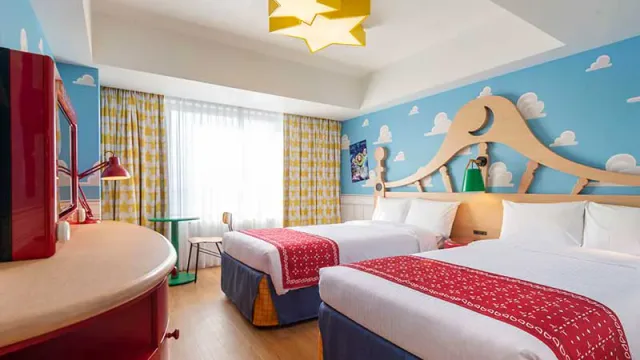
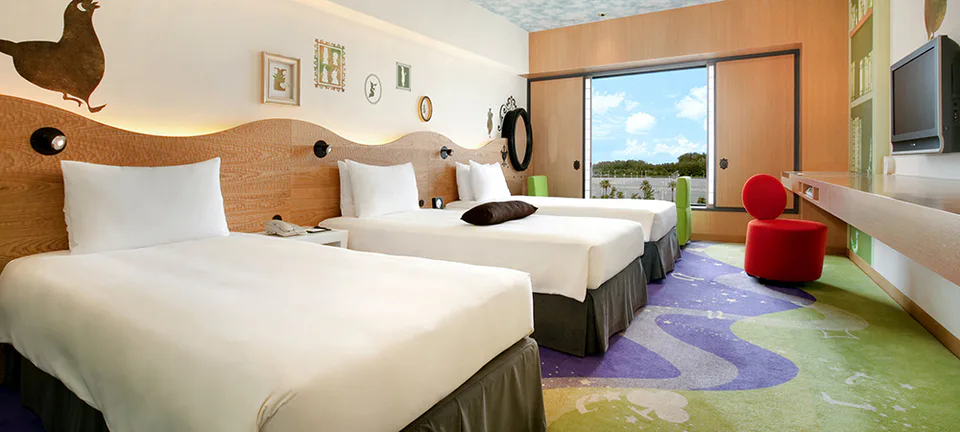
The four-person Toy Story room is not a conventional four-twin layout. It has two regular beds, a third trundle and a fourth pull-down. The published bed-size table lists a regular mattress at 110 × 203 cm and both auxiliary types at 85 × 185 cm. Those narrower third and fourth positions can work well for younger children but need deliberate assignment in an adult party. Open the diagram for the exact booked category, particularly if bed equality matters. The four-person Disney hotel guide compares other bed layouts when this one is unsuitable.
The real vetoes are party size and bed position
| Family requirement | Room or hotel to inspect first | Limit to keep visible |
|---|---|---|
| Two adults and young Toy Story fans, up to four guests | Toy Story four-person Standard or Superior | Fourth position is a pull-down; compare 29 and 35 m² |
| Five or six in one room | Hilton Family Happy Magic | Bunk positions and one bathroom may not suit every guest |
| Four adults wanting similar sleeping surfaces | Broaden the Bayside hotel search | Do not infer bed equality from an occupancy label |
| Disneyland morning with usable Happy Entry | Toy Story Hotel | Benefit is not available on check-in day |
| Only DisneySea, especially with a rest afternoon | Compare actual room and facility value | Toy Story does not provide DisneySea Happy Entry |
| Pool, dining or hotel downtime central to the plan | Hilton | Some facilities cost extra or operate seasonally |
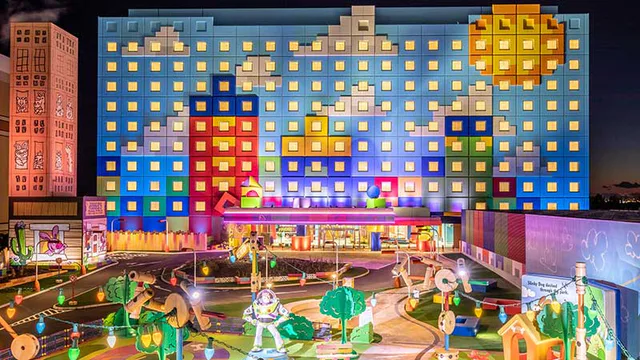
Toy Story Hotel has 595 rooms: 575 Standard and twenty Superior. Its usual four-person Standard is around 29 m², with some view categories at 28 or 30 m². Superior is 35 m², while an accessible Superior category has a different 55 m² specification and should not be assumed available in a generic search. A four-person room uses two full-width regular beds, the narrower trundle and a pull-down. Assign both auxiliary positions deliberately, especially for tall older children or adults. The hotel's theme does not enlarge those sleeping surfaces overnight.
For two adults and two smaller children, that arrangement can be entirely workable. Toy Story's surfaces and Andy-inspired detailing are most valuable when the family actually spends time in the room and public areas. If everyone returns after closing and immediately sleeps, the premium buys far fewer waking hours of immersion. A 35 m² Superior may leave more room to open cases and move around a child than a 29 m² Standard, but check the full rate difference. The larger category does not replace the pull-down with a fourth standard-width bed. Disneyland Hotel versus Toy Story is a useful next comparison if Disney-owned atmosphere and morning access are the priorities.
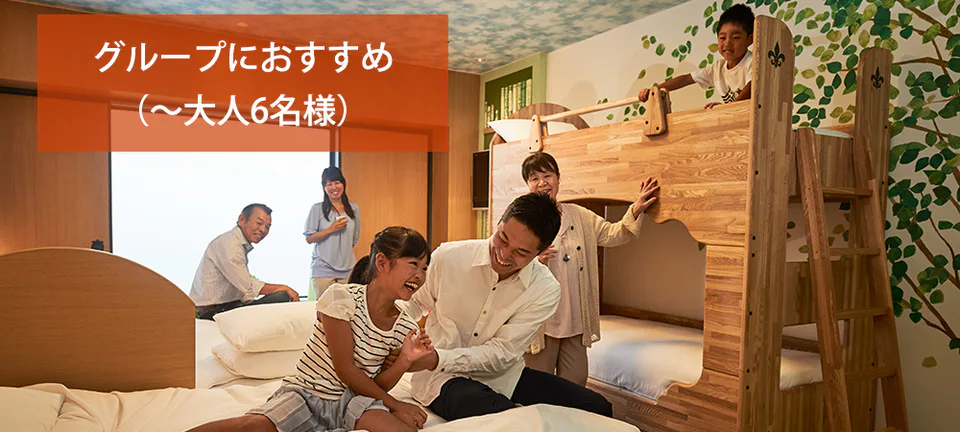
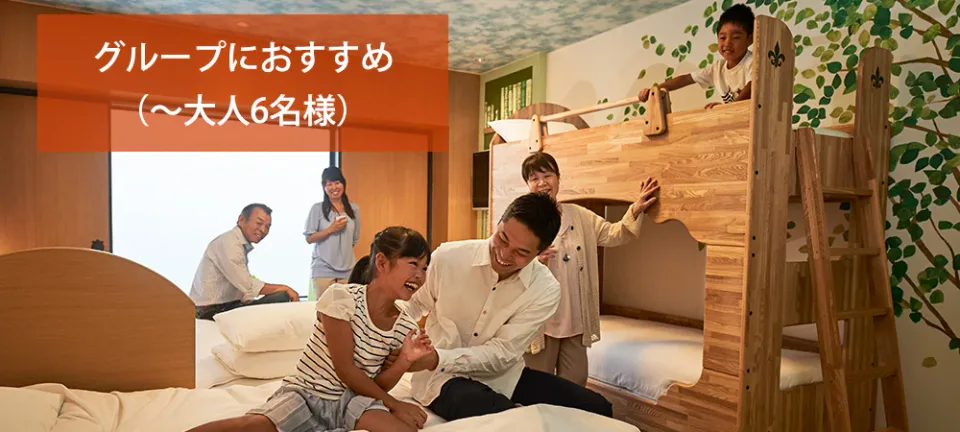
Hilton Tokyo Bay's Happy Magic rooms are generally around 35–40 m² and suit parties of three or four. Its separate Family Happy Magic Park and Ocean listings accommodate five and six respectively. That larger nominal capacity is the clear reason to check Hilton when Toy Story would require two rooms. It comes from a different mix of regular and bunk sleeping, not six equivalent adult beds. Hilton restricts the upper bunk to guests aged ten or older. The Hilton room-by-room comparison explains the Park/Ocean capacity split and how a three-person party can avoid paying for unused bunk space.
If the group includes grandparents, adults who cannot climb, or a child under ten expected to take the upper level, the room's “sleeps six” label does not settle the question. Decide the actual person for every position. Five guests in one room also share one bathing and sleeping environment; two rooms may cost more but give separate bedtimes and bathrooms. For four adults, search for four acceptable permanent beds rather than forcing either themed property to win. Grand Nikko versus Hilton includes larger multi-bed categories, and the Bayside four-person guide helps test bed equality across properties.
Disneyland benefits belong to the stay date, not the logo
Toy Story Hotel is a Disney Hotel and currently appears on the Tokyo Disneyland Happy Entry list. Hilton is a Tokyo Disney Resort Official Hotel, a different category that does not receive that early-entry benefit. Happy Entry is generally unavailable on the day you check in and can have excluded dates. A single Toy Story night whose only Disneyland ticket is on check-in day therefore cannot be justified by that privilege. Confirm the Disney eligibility calendar, then map the hotel night to the park day. The Happy Entry value test explains when that early start materially changes a family's park morning.
DisneySea is a different comparison. Toy Story is not currently on the DisneySea Happy Entry hotel list; Hilton also has no Happy Entry. Toy Story guests do have a separate Fantasy Springs Entrance arrangement: with park admission and proof of stay, they can enter or re-enter DisneySea through that entrance from 10:00, and use it to exit under the posted conditions. That is a routing benefit, not early entry. If your purchase is specifically for DisneySea Happy Entry or a park-integrated hotel, MiraCosta versus Fantasy Springs Hotel addresses the relevant properties.
The importance of these privileges depends on park order. One night before a Disneyland day may put a usable Happy Entry morning after check-in; one night after that day may not. The one- versus two-day park plan helps set the sequence before a hotel rate is compared. A two-park holiday should not overpay for a benefit used on neither chosen date. Toy Story immersion can still justify a stay, but call that the reason rather than relying on an inapplicable early-entry claim.
The Bayside Station difference grows with repeated returns
Neither hotel places guests at a park gate. Both use the Disney Resort Line for the final park leg. Toy Story Hotel stands near Bayside Station, so the family can walk to the monorail. Hilton's standard guest route uses a complimentary Disney Resort Cruiser between the hotel and Bayside Station, then the Resort Line. For one morning departure and one late return, this additional shuttle may be minor. For a toddler nap, medication break, wet clothes or a split-family schedule, it repeats with every park-to-room crossing. The Disney-versus-Tokyo base decision asks whether any Bayside stay earns its premium for your number of returns.
Do not equate “near the resort” with “park-front.” A family leaving the park to rest still has the monorail ride and station transition. If everyone will stay in the park from morning to close, repeated-return convenience may have no value at all. Then the room's sleeping quality and total price carry more weight. The split-stay timing guide can prevent a hotel move from eating the very rest window the move was meant to create.
Hilton facilities need time and sometimes another payment
Hilton has multiple restaurants and bar options, indoor pool, fitness and spa infrastructure, plus a seasonal outdoor Garden Pool product. These can absorb a rain-affected afternoon or a second hotel evening. They should be priced only when the family intends to use them. Pool inclusion is rate- and status-sensitive: Hilton's room and fitness notices do not consistently describe it as free for every standard guest, and special garden-pool access has its own reservation and admission terms. Check the selected booking rather than making the pool a free default benefit. The Hilton themed-room guide separates the actual bedding and facility questions.
The seasonal outdoor pool is particularly easy to overcount for a winter or full-park itinerary. Restaurants may help when a younger child cannot handle another late meal line, but a family leaving before breakfast and returning after dinner may use none of that capacity. Hilton's original children's-theme rooms add their own atmosphere without being Disney-owned; the value is a mix of room fit and resort facilities, not a substitute for Toy Story's exact theme. The Disney, Official and Partner categories explains which privileges belong to each tier.
One night straddling two intense park days gives little awake time for either hotel's extras. Two nights can create a second evening and a planned rest interval. Hilton facilities then have a chance to matter; Toy Story's grounds can become part of the children's holiday rather than a quick photograph at check-in. Ask how many hours the family will be awake on the property and how many mid-day returns are actually scheduled. “Two nights” is not evidence of hotel time if both days are spent entirely in the parks.
Suitcases make room area a working constraint
Four travellers arriving with large cases, a stroller and park purchases need space to open luggage and prepare simultaneously. Toy Story's 29 m² Standard and 35 m² Superior are meaningfully different for that routine, even though both are four-person rooms. Hilton's 35–40 m² Happy Magic range gives another layout to inspect. The published square metres do not reveal exactly how much unobstructed floor remains with auxiliary beds deployed, so look at the specific floor plan and current room photos. Grand Nikko's larger Deluxe Family room is relevant when four large cases or equal beds make Toy Story's compact categories less appealing.
For five or six, the more important comparison is one Family Happy Magic booking against two Toy Story rooms, with the same travel dates, meal plan, tax, cancellation terms and counted adults or children. If two rooms make supervision harder or split a small child from a parent, that has practical value. If a six-person family needs more than one bathroom and separate sleep zones, the second room may be worth paying for. There is no sensible “Hilton price premium” until the two bookable configurations solve the same problem.
One January 2027 date overrides the usual comparison
Toy Story Hotel says it will close on 18 January 2027 for thermal-energy-supply work, with related changes on the nineteenth. Its notice asks guests to leave by 13:00 on the closure day, with baggage and other services ending earlier. Hilton separately announces a hotel-wide electrical-inspection shutdown from 15:00 on 18 January until 07:00 on 19 January. A stay touching either date needs a live operations check before considering them as ordinary alternatives. This is a date-specific exception, not a recurring weekly closure. The notices are at Toy Story Hotel and Hilton Tokyo Bay.
Hilton also advertises renovation of its fitness facility during early 2027, so a future winter booking should not assume every advertised amenity is available. Future pool hours, room inventory and Disney benefits can change independently of the dated closures. Check the exact stay date, not a generic hotel description, once the room type and park order are settled.
Seven practical dimensions for the final comparison
For four guests, Toy Story’s Disneyland benefit can matter more than its small room. Hilton’s family bunk rooms become relevant at five or six guests, provided the date is outside its announced power shutdown.
| Hotel dimension | Toy Story Hotel site score and basis | Hilton Tokyo Bay site score and basis |
|---|---|---|
| Location | 8/10 — The Bayside Station walk is direct, but guests still ride the Resort Line to the parks. | 9/10 — The Resort Cruiser reaches Bayside Station, and a walk is possible for guests travelling light. |
| Room | 7/10 — Four-person rooms have two full beds, a trundle and pull-down position; the 29 m² Standard and 35 m² Superior differ for open cases. | 8/10 — Happy Magic is around 35–40 m², while Family Happy Magic can fit five or six through bunk positions, subject to age and comfort. |
| Cleanliness | 8/10 — Current guest accounts support a good impression of room upkeep, but the available category sample is smaller than Hilton’s. | 9/10 — Recent large-sample guest cleanliness feedback is strong; the precise room and bed plan still need inspection. |
| Service | 9/10 — Guest service reports are positive; Disneyland Happy Entry depends on an eligible non-check-in day. | 9/10 — Current staff feedback is strong, yet Hilton is an Official Hotel and does not provide the same Happy Entry benefit. |
| Facilities | 7/10 — The themed grounds reward children’s hotel time, with a narrower pool/fitness offer than Hilton. | 8/10 — Pools, fitness and other facilities broaden a rest afternoon, though access can be seasonal or extra-cost. |
| Food | 7/10 — Lotso Garden Cafe supplies themed dining; compare actual meal inclusion and the child’s interest. | 8/10 — More restaurant choice supports a hotel evening; breakfast and pool-day meals require a full-rate comparison. |
| Value | 7/10 — For a four-person Disneyland morning that uses Happy Entry, the Disney benefit can justify a premium. | 7/10 — For five/six guests or a DisneySea-focused rest day, a valid Family Happy Magic can be the better one-room purchase. |
| Overall | 7.6/10 — strongest for a four-person Toy Story family using an eligible Disneyland Happy Entry morning. | 8.3/10 — broader occupancy and facilities, provided the family uses them and does not expect Happy Entry. |
For two adults and younger children who will use a Disneyland Happy Entry morning and enjoy Toy Story's space outside the parks, Toy Story Hotel has a coherent reason to cost more. For five or six travellers wanting one booking, or a family planning resort downtime, Hilton has a stronger first look. Four adults who insist on comparable adult sleeping surfaces should test other Bayside rooms before trying to award this comparison a winner. DisneySea-only visitors should value Toy Story's 10:00 Fantasy Springs routing accurately, without treating it as Happy Entry. The Grand Nikko/Hilton decision and the resort-versus-city base test expand the shortlist when either hotel fails the actual bed or travel requirement.
Compare Bayside Station family rooms for the real guest ages and dates. First write down the number and type of bed positions each traveller will accept, then the park-day order, room returns and time available for hotel facilities. Match breakfast, cancellation and all guests in the price. This prevents a cheap nominal four-person rate or a costly theme premium from hiding a room that the family cannot use comfortably.
Further Disney-area room decisions
Tokyo Disney hotels for families of four · Tokyo Honeymoon Hotels: Don’t Pay for the View Until You Pick the Night You’ll Stay In · Staying in Tokyo for 5–7 Nights? Don’t Pick a Hotel for the Washer · Tokyo Bay Private Cruise 2026: Yacht, Yakatabune or Dinner Cruise? Start With Group Size · Lake Biwa Otsu Prince Hotel: Is the 36.2m² Lake View Worth the Shuttle? · Yokohama or Tokyo: Where to Stay for Two Nights · Okutama Rafting 2026: Tokyo Full-Day Tour vs Local Half-Day — You're Paying for Transport · Where to Stay in Tokyo for First-Time Visitors: 6 Areas · Tokyo Autumn Leaves: Timing for Mt. Takao, Okutama, Gardens and Ginkgo · Chatan Hotel Comparison: Hilton vs Vessel Campana vs LeQu for Two Nights · Best Japan eSIM for Tokyo, Osaka and Kyoto: Data and Hotspots · Tokyo Split Stays: For 5–7 Nights, I’d Only Move Hotels in These Three Cases · Where to Stay for Tokyo Events: Dome, Ariake or Makuhari