
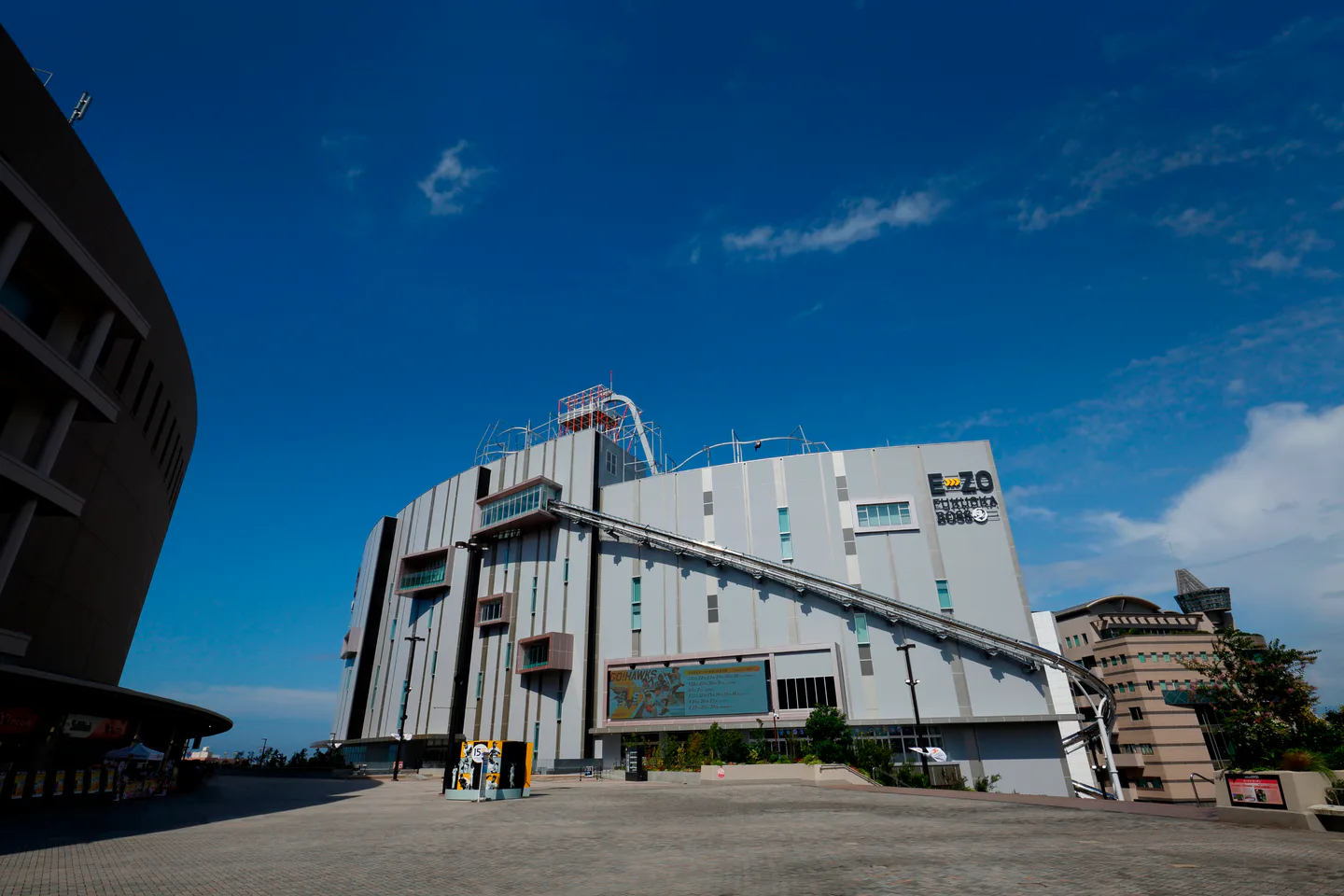
sube-ZO is a short rooftop thrill at BOSS E・ZO FUKUOKA beside Mizuho PayPay Dome. The slide tube travels about 100 metres down the outside of the building from roughly 40 metres up. Its whole appeal is a brief rush after the nerves at the start, not an afternoon of rides. That makes the current ¥1,400 regular or ¥1,700 peak ticket easiest to justify when Momochihama, a game, a concert or another west-side stop has already brought you to the area.
A dedicated trip from Hakata or Tenjin changes the equation. You must reach the Dome district, walk in, check in upstairs, store your belongings, wait, slide once and travel back. Even though the descent itself is quick, that chain can take a meaningful part of a Fukuoka day. If this is a first visit, give larger city decisions priority: how many days to stay, where the three-day route goes, and whether the coastal district belongs in it.
↔ Scroll table left or right
| Your situation | sube-ZO decision | Reason |
|---|---|---|
| Already near PayPay Dome with a flexible gap | Consider one descent | The extra journey is small and the short ride can fit the area day |
| Cross-city return solely for the slide | Usually skip | Transport and preparation can dwarf the ride |
| Anyone misses an age, height or weight threshold | Do not buy | Safety eligibility is enforced, not waived for a willing guest |
| Unsettled weather | Keep it conditional | Rooftop operation can stop even during posted hours |
| Concert or game at the Dome | Fit a timed slot around the event | The hardest logistics are entry, crowds and the journey home |
| You expect a long ride for the fare | Choose another attraction | The 100-metre tube is intentionally over fast |
The ride begins before anyone moves
From the rooftop, the height is visible before launch. A clear section of tube lets in the outside view; farther along, the descent becomes darker and more enclosed, with turning, light and sound intensifying the sensation. The fast passage is the point. It is not a roller coaster with several minutes of motion, and the name's 100 metres describes the path rather than a long duration. Someone afraid of standing at height may find the start more difficult than the dark spiral. Someone uncomfortable with enclosed spaces or turning may feel the reverse.
This distinction is useful before buying. “Afraid of heights” does not tell the whole story: the trigger could be looking down from the start, surrendering control as the bag enters the tube, speed, darkness or tight space. Visitors should not be talked into a ride because the tube hides the ground later. If the height at the launch is the problem, the approach itself remains part of the experience. A group looking for a more substantial paid outing should compare Marine World Uminonakamichi's half-day or a different full Fukuoka activity rather than measuring sube-ZO by a roller-coaster standard.
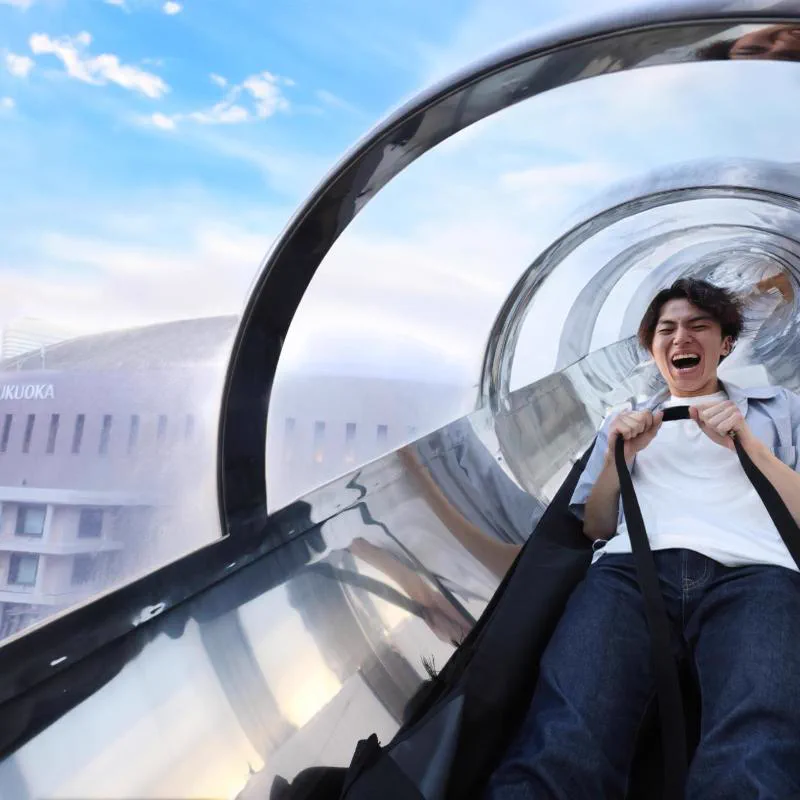
The retained photograph shows a rider inside the transparent section of the tube. It illustrates the exposed-feeling part near the exterior, not a claim that a future ride will have identical weather, speed or view. The venue's capture video, included with current sube-ZO tickets, records the moments before and after the descent and combines them with common slide footage. It should not be confused with an uninterrupted personal camera recording of the entire 100 metres.
Eligibility comes before ticket price
Riders must be aged 10 to 64, at least 130 cm tall and at least 35 kg including clothing. A child who is nine, an adult who has reached 65 or anyone below either physical threshold cannot solve the issue by signing a waiver. Staff may remeasure or decline participation when a safety condition is not met. Children aged 12 or younger require an accompanying adult guardian, 18 or older, with consent; the guardian need not buy a ride merely to accompany a child who qualifies.
Additional restrictions matter even when all three numbers fit. The venue excludes guests affected by alcohol, pregnancy or specified heart conditions, as well as anyone unable to walk independently or correctly wear the slide bag. For younger or lighter riders, helmet and arm protection requirements also apply: the guidance identifies participants aged 15 or younger or weighing 45 kg or less. Read the full conditions for the actual rider before paying; a rough guess about a child's height or an older traveller's eligibility is an avoidable loss on a product that cannot simply be changed after purchase.
Clothing can become an entry obstacle. Skirts and dresses are discouraged; short sleeves may require borrowed arm covers. Loose sandals, platform shoes or heels can mean changing into the operator's loan shoes, while wet, badly soiled or studded footwear may be unsuitable. Phones, cameras, outerwear, scarves and loose jewellery go into storage. Jewellery that cannot be removed can prevent the ride. For a one-descent attraction, trousers, secure shoes and minimal accessories can save a disproportionate amount of preparation time.
A family day in Fukuoka needs another plan for anyone who cannot ride. Family hotel choice and KidZania's much longer programme involve different ages and time commitments. Do not bring a younger sibling to the Dome district solely on the assumption that the slide will accept them once they see it.
Check-in and waiting are longer than the descent
The normal flow starts at the eighth-floor counter. Show the ticket, take the supplied locker coin, put away loose items, complete the safety checks and wait for the assigned turn. The rooftop start follows. The ride may finish quickly, yet the whole attraction does not fit into a five-minute itinerary slot. A game day, holiday or concert can make the building and nearby routes busier. If you are visiting for an event, settle its admission and timing first; sube-ZO should fit the remaining window rather than put an expensive show or game at risk.
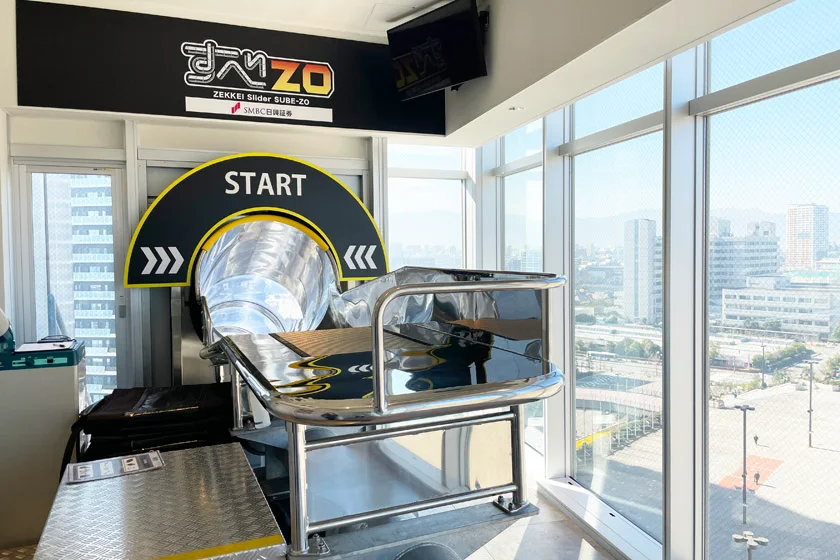
The image of the start platform shows the gate, metal slide and city view through the windows. It does not show the lockers or prove a particular queue length. A visitor may spend more time checking restrictions, storing belongings and waiting than inside the tube. The PayPay Dome concert hotel guide deals with a more consequential part of an event day: where the crowd goes after the venue empties.
Ticket handling is strict. A completed purchase ordinarily cannot be changed, cancelled or reissued; arriving outside a specified entry time can mean losing access. This is a stronger reason to wait until the area's schedule is settled than the ¥300 difference between Regular and Peak dates. A visitor who already has a fixed game or concert can choose a workable slot with a buffer. Someone loosely considering Momochihama in poor weather should not buy a tightly timed rooftop ride simply because an opening exists.
What ¥1,400 or ¥1,700 now includes
The current calendar divides sube-ZO into Regular ¥1,400 and Peak ¥1,700 dates. The higher fare is not a signal that the tube is longer or that the video is different. Since 30 March 2026, tickets have included the experience-video service. Automatic footage from before and after the slide is combined with shared footage from the ride; the guest receives a QR code. The download window is seven days and the published limit is up to 30 downloads. The person on the ticket does not appear in a continuous first-person recording through the whole tube.
That video can matter because phones and personal cameras are not allowed down the slide. It gives a short experience a record without encouraging unsafe filming. Download it within the stated period rather than assuming the QR link is a permanent archive. The operator describes specific remedies if a video cannot be downloaded on site; that is separate from the ordinary rule against cancelling a completed ticket because a traveller changed their mind.
Compare Regular and Peak only after the day itself makes sense. Moving a good Dome-area plan to a less useful date for ¥300 can add transport, waiting or a missed activity worth far more. The Fukuoka budget hotel comparison makes a similar point about saving a headline amount while adding daily friction; the local transport guide helps decide whether a pass actually lowers the cost of a west-side journey. Neither should be bought around one rapid descent alone.
Weather is the variable a reservation cannot control
sube-ZO is a rooftop attraction. The operator warns that sudden weather changes can stop it during the hours shown on the schedule. A tube attached to a building is not a rainy-day substitute for indoor sightseeing. If the forecast is poor across the day, an indoor Fukuoka route is a sturdier starting point; hotel access in rain may matter more than reserving any rooftop activity.
On a mixed forecast, keep the broader Momochihama or Dome plan independently worthwhile. The slide can be an addition if operations and the ticket calendar work when you arrive. If it is the only reason for crossing town, a weather stop strands the day. Other E・ZO attractions may operate indoors, but they use their own products and suitability rules; do not assume a sube-ZO ticket becomes admission to a different floor when the roof closes.
Getting to the Dome changes the value calculation
The building stands beside Mizuho PayPay Dome in the Momochihama district. From Tojinmachi subway station, allow roughly fifteen minutes on foot before entering the venue. A visitor starting in central Fukuoka must add the subway or bus, the walk, and the return. One quick descent is a weak reason to spend that travel time if no other west-side stop appeals. Fukuoka Tower is another attraction whose value changes when the area is already on the route. A short coastal walk, Dome event or tower stop can make the same transport leg serve several purposes.
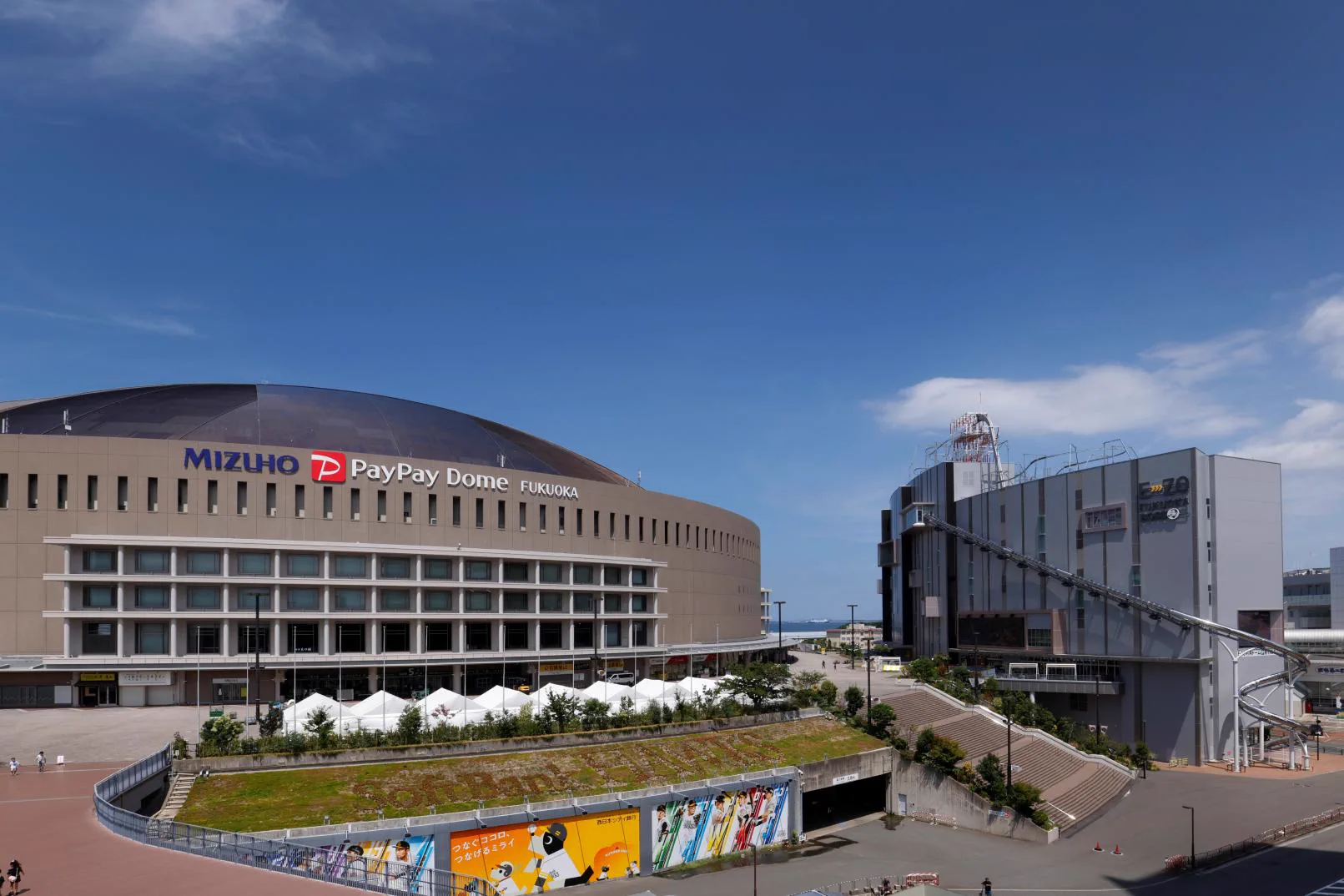
The retained wide photograph shows the Dome on one side and the E・ZO building with its outdoor tube on the other. The proximity explains why a game or concert day can absorb the slide with little extra travel. It does not mean the post-event journey home is short. Fukuoka's hotel-location decision and Hakata versus Tenjin should reflect the whole trip, not just this west-side afternoon.
Visitors staying in Tenjin may find the Dome side easier to combine with an early dinner than someone arriving from Hakata between timed rail commitments. A traveller whose Fukuoka days are already crowded with Dazaifu or Itoshima and other excursions should ask whether Momochihama deserves a half-day at all. If the answer is no, sube-ZO is not the activity that fixes the itinerary. The first-Japan-trip Fukuoka decision addresses that larger allocation before any ¥1,400 add-on.
Buy only after the area day is real
For a Dome or Momochihama day, first confirm each prospective rider meets the age, height, weight, health and clothing rules. Then look at the Regular or Peak calendar, the day's rooftop operating window, the entry time and the weather. Leave enough space for eighth-floor check-in and waiting. The current video inclusion is a useful extra, but it does not turn one rapid ride into a long attraction.
For everyone else, the decision is whether the whole west-side journey is worth it. A slide that takes seconds can still make a good small memory when it sits naturally between other plans. If the day must bend around it, choose the Fukuoka activity or neighbourhood that would have justified the journey without the ride. Review the date's ticket category, daily operating window, participation conditions and video terms before paying. The existing ticket listing is only relevant if the selected product explicitly includes sube-ZO at the intended time.
For a Dome event that ends late, compare rooms around Momochihama on that date against the return journey to Hakata or Tenjin.