
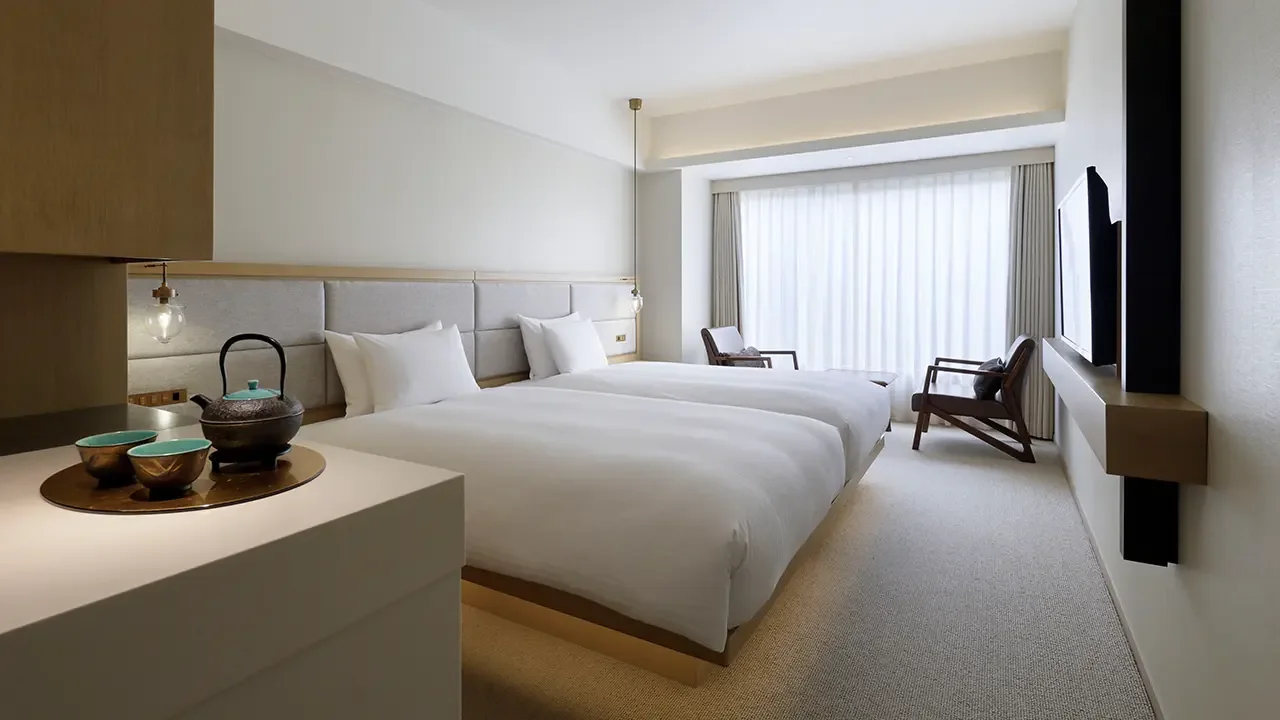
November Kyoto makes a hotel address valuable at two particular times: before a crowded temple approach and after an evening illumination. Hotel The Celestine Kyoto Gion places the room on the southern Gion and Higashiyama side, closer to some east-side walks but farther from a major rail interchange. GOOD NATURE HOTEL KYOTO sits beside Kyoto-Kawaramachi Station, close to shops, dinner choices and the crossing to Gion-Shijo. Both can serve an autumn visit, but they do not shorten the same journeys. Choose the hotel by the first site each morning and the place you will finish most evenings; a room marketed with “Kyoto atmosphere” cannot substitute for those actual routes.
JapanLayer hotel assessment by dimension
↔ Scroll table left or right
| Hotel | Access | Space | Comfort | Cleanliness | Neighbourhood | Service | Value |
|---|---|---|---|---|---|---|---|
| Hotel The Celestine Kyoto Gion | 9.3/10 | 7.0/10 | 8.4/10 | 9.2/10 | 7.8/10 | 9.0/10 | Insufficient evidence |
| GOOD NATURE HOTEL KYOTO | 9.3/10 | 9.4/10 | 6.1/10 | 7.4/10 | 6.6/10 | 8.2/10 | Insufficient evidence |
The November booking trade
↔ Scroll table left or right
| Decision point | Celestine Gion | GOOD NATURE Kyoto |
|---|---|---|
| Best repeated walk | Southern Gion and Higashiyama morning routes | Kawaramachi shopping, dinner and rail interchange |
| Station approach | About ten minutes on foot from Gion-Shijo | About two minutes from Kyoto-Kawaramachi |
| Named twin baseline | Superior Twin 30.0–34.7 m² | Superior Twin/Double 28–35 m² |
| Evening recovery | Large public bath and guest lounge | Private bath in Deluxe Twin and in-building food options |
Swipe to compare the hotels
Put the autumn walks on a map first
An itinerary centred on Kiyomizu-dera, Yasaka, southern Higashiyama and early Gion streets gives Celestine a stronger location argument. You may be able to walk to the first stop without a morning bus. That has value when autumn crowds build through the day. Yet Higashiyama is large, steep in places and full of separate entrances; “Gion hotel” does not mean a three-minute walk to every temple. The Higashiyama autumn walk helps locate the particular gates, slopes and evening exit points.
If the plan spreads across Nishiki, Shijo shopping, a Keihan trip, dinner by the river and a foliage site reached by train, GOOD NATURE's Kawaramachi position may be easier. It is about two minutes from Hankyu Kyoto-Kawaramachi Exit 4 and around five minutes from Keihan Gion-Shijo Exit 3. Celestine lists roughly ten minutes on foot from Keihan Gion-Shijo and about twelve minutes from the Kawaramachi side. These are stated walks from specific exits, not universal door-to-platform times. The Kyoto Station versus Gion base guide clarifies why the wider district matters as much as a hotel's name.
The most expensive mistake is assuming one hotel will avoid all autumn transit. A day in Arashiyama needs a rail or other cross-city trip from either. A day in northern Kyoto has another pattern. A hotel in southern Gion can improve a dawn walk to Kiyomizu, while GOOD NATURE can make a late return from the central shopping and dining district shorter. The three-day Kyoto foliage itinerary is a useful test: mark the start and finish of each day and count which hotel removes a repeated leg. If the itinerary has only one east-side day, Celestine's local advantage may be too narrow to justify a higher room rate.
Celestine makes a slower Higashiyama stay possible
Celestine's address is on Yasaka-dori in Higashiyama. It has a calmer residential feel than the main Kawaramachi interchange, though actual quiet depends on room position and the season. A guest might walk out before the day crowds arrive, return for a break and head out again after dinner. That second departure is where the location earns its price: an early temple outing followed by a midday rest can be difficult from a hotel that requires two extra station transfers. The Kyoto autumn crowds guide helps decide whether you will actually use an early start rather than merely like the idea of one.
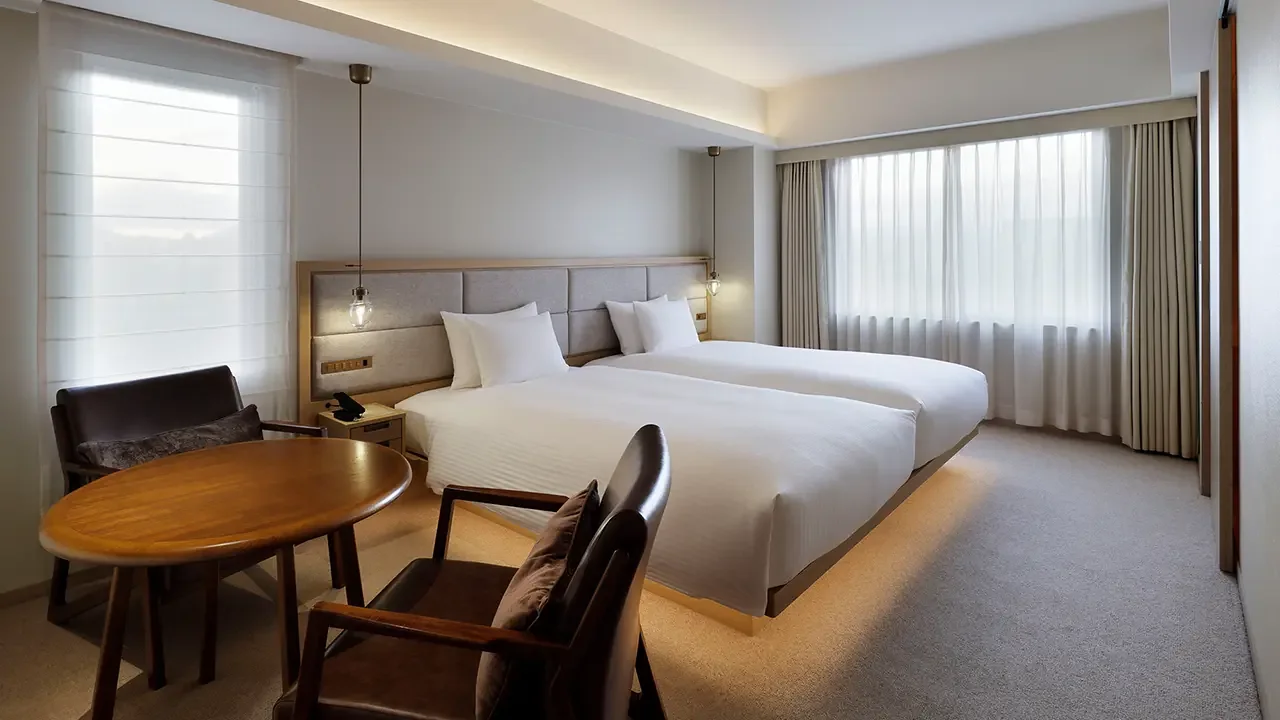
Celestine's Superior Twin is listed at 30.0 to 34.7 square metres with two 123-centimetre beds for one or two guests. Its Deluxe Twin ranges from 34.0 to 37.1 square metres. A Deluxe Twin with daybed can handle three people under a separate configuration; an ordinary Superior Twin does not automatically become a triple. The room size difference is not huge for two adults, so compare the actual rate, bathroom and whether an upgrade brings an amenity you will use. A child or third adult changes the bedding calculation completely. The Kyoto hotel shortage guide is helpful when peak dates tempt you to accept an unsuitable room just because it is available.
The hotel has a large public bath and guest lounge. Those can matter after a day of walking, especially if the group plans to return before an evening event. They are not universally usable: shared-bath rules, hours and comfort with communal bathing vary. A room can still be a good choice if someone never enters the bath, but do not pay an upgrade solely for an amenity the travellers will skip. A late illumination may also end after the preferred bath window. Check current hours against the event finish rather than assuming all facilities are open when you get back. The Kyoto autumn illumination guide helps place the evening in a realistic schedule.
Celestine provides a free Kyoto Station shuttle subject to timetable and capacity. It is useful with suitcases, but it should not be treated as a continuous private transfer. Check the exact pickup location and departure schedule before using it for a time-sensitive train. The hotel also lists a taxi trip of around ten minutes from Kyoto Station, traffic permitting. If your Shinkansen leaves early, the shuttle schedule might make a taxi more practical; add that cost to the room comparison. The Tokyo–Kyoto–Osaka luggage guide can help when a same-day bag transfer would let you spend the final Kyoto hours without cases.
Celestine's breakfast and restaurant can be attractive when the stay itself is part of a quieter trip, yet a dawn temple walk may conflict with a paid breakfast window. A room-only quote and a breakfast-included quote are different products. If you plan to be outside before the restaurant opens, check whether you can use the meal later or whether the package is simply wasted. The same logic applies to a late checkout: a noon departure matters only if the group will return to the room. Compare the actual schedule before paying for inclusions.
GOOD NATURE places the room beside the evening district
GOOD NATURE sits in the Shijo-Kawaramachi area, with market, food and shops in the same urban cluster. For a traveller who returns after a long illumination and wants a simple dinner, this can be more useful than a quieter Higashiyama lane. The hotel is part of GOOD NATURE STATION, with food and retail floors, but individual businesses have their own operating hours and menus. Do not assume a late-arrival meal will be available simply because the building contains restaurants. The Kyoto evening illumination guide helps identify how late you will actually get back.
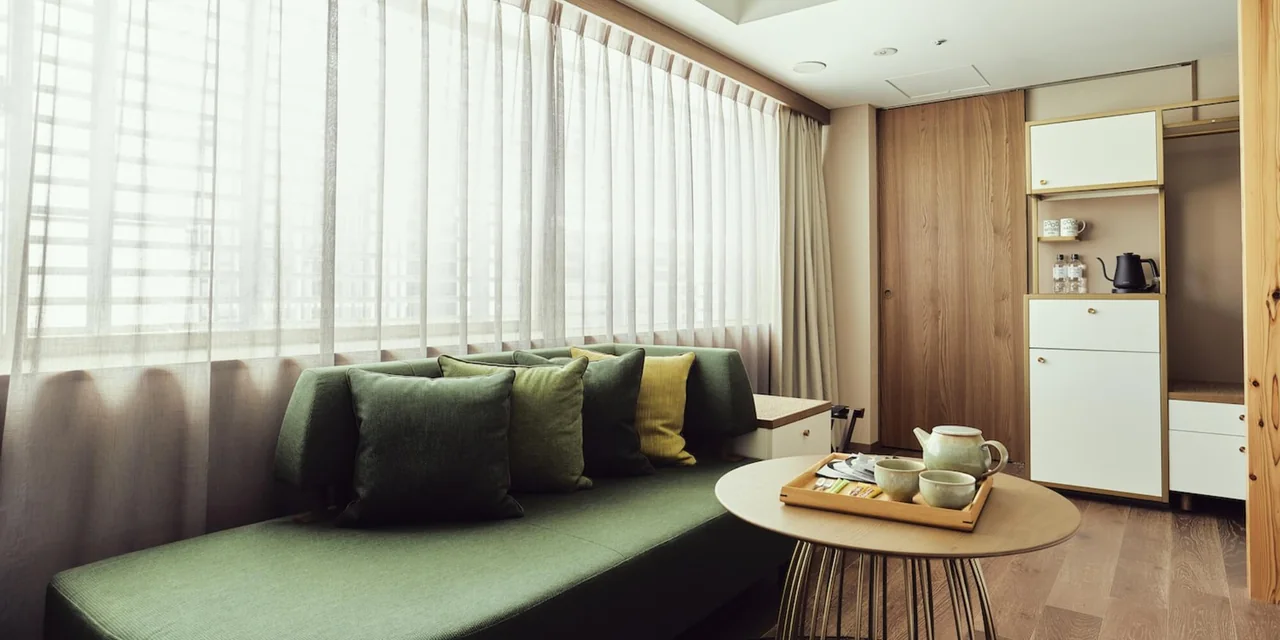
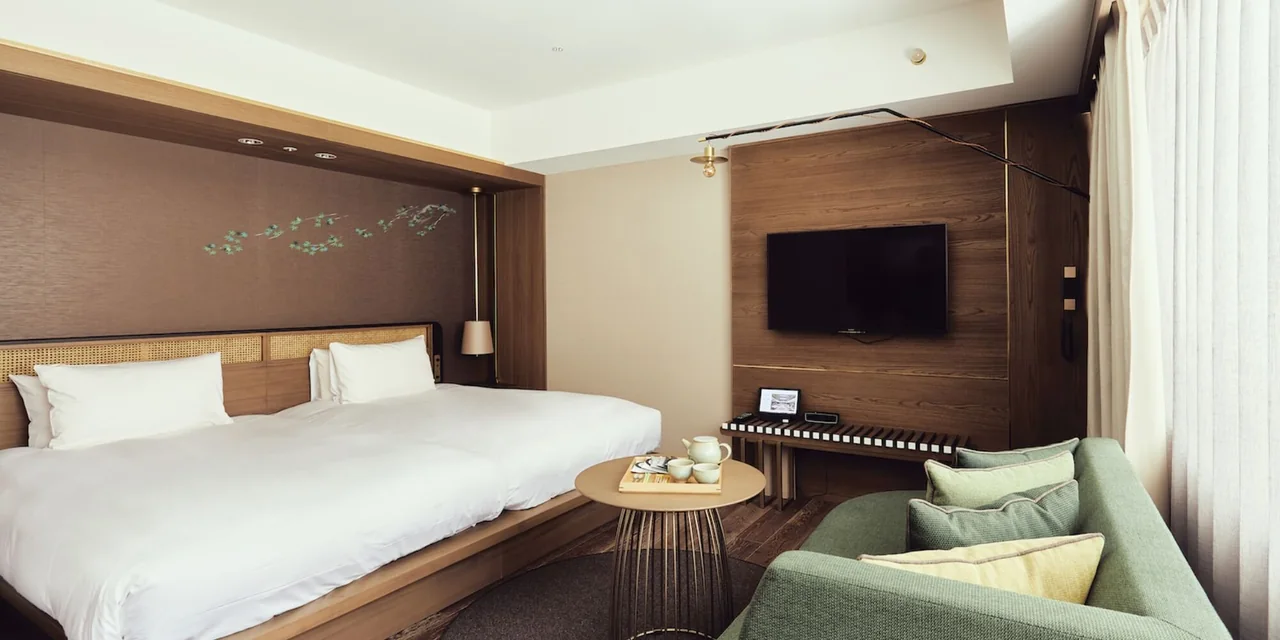
Its entry Superior Twin/Double category spans 28 to 35 square metres for up to two people. The Deluxe Twin is 35 square metres with two 120-centimetre beds, a separate bath and toilet, and two washstands. That double-sink arrangement can save time when two adults are getting ready for an early train or a booked dinner. Some rooms do not have a view; a higher floor or attractive brochure image does not guarantee a particular outlook. The Deluxe Corner Twin is 42 to 49 square metres, can add a third bed and has different scenic or relaxation layouts. Choose the named room and view condition, not just the broad “deluxe” label. The Kyoto room area comparison helps relate room choice to neighbourhood rather than to category names alone.
GOOD NATURE's Deluxe Grand Twin is a 52-square-metre four-person option using two normal beds plus an extra bed and sofa bed. It is not the same as four identical beds; inspect the actual sleeping arrangement and room rate for a family. If the group includes two children who need separate beds, that difference matters. A couple may find the standard or deluxe twin ample and better value. The Osaka group-room guide explains why an advertised four-person capacity should lead to a bed-by-bed check even outside Osaka.
This hotel can also be practical for travellers who prefer central shopping and dining to an in-building public bath. There is no need to buy a room for a facility you would not use. Its separate in-room bath in the Deluxe Twin offers a private alternative after a long walk. However, an attractive larger room does not erase the morning journey to a distant temple. If you plan Kiyomizu at first light on two days, calculate the walk or taxi from Kawaramachi before choosing this hotel for its evening location. The Kyoto autumn leaves by elevation guide can help if the day's foliage target changes with the season.
The hotel encourages reduced disposable amenities; for example, some toiletries are not automatically placed in the room. A traveller who always packs a toothbrush will not notice, but a family arriving after an international flight may want to check what is in the selected room and what can be requested. This is a practical packing detail, not a reason to rank the hotel as less comfortable. The larger question remains whether the room's area, bath and station access are worth its date-specific rate.
Two November evenings can point to different hotels
Imagine a couple with an early southern Higashiyama walk on Monday and an evening opening at a nearby temple on Tuesday. Celestine can support a return between the outings, provided the actual walk and event entrance are manageable. If the couple instead spends Monday around Nishiki and Tuesday evening at a central restaurant after a Keihan excursion, GOOD NATURE cuts the return to the room. The hotel with the shorter line on a map may not be the one closest to the last gate or station you use. The free Kyoto foliage guide and illumination guide help separate daytime and night routes.
A three-generation group has a different problem. Someone may want to rest earlier while others continue sightseeing. Celestine's public bath, lounge and larger twin can make the room a retreat if the group is focused on eastern Kyoto. GOOD NATURE's larger corner and four-person categories can reduce the need for two rooms, and its urban location offers food without another long walk. Compare lift access, exact bed types and the last walk from the evening venue. The Kyoto seniors' station-versus-Kawaramachi guide is useful when the steep or crowded segments matter more than train fare.
If the trip includes a day at Fushimi Inari, GOOD NATURE's Gion-Shijo access can feed into the Keihan route, while Celestine is also within a walk of Gion-Shijo. Neither hotel should be selected solely for that one morning without checking the full itinerary. A Kyoto Station hotel may be better if the next day is a Shinkansen departure; a Kiyomizu-side room may be better if dawn is the main objective. The Fushimi Inari hotel comparison and Fushimi Inari guide show why route choice matters more than a broad “central Kyoto” label.
Peak foliage prices make the room condition important
November rates can rise sharply on popular weekends, and the exact foliage peak cannot be promised months in advance. A non-refundable view room booked for one forecast date is a different risk from a flexible ordinary twin. Check the hotel's cancellation cutoff, not just the headline percentage off. A room with no guaranteed view should be bought for its layout and location; a room with a named view category should still be judged against the time you will spend inside. The Kyoto autumn hotel guide helps frame this seasonal risk.
Transport costs also belong in the comparison. A Celestine stay may use its free shuttle on arrival but require a taxi at another hour; a GOOD NATURE stay may involve a subway and Hankyu transfer from Kyoto Station or a taxi with luggage. The hotel access descriptions give routes, but your party's bags, arrival hour and mobility determine the useful one. Add the full arrival and departure cost before concluding that one nightly rate is cheaper. The Kyoto Station versus Gion guide is particularly relevant if Kyoto is the first city after a flight.
For a stay of four or five nights, one hotel will not be equally close to every stop. Weight the repeated journeys. A hotel that saves fifteen minutes on one afternoon but costs a bus ride every morning is a poor trade. A hotel that lets you walk back after two night events can be worth a premium even if a taxi is needed once from Kyoto Station. The three-day Kyoto autumn itinerary and Kyoto–Osaka split-stay guide can reveal when changing base would genuinely reduce travel.
Choose Celestine if your November plans concentrate on southern Higashiyama, you intend an early walk and will use the room or bath between outings. Choose GOOD NATURE if evenings centre on Kawaramachi, the Keihan and Hankyu connections recur, or a larger private-bath room is the purchase you actually want. For either, verify the named room, bed count, view guarantee, breakfast timing and cancellation terms. Then mark the precise illumination exit and next morning's first stop. The address should support those two moments, not just a seasonal photograph.
Updated 4 October 2026. Foliage, evening openings and room terms vary by travel date.