
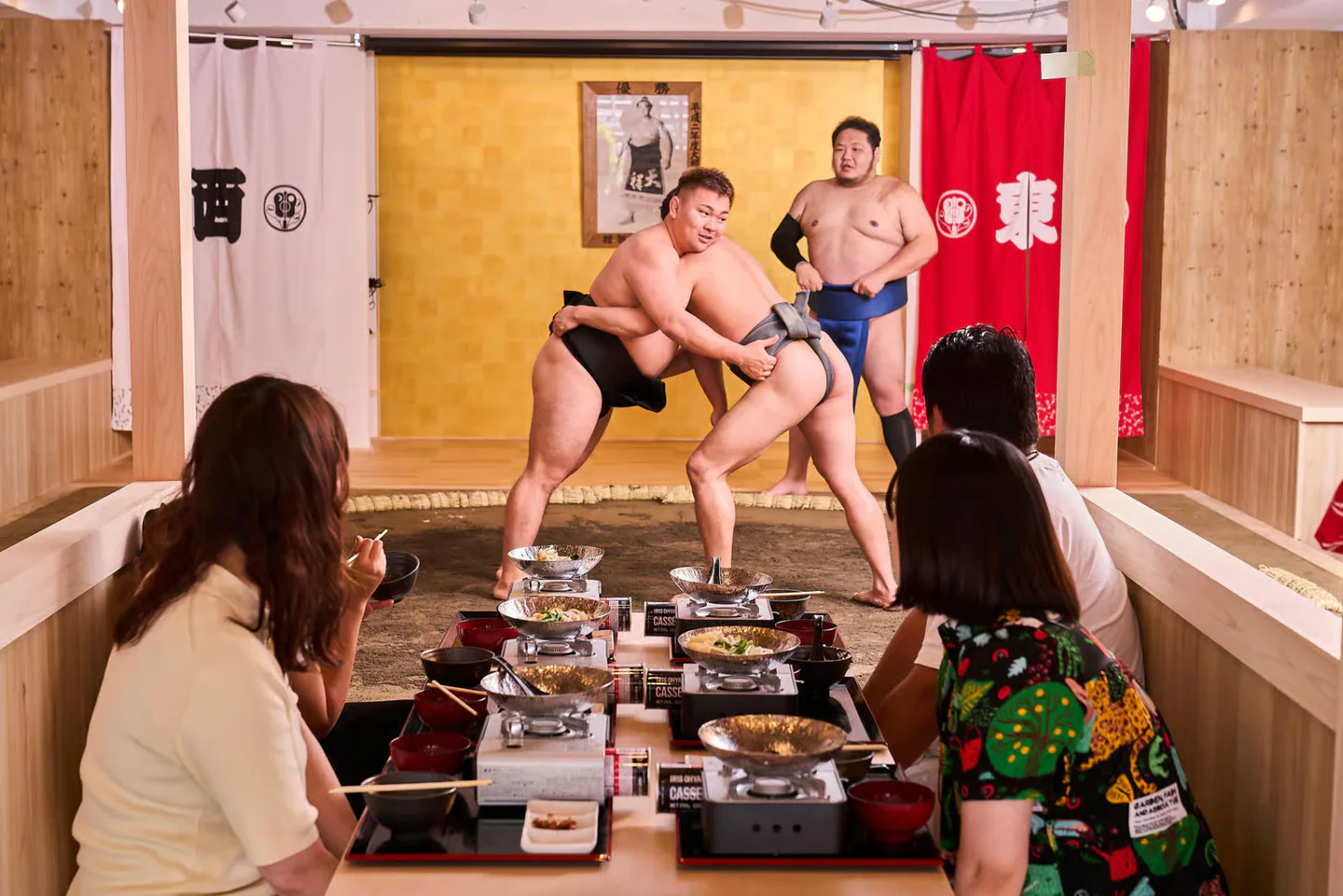
Tokyo sumo can mean three purchases with very different outcomes: a Grand Sumo tournament at Ryogoku Kokugikan, a quiet visit to a working stable's morning training, or a staged show with food and audience participation. Start with your travel dates. The September 2026 Tokyo tournament ended on September 27; the next Tokyo Grand Sumo dates currently published are January 10–24, May 9–23 and September 12–26, 2027. A booking page selling a show during one of those windows deserves comparison with the real competition before you pay. Outside those windows, a practice visit or show may be the practical Tokyo choice.
The Grand Tournament calendar also places November 8–22, 2026 in Fukuoka, not Tokyo. A traveller in Tokyo that month should not search for an imaginary local tournament ticket. For a completed-event account of the previous Tokyo run, the September 2026 ticket guide explains the sale and resale problem, but its September inventory is history now. The choice below is built around the kind of sumo you actually want to see rather than the most prominent product in a search result.
First decide whether you want competition, training or a performance
A tournament bout affects the ranking of active wrestlers. A stable visit lets you observe active wrestlers preparing, often with long intervals of repetitive or quiet work. A show uses retired wrestlers to explain the sport through demonstrations and a social meal. None of these can be substituted for another just by adding a longer ticket. The right question is what you would regret missing: competitive stakes, access to a workplace, or an easy introduction shared with a mixed-interest group.
| Your trip condition | Strongest first option | Why it fits | Reason to choose differently |
|---|---|---|---|
| Tokyo dates coincide with a Grand Tournament | Ryogoku tournament | Active wrestlers compete within the ranking system | No viable seats, or your schedule cannot spare a substantial block |
| No Tokyo tournament; you want to observe athletes at work | Morning practice | You see training in a real stable | Early timing, quiet rules or an age restriction do not suit your group |
| You want a compact, explained introduction with dinner | Asakusa-style show | Demonstration and meal share one fixed booking | You would be disappointed without competitive bouts |
| Sumo is a mild curiosity on a short trip | Ryogoku neighbourhood visit | You keep the day and budget for stronger interests | A specific tournament or stable opportunity becomes a priority |
Tokyo hosts three Grand Tournaments a year, normally in January, May and September. Osaka, Nagoya and Fukuoka host the other three. The published 2027 dates and advance sale dates are the useful ones now: January tickets are scheduled to go on sale December 5, 2026; May tickets April 10, 2027; September tickets August 7, 2027. Treat these as calendar entries to check when you can actually buy, not as proof that a particular seat remains available. The Tokyo pass comparison is a separate decision; a generic sightseeing pass should not be assumed to include a tournament.
How each format performs on the seven choices that matter
These are qualitative editorial judgments, not customer ratings. The dimensions help expose trade-offs that a single total score would hide. “Easy” means less scheduling or explanation work for a first-time visitor, not a guarantee of availability. A stable operator, show venue or ticket seller may set its own conditions, so make the final comparison against the named product you intend to book.
| Decision dimension | Grand Tournament | Morning practice | Entertainment show |
|---|---|---|---|
| Competitive stakes | Live ranking bouts | No competition; active athletes train | Demonstration by retired wrestlers |
| Access behind the scenes | Watch from public seats | Observe inside a working stable | Purpose-built visitor setting |
| Explanation in English | May need preparation or a guide | Depends on the specific tour; the cited product included a guide | Bilingual explanation is part of the cited show format |
| Family fit | Possible with an appropriate seat and attention span | The cited tour did not admit children under eleven | Meal and demonstrations suit more mixed interests |
| Time cost | Best protected as a large day block | About two hours plus early travel | About two hours plus travel and the meal |
| Participation | Watch the bouts | Observe; keep quiet and still | Some guests may volunteer, but a challenge is not guaranteed |
| Booking certainty | Seat sales can be difficult | Stable availability and rules control the date | Fixed show slot, subject to seats and meal conditions |
A total score would flatten the most important distinction: a person who wants active wrestlers competing cannot make a dinner show “equivalent” by giving it high marks for convenience. Equally, a family with a ten-year-old should not pay for a particular practice tour that excludes that child just because behind-the-scenes access sounds compelling. The Tokyo family activity guide puts age and stamina before an attraction ranking.
When the tournament deserves half a day
At Ryogoku, the appeal is the change in tension as the day's bouts work toward the higher divisions. Coming only for the last few minutes can discard much of what makes a tournament different from a clip or demonstration. Set aside a substantial part of the day, allow time to find the arena and your seat, and understand that the ticket buys a place in a sporting event rather than an English-led explanation. If watching the sport develop is the point of the purchase, preparation about divisions, rituals and the ranking system can make the time richer.
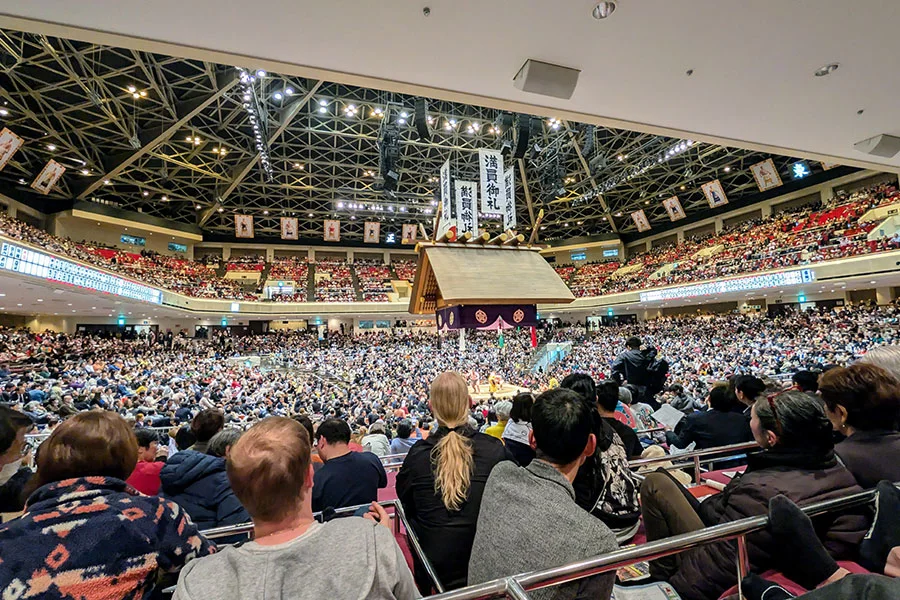
The obstacle is seat availability. The January 2027 tournament has a listed advance sale date, but the calendar does not promise that the seat type you want will remain. Buying a show first merely because it is easier could crowd out a real match if your Tokyo dates overlap. Conversely, someone with a short Tokyo visit and only one free evening may rationally choose a show even during tournament dates. The decision is about the time you can protect as well as the kind of sumo you want. Use the short Tokyo stay comparison to test what a half-day in Ryogoku would displace.
Ryogoku is also an area you can visit without a tournament ticket. Seeing Kokugikan from outside, walking the neighbourhood and eating chanko elsewhere may satisfy a mild curiosity. It should not be described as equivalent to entering the arena, but it avoids paying for a product whose focus you do not share. A visit can pair with the Tokyo National Museum or another eastern Tokyo stop on a day when no bouts are on. If the trip already includes teamLab Planets, decide which paid experience deserves the longer block before buying both.
What a morning practice visit asks of you
A morning visit is about observation. Wrestlers drill, wait, repeat movements and respond to stable routines; a visitor does not direct the session. One English-guided stable tour has advertised roughly two hours and excluded children under eleven. Those are conditions of that named product, not a rule for every stable in Tokyo. Compare the stable, meeting place, age policy and visit date before committing the group. Training can change around tournaments and tours, so it is especially important to reserve the actual session you want rather than assume every morning offers the same access.
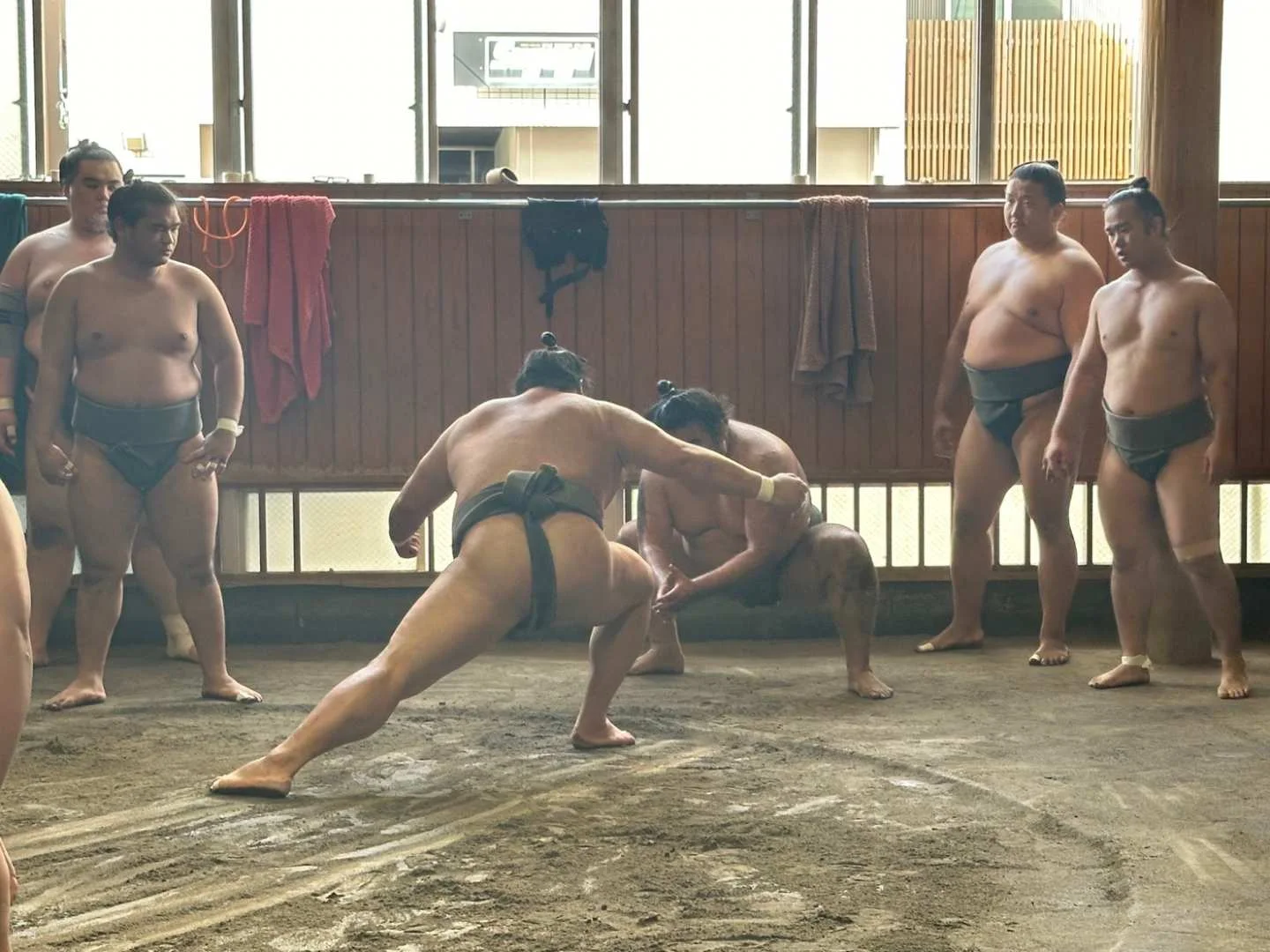
The visit suits someone who would enjoy seeing disciplined work even without a theatrical climax. It is less suited to a group that needs frequent movement, guaranteed photographs, flexible bathroom breaks or hands-on interaction. A stable is a workplace; quiet rules are part of the access. If a child cannot join the selected tour, the group should choose another format rather than assume a different adult can wait with the child at the door for two hours. The Tokyo family room guide may solve the night's layout, but it cannot override an attraction's age condition.
The price question comes after the access question. A guided stable tour buys a place near active training and someone who can explain the routine; it does not buy a photo opportunity, a meeting with a named wrestler or a competition. A visitor who wants the latter should keep looking at tournament dates. Compare a live price for the exact stable and party size with a show only after deciding that both experiences would satisfy you. A lower price is not good value when the group cannot meet the early start or quiet rules. Some guided stable visits offer different formats, so read the details of the selected session.
What the Asakusa show includes, and what it cannot promise
The show described in the earlier article combined English and Japanese explanation, demonstrations by retired professional wrestlers, chicken chanko and other dishes, a geisha dance segment, souvenir photography and an invitation for some guests to try a controlled challenge. It is a designed entertainment product, not a live ranking contest or an ordinary stable practice. That makes it easier for a mixed-interest group to understand in one sitting. A meal also means the booking can replace a separate Asakusa dinner rather than just add another paid stop.
Do not build the purchase around being selected for the ring. Volunteer places are limited; when there are more applicants than spaces, selection may be by lottery. The demonstrations, explanation, food and social setting should justify the ticket even if you watch from your seat throughout. Vegetarian or vegan arrangements need to be requested in advance, and the specific notice period, allergens and seat conditions should be checked for your booking. Asakusa Sumo Club lists its own venue and reservation options; compare the named location because a main room and an annex need not have identical seating. A show price includes dinner, so compare the complete evening rather than two admission fees alone.
A show works best as part of an Asakusa evening when the group wants a shared experience rather than a sporting event. If that neighbourhood is already on your trip, the Tokyo base guide helps decide whether eastern Tokyo deserves your hotel nights. CROSS Suites Asakusa is a room-layout decision for a group, not a prerequisite for attending a show. A hotel in another part of Tokyo can still work if the return after dinner fits your transport plan.
Protect the actual itinerary block
An advertised two-hour duration is not a two-hour demand on the trip. Practice begins early and may require travel to a stable with a precise meeting place. A show adds the journey to Asakusa, seating time and the return after dinner. A tournament can occupy much of a day if you want to see the progression of bouts. The table below turns the advertised experience into the time you need to reserve. It is a planning allowance, not an operating timetable.
| Format | Core experience | Protect in the trip | Main scheduling friction |
|---|---|---|---|
| Grand Tournament | Bouts throughout the day | A half-day or more when it is a trip priority | Seat sale, arena arrival and the temptation to miss earlier divisions |
| Morning practice | Roughly two hours on the previously listed product | An early three-hour block including travel | Stable rules, fixed meeting point and possible product-specific age restriction |
| Entertainment show | Roughly two hours with a meal on the previously listed product | About three hours including arrival and return | Food request, exact venue and whether participation matters to you |
Do not move hotels for one two-hour sumo slot. If the wider itinerary has several Shinkansen departures, Tokyo Station versus Shinjuku may matter far more. Ueno versus Shinjuku addresses Narita arrival and eastern-city days. A solo visitor should compare room quality and late returns in the solo hotel guide, while a late arrival has a separate airport-night decision. These choices influence several days; the sumo booking influences one block.
If the tournament in Ryogoku is the anchor of your trip, compare rooms around Ryogoku for your dates with the route to any morning practice or separate show you plan to add.
Check these failure points before paying
First, use the tournament dates for the year you will travel. The 2026 September Tokyo sale began August 8 and the event is over; the 2027 calendar has different sale dates. Second, confirm the exact stable or show venue, rather than assuming every product with “sumo” in its name contains the same format. Third, match everyone in the group to its age, mobility, food and participation conditions. A stable visit that excludes a child is not fixed by a lower price; a show with a limited ring challenge cannot guarantee your turn.
Finally, decide whether sumo is a central interest or a cultural box to tick. A paid practice or show plus travel can replace an entire neighbourhood block. Someone only mildly curious may prefer a Ryogoku walk and an unhurried meal. Someone fascinated by the sport may value a difficult tournament ticket or quiet training more than the easiest product to purchase. For a broader set of eastern Tokyo choices, compare museum time, a Tokyo Bay dinner cruise or a concert-night hotel against the time and money the sumo product asks for.
If your dates include a Tokyo Grand Tournament and a viable seat, compare that first. If not, choose a real training visit for its workplace access or a show for its explanation, meal and group fit. Keep the current tournament calendar open while deciding; use a current product page for any operator-specific rules. That resolves the actual purchase without promising that a past ticket, price or September 2026 event is still available.