
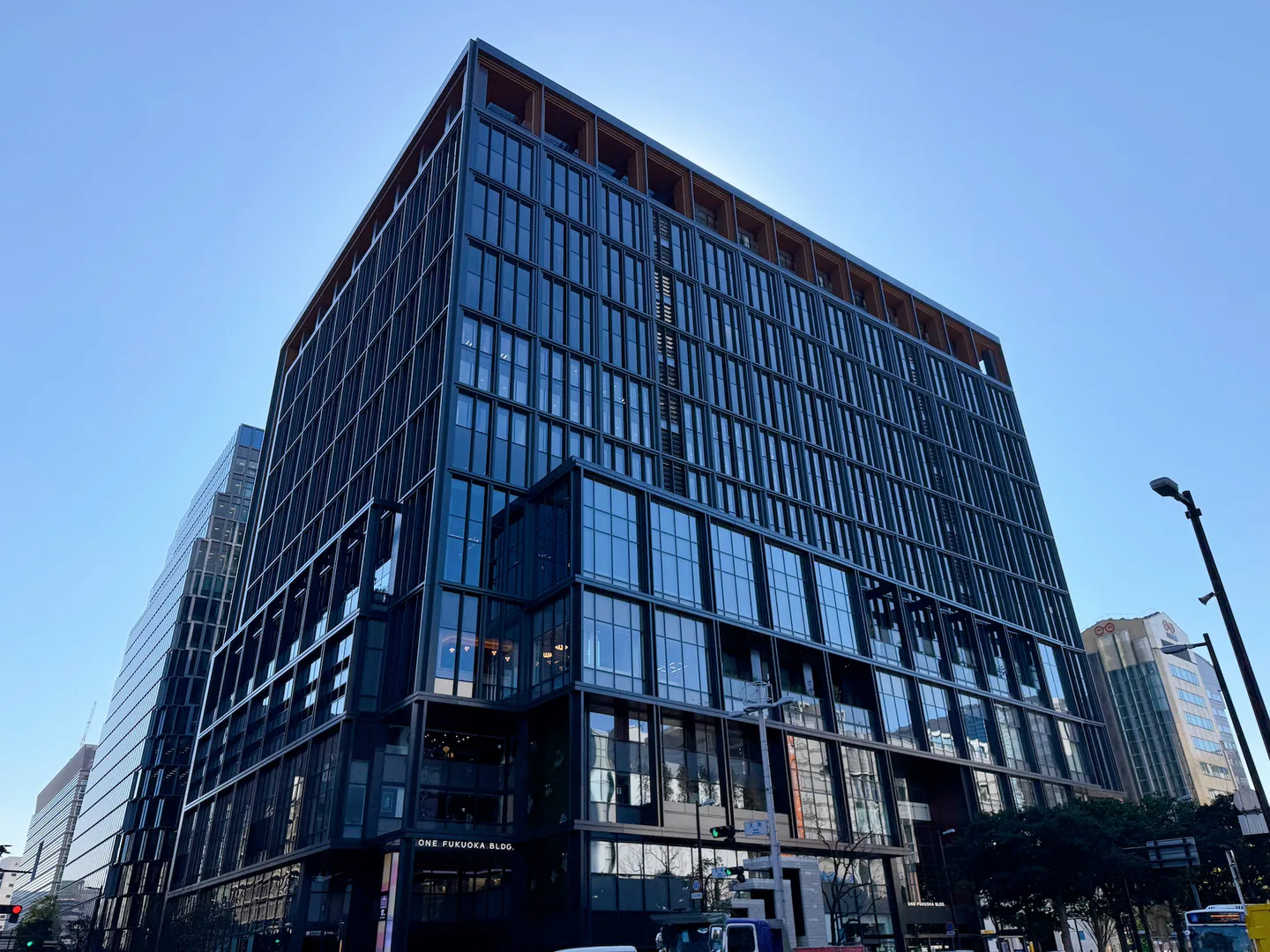
The two hotels occupy different sides of a Tenjin decision. Solaria Nishitetsu Hotel Fukuoka sits inside the Nishitetsu station and bus-centre complex; ONE FUKUOKA HOTEL connects directly to subway Tenjin and gives a smaller party a larger starting room plus a bath, sauna and guest lounge. A domestic-airport arrival can favour ONE. Repeated Nishitetsu departures, a known four-adult room or a car can move the answer toward Solaria. Neither is a substitute for checking whether Hakata or Tenjin fits the whole trip.
Count the journeys and hotel sessions that repeat. One transfer from the airport is useful, but a Dazaifu train, daily Tenjin shopping walk, nightly bath and final morning each use the building differently. ONE starts at 35 m² in its Superior King, while Solaria's common twin category is around 28.4 m²; four guests, however, have a named 41.8 m² Deluxe Quad at Solaria. The comparisons below keep the terminal, bed layout, bath eligibility and parking distinct so a single attractive amenity does not hide a poor itinerary fit.
↔ Scroll table left or right
Trip pattern | Hotel to price first | Why the route or room changes the answer |
Domestic flight, two guests and luggage | ONE | Airport-side subway reaches Tenjin in about 11 minutes; building connects to East gate. |
International flight | Compare both | Subway starts at Domestic Terminal; direct Tenjin buses also leave International. |
Dazaifu or repeated Nishitetsu | Solaria | Direct Fukuoka (Tenjin) station and bus-centre integration. |
Two guests planning bath and room time | ONE | 35 m² entry room plus bath, sauna and guest lounge. |
Four adults in one room | Solaria | Named 41.8 m² Deluxe Quad has three beds and one smaller daybed. |
Child under two or in diapers | Discount ONE bath value | That guest cannot use the public bath. |
Car kept in Tenjin overnight | Solaria | Affiliated guest parking; ONE has no dedicated hotel lot. |
Repeated early JR or Shinkansen starts | Consider Hakata | Station-side base may remove more daily movement. |
Airport arrival depends on the terminal
ONE occupies the upper levels of ONE FUKUOKA BLDG. Its entrance connects with the East ticket-gate side of Fukuoka City Subway Tenjin Station. The hotel's route gives 11 minutes on the Airport Line from Fukuoka Airport Station to Tenjin and six minutes from Hakata. That is an unusually clean finish for a domestic air arrival with cases or rain, because the Domestic Terminal is linked to the airport subway station. It is also useful on a stay whose days repeatedly begin on the subway.
An international aircraft lands at a different terminal. The airport directs passengers to a free shuttle between the International and Domestic buildings; it describes the ride as roughly ten minutes, before waiting and transfer time. The International Terminal also has buses to Tenjin and Hakata, so there is no reason to assume that every passenger should shuttle to the subway. Compare the direct bus, taxi and shuttle-plus-subway routes after looking at arrival time, baggage and traffic.
The advertised 11-minute rail ride is the airport station to Tenjin, not an International Terminal door-to-hotel clock. ONE can still be the right room, but its subway advantage begins only after the international passenger reaches the station. Where to stay before an early Fukuoka flight may change the choice again if this is the final night rather than the first.
Solaria connects directly with Nishitetsu Fukuoka (Tenjin) Station and Tenjin Bus Center. The current hotel site puts Airport Line Tenjin about five minutes away on foot, as well as Tenjin-minami on the Nanakuma Line at about five minutes. That geometry is useful for Dazaifu travel and repeated Nishitetsu or bus departures; it is less compelling if the whole stay uses only the Airport Line. Fukuoka rail, subway and bus passes helps identify the likely network before booking.
A frequent route should weigh more heavily than a single arrival. Someone travelling to Dazaifu once and otherwise resting at the hotel may prefer ONE's room and facilities. Someone crossing the Nishitetsu station complex several times a day may save the Solaria walk repeatedly. If the agenda is actually several Shinkansen or JR mornings, reopen the Hakata-versus-Tenjin base comparison; a Tenjin pair cannot answer a Hakata problem.
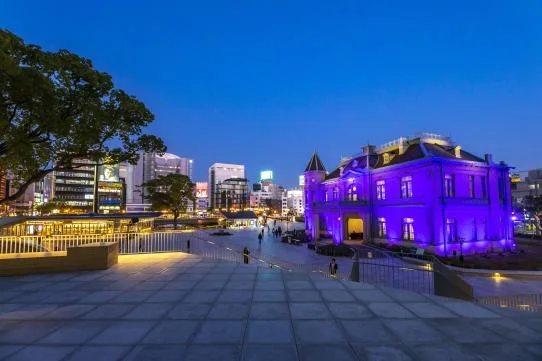
ONE's entry room gives a couple more space
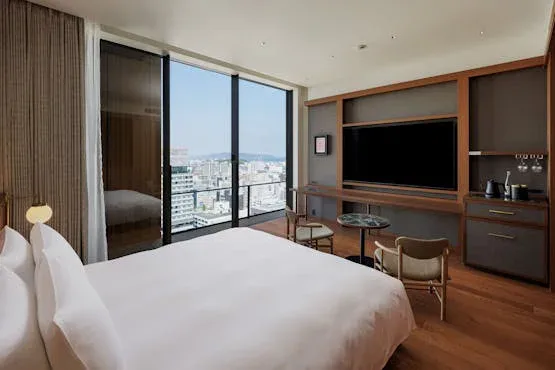
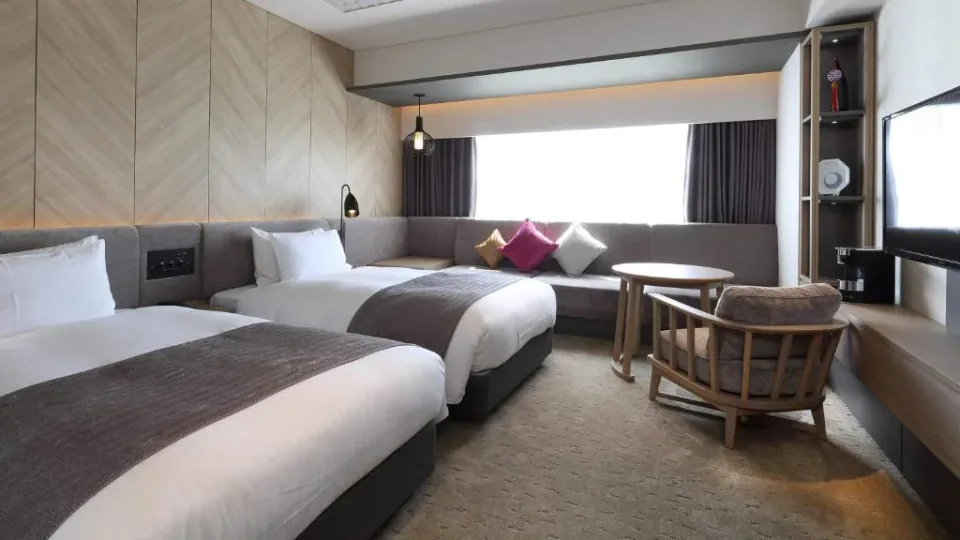
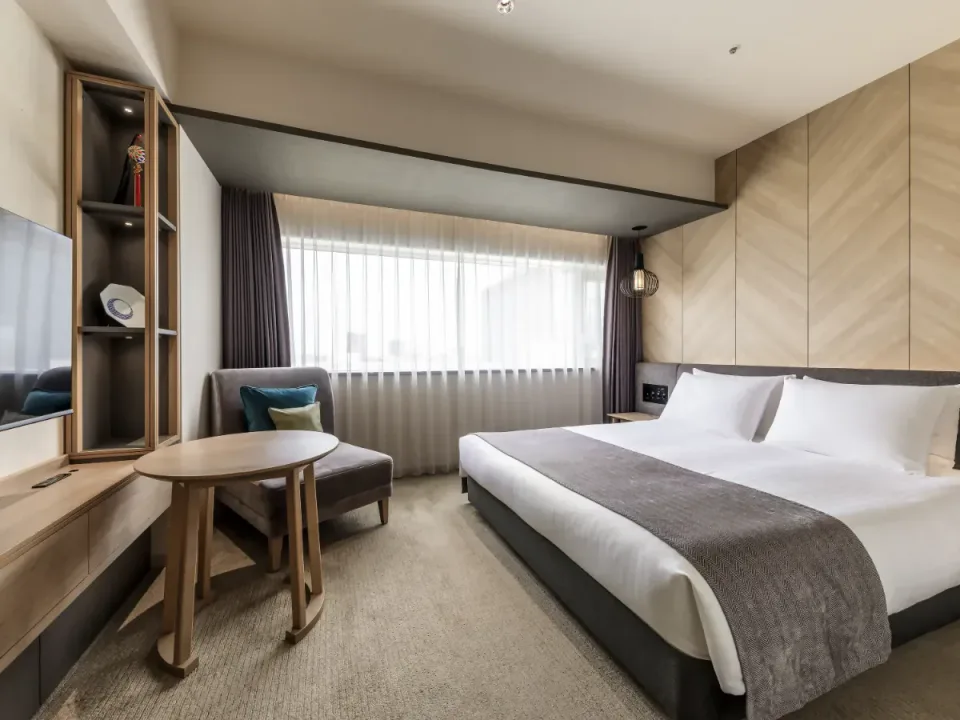
ONE lists 41 guest rooms across categories from 35 to 64 m². The Superior King is a 35 m², one- or two-guest room with a king bed and a large window. Solaria's familiar twin rooms are around 28.4 m², so the baseline comparison gives ONE roughly six to seven extra square metres indoors. That margin can help two people open cases during a multi-night shopping trip, but the visible space in a photo is not a promise of twin bedding.
Two friends needing separate mattresses should compare a named twin at each hotel rather than one 35 m² king against a 28.4 m² twin. For a couple with large cases, ONE's entry space may be used every evening. For travellers who spend little time in the room, the same area difference can become an expensive number on the listing. ONE FUKUOKA HOTEL's own room and amenity decision goes further into its category choices.
Put each part of the premium against a real use in the itinerary:
A useful premium equals the room space, bed arrangement and hotel facilities you will use, less the added price and any repeated transport convenience surrendered. Keep each part tied to actual days rather than treating a larger room as automatically better.
That test keeps a room upgrade honest. If you will return for a midday reset, change clothes before dinner and use the bath, ONE has several opportunities to earn its rate. If breakfast is hurried and the room is empty from early morning to late night, a smaller, more connected room can be the better purchase. Solaria as a Tenjin rather than Hakata base is worth reading when rail movement is the main reason to stay there.
Four adults have a clearer named room at Solaria
Solaria's Deluxe Quad is 41.8 m² and accepts four guests. Three listed beds are 120 × 205 cm, while the fourth is a 100 × 195 cm daybed. That is one real four-adult room to price, with an important sleeping-surface difference. Do not treat the word 'quad' as four equivalent full beds, particularly for four tall adults or companions who care about equal bedding.
ONE's 35 m² Superior King is designed for one or two guests and should not be multiplied into a four-person option. The hotel has larger categories, but only the exact bookable room can establish capacity, bed layout and final cost for four. Solaria is the more straightforward comparison starting point, not a universal winner. Fukuoka hotels for three or four adults covers the one-room-versus-two-room decision.
A group could still choose ONE if a larger named category offers the bedding, terrace and shared hotel time they want at an acceptable price. Solaria becomes stronger when one room for four and a direct Nishitetsu morning matter more than the bath or lounge. Mitsui Garden Hotel Fukuoka Gion for three adults and Nishitetsu Hotel Croom Hakata Gion for six offer other group-layout checks without assuming every 'family' label solves the bed count.
ONE's facilities need an actual place in the day
ONE lists the 18th-floor public bath and dry sauna from 06:00 to 12:00 and again from 15:00 to 25:00. Its guest-only Library Lounge opens 06:00–22:00 with books, self-service coffee and tea, ice cream and light snacks. The Garden Terrace is listed around the clock, although poor weather can close it. These are reasons to spend time upstairs, not price discounts to add up without using them.
A two-night stay might realistically allow:
An arrival afternoon in the larger room or Library Lounge.
A bath or sauna visit after dinner.
A quieter bath visit before a later sightseeing start.
A midday return to change, rest or reorganise shopping bags.
Time in the room before a noon checkout.
Several bath, lounge or terrace visits make ONE's premium easier to defend. A schedule that departs before breakfast and returns near midnight uses much less of it, even though the bath opens late. A visitor who only wants Tenjin restaurants and shops may get more from Solaria's position and a lower room quote than from paying for shared spaces left unused.
The bath is not a blanket family benefit. ONE does not allow children younger than two or children wearing diapers into the public bath. Those younger than thirteen need an accompanying adult, and Fukuoka City generally prohibits mixed bathing once a child reaches seven. A family with a diapered toddler should compare room and station access without assigning value to a bath that part of the party cannot enter.
Tattoo access is another eligibility condition. ONE allows use only when the tattoo can be covered with a sticker or similar covering. A traveller who cannot meet that rule should not price the bath and sauna as part of their personal return. The room, direct subway route and lounge may still be valuable on their own.
The departure hour and breakfast window
ONE's normal checkout is 12:00; Solaria states 11:00. That extra hour can support a slow final morning, luggage repacking or one more bath visit. It has little value before an 08:00 departure from Hakata or the airport. Check the chosen package, since ONE notes that checkout can differ by plan.
ONE serves breakfast from 07:00 to 10:30 with last entry at 09:30. Solaria's Red Flamma breakfast runs 07:00–10:00, with last order at 09:30. The later end at ONE helps a leisurely morning but neither hotel provides an earlier breakfast start. Do not buy an included breakfast for a day that requires boarding an early train before it can be used.
For a Dazaifu departure, a Yufuin transfer or a Shinkansen morning, work backward from the first fixed train or bus. Fukuoka to Yufuin by train, bus or car can reveal whether there is time for the hotel meal at all. A slower Tenjin day is when breakfast and the later ONE checkout can both matter.
One-night domestic arrivals are a special case
From a domestic flight, the subway station at the Domestic Terminal, the 11-minute Tenjin ride and direct East-ticket-gate building connection make ONE a clean arrival hotel. Bad weather strengthens that benefit, particularly with luggage. The room's 35 m² baseline can also make a single-night reset pleasant, though it should be priced against the actual arrival hour rather than an imagined afternoon at the property.
From the International Terminal, choose the route first. The airport lists direct buses for Tenjin as well as the inter-terminal shuttle to the Domestic-side subway, and taxis remain an option. Waiting time, luggage volume and traffic can reverse which is easier on a given arrival. A traveller should not describe ONE as eleven minutes from an international aircraft gate.
The hotel entrance can be directly connected to Tenjin Station and still be several steps after an international arrival. If that journey is the only reason to pay the ONE premium, check the complete route before booking. Solaria remains close to subway Tenjin on foot and directly connected to Nishitetsu, so the airport leg alone need not decide a three-night stay.
The next morning may matter more than arrival. A Nishitetsu or bus start favours Solaria's integrated station position. Repeated early JR or Shinkansen starts suggest a Hakata Station hotel instead. A hotel is a base for all the mornings, not simply a finish to the first evening.
Dazaifu is one piece of a wider Nishitetsu pattern
Solaria's direct Nishitetsu connection removes a small but real walk on a Dazaifu morning. The value grows when the same station or bus centre is used again for another departure, shopping, dinner or return. One outbound train alone may be too little reason to reject ONE's room space and shared facilities across several nights.
A Tenjin itinerary that repeatedly circles Solaria Plaza and Nishitetsu Fukuoka Station gives the older hotel a practical rhythm. ONE is still only a short walk from Nishitetsu, so this is a question of repeated closeness rather than impossible access from the other hotel. Hotel JAL City Fukuoka Tenjin by Akasaka provides another rail-side alternative if the Tenjin shopping complex is not central to the trip.
Parking can change the result
ONE does not provide a dedicated hotel car park. Its access information points drivers to paid facilities nearby, including Tenjin Underground Mall South Parking, where entry and exit are listed from 06:30 to 24:00. A car traveller must check the vehicle height and overnight total separately; direct subway access has little relevance while carrying a vehicle through central Tenjin.
Solaria offers guest parking through its underground hotel space and affiliated Terminal Parking, generally first come rather than reservable. Hotel-managed booking information updated after a 2024 rate change lists ¥2,000 per vehicle per night, with typical access 06:00–24:00. An older Solaria access page still displays ¥1,500, so verify the amount on the live reservation or directly with the hotel before treating it as a firm total. This discrepancy should not be hidden in a cost comparison.
Neither property is a suburban car base. Solaria simply gives a clearer hotel-related parking route and known overnight price reference. ONE makes more sense when the car is absent or parked elsewhere and the Airport Line connection is used often. For a drive-heavy Kyushu trip, the choice of Tenjin itself deserves scrutiny before either hotel is booked.
Rain follows the network, not a single hotel label
ONE's underground Tenjin connection is strongest for subway journeys from the Domestic-side airport station or Hakata. Solaria's covered links favour Nishitetsu Fukuoka Station, Tenjin Bus Center and the surrounding shopping complex; its published subway Tenjin walk is around five minutes. The weather benefit changes with the platform reached at the end of each day.
An international-airport arrival remains a separate case in rain. A direct bus from the International Terminal to Tenjin may avoid the terminal shuttle and subway interchange; a taxi may be easier with bulky cases. Decide the airport-to-city mode before using 'direct station connection' as a decisive hotel criterion. Fukuoka transport networks helps with the other days.
Three nights reveal which advantage repeats
Solaria pattern: Dazaifu, repeat Nishitetsu or bus departures, Tenjin-complex evenings, a group of four or affiliated parking.
ONE pattern: one or two guests, Airport Line arrival, extra room space, several bath or lounge sessions and useful noon checkout.
Hakata pattern: repeated JR or Shinkansen mornings and onward Yufuin or Kumamoto travel; reconsider the district before either Tenjin hotel.
Remove each hotel's signature benefit mentally. If ONE had no bath, lounge or extra room space, would you still pay more for the direct subway finish? If Solaria were five minutes farther from Nishitetsu, would your daily departures become meaningfully harder? The answer should come from the actual three-day route, not an abstract preference for newer or older hotels.
The Solaria-shaped itinerary
Solaria is a strong starting quote when several of the following describe the stay:
Several journeys use Nishitetsu Fukuoka Station or Tenjin Bus Center.
Dazaifu is fixed and Tenjin remains the evening neighbourhood.
Four adults can use the named 41.8 m² Quad with its daybed understood.
The hotel is mainly a sleep and movement base rather than an afternoon retreat.
A car needs a clearer hotel-related parking arrangement.
The cost of that network advantage is a smaller common two-person room than ONE's 35 m² entry category and no equivalent public-bath, sauna and guest-lounge package. Solaria can still be the better room if transport is used repeatedly or a four-adult Deluxe Quad avoids booking two rooms. Compare the exact total, not a generic brand tier.
The ONE-shaped itinerary
ONE earns a closer look when the guest will use more than one of its specific differences:
One or two guests will use the 35 m² or larger room space.
A domestic-airport or Hakata subway arrival benefits from the East-gate building connection.
The party is eligible for, and plans to use, the bath and sauna.
The Library Lounge, terrace or midday reset has a place in the schedule.
A 12:00 checkout gives a materially easier final morning.
ONE's restrictions are part of the same price decision: no dedicated hotel parking, an extra airport leg from the International Terminal before its subway shortcut, and bath access rules that can remove value for a family or tattooed guest. A Superior King is for one or two people; groups should price a real larger category. Tokyu Stay Fukuoka Tenjin's washer-dryer may be the more useful premium on a laundry-heavy stay.
Seven marks for two Tenjin hotel routines
| Dimension | Solaria Fukuoka | ONE FUKUOKA |
|---|---|---|
| Location | 10/10 — Inside the Nishitetsu station and bus-centre complex, useful for Dazaifu and repeat Tenjin departures. | 9/10 — Direct subway Tenjin access benefits domestic-airport arrivals; Nishitetsu is a further walk. |
| Room | 8/10 — A common twin is 28.4 m²; the 41.8 m² Quad has three regular beds and a daybed. | 9/10 — The 35 m² Superior King gives a couple more space, but is not a four-adult room. |
| Cleanliness | 9/10 — The established hotel maintains a strong room-upkeep record. | 10/10 — The new hotel has an exceptionally strong early upkeep record, from a smaller sample. |
| Service | 9/10 — Staff support is steady across a substantial base of recent stays. | 10/10 — Service scores are excellent so far; the sample is shorter than Solaria's. |
| Facilities | 7/10 — The transport complex helps movement, but there is no counterpart to ONE's guest bath and lounge. | 9/10 — The 18F bath, sauna, Library Lounge and terrace create usable hotel time. |
| Food | 8/10 — Red Flamma breakfast begins at 07:00 and Tenjin's food options sit close by. | 9/10 — Breakfast runs to 10:30 with a 09:30 last entry and supports a slow final morning. |
| Value | 8/10 — Best value for repeated Nishitetsu trips or four adults using the actual Quad bedding. | 7/10 — Paying more makes sense when room space and shared facilities enter the actual schedule. |
JapanLayer overall scores for a Tenjin base: Solaria Nishitetsu Hotel Fukuoka 8.4/10 and ONE FUKUOKA HOTEL 9.0/10. Solaria retains a practical edge for Nishitetsu departures and its named four-person Quad; ONE earns its higher mark when two guests use the larger base room, bath, lounge and later checkout. The newer hotel's service and upkeep sample is still much smaller, so the gap is less certain than the room and access facts.
A Tenjin choice, or a Hakata decision?
For one or two adults with a slower Tenjin stay, ONE can justify more spend through a 35 m² baseline, subway connection and several real bath, sauna or lounge sessions. A domestic arrival and late checkout can add to that case. Its value diminishes as the schedule fills with early departures and late returns.
Solaria is the more direct starting point for frequent Nishitetsu use, Dazaifu plus other Tenjin movement, a four-person Deluxe Quad or a car requiring an affiliated parking process. It solves repeated urban movement rather than selling much hotel time. Its smaller common two-person rooms may be entirely sufficient for a movement-heavy trip.
For an international arrival, choose between direct Tenjin bus or taxi and the shuttle-to-Domestic subway chain before counting minutes to either hotel. If JR Hakata governs several mornings, compare a Hakata base rather than forcing a winner from this Tenjin pair. Miyako Hotel Hakata versus Solaria asks precisely that cross-district question.
Price the named room and access conditions
ONE FUKUOKA HOTEL: room time and subway access
Compare ONE FUKUOKA HOTEL rooms
A direct hotel booking and an intermediary quote can have different inclusions or payment terms. Check the bath and lounge access described for the actual room, and avoid assuming a four-person configuration from the one- or two-guest Superior King.
If the purpose is the public bath, confirm every guest can use it under the age and tattoo policies. Otherwise price the room and station connection on their own merits.
Solaria Nishitetsu Hotel Fukuoka: station and group layout
Compare Solaria Nishitetsu Hotel Fukuoka rooms
A Solaria offer should be checked against the current parking terms if driving. Published legacy and newer hotel-managed rates differ, and the overnight car total can matter more than a small difference in room headline price.
Compare breakfast, taxes, cancellation and checkout with the same travel dates. If the room is mainly a base for Dazaifu and Tenjin Bus Center, its value comes from repeated departures rather than from a view upgrade.
The other Fukuoka decisions behind this comparison
Hakata versus Tenjin decides the district; Fukuoka's transport networks decides the daily line. For group bedding, read three or four adults in Fukuoka; for an onward journey, compare Fukuoka to Yufuin.
Hotel and airport details
For exact details, see ONE's access route, rooms and shared facilities, guest and bath conditions and breakfast hours. Solaria's hotel page and Deluxe Quad listing cover its room and location. The airport's terminal transport overview and bus destinations clarify the international-arrival choice.
For an individual property view, read ONE's hotel-time comparison and Solaria's Tenjin-versus-Hakata trade-off. Miyako Hotel Hakata versus Solaria revisits the station choice. Other original reading routes: The Orion versus Ala Mahaina, last night before a Fukuoka flight, Tenjin laundry options and Noboribetsu versus Jozankei.