
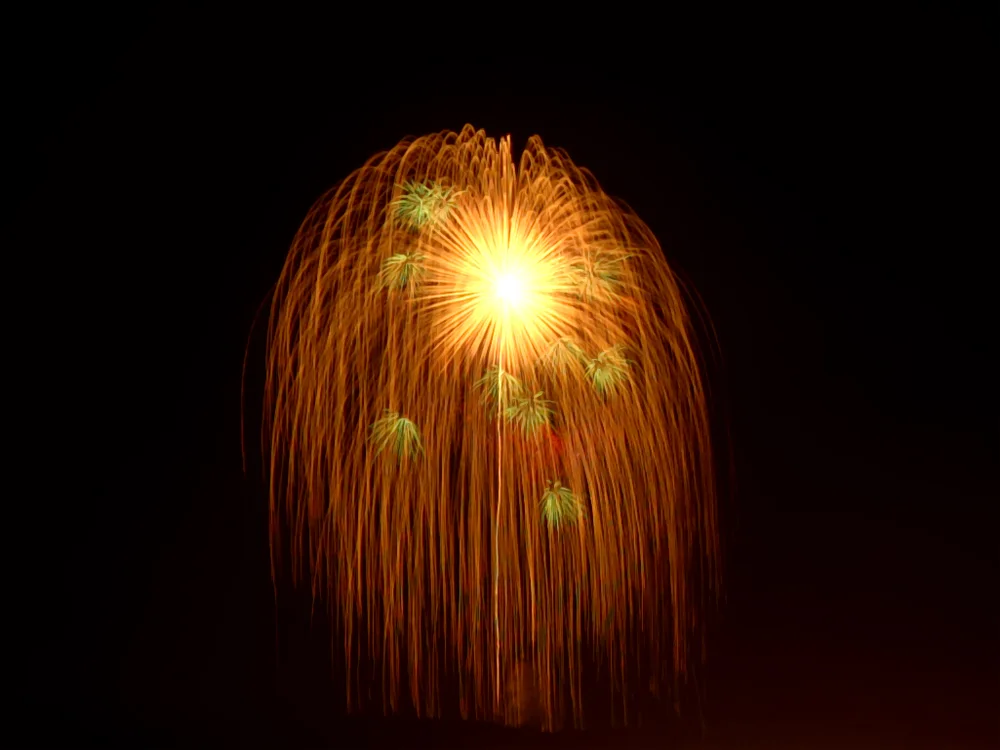
Katakai's 2026 fireworks finished on 12 September. The next festival is now dated for Friday 10 and Saturday 11 September 2027, but the association has not yet published a full 2027 seat and transport sale plan. The useful way to plan now is to choose which part of Katakai is worth the late journey, then use 2026 prices and bus arrangements as a budget benchmark rather than promising they will repeat. The two night programmes normally run 19:30–22:20, with the four-shaku shell at 22:00 on each night. The second day adds daylight fireworks, including a three-shaku shell around 14:00.
Katakai is a dedication festival around Asahara Shrine in Ojiya, not a city-riverfront show whose entire plan is a viewing map. Each shell carries a dedication, and the programme's pacing follows those messages. The town is proud of its large shells, but the experience also includes the procession and a community rhythm before dark. Travellers comparing Niigata's two famous shows should read our Nagaoka ticket and exit guide: Nagaoka rewards a different, much larger riverbank plan. Katakai rewards anyone interested in the dedication culture and willing to solve a late rural return.
| Your main reason to go | Choose | Trade-off |
|---|---|---|
| Four-shaku shell and a manageable festival day | Either evening, arriving before the night show | You miss the daylight fireworks on the second day. |
| Rare daylight three-shaku and night programme | Second day, arriving before 13:00 | You commit to many hours on site before the 22:00 signature shell. |
| Dedicated viewing base with friends | Check the next year's box-seat release | A box costs more and cannot be assumed available overseas. |
| Easiest rail-based return | Secure the return route before choosing an arrival time | The late event bus is a separate cost and timetable decision. |
| Want a quick fireworks stop on a Japan rail trip | Consider a different event | Katakai's strongest moment is late, and the exit is part of the trip. |
2027 dates are known; 2026 seat availability is history
The association now lists 10–11 September 2027. Its site still shows the 2026 box-seat and transport material, which is useful for understanding what to budget, but not evidence that you can buy a 2027 seat today. By the time the 2026 event took place, all advance box-seat allocation had sold out. The earlier version of this guide reported that one-day September 11 boxes and two-day boxes were still available while September 12 and camera seats had gone; that was an interim 2026 status, not a live route now. A future visitor should watch for the next sale announcement rather than treating those old categories as current inventory.
In 2026, a one-day box cost ¥25,300 and a two-day box ¥33,000. Each box admitted up to eight, although roughly six was more comfortable if the group ate and drank. The pair of nights cost ¥7,700 more than one night for the box itself. That difference does not include another hotel night, another post-show journey or another full day allocated to Katakai. The dedicated camera seat cost ¥5,500 in 2026 and sold out, too. These numbers are a scale for early budgeting only; replace them with 2027 terms when released.
| 2026 ticket | Recorded price | Status after the 2026 event | 2027 planning use |
|---|---|---|---|
| One-day box | ¥25,300, up to eight guests | All 2026 advance boxes ultimately sold out | Budget scale for a group, not a live offer |
| Two-day box | ¥33,000, up to eight guests | 2026 sale closed | Compare against two hotel nights and two late exits |
| Camera seat | ¥5,500 | 2026 allocation sold out | Wait for next-year availability and conditions |
| Same-day individual entry | ¥5,500 per person | Sold at the gate in 2026 | Check whether this route recurs for overseas visitors |
The 2026 association guidance did not sell its paper box seats internationally by post. It directed overseas visitors towards same-day individual admission, which cost ¥5,500 per person and was sold at the central box-seat gate from 09:00 on the two festival days. That arrangement made planning easier for someone without a Japanese delivery address, but it did not give them a reserved group box. Do not assume the same sales channel or price will be offered in 2027. If you need a guaranteed seated base, decide how you will obtain the next year's ticket before booking a nonrefundable hotel. Our post-2026 Nagaoka analysis makes a similar distinction between past inventory and future planning.
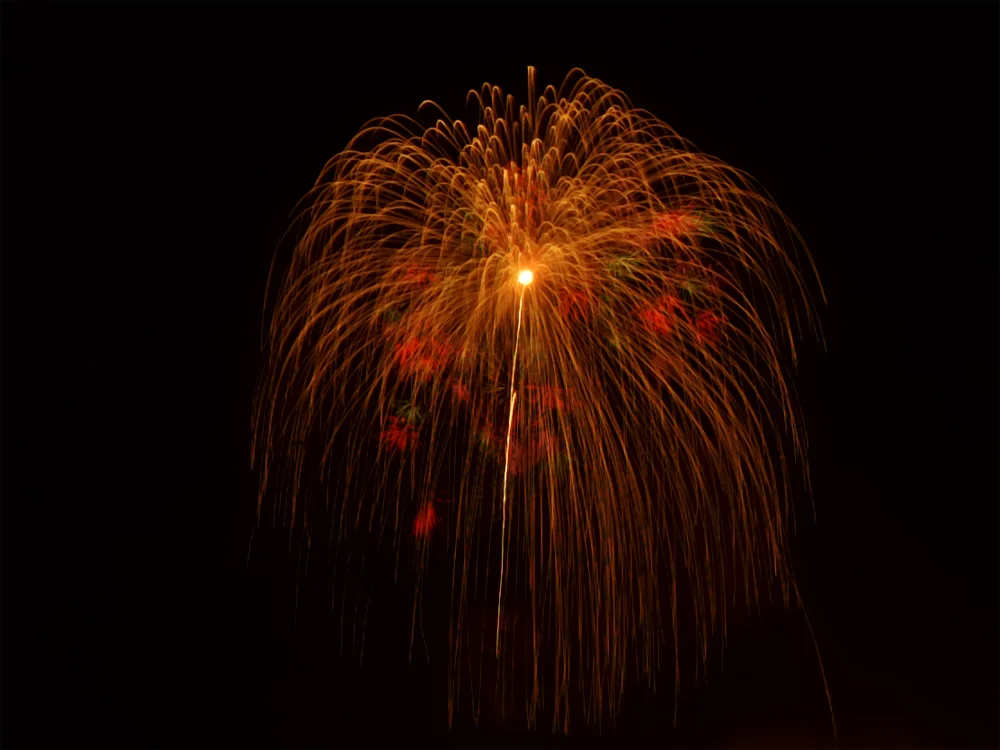
The second day is an endurance decision, not just another night
The festival programme pattern puts daytime fireworks from 13:00 to 14:00 on day two, ending with a daylight three-shaku shell around 14:00. The night dedication programme then begins at 19:30. A visitor who arrives for the daytime session has more than five hours between its end and the start of the night show, then remains until the four-shaku at 22:00 if that is the purpose of the trip. The daylight shell is distinctive; the cost is exposure, waiting and more meals or drinks to manage in a small town.
If you intend to attend both sessions, plan the interval as a rest block. Locate toilets, eat before the evening peak, charge your phone and reduce unnecessary walking. An older traveller, a family with a child or a heat-sensitive visitor may get more enjoyment from the evening alone. The same principle appears in our Nagaoka packing and exit guide: the preparation that matters most is often what happens in the hours after arrival, not which fireworks are listed on the poster.
The first night can still be a full festival evening. Katakai's fireworks are offerings to Asahara Shrine; the association describes processions called tama-okuri and tsutsu-hiki, and the dedication announcements give context to each shot. Large shells dominate the programme: it says roughly seven or eight in ten fireworks are shaku-dama. The nearby hillside reflects the bursts, making the sound a feature of the visit. That is one reason to choose Katakai rather than simply watch any large fireworks event from afar. If your main aim is the total visual spectacle of a major river show, Nagaoka may suit you better.
The shrine setting also distinguishes Katakai from a show built around an amusement-park timetable. At Huis Ten Bosch, the theme-park entry, reserved seating and resort exit form the decision. Katakai's ticket buys a viewing place for a programme rooted in local dedications; the queue and temporary bus are part of the cost even after a good seat has been secured. If you are selecting one summer festival from several regions, the Tohoku festival route and Sendai Tanabata plan show events that can fit into a city-centred week more easily. Those are sensible alternatives when Katakai would require a one-night detour solely for the 22:00 shell.
Build the Nagaoka return before you choose your viewing spot
In the 2026 transport plan, the regular bus from Nagaoka to Katakai cost ¥470 for an adult and ¥240 for a child. The event return after the show was different: a special bus left the temporary Katakai Gonochō stop for Nagaoka Station East Exit at a ¥2,500 cooperation fare for both adults and children. These were not symmetric ordinary fares. They show why “we will take the bus” was incomplete as an exit plan. The next year's stops, fares and last departure should be checked as a single return chain before you decide whether to stay beyond 22:00.
| 2026 route component | Recorded fare or operation | What to verify for 2027 |
|---|---|---|
| Nagaoka to Katakai | Regular adult ¥470, child ¥240 | Timetable, fare and the stop nearest your viewing area |
| Post-show Katakai to Nagaoka | Special bus, ¥2,500 for each rider | Temporary stop, queue, final departure and payment method |
| Harashin-linked parking shuttle | 2026 departures from Hanazono via Raikōji every 30 minutes from 15:00 to 17:30 | Whether this arrangement returns and where the car must be parked |
| Other drive-and-shuttle routes | Separate 2026 lots and traffic restrictions | Which exact lot, shuttle and exit road form one usable chain |
Driving only simplifies the festival if you know your permitted parking area, the shuttle serving it, the return operation and the restricted roads after dark. In 2026 a Harashin-linked option connected the Hanazono and Raikōji stores with the temporary Gonochō stop; outbound departures from Hanazono ran every half-hour between 15:00 and 17:30. That is evidence of how detailed the event plan can be, not a forecast of 2027 service. A generic map showing a short drive from Nagaoka will not include festival controls. Compare the actual trip with our Omagari train versus park-and-ride decision if you are used to large Japanese fireworks nights.
The signature four-shaku shell is normally fired at 22:00 both nights; the programme continues until about 22:20. Leaving before 22:00 can ease the departure but removes the moment many visitors came to see. Staying for it means accepting an exit queue. A fixed hotel check-in, a young child's stamina or a final train may make an earlier departure sensible, but that is a conscious trade. The Kumagaya seats versus free-viewing comparison illustrates how the return can matter more than the price printed on an entry ticket. In Niigata, the difference is amplified by Katakai's rural location.
Rain usually changes your gear, not the festival date
Katakai launches in ordinary rain. Postponement is associated with severe conditions such as typhoon-level weather or a high-wind warning at the stated threshold; if delayed, the first- and second-day firing order remains sequential and the box-seat tickets slide with their corresponding day. That policy is more specific than a general “rain or shine” claim. In 2027, check the day's firing announcement rather than deciding from a forecast screenshot. The Japan rain contingency guide handles the surrounding rail and hotel plan; our Akita Kanto post-event notes show another case where a festival's operating decision matters more than a general weather label.
Bring rain protection you can use in a crowd, layers for a long stationary evening and a charged phone for the exit route. Keep a large suitcase out of the viewing area. Hotel-to-hotel forwarding or station storage can work, depending on the travel day; the Japan luggage guide breaks down when each option is realistic. If your Niigata stay includes a winter leg elsewhere, do not treat this September packing list as a general mountain-weather plan; our Yuzawa hotel comparison addresses a very different season and transport pattern.
One night usually earns more than two
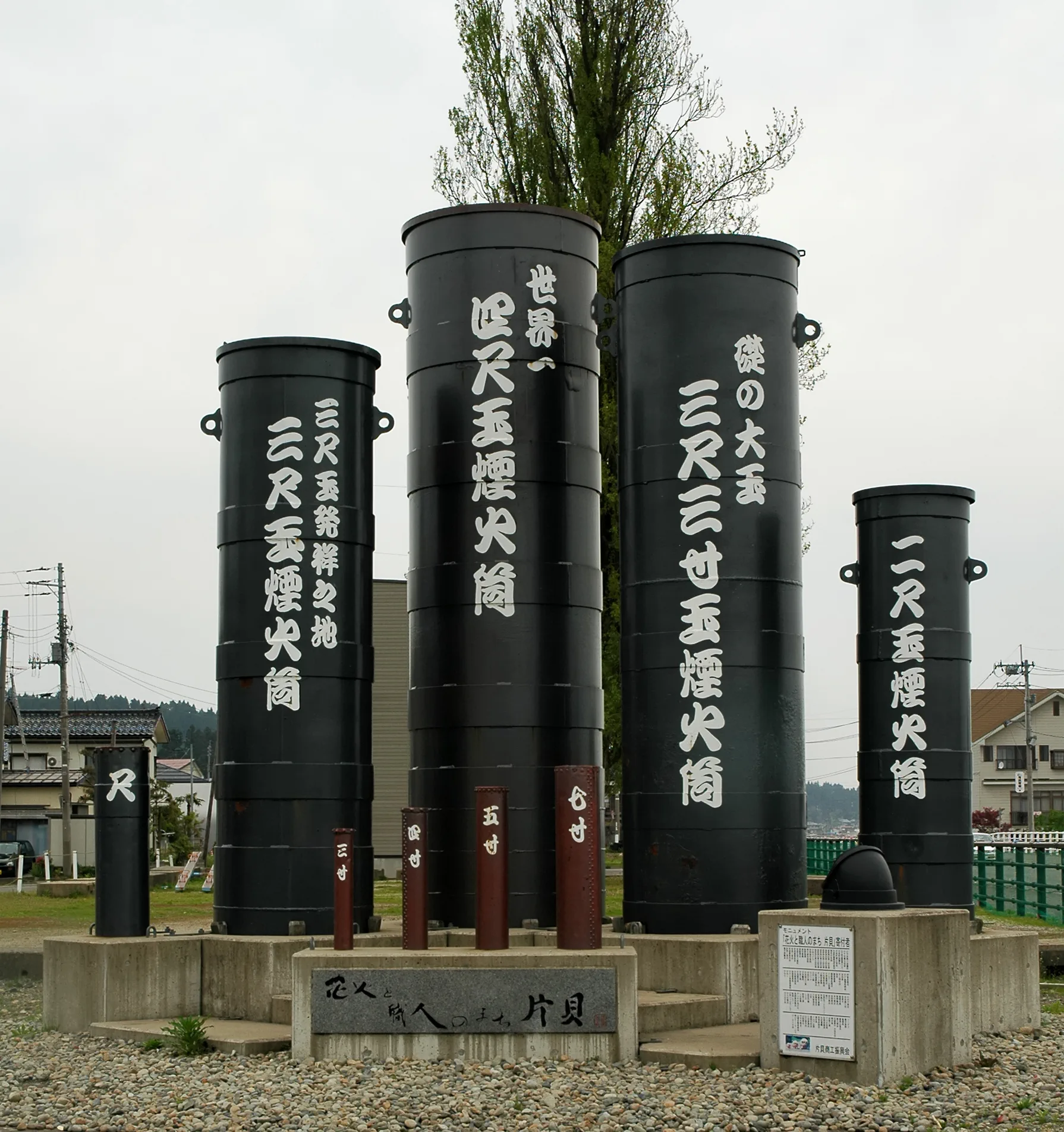
A single evening gives most international visitors the dedication programme and a four-shaku shell. The second-day daytime fireworks justify a longer stay only if the daylight three-shaku is part of the reason you chose Katakai. Two nights make sense for someone absorbed by the local dedication culture, for a group that genuinely uses a two-day box, or for a photographer who accepts two late returns. The small difference between the 2026 one-day and two-day box prices did not make the extra night cheap once room, meals and transport were included.
Nagaoka is the straightforward rail-based hotel base for many visitors, but the final event bus must still take you from Katakai to the station after 22:00. A hotel near Nagaoka Station East Exit can reduce the last leg. Compare available rooms on the Nagaoka accommodation map against your likely bus arrival rather than choosing by a low room rate far from the station. If you are deciding which Niigata fireworks deserves a limited travel night, our Nagaoka 2026 review and exit lessons give the counterpart.
Outside Niigata, other fireworks guides help only when you compare the real access pattern. The Lake Biwa access guide is a station and shoreline decision; the Yodogawa guide is about which bank remains usable; Sumida River involves a dense Tokyo exit. Katakai's late shell and event bus define it more strongly than a free-viewing map. For a trip with only one fireworks date, our Tokyo fireworks comparison is a useful reminder that the easiest show to reach can be the better travel decision even when Katakai's shells are larger. The summer festival comparison is broader if the choice is between fireworks and a procession or dance event.
The confirmed planning fact for the next edition is the 10–11 September 2027 date. The 2026 ¥25,300 one-day box, ¥33,000 two-day box, ¥5,500 individual entry and ¥2,500 post-show bus are historical benchmarks until a new sales and transport notice appears. Choose a festival day for its actual programme, then build the hotel and late return around the four-shaku. A first-time Japan traveller should weigh the detour against a 10-, 12- or 14-day itinerary before reserving a second Niigata night. Check the association's event and sales updates before buying transport or accommodation that depends on a particular 2027 seat or bus.