
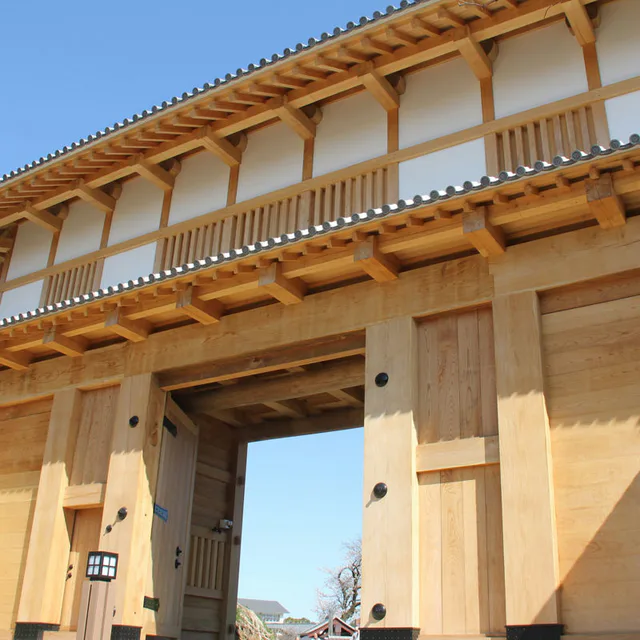
Mito Castle rewards a visitor who wants to understand an earthwork castle and the Mito domain more than a visitor seeking a towering keep. The ruins spread around Kodokan, a restored main gate and a corner turret, all near Mito Station. Their visiting hours differ. If the No.14 Japan 100 Famous Castles stamp matters, settle that timed errand first and leave the always-viewable Otemon for later.
The stamp and a paper castle seal are different souvenirs. The Japan Castle Foundation stamp belongs to the numbered national collection; Mito’s gojoin are printed sheets sold through several local outlets. A shop selling a handsome seal cannot necessarily provide the No.14 stamp. Check the current stamp location and its hours before travelling, especially if Mito is a short stop between trains.
↔ Scroll table left or right
Your purpose | First task | Leave until later |
No.14 stamp | Confirm its current staffed counter and hours | Otemon exterior |
Understand Mito domain | Visit Kodokan and the Corner Turret while open | Gate photographs and outdoor earthworks |
Free castle remains | Reach the Corner Turret before 4:00 p.m. | Otemon, visible after hours |
Evening arrival | Use the outdoor remains and Otemon | Kodokan, stamp and turret interior need another opening window |
The No.14 stamp is a timed task
The Japan Castle Foundation identifies Mito as castle No.14. An earlier closure notice connected stamp availability with Kodokan, showing why a visitor cannot assume a 24-hour castle site means a 24-hour stamp. That notice was about a past interruption, not a live statement of today’s counter. Confirm the place and the time for your travel date with the castle foundation or local facility before making the stamp the sole purpose of a late arrival.
Mito’s tourism association lists castle gojoin at its office, the tourist information counter beside Mito Station’s JR gates and the Kitazawa shop inside Kodokan; the Tokugawa Museum carries selected Tokugawa-approved designs. The office moved in September 2026, and Kitazawa requires Kodokan admission, so check the sales point that fits your route. A gojoin is a printed paper memento, sometimes seasonal, rather than an impression in the 100 Famous Castles stamp book. The seal counter is not a substitute for the No.14 stamp.
For a collector, the first itinerary check is the No.14 stamp procedure, followed by Kodokan’s opening hours and the route to the other castle features. A casual visitor can reverse the emphasis and enjoy the ruins without treating a stamp as the finish line. Both visits can be satisfying, but they have different deadlines.
Kodokan gives the visit its historical centre and first clock
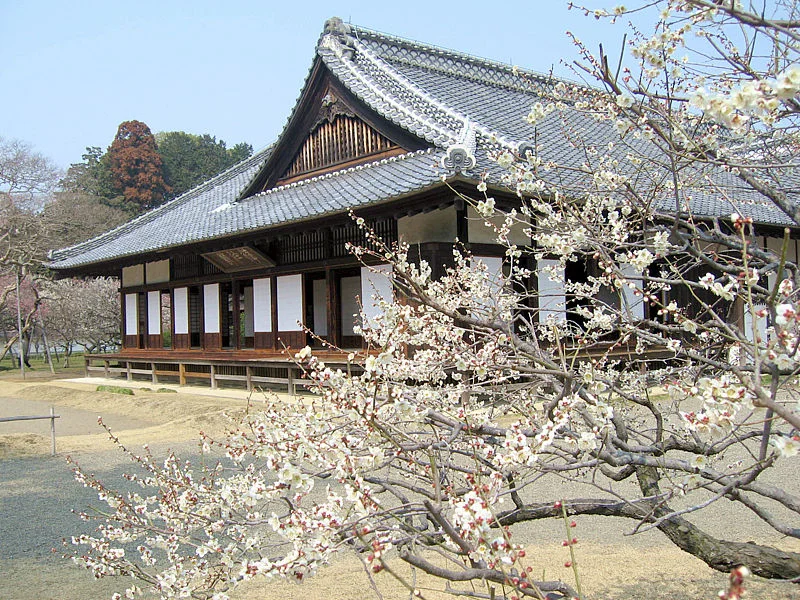
Kodokan opens 9:00 a.m.–5:00 p.m. from February 20 through September 30 and 9:00 a.m.–4:30 p.m. from October 1 through February 19. Current admission is ¥420 for adults and ¥210 for school-age children and visitors aged 70 or over. It closes December 29–31. The outdoor ruins are free, but the admission buys the domain-school buildings and grounds; a first visit loses much of Mito’s story by treating that ticket as an optional afterthought.
A late arrival can still see sections of the castle landscape, but it cannot recreate an indoor Kodokan visit after the gate closes. That distinction matters for someone coming from Tokyo or adding Mito between other Ibaraki stops. Put the timed school ahead of the outside photographs, even if the reconstructed gate looks like the natural first stop on the map.
Tokugawa Nariaki founded Kodokan as the Mito domain school in 1841. The surviving site connects the castle’s political history with education, medicine, astronomy and martial study; Yoshinobu Tokugawa, later the last shogun, studied there. These rooms and grounds explain why Mito is more than a stamp-shaped detour. Leave enough time to read the setting instead of using Kodokan only as an errand beside the ruins.
Otemon can wait until after the timed doors
The present Otemon is a reconstruction completed in 2020, built to restore the principal entrance of the castle’s Ninomaru area. At about 13 metres high and 17 metres wide, it gives scale to the surrounding earthworks. The gate is viewable 24 hours, so it is usually the least urgent stop when daylight and opening hours are running out.
If you reach town at 3:20 p.m., photographing Otemon for twenty minutes before looking at the clock could cost the Corner Turret interior. Walk past the gate if necessary, visit the place that closes first, then return for the exterior. The gate remains useful later for seeing the reconstructed scale of the entrance, even when the school and turret have stopped admitting visitors.
The Corner Turret closes before Kodokan in autumn
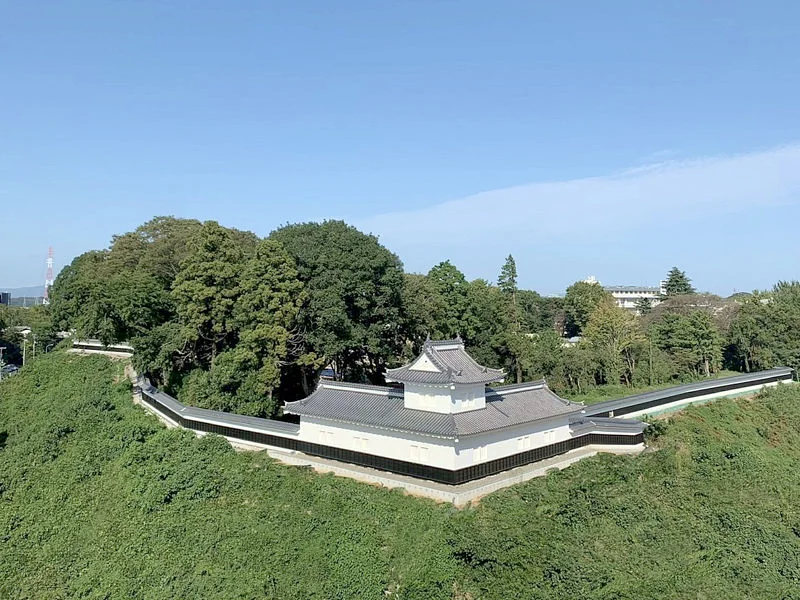
The restored Ninomaru Corner Turret is free to enter but currently opens only 9:30 a.m.–4:00 p.m. It closes December 29–January 3 and may close in severe weather. Inside are exhibits about the castle; the upper floor is normally not open. The walking route from Mito Station is longer than a glance at a city-centre map suggests, so do not use a 3:55 p.m. station arrival as though it were a 3:55 p.m. turret arrival.
For a visit that begins late, make the order explicit:
Confirm and collect the No.14 stamp at its current place if that is your principal goal.
Enter the Ninomaru Corner Turret before its 4:00 p.m. closing time if the interior interests you.
Use the time left for Kodokan where hours permit, then Otemon and the outdoor castle ground.
A visitor with time for only two stops should remove the one that remains accessible later. If the stamp is essential, deal with that first; if entering the Corner Turret is essential, reach it before 4:00 p.m. An exterior Otemon view and a walk along the surviving earthworks can fill the remainder without a ticket window.
The missing keep is part of the site’s character
Mito was an extensive earthen castle rather than a stone-and-tower scene of the kind many travellers picture. The remaining moats and embankments, Kodokan and Yakuimon tell more of its story than a distant skyline view would. The restored gate and turret help visitors read the plan, but they should not be mistaken for a surviving main keep.
If the point of your castle day is a dramatic original tower, Himeji or Matsumoto will answer that desire more directly. Mito suits someone who likes tracing a castle through streets, surviving ground forms and the Mito Tokugawa connection. A collector may still come for No.14; a non-collector should know what kind of historical site the train journey buys.
Ask whether the earthworks and domain school would interest you without the expectation of a giant keep photograph. If the answer is no, an easy walk from Mito Station does not make this the right castle for a long Tokyo detour. If the answer is yes, the dispersed layout becomes part of the visit rather than a defect to overlook.
Yakuimon survives inside a working school site
Yakuimon is regarded as the surviving original castle structure, now within Mito Daiichi High School grounds. The working campus is not a castle park: do not wander through its courtyards or block pupils for a photograph. Check the current gate arrangement, use the permitted approach and keep the visit unobtrusive.
Original fabric makes the gate meaningful to a castle enthusiast. A hurried collector trying to complete the Kodokan-side stamp and reach the turret before closing may sensibly omit it. The school location adds a practical constraint, so put Yakuimon into a longer visit rather than treating it as an effortless photo next to Otemon.
Build the route around closing times
↔ Scroll table left or right
Time in Mito | Suggested emphasis | What may be lost |
About one hour | Stamp task plus Otemon, with turret only if timing allows | A full historical walk |
About ninety minutes | Kodokan, Corner Turret, Otemon | Yakuimon or a slower earthworks visit |
About 150 minutes | Add Yakuimon, earthworks and moats before Otemon | Little of the core castle story |
After 4:30–5:00 p.m. | Exterior remains and Otemon | Kodokan, stamp counter and turret interior |
These windows are examples for planning, not promised tour durations. The principle is to spend the first available minutes on access that will expire. Add walking time between Kodokan, Otemon, the turret and Yakuimon; a map of nearby pins can disguise the time spent finding the correct pedestrian approach.
Near the station does not make every Tokyo day trip worthwhile
Kodokan and Otemon are close to central Mito, but “near Mito Station” measures only the final leg. The current Ibaraki visitor page puts Kodokan about a fifteen-minute walk from the station; local route choices can change the exact duration. A Tokyo visitor must also pay for and schedule the long rail journey, then decide whether the castle, Kairakuen or another Mito purpose justifies the travel day.
The strongest reasons to travel are a commitment to the 100 Famous Castles collection, a real interest in Mito Tokugawa and late-Edo history, or a wider Ibaraki route that already brings you near Mito. On those terms, even a modest exterior walk can be meaningful. A visitor seeking only a quick stamp should still check that the timed counter will be open before committing the train fare.
If the trip may include an overnight, Mito or Oarai without a car compares the bases. If it competes with Kamakura, Nikko or another outing from Tokyo, use Tokyo Day Trips Compared before choosing a northbound day solely because the castle looks compact on the map. Mito works best when the rest of the route supports it.
Kairakuen shares the Mito story; distant Ibaraki stops do not share its clock
Kodokan, Mito Castle and Kairakuen make a coherent day around the domain and its cultural landscape. Oarai, Hitachi Seaside Park and the Ryujin area each add a different journey. Their names can fit on one prefectural map, but opening hours and road or rail transfers will not collapse into a short city walk. Choose the city history day or a broader Ibaraki route deliberately.
A traveller coming mainly for Ryujin Bungy should build around that timed booking and its transport first, then ask whether Mito belongs before or after it. The castle should not be an automatic extra because it shares the Ibaraki label. Its free outdoor sections are flexible; the Kodokan and turret parts are not.
Who should make the stop
For a No.14 collector, verify the stamp procedure, then fit Kodokan and the 4:00 p.m. turret cutoff around it. Return to Otemon after the doors that can close. A paper gojoin is a separate purchase with its own stock and sales point, so decide whether you want that too rather than assuming one counter completes both collections.
For a first-time visitor without a stamp book, allow roughly ninety minutes to two and a half hours if the earthwork site and Kodokan story interest you. A much shorter stop may be enough for Otemon alone, but it will not show why the castle mattered. If a surviving keep is the only goal, spend the rail day elsewhere and leave Mito for a trip with a stronger historical purpose.