
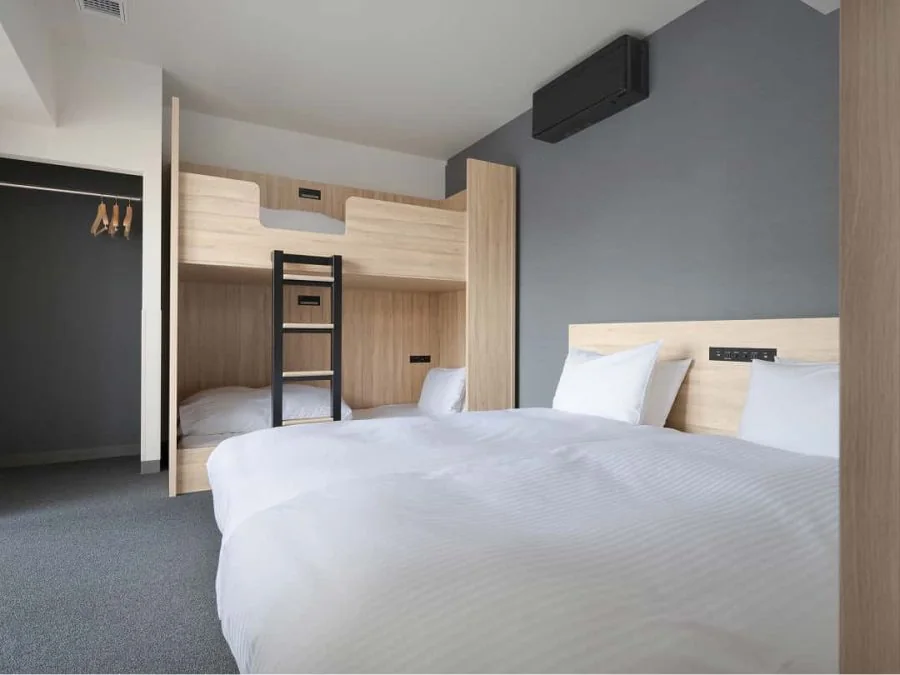
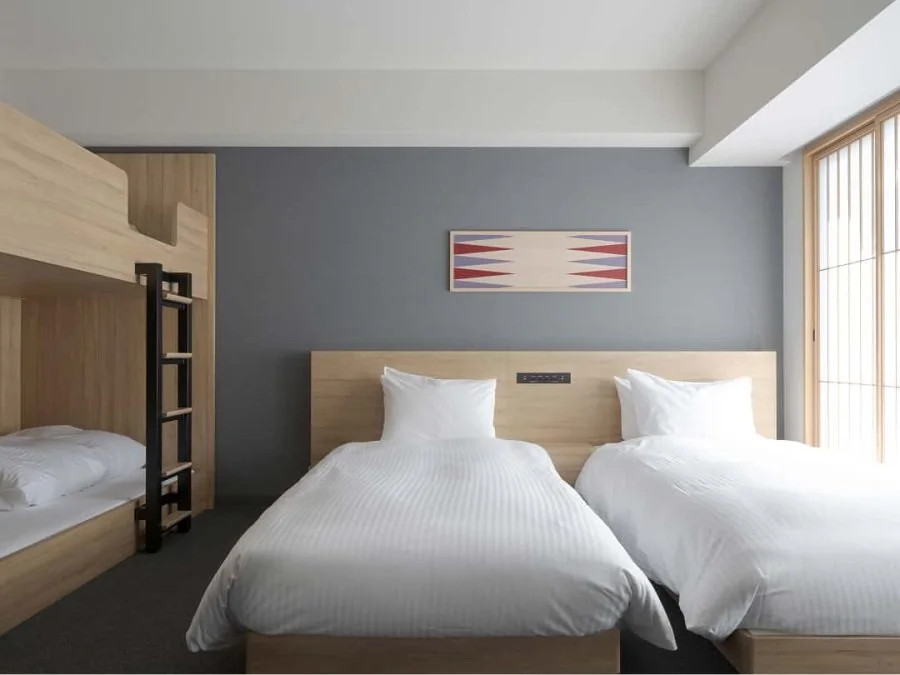
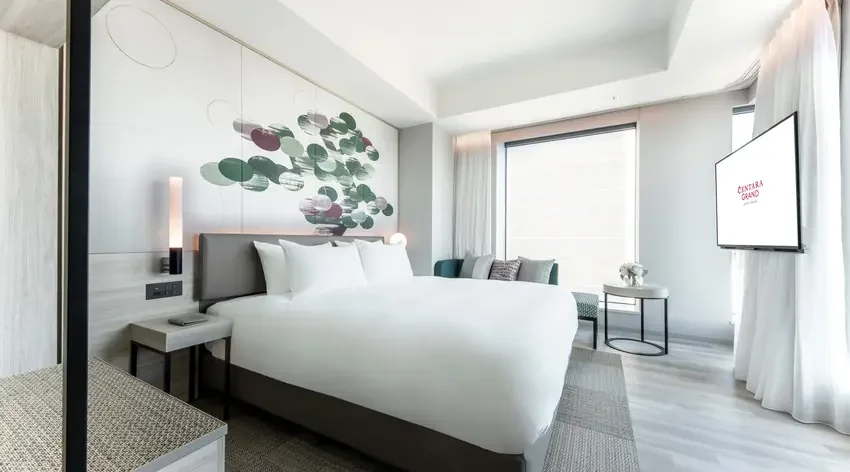
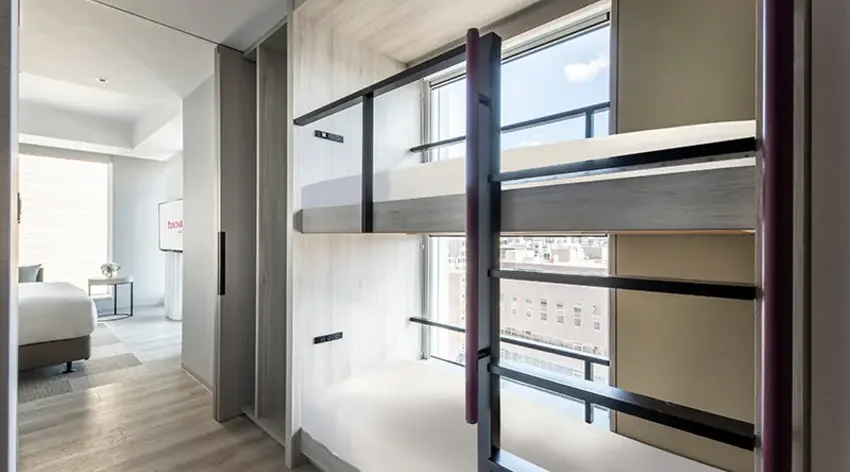
MIMARU Osaka Namba Station and Centara Grand Hotel Osaka can both sell a family of four a room in Namba, but the four places to sleep do not mean the same thing. MIMARU's 35-square-metre Family Apartment has two single beds and one bunk bed, a furnished kitchen and a dining table. Centara's 40-square-metre Family room has a king bed for adults and a separate children's bunk area, plus hotel dining and service. Two adults with two school-age children may be comparing a practical apartment with a more serviced hotel. Four adults, however, cannot simply book Centara's Family room and treat the children's bunks as adult beds. The occupancy rule can eliminate that option before price or location enters the decision.
JapanLayer hotel assessment by dimension
↔ Scroll table left or right
| Hotel | Access | Space | Comfort | Cleanliness | Neighbourhood | Service | Value |
|---|---|---|---|---|---|---|---|
| MIMARU Osaka Namba Station | Insufficient evidence | Insufficient evidence | Insufficient evidence | 9.4/10 | Insufficient evidence | 9.4/10 | Insufficient evidence |
| Centara Grand Hotel Osaka | 8.6/10 | 8.3/10 | 8.8/10 | 8.0/10 | 8.5/10 | 7.5/10 | Insufficient evidence |
The four-person booking that actually fits
↔ Scroll table left or right
| Decision point | MIMARU Namba Station | Centara Grand Osaka |
|---|---|---|
| Four sleeping places | Two singles and a bunk; up to four adults | King plus children's bunk; check child age and occupancy |
| Entry family room | 35 m² Family Apartment | 40 m² Family Yu room |
| Food | Furnished kitchen and dining table | Breakfast buffet and hotel restaurants |
| Laundry | Coin laundry; washer-dryer only in selected larger rooms | Check current hotel service terms |
| Nankai arrival | About four minutes from Namba Station | About four minutes from Nankai South Exit via Namba Parks side |
| Four-adult solution | One four-adult apartment is eligible | Compare two suitable rooms, not a children's Family room |
Swipe to compare the hotels
Count eligible sleepers before looking at the skyline
MIMARU lists its Family Apartment for four adults, with up to two additional children age six or under under its child policy. Two singles and a bunk offer four distinct sleeping places. That can solve the nightly bed negotiation for four adults or a family with older children. It is still one 35-square-metre room with one bathroom and one toilet. If four adults have different morning schedules, the bed count solves sleep but not necessarily the shower queue. The MIMARU Namba Station four-person apartment guide goes further into the room's fit as a group base.
Centara's Family room is designed around two adults and children. The Yu Standard Floor version is 40 square metres, with a king bed and a bunk area. Its individual Family-room description says two adults and two children, while a broader room-listing display has shown a different child count. That makes the final reservation screen important: enter the two children's exact ages and confirm the named Family room accepts the full party on those dates. Centara separately states that its family bunk beds are for children under 11. If a child has aged out or two unrelated adults need the bunks, do not rely on the word “family” to make the room valid. The Centara 40-square-metre family room analysis is useful once eligibility is established.
For four adults who want Centara's hotel services, compare two suitable rooms, including any explicitly confirmed connecting arrangement, with MIMARU's four-person apartment. Four adults split across two Centara rooms gain a second bathroom, more privacy and likely a higher total price. Four adults in MIMARU can eat together and share one kitchen, but they also share one bathroom. Neither arrangement is superior without the group schedule. The one room versus two rooms decision for Osaka groups gives this issue a wider price and bathroom test.
Both are Namba addresses, but the last walk differs
MIMARU puts Nankai Namba Station about four minutes away on foot from its Nippombashi address. Centara also quotes four minutes, specifically from the Nankai South Exit, and offers access via the Namba Parks second-floor deck to its own second-floor entrance. Those published walks share a number but describe different door-to-door routes. Families landing at Kansai airport may arrive by a Nankai train with wheeled cases, a stroller or a tired child. Locate the actual station exit and hotel entrance before assuming the two walks are interchangeable. The Kansai airport to Osaka transport guide covers the rail choice before this last stretch.
The subway adds another distinction. Centara estimates about eight minutes from Osaka Metro Namba Exit 4. MIMARU's most prominent published station walk is the Nankai one; calculate your own route to the relevant metro platform if you plan to travel daily on the Midosuji Line. A family going to Umeda, Shin-Osaka and Tennoji can spend more time inside the station complex than on the short outdoor walk. The Namba versus Umeda accommodation guide is worth reading if daily northbound journeys dominate the itinerary.
Centara's Namba Parks connection is useful when shopping or returning with children and bags, but it does not make every station approach weatherproof. Confirm the route for the specific entrance and its opening conditions; an elevated deck is not a promise of a fully indoor trip from the train. MIMARU's address can make Kuromon Market and the eastern Namba streets natural walking territory. If your family intends to buy fruit, snacks or a simple meal for the apartment, that local shopping pattern matters more than a one-minute difference in a hotel map. The Kuromon Market food walk helps turn that idea into a realistic morning.
A kitchen only saves money when the family will use it
Every MIMARU Namba Station apartment is described with a furnished kitchen and dining area: IH hob, microwave, refrigerator, utensils, cookware and tableware. That lets a family prepare breakfast at its own pace, keep familiar foods for a child, or eat takeout together after a long day. It is especially useful for four or more nights, when repeated restaurant breakfasts add cost and time. It does not turn the room into a grocery-delivery service. Someone still has to buy food, cook, clean and manage storage. A family spending every morning outside may pay for a kitchen that remains unused. The Osaka long-stay hotel guide compares that kind of trade-off over a longer booking.
Centara offers hotel dining instead. Suan Bua serves an international breakfast buffet from 6:30 a.m. to 10:30 a.m. on the current schedule, with last entry at 10. Other restaurants and in-room dining may suit a later return. That can remove the food-shopping task and provide a predictable early meal before a day trip, but breakfast for children may carry an additional charge even when they share the adult bed without an extra room fee. Check the plan's meal inclusion separately for each adult and child. The cheapest room-only quote and a breakfast-inclusive family quote are not comparable totals. The Osaka with children itinerary is a useful check on how many mornings actually require an early departure.
The first-night arrival can overturn the kitchen advantage. After an evening flight, it may be easier to order food or eat near Centara than shop and cook in the apartment. Conversely, a family with a child who needs a fixed food routine might prefer the MIMARU kitchen even on the first night. The right question is what happens between arrival and the next morning, not whether “apartment” or “hotel” sounds more comfortable. The late KIX arrival hotel guide helps assess whether Namba is the right first-night destination at all.
Laundry and bathrooms change the value after three nights
MIMARU Namba Station has shared coin laundry, while selected larger apartment types include an in-room washer-dryer. Its basic Family Apartment explicitly does not. A listing that says “MIMARU has laundry” does not tell you whether you can start a wash after the children sleep without leaving the room. For a four-night visit with a theme-park day, look at the precise room category and laundry location. If the trip continues to Kyoto or Tokyo, a mid-stay wash may reduce the luggage the group has to carry onward. The Fraser Residence Nankai four-night studio guide gives another Namba laundry-and-kitchen reference.
Centara's family room provides hotel housekeeping and a conventional serviced-room routine, but the room is not an apartment with its own kitchen. If laundry is essential, inspect the hotel's current service terms and turnaround before booking; do not assume a laundry bag in a hotel room works like a washer-dryer. A two-room Centara booking can provide two bathrooms, which may be more valuable than a kitchen for four adults getting ready for early trains. The MIMARU Shinsaibashi Central morning bathroom decision shows how one additional bathroom can reshape a group itinerary.
The bathroom configuration matters for children too. MIMARU describes a separate washstand and bath; parents can supervise a child's bath while someone else uses the sink. Its standard Family Apartment still has one toilet. Centara's Family room has a spacious bathroom with both shower and bathtub, but the room's bed layout gives the children a distinct bunk area. A child who falls asleep early may make that separation more valuable than a second washbasin. Read the floor plan or photos for the booked room rather than treating its 40 square metres as one open square of space.
Board games and hotel facilities serve different evenings
MIMARU Namba Station has a board-game identity, with themed rooms and games as part of its family appeal. The ordinary Family Apartment is not automatically the same product as a named board-game room or a Sky Terrace concept room. If the games are central to the trip, verify which room type and shared options are included. A family that returns from sightseeing at 7 p.m. may enjoy a table, a simple dinner and a game without spending another hour outdoors. The Osaka attractions with kids can help decide whether the evening should be quiet after a long day.
Centara provides a more traditional large-hotel evening: several dining venues, a club-lounge tier on certain room plans, and city views from named room categories. None of those facilities should be priced as included with every Yu-floor Family room. The Family room's bed layout, floor category and rate are separate decisions from club access or a restaurant reservation. A family who values a cooked breakfast and dinner without leaving the building may use Centara's service more than MIMARU's kitchen. Another family may spend every evening eating through Namba, making the hotel's restaurants an unnecessary premium. The Namba shopping hotel guide puts those nightly journeys in context.
The park itinerary is another pressure test. A Universal Studios Japan day usually ends with a train ride back to Namba; the most useful room then may be the one where everyone can shower and sleep without a queue. With older children or four adults, MIMARU's four separate beds are a concrete advantage over squeezing people into a room meant for two adults and two younger children. With younger children who sleep on bunks and parents who want a hotel breakfast, Centara's Family room may fit better. The USJ one-day versus two-day hotel choice can establish whether staying in Namba is right for the park portion at all.
Compare the exact family quotation, not the hotel names
For two adults and two children under the relevant bunk age, obtain three numbers: MIMARU Family Apartment, Centara Family Yu room and any Centara Family Rei or club-floor rate that interests you. Include breakfasts, all children, taxes and cancellation terms. A premium-floor quote cannot be compared fairly with MIMARU's standard apartment unless the family will use the premium benefits. For four adults, skip Centara's two-adult Family room and compare two appropriate Centara rooms with MIMARU's four-adult apartment. The Namba family hotel comparison with Centara and Keihan offers another hotel-style family option.
If one adult will work or one child will nap during the day, consider room separation. MIMARU has larger two-bedroom options with extra washstands, toilets and in-room laundry; its 35-square-metre Family Apartment is the entry comparison, not the whole property. Centara's Family room separates the bunk area from the king-bed zone, but it does not become a full two-bedroom suite. The Osaka hotels for parents gives a different mobility and privacy lens if grandparents travel with the group. A second room can be better than any single family room when adults have conflicting sleep schedules.
The station choice may ultimately beat the room choice. A family based in Osaka for Kyoto, Nara and Kobe day trips should map the repeat transfers before paying for either Namba property. The Osaka day trips comparison and Osaka hotel bases for Kyoto and Kobe show how a different district can remove daily changes. If Namba remains the right base, MIMARU is the first quote for four distinct beds, self-catering and shared evenings. Centara is the first quote for two adults with children who fit its bunk policy and who want hotel dining and services. The booking must confirm the actual sleepers and named room; a generic “family” filter does not settle either issue.
Updated 4 October 2026. Confirm child eligibility, room category and meal terms in the selected rate.