
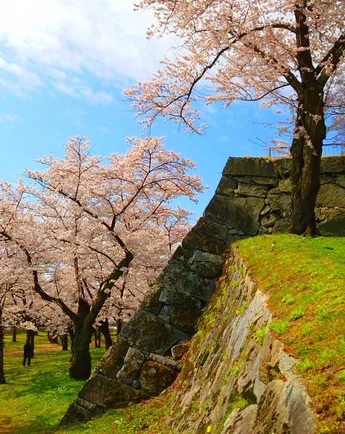
Morioka Castle is an unusually good stop for visitors who enjoy reading a place on foot. There is no keep to enter, and the castle ruins cost nothing. What remains is a sequence of high granite walls, changes in ground level and four recognisable enclosures: Honmaru, Ninomaru, Sannomaru and Awajimaru. The question is how much of a Morioka day to give them. A quick photograph beside the nearest wall misses the site's shape, while a museum visit can crowd out the outdoor circuit if your train leaves soon.
The practical split is straightforward. Walk the free ruins first if you want architecture and city views. Use the Morioka History and Culture Museum's free ground floor for a brief introduction or the Japan 100 Famous Castles No.6 stamp. Buy the ¥450 adult ticket for its second floor when you want the Nanbu clan and castle-town history in greater depth. The museum has its own hours and closed days; the park does not turn into a stamp desk after the building shuts. This distinction matters more than the modest admission fee.
Choose the visit you have time to finish
| Time in the area | Route that fits | Leave out |
|---|---|---|
| 30–45 minutes | Head for Ninomaru and Honmaru, compare two wall sections, then return toward the station or bus stop. | The paid museum rooms and the wider castle town. |
| About 60 minutes | Follow the main enclosures and collect No.6 at the museum if it is open. | Reading every monument or paying for upstairs only because it is inexpensive. |
| About 90 minutes | Walk Ninomaru, Honmaru, Sannomaru and several masonry styles, with a short museum stop. | Trying to make the castle the whole Morioka day. |
| Two to three hours | Add Awajimaru, Hiko-gura, the museum's paid rooms if the exhibitions interest you, and nearby castle-town streets. | Rushing through the stonework to keep a rigid checklist. |
If you have not chosen a base for the region, the decision starts earlier than the park gate. The Tohoku hotel-base comparison weighs Morioka against Sendai, Aomori and Hachinohe. With a Morioka night already booked, this is a low-friction city stop; on a same-day rail transfer, museum closing time and luggage become the controlling details.
The castle is a sequence of levels, not a missing tower
Kozukata Castle is the other name you will encounter for Morioka Castle. Nanbu Nobunao began the project around 1597. His successors continued it through a long construction period complicated by flooding, and the complex reached its completed form before Nanbu Shigenao entered it in 1633. Most buildings disappeared during the early Meiji period, with dismantling in 1874. A visitor who expects an intact tower will therefore be disappointed for a predictable reason; the earthwork and stone system are the surviving attraction.
Start by understanding where the Honmaru sits in relation to the Ninomaru rather than photographing the first exposed wall. From the upper enclosure, look back across the change in height and trace where a defender would have moved between sections. Sannomaru and Awajimaru give the larger footprint its scale. The granite was quarried within and near the castle precinct, including the Uchimaru area, so the walls are part of the local terrain as well as a piece of military architecture.
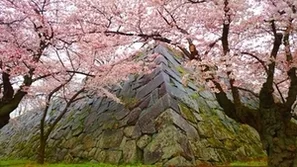
It helps to compare this place with another castle only after you know what you want from the series. Sendai Castle also asks visitors to separate open ruins from stamp hours, but its hilltop approach and city panorama make for a different half-day. At Nejo Castle, reconstructed buildings make the former use of the site more explicit. Morioka rewards the visitor who has time to follow a wall until its building method changes.
Read three wall styles without turning the walk into homework
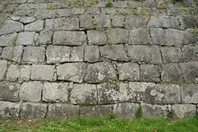
Morioka's masonry is not all from one moment or made in one way. Nozura-zumi uses natural, irregular stones. Ran-zumi puts cut stones of different dimensions together in a less even pattern. Nuno-zumi tends toward horizontal courses of squared blocks. Those names help you notice differences, but you do not need to identify every stretch correctly to enjoy the walk. Watch the stone faces, their joints and the regularity of the rows; then compare another enclosure before deciding that you have seen the whole castle.
The west side of Ninomaru is particularly useful for seeing the more orderly appearance of nuno-zumi. Elsewhere, changes in stone size and fit are easier to notice from a few steps back than with your face close to the wall. A photograph can flatten the slope, so move around the corner where a path permits and look at the wall's full height. These small observations explain why an hour in Morioka Castle feels different from an hour in a flat urban park.
Stone conservation is also visible. Morioka City's castle-park details describe roughly 16,000 square metres of walls, of which around 5,000 square metres have required attention. Survey, dismantling and repair have continued since 1984. Rain, earthquakes, trees and deformation can alter access to individual sections. Treat a fence as an actual limit and change your route or camera angle. A single older photograph is not a reliable walking map. The Taga Castle route guide explains a similar problem with outdated access directions elsewhere in Tohoku.
What the museum adds, and what it does not
The Morioka History and Culture Museum stands beside the ruins. Its first floor is free to enter. The second-floor exhibition rooms cost ¥450 for an adult, ¥300 for a high-school student and ¥150 for a primary- or middle-school student. Those fees have applied since April 2026. From April through October, opening is 9:00–19:00 and last second-floor admission is 18:30. From November through March, opening is 9:00–18:00, with last admission at 17:30. The regular closure is the third Tuesday of each month, shifting to the following day when that Tuesday is a holiday; the building also closes from 31 December to 1 January. Check the current calendar for exceptions before making a stamp collection a same-day rail stop.
| What you need | Best use of the building | Cost or timing |
|---|---|---|
| A brief sense of the city or the No.6 stamp | Visit the ground-floor area during opening hours. | Ground-floor entry is free; the stamp follows museum access on normal opening days. |
| Nanbu history and exhibition material | Allow time for the second-floor rooms after the outdoor loop. | Adult ¥450; admission ends 30 minutes before closing. |
| The museum is closed | Check the Tourism Division counter on the seventh floor of Morioka City Hall. | The alternative stamp location only helps when that office is open. |
| A rainy or very cold day | Keep a shorter outdoor circuit and spend longer upstairs. | The museum adds shelter, but its exhibits change. |
The fee is small enough to look automatic, yet it buys a different experience rather than a better view of the castle. Go upstairs when the Nanbu story, local festival objects or an exhibition answers a question the ruins raised. If your remaining hour is barely long enough to cross the enclosures, use that hour outdoors. The museum currently specifies cash payment for second-floor admission, so carry yen rather than assuming a card will settle the ¥450. Its visitor information and calendar and the Morioka City museum listing are the useful final checks for hours and temporary closures.
Stamp collectors need to be especially precise. The museum is the normal No.6 location, but Morioka's stamp-location notice also lists the Tourism Division counter on the seventh floor of City Hall when the museum is closed. The Japan Castle Foundation's location update gives the same closed-day exception. Check that the counter will actually be open on your date; a city office is not a dependable weekend or evening fallback. The stamp is no longer at Plaza Odette, despite older guides pointing there. A museum closure notice means you cannot stamp inside the museum, not that every alternate location has vanished. For a different arrangement, see the Sakura Castle stamp guide; do not generalise its access rule to Morioka. The Kubota Castle guide also separates free grounds from paid context.
Hiko-gura stops the claim that nothing old survives
The Hiko-gura storehouse is an easy building to overlook because it is neither a keep nor a dramatic gate. Morioka City describes it as the sole feudal-period building remaining within the castle area. An earlier storehouse burned in 1836; the present structure was rebuilt in 1837. It has also been relocated roughly 100 metres from its original position because of road widening. That combination matters: the material is historic, but the current location is not a preserved Edo-period arrangement.
Give Hiko-gura a short look when your route passes it. The building helps answer the reasonable question of whether anything above ground remains besides walls, without asking it to carry the whole visit. If you are comparing original, reconstructed and moved fabric across the castle series, the Hirosaki Castle update and Shirakawa Komine access guide are useful next reads.
Arriving from Morioka Station, by bus or by car
The walk from JR Morioka Station to the museum is about 20 minutes. In dry weather, that can be part of a pleasant city route rather than dead transfer time. With luggage, rain or a short connection, a central bus cuts the ride to roughly ten minutes; Kencho/Shiyakusho-mae is about four minutes from the museum, while the Morioka Bus Center is about five minutes away on foot. The Morioka Castle Ruins Park stop is another nearby option. Check the service that fits your train instead of assuming every loop bus stops at the same point.
A car is rarely necessary for the castle alone. The museum does not offer a general visitor car park, and the adjacent underground park charges ¥150 per 30 minutes from 8:00 to 18:00, with a ¥1,100 daytime maximum. The city lists separate evening and overnight rates. If a wider Iwate driving day follows, parking may still be sensible; the Hachimantai driving guide is where to decide whether the car has a real job after the castle. For a rail-led regional trip, compare the station days in the five- or seven-day Tohoku itinerary.
| Arrival pattern | Castle plan | Risk to manage |
|---|---|---|
| Walking from Morioka Station | Allow about 20 minutes each way, then 60–90 minutes in the ruins. | A tight train connection leaves little room for the museum. |
| Bus from the station | Get off near the city offices or castle-park area and walk a few minutes. | Confirm the return stop and actual departure time. |
| Rental car on a wider Iwate route | Use paid central parking, then continue to the next driving destination. | The charge is extra even though the ruins are free. |
If you are staying in Morioka, compare the walk against your hotel's position before deciding that the station is your only reference point. A hotel near the castle or central shopping streets changes the route. Use the Morioka castle-area accommodation map to see what is actually near the ruins, then weigh it against your rail departure. A room convenient for an early Shinkansen may be better by the station; a slow city day can justify sleeping closer to the park.
Seasonal visits change the route, not the basic admission
In spring, roughly 250 cherry trees bring a very different visual character to the walls and lawns. The castle still costs nothing, but blossom dates and any lighting programme must be checked for the particular year. An old spring-event page cannot promise next season's bloom. The Tohoku autumn timing guide is likewise useful when the castle is part of a foliage trip: city colour does not peak at the same time as higher mountain roads.
Morioka's Autumn Festival used the central castle area again on 14–16 September 2026. The float parade on the 15th began by the museum and park lawn at 18:00. Those dates have passed; they show why a future festival itinerary should pair an afternoon wall walk with an evening city event only after its new route is published. Do not book a September hotel on the assumption that a 2026 timetable repeats exactly. The museum also moved one September 2026 closure from the usual third Tuesday to the 8th, demonstrating why the annual calendar outranks the usual rule for a collector.
Morioka Sansa Odori is another summer occasion to split the day. A castle visit works before the evening parade, but the stamp must still be collected while the museum is open. The Sansa Odori viewing review addresses roadside and reserved viewing separately, while the Tohoku festival route shows how Morioka can fit with Aomori, Akita and Sendai. Both 2026 festival programmes are past events, so use them as planning patterns rather than current schedules.
When Morioka Castle should lose its place in the itinerary
Skip or shorten the castle if your only goal is an original surviving keep, if you have a 30-minute transfer plus luggage, or if bad weather would make the exposed stone paths unsafe for your party. A castle-series stamp collector should instead prioritise the museum opening window, even if the outdoor loop has to be shortened. Someone based in Morioka for two nights can be more relaxed: visit the walls when light and weather are good, and make the museum a separate short stop if its exhibition appeals.
For an intact-building emphasis, consider where Matsumae Castle, Tsuruga Castle and Goryokaku Tower sit in your larger route. None is a simple substitute for an hour in central Morioka, but comparing them clarifies whether your trip is about enclosures, reconstructed interpretation or a high viewpoint. The Nemuro fortified sites make the point even more sharply: the Japan 100 Famous Castles series does not promise the same kind of visit at every stop.
For Morioka itself, the strongest plan is about 90 minutes outside, with the ¥450 upstairs exhibition added only if the history is the missing piece. Take the No.6 stamp before museum closing, follow whatever conservation barriers exist on the day, and leave enough room for the central city rather than treating the park as a single wall photograph. That gives the free ruins their proper scale without forcing a museum purchase or a festival timetable onto every visitor.
Small details that change a short stop
The grounds include more than the most photographed Honmaru wall. The old inner-moat areas are now Tsurugaike and Kamegaike ponds, while Sakurayama Shrine gives the castle edge another useful landmark. Hiko-gura is away from the obvious “find the keep” route, and a few of the park's pavilions date from the period when the former castle became Iwate Park in 1906. These are not substitutes for the masonry, but they give a longer walk some variety after you have compared the main enclosures. The ponds and lawns also make it easier to take a break if one member of your group is less interested in castle construction.
For a stamp-focused stop, reverse the normal order when time is tight. Enter the museum while it is open, collect No.6, and only then use the park's flexible outdoor hours for the walls. If the museum is closed during City Hall office hours, check the Tourism Division counter rather than searching the park for an unattended box. After both counters have shut, the practical choices are an overnight return or an incomplete stamp visit. This is a better decision than missing a reserved train for a stamp that is unavailable that evening.
Do not confuse the museum's second-floor admission deadline with the building's closing time. The last paid entry is 30 minutes earlier, and a person who reaches the counter just before that deadline may still have too little time to read the exhibition well. The free first floor can be enough if your focus is the walls. On a cold November or December day, however, a proper museum hour can be a useful way to warm up and understand the Nanbu material before returning outside. Check the current exhibition programme if that hour is the reason you are paying; the permanent price alone says nothing about what special display is on your travel date.
For a photography-led visit, spring blossom and autumn foliage frame the walls differently, but neither guarantees access to every old photo angle. Conservation fencing and crowd management can change the path. Aim for several enclosure perspectives rather than one exact composition: an upward view from the lower path shows wall height, a view across Ninomaru explains the ground plan, and a wider frame with the park setting places the stone in central Morioka. The castle is strongest when those views together tell the story of the site.