
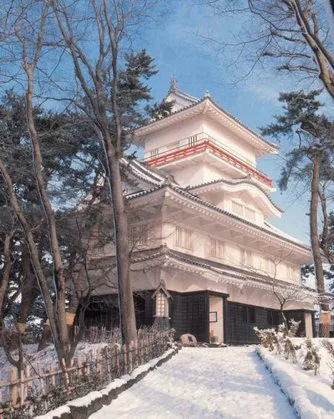
Kubota Castle is an easy Akita city stop precisely because its main experience costs nothing. Senshu Park preserves the former castle grounds, earthworks and a route through the Honmaru. The white Osumiyagura turret is a reconstruction with a small paid exhibition and a view from above, while the Satake Historical Material Museum is a separate history visit. Treating all three as a single “castle ticket” obscures the useful choice: walk the free site, add the ¥150 turret if it is open, and pay for the museum when the Satake clan itself is a reason to linger.
The old version of this guide revolved around a ¥1,200 special exhibition that ended in September 2026. The current general adult museum admission is ¥500. An August gallery changeover and the turret's 2026 summer extension have also passed. Those dates still explain why a traveller should verify a special display, but they cannot form the present booking advice. A winter visit has a more durable constraint: the turret is closed from 1 December through 31 March even though the park remains available.
Start with the free park and one real Edo-period building
The Satake family built Kubota Castle after moving to Akita in the early seventeenth century, and the former seat now sits within Senshu Park. Visitors can cross the park without buying entry. The reconstructed Front Gate gives the climb toward the Honmaru a clear landmark, while moats, paths and changes in level show how the castle occupied its hill. This is not a site with an original high keep or the massive stone systems seen at some other castles. Its strength is that you can understand the core layout in a manageable city walk near the railway station.
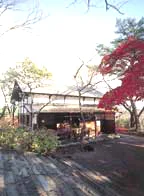
Make time for Onmonogashira Gobansho. It is quieter than the white turret or gate, but Akita City identifies it as the only domain-period building surviving within the castle grounds. It once served an administrative and guard function. The Front Gate and Osumiyagura help explain the old plan visually but were rebuilt in modern times; the Gobansho supplies a different kind of evidence. A visitor interested in original fabric should not walk past it on the way to a reconstructed viewpoint.
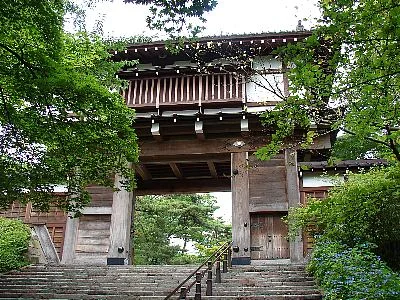
Among the Tohoku castle series, Morioka Castle is the better long wall-reading visit. Sendai Castle adds a hilltop city outlook. Kubota's advantage is the short approach from Akita Station and a small, comprehensible set of decisions. Do not force a comparison based on keep height: none of these stops offers the same physical experience.
Which paid layer adds value?
| Question you want answered | Best stop | Current adult cost |
|---|---|---|
| What remains of Kubota Castle and where was the Honmaru? | Walk the gate, Gobansho, earthworks and park paths | Free |
| What does the site look like from above? | Osumiyagura reconstructed turret | ¥150, when seasonally open |
| Who were the Satake, and what material survives from Akita-domain history? | Satake Historical Material Museum | ¥500 general admission; special exhibitions may differ |
| Where can I collect No.9? | Museum reception or turret while each is open | Check the desk and opening calendar; do not assume a separate castle admission |
The turret's adult price remains ¥150; high-school-age visitors and younger enter free. It normally opens 9:00–16:30 from April through November, with a later 19:00 closing only during the city's defined school summer-holiday period. The 2026 extension ended on 24 August. The building closes for the whole December–March period. Its accessible entrance and lift help once you reach it, though paths across the park still have slopes. The turret's current visitor details are the correct place to check an unusual date.
For a first visit with an hour or more, ¥150 is a sensible addition when the turret is open. The payment buys a compact introduction and a view that helps fix the Honmaru and surrounding Akita city in your mind. The city's inside-the-turret description explains the historical panels and the top-floor lookout. It is a modern reconstruction, so do not mistake that height for surviving Edo-period architecture. With 20 minutes before a train, paying even a small amount can be unhelpful: entry, climbing, reading and returning to the station use the entire margin. In that case, prioritise the free gate and Gobansho route.
The museum price changed after the special exhibition
The rebuilt Satake Historical Material Museum reopened in 2025. Its general adult admission is now ¥500 and high-school students and younger enter free. Normal opening is 9:00–16:30. It closes from 29 December through 3 January and may close exhibition rooms during display changes. The museum's limited 2026 “Treasures of the Satake Clan” exhibition used a ¥1,200 adult ticket through 23 September; that rate should no longer be presented as the standing museum fee. A future special exhibition can bring its own price and closure schedule, so decide on the display published for your travel date.
The museum gives depth that the park cannot. Satake-related documents, armour, art and explanations of Akita-domain administration are reasons to pay. If those objects are an active interest, give the building real time. If you mostly want a Japan 100 Famous Castles stamp and the physical layout, the museum ticket is not a compulsory upgrade. Its visitor listing provides the current general fee and hours; the museum's programme page is useful for any special display or changeover.
The present city centre grew from the Satake castle town. The domain occupied this site from the early 1600s until the end of the feudal period, across twelve lords and more than two and a half centuries. That long span is why a short walk through a park cannot explain every document or object in the museum. There is also an annual ¥1,300 ticket covering repeat visits to the museum's permanent exhibition and Osumiyagura for a year from issue. It is a real product for a local repeat visitor or someone based in Akita for a long stay, but it is unnecessary for a one-off castle stop costing ¥150 at the turret or ¥500 at the museum. Special exhibitions may not follow the ordinary annual-ticket terms; check the applicable programme before treating the pass as access to every display.
The 2026 exhibition closed its galleries on 26 and 27 August between two halves while the park remained open. That example is worth remembering without treating the dates as future hazards. A gallery closure does not automatically shut the outdoor castle or turret. Likewise, a turret closure in winter does not mean you must abandon the park. Think of each place as its own opening calendar. For another series visit where a stamp and an outdoor site require separate timing, compare Taga Castle.
No.9 has two desks, with one unavailable in winter
Akita City lists two Japan 100 Famous Castles No.9 stamp locations: Satake Historical Material Museum reception and Osumiyagura. This usually gives a collector flexibility if one visit becomes awkward. It does not create an after-hours stamp service. During December, January, February and March, the turret is closed, leaving the museum desk as the route to check. The museum has its own year-end and exhibition-change periods, so confirm the applicable day instead of assuming the park's always-open paths settle the matter.
Do not pay for a museum visit solely because you think the stamp is sold as an exhibit. Ask at the reception while it is operating, then choose the exhibition on its own merits. The same separation matters at Nejo Castle and Nihonmatsu Castle, though their actual stamp arrangements differ. A castle number tells you what book to bring; it does not guarantee that every site runs the same desk schedule.
| Season or situation | Stamp plan | Outdoor visit |
|---|---|---|
| April through November, normal day | Check the museum or turret during opening hours | Walk the grounds before or after the desk visit |
| December through March | Check Satake Museum hours; turret is closed | Senshu Park still supplies the castle route |
| Museum gallery changeover | Confirm reception access and consider the turret if in season | Park does not close merely because exhibitions change |
| After both stamp desks close | Return during an available opening period | A late park walk cannot complete the stamp |
Allow walking time from Akita Station before choosing a train
The city describes a walk of about 15 minutes from JR Akita Station West Exit to Senshu Park and its castle area. That number is an approach estimate, not the duration of a castle visit. You still need time to cross the park, inspect the gate and Gobansho, reach the turret or museum and walk back. For a rail transfer, a worthwhile stop generally needs at least an hour on site plus the two station approaches. A hotel near the station can make that easier by removing a luggage detour.
If Akita is only a transfer point on a Tohoku loop, compare the station margin before deciding to add an exhibition. The five- and seven-day Tohoku itinerary explains where an Akita night helps a regional route. The Tohoku hotel-base comparison shows when staying elsewhere is simpler. Kubota is efficient when Akita is already in the plan; the low admission fees are not, by themselves, a reason for a long detour and hotel move.
| Time on site | Route to use | What to avoid |
|---|---|---|
| About 45–60 minutes | Front Gate, Gobansho, Honmaru and stamp if its desk is open | Paying for a long exhibition on a tight rail connection |
| About 90 minutes | Add moats and a slower park loop; use the turret when in season | Assuming 15 minutes from the station includes the visit |
| Two hours or more | Add the Satake museum when its current display interests you | Buying it solely to make a free castle feel complete |
Staying close to Akita Station or Senshu Park changes the calculation. Use the Akita castle-area accommodation map to compare the actual distance of a room against your train plans. A park-side room helps a leisurely morning walk; station access is stronger for an early departure or heavy bags. The Mito Castle route offers another example of doing the operational stamp step before the scenic walk when the day is short.
Weather, slopes and expectations
Osumiyagura lists lift and accessible entrance features, and the museum has indoor facilities. That does not make the whole Senshu Park approach flat or sheltered. Examine your park entrance and walking limit separately if someone in the group cannot manage gradients. In heavy rain, a short outdoor circuit plus the museum may be more comfortable than a full moat loop; in clear weather, the free earthworks may be the reason to keep more time outside. Do not infer that an indoor building turns the visit into an indoor castle attraction.
Visitors hoping for an original tower should lower expectations. The Front Gate and Osumiyagura are reconstructions, and the surviving Gobansho is a modest working building rather than a grand keep. That modesty is part of Kubota's value for the right itinerary: an authentic Edo-period anchor, a walkable city park and an inexpensive overview. The Shirakawa Komine Castle guide, Hirosaki Castle update and Tsuruga Castle ticket comparison show different balances of reconstructed buildings, access and paid interpretation. Matsumae Castle is another useful comparison if your larger route includes southern Hokkaido.
If you have exactly one Akita city hour, choose the free park and check one No.9 stamp desk. With 90 minutes and an open turret, ¥150 adds a useful height change. The current ¥500 museum admission is for a separate Satake-history visit, and a future special exhibition must justify its own ticket. Carry these as distinct options; then the castle can fit a real Akita day without either skipping its surviving building or buying every nearby entrance.