
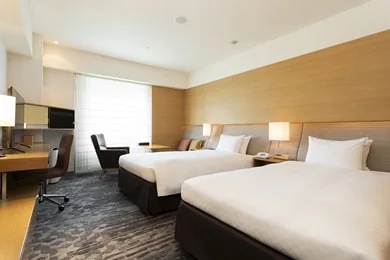
A late Kansai airport arrival is a timing problem before it is a hotel problem. Hotel Nikko Kansai Airport removes the rail trip on arrival night: Terminal 1 and the airport railway station connect to the hotel through Aero Plaza. Hotel Royal Classic Osaka puts you in Namba, ready to start an Osaka stay the next morning, but reaching it still depends on immigration, bags, the last suitable Nankai service and the walk from Namba's platforms. The decisive time is when you can leave the arrivals area, not the flight's scheduled landing time. A 9:30 p.m. landing and an 11:30 p.m. arrival at the railway gate lead to very different bookings.
JapanLayer hotel assessment by dimension
↔ Scroll table left or right
| Hotel | Access | Space | Comfort | Cleanliness | Neighbourhood | Service | Value |
|---|---|---|---|---|---|---|---|
| Hotel Nikko Kansai Airport | 9.0/10 | 8.6/10 | 8.2/10 | 7.9/10 | 8.9/10 | 8.7/10 | Insufficient evidence |
| Hotel Royal Classic Osaka | 9.6/10 | 9.3/10 | 10.0/10 | 8.8/10 | 9.5/10 | 9.1/10 | Insufficient evidence |
The arrival-night trade
↔ Scroll table left or right
| Decision point | Hotel Nikko KIX | Royal Classic Namba |
|---|---|---|
| After Terminal 1 arrivals | Walk through Aero Plaza to the North Wing entrance | Take Nankai to Namba, then walk to the hotel |
| After Terminal 2 arrivals | Use the free Aero Plaza shuttle before the hotel walk | Use the shuttle, then the railway and Namba walk |
| Next morning | Check out and take the train towards the city | Wake up at the city base without another hotel move |
| Room decision | Confirm North/South Wing and beds | Confirm named twin/double and total stay terms |
Swipe to compare the hotels
Calculate the usable evening, not the published landing time
Write down your terminal, landing time, checked-bag status and the latest train that will actually take you towards Namba. International arrivals can lose time between touchdown and a platform: the aircraft may taxi, passengers disembark, immigration queues vary, baggage may come later and a family can need food or a bathroom stop. An arrival forecast is therefore a range. If the late edge of that range crosses the train you need, Hotel Nikko is the safer first night. If you will realistically clear the airport while trains are still frequent, moving straight to Royal Classic may save a hotel change the next day. Our Kansai airport to Osaka transport guide helps compare the rail and road legs without pretending that every flight has the same buffer.
Do not rely on a remembered “last train” from a previous trip. Nankai's airport services differ by day, destination and service pattern. A train that reaches Namba might still require a transfer or a longer walk than the limited express you had in mind. Compare the timetable for the actual date, then allow time to buy or collect a ticket and reach the platform. If an airline delay makes that train unlikely, the relevant alternative is a paid late-night taxi or another road transfer, not a theoretical rail journey that has already gone. The early-flight and late-arrival Osaka hotel guide examines when a transfer cost changes the value of an airport hotel.
Terminal 2 makes the “airport hotel” label less literal. KIX's railway station is connected to Terminal 1 and Aero Plaza, while Terminal 2 passengers use a free shuttle between Terminal 2 and Aero Plaza. The shuttle ride itself is about seven to nine minutes; waiting and moving through the terminals add time. Nikko is still considerably closer than a Namba room after a late Terminal 2 landing, but it is not a door-to-door walk from that terminal. Check the airline's terminal before judging the effort. A first-time visitor can also use the Osaka arrival and station-area guide to avoid choosing a city hotel by its map pin alone.
Nikko's real advantage is the first hour after arrivals
Hotel Nikko Kansai Airport has its second-floor pedestrian entrance on the North Wing side, linked to Terminal 1 and KIX Station through Aero Plaza. A tired guest can leave the railway journey for morning. The South Wing economy rooms are part of the same hotel, but reaching them from the connected entrance involves the lobby connection on the first floor. That detail matters to a family with several suitcases or someone who bought the cheapest room expecting the terminal-facing corridor to stop at their door. Confirm the wing as well as the room class. A plan showing “airport access” does not tell you how far the last internal walk will feel at midnight.
Nikko lists check-in from 3 p.m. and checkout at 11 a.m. The latter gives time for a normal breakfast and a daylight rail trip into Osaka; it is not an invitation to leave all luggage until evening. If you will move to a city hotel the next day, consider whether it can hold bags before check-in, and where you will actually spend the gap. Keeping the same large cases with you through Namba's platforms and exits may cancel some of the rest gained at the airport. The Osaka luggage and hotel base comparison is useful if a single base can avoid the double move altogether.
The airport hotel makes most sense when you expect little useful city time on arrival night. Suppose the plane is due late and you might reach the hotel after midnight. A Namba room purchased for the same night delivers only sleep, but still demands a rail or road transfer before it. Nikko lets the group shower and stop. The next morning's train costs time, yet that journey takes place when everyone is awake and services are running. This is an especially material trade for travellers who must drive, collect a rental car or continue beyond Osaka the following morning. The KIX last-night hotel comparison also applies in reverse for an early departure.
There are reasons not to default to Nikko. A traveller carrying one bag, arriving at Terminal 1 well before the last useful train and spending several nights in Namba may gain nothing from an extra checkout. A group whose first morning begins at Dotonbori or at an Osaka hotel check-in could prefer to finish the journey once. Another traveller may want a late Namba dinner; airport food availability at the hour of arrival should not be assumed. Room-only and breakfast-inclusive rates at Nikko need comparing against the actual meal options you will use, not against a generic city breakfast price.
Choose the Nikko wing and beds deliberately
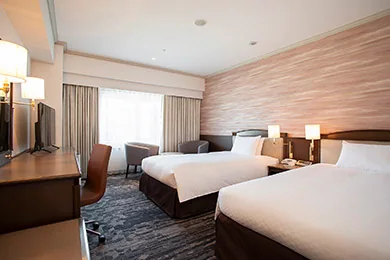
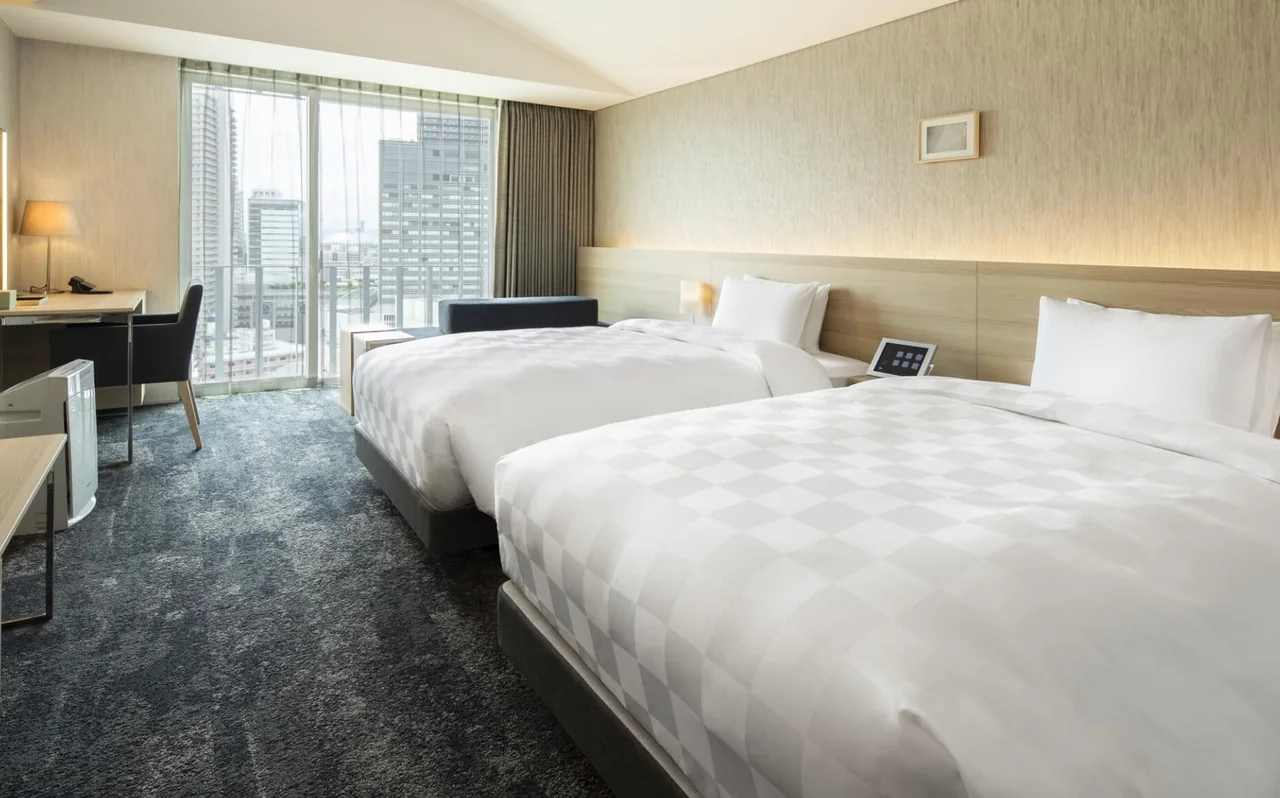
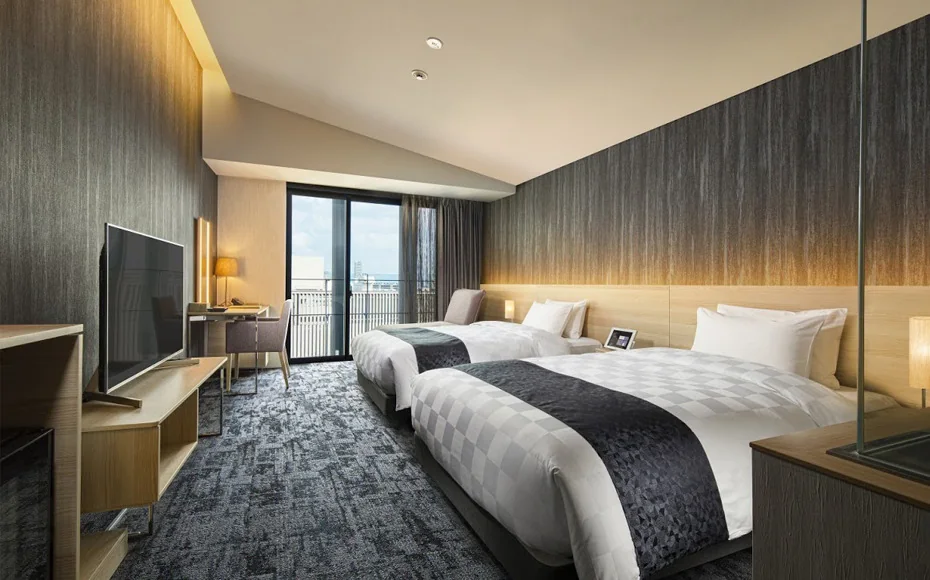
Hotel Nikko's Economy, Premium Economy and Business classes are tied to different wings and room specifications. Its published Economy Twin is 29 square metres, while an Economy Single is 23 square metres. Larger family and multi-bed categories are available, but they must be selected by name and occupancy. A room for two adults and two children cannot be inferred from a photograph of two double beds elsewhere in the hotel. Set the actual guest ages, required beds and luggage count before sorting by price. If the first night's priority is simply sleep, a correctly sized economy room can be a more sensible purchase than an upgraded class whose extra amenities you will scarcely use.
A shared bed policy needs close attention with children. A cheap twin can look workable until two older children require their own sleeping spaces, or breakfast is priced for only the adults. Compare the final room and breakfast total for the whole party. A four-person room or two rooms may cost less than upgrading a smaller room with extra beds, but availability changes by date. Our four-adult Namba room comparison gives a city-side reference for what a group room actually buys after the airport night.
The North Wing also contains the hotel laundry, which can be useful after a longer trip; its presence does not make it a reason to choose a late-night airport stop for one sleep. Think about the following day's route. If you are leaving the airport on an early domestic flight or collecting a car there, Nikko can eliminate a needless trip into and out of Osaka. If the whole week is based in Namba, the repeated packing and transit may outweigh the calm first night. The Osaka long-stay hotel guide can help price that broader itinerary rather than judging a single room night in isolation.
Royal Classic is a Namba arrival, not an airport arrival
Hotel Royal Classic Osaka connects to Osaka Metro Namba Exit 12. From Nankai Namba, the hotel's stated walk is about four minutes, which is short in daylight without baggage but still requires navigating the station and street or underground route after an airport train. JR Namba is farther away, around ten minutes on the hotel's access map. The practical advantage is that Nankai trains terminate in the same Namba district as your bed. It does not mean the airport train pulls into the hotel lobby. The Royal Classic airport-access guide sets out those station distinctions in more detail.
If your flight clears the airport at a reasonable hour, Royal Classic can be the cleaner whole-stay choice. You unpack once, eat in Namba if restaurants are still serving, and start the next morning close to Dotonbori, Namba shopping or the metro. A three-night booking at the same property avoids negotiating bag storage between two hotels. Price the entire stay, not just the arrival-night rate. A Namba night may be more expensive than Nikko that day, but it can save the next morning's rail fares and time. The Namba hotel comparison gives context when Royal Classic is one of several station-area options.
Royal Classic's Standard Twin is published at about 30 to 31 square metres with two 120-centimetre beds and a bathroom with washing area. That layout can feel more practical after a flight than a narrow business-hotel double, particularly when two people need to shower and open bags. Its Standard Double spans several room sizes, so do not assume every “standard” booking shares the twin's floor area. Compare named room categories, bedding and cancellation terms. The Swissôtel versus Royal Classic Namba comparison helps decide whether direct Nankai station access is worth more than Royal Classic's particular room layout.
Namba also has many exits. A map that shows the hotel a few metres from a metro exit may conceal a long underground station walk from the airport railway platform. Follow the Nankai-to-hotel route, then the hotel's Exit 12 connection if you are using the metro during the stay. With heavy luggage, an accessible route can matter more than the shortest stairs on a map. The Osaka solo hotel guide and Namba shopping hotel guide provide different tests of whether this lively base fits the trip.
Price the transfer and the room actually used
The price comparison changes with the group. For a couple with a checked case, add two rail tickets or the likely road transfer to the Royal Classic room. For a family of four, multiply the ticket or taxi cost by the people and luggage involved, then price the next morning's Nikko-to-Namba trip. The airport room may cost more on the night but save a late vehicle and reduce the risk of a missed service. On another date, the city room may be cheaper and remove the next day's hotel switch. Prices fluctuate too much to name a universal winner; compare the full booking totals for your date and room category. The Osaka four-person room guide can prevent an unfair two-adult comparison.
Cancellation has special value on an arrival night. If the airline changes the schedule, a non-refundable Namba booking can become a stressful race. A Nikko booking with a flexible cutoff may protect the first night, but only if the cutoff is later than the point when you learn about disruption. Check the local-time deadline and no-show policy on the actual rate. The same applies to Royal Classic: a flexible booking is useful when the landing time is uncertain, though it cannot make a train run later. For an early morning flight at the end of the trip, the Shin-Osaka last-night guide illustrates why final-night hotel choices should follow departure logistics rather than an attractive headline room price.
Do not count a late city dinner as guaranteed value. Airport immigration can erase the planned evening, and Namba restaurants have different final-order times. If the group will eat on the plane or at the airport, Royal Classic's nightlife adds little that night. Conversely, if you land early enough for a proper meal and want several consecutive nights downtown, an airport hotel postpones the enjoyable part of the trip. The Dotonbori and Namba hotel area guide can help place Royal Classic against the districts you plan to visit.
A decision for three common itineraries
On a delayed international flight with a Terminal 2 arrival, checked bags and children, book Nikko first if the onward city train is fragile. Allow for the shuttle to Aero Plaza and select a room with enough actual beds. Mark the next morning's Nankai or JR route before bed so the airport hotel does not become an unplanned slow start. If the next destination is Kyoto rather than Osaka, compare direct airport transport to Kyoto before paying for a Namba transfer you do not need. Our Osaka base for Kyoto and Kobe day trips helps distinguish a useful Osaka base from a forced detour.
For a Terminal 1 arrival with only carry-on bags and a confirmed train well after your likely exit time, Royal Classic is plausible. Its Namba room is usable for the entire stay, and the following morning begins in the city. Still keep a backup plan for a long immigration queue. If the rate difference is small, a flexible city room offers more resilience than a heavily discounted non-refundable one. If you will visit Universal Studios Japan next, check the transfer from Namba on the actual day; a hotel near the park may serve the next two nights better. The USJ hotel and train base guide can help with that second-stage choice.
For a one-night airport connection or a rental-car pickup in the morning, Nikko is usually the simpler bed. Travelling all the way into Namba and returning to KIX spends money and energy for little city time. If you want to begin an Osaka or Kansai itinerary after sleep, use the next day's departure time to decide whether to eat at the airport, travel to Namba, or go directly to another city. The Osaka seven-day itinerary is useful for placing the first night within the rest of the week rather than making it the itinerary's most elaborate transfer.
Before paying, verify the flight terminal, arrival date, final train for that date, room wing at Nikko, named room and bed count at either property, breakfast inclusion and cancellation deadline. Open Nikko's airport-connected room choices if the rail margin is narrow or the first morning remains near KIX. Open Royal Classic's Namba room choices if you can reach the city comfortably and intend to stay there. The hotel is the last part of a door-to-bed route; compare that complete route with luggage and actual travellers in mind.
Updated 4 October 2026. Railway schedules and hotel room conditions should be checked for the booked date.