
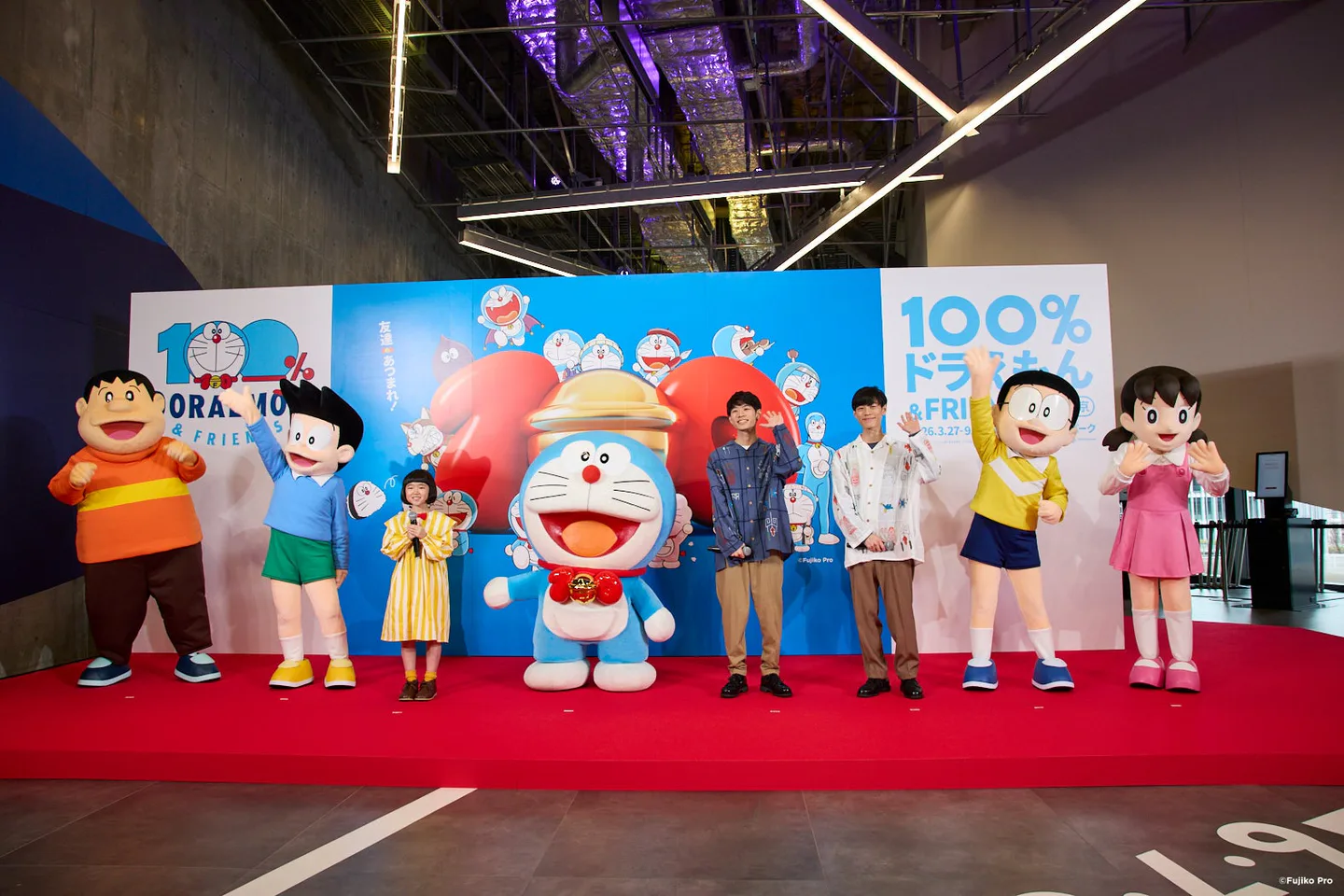
The 100% Doraemon & FRIENDS Tokyo exhibition closed on 30 September 2026. Its timed tickets, ticket-holder shop and UMIKAZE KITCHEN special menu are no longer a current Ariake outing. The event site now announces a Nagoya run planned for late April through late August 2027, around Nagoya PARCO and the Sakae area; precise dates, venue details and admission prices had not been released when this article was updated. Anyone planning a Tokyo Doraemon visit now has a clearer live choice: the Fujiko・F・Fujio Museum in Kawasaki.
The Tokyo event is still useful as a record of what the temporary spectacle offered and why a fan might have chosen it over the museum. The shop required event admission, while the special menu at UMIKAZE KITCHEN was open to people without exhibition tickets. Those rules belonged to the finished Tokyo run. Do not transfer them to Nagoya: its ticketing and food arrangements are yet to be announced. At the Kawasaki museum, even café and shop access requires a museum ticket.
What you can visit after the Tokyo run
The Fujiko・F・Fujio Museum in Kawasaki currently lists 10:00–18:00 hours on operating days. Admission is by advance dated entry reservation, with no ticket sales at the museum. Adults and university students pay ¥1,000; middle and high school students ¥700, children aged four or more ¥500, and those aged three or under enter free without a ticket. These are live museum terms, separate from any 2026 Ariake price.
The museum is about the maker and his work. Its exhibition rooms and facilities include original pictures, Fujiko’s study, a manga reading area, a theatre showing museum-specific short films, a café and a shop. The 15th-anniversary exhibition focuses on Doraemon’s secret gadgets, with the first phase scheduled through 17 January 2027 and a second from 23 January to 20 June 2027. Check the museum calendar for the actual visit date and any closure or programme change.
The museum sits in Kawasaki rather than central Tokyo. Noborito is the main rail gateway; a paid direct shuttle runs from the station roughly every 10–15 minutes on museum operating days and takes about nine minutes. The train journey to Noborito can be quick from Shinjuku or Shibuya, but the station-to-museum leg and reserved entry still make this a deliberate half-day rather than a spontaneous stop between two Tokyo attractions. Museum tickets are tied to an entry period, although visitors are not pushed out after one hour.
↔ Scroll table left or right
Reason for Doraemon time | What works now | What the 2026 Tokyo event supplied |
Original art and the creator | Book the Kawasaki museum in advance | A staged exhibition, with some displayed drawing material reproduced |
Large character installations | Wait for confirmed details of the 2027 Nagoya touring run | More than 100 life-size Doraemon figures and outdoor photo areas |
Event-only goods | No Tokyo event shop remains; museum goods have their own ticket requirement | Ticket-holder-only merchandise, with stock not guaranteed |
Themed food | The museum café requires admission; Nagoya rules are not yet known | UMIKAZE KITCHEN special menu did not require Tokyo event admission |
Outdoor Doraemon photographs | Check the future Nagoya area map once published | Some Tokyo photo areas were free, while others were paid |
This distinction matters for a reader landing on an old 2026 ticket page. The 2027 Nagoya announcement is not a continuation of admission to Tokyo Dream Park. Tokyo pictures and price charts cannot tell you the Sakae layout or the new shop policy. The organiser’s current event announcement gives the touring location and broad period, while the museum site gives an actionable admission route today.
For a Kawasaki visit, buy the museum ticket before committing the rest of the day. The place is a museum of Fujiko’s creative work as well as a Doraemon destination, so a child mainly hoping to pose beside a vast group of characters may prefer to wait for tour details. Conversely, someone who wants to see the drawings and the artist’s working space can make a firm booking now. The museum café, shop and film are part of that ticketed visit; arriving only for lunch or goods does not bypass admission.
Why fans chose the Ariake event in 2026
The Tokyo run occupied TOKYO DREAM PARK in Ariake from 27 March to 30 September. The event had three paid areas and three free areas, including the 7F Manga World Exhibition and outdoor installations. It offered the scale of more than 100 life-size Doraemon figures, photo scenes, event gifts, limited merchandise and themed food. That temporary combination was the reason a fan might have devoted an Ariake block to it rather than use the time for the creator-led museum.
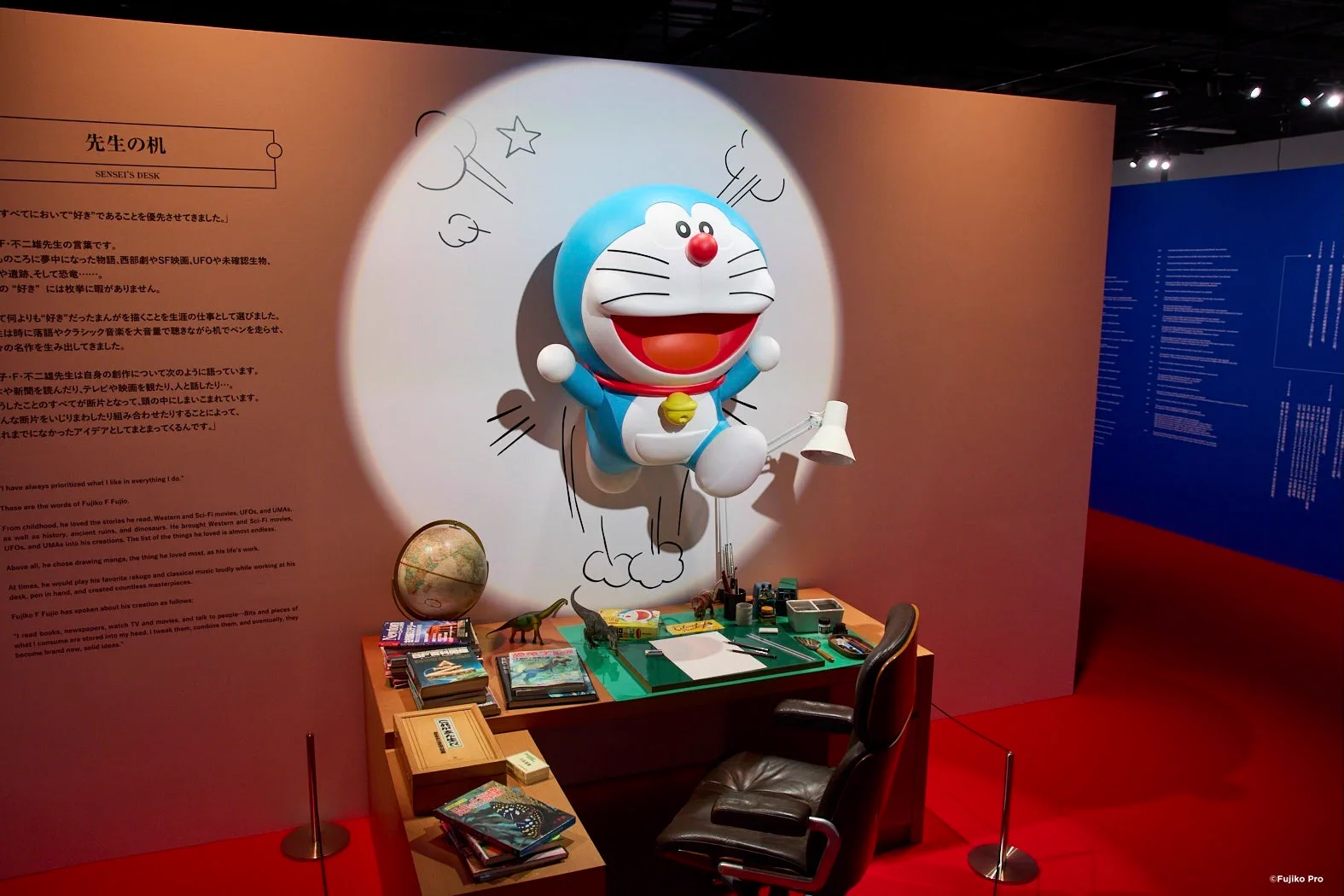
The Manga World Exhibition was more than a line of statues. Installations drew on Fujiko’s characters, gadgets, film worlds and manga scenes. One projected presentation used material from all 45 Doraemon volumes and prohibited photography. Some displayed drawing material was a reproduction; a visitor primarily seeking authenticated original artwork had a stronger reason to book the Kawasaki museum. A reader looking back at the Tokyo event should distinguish immersive staging from the original-art collection.
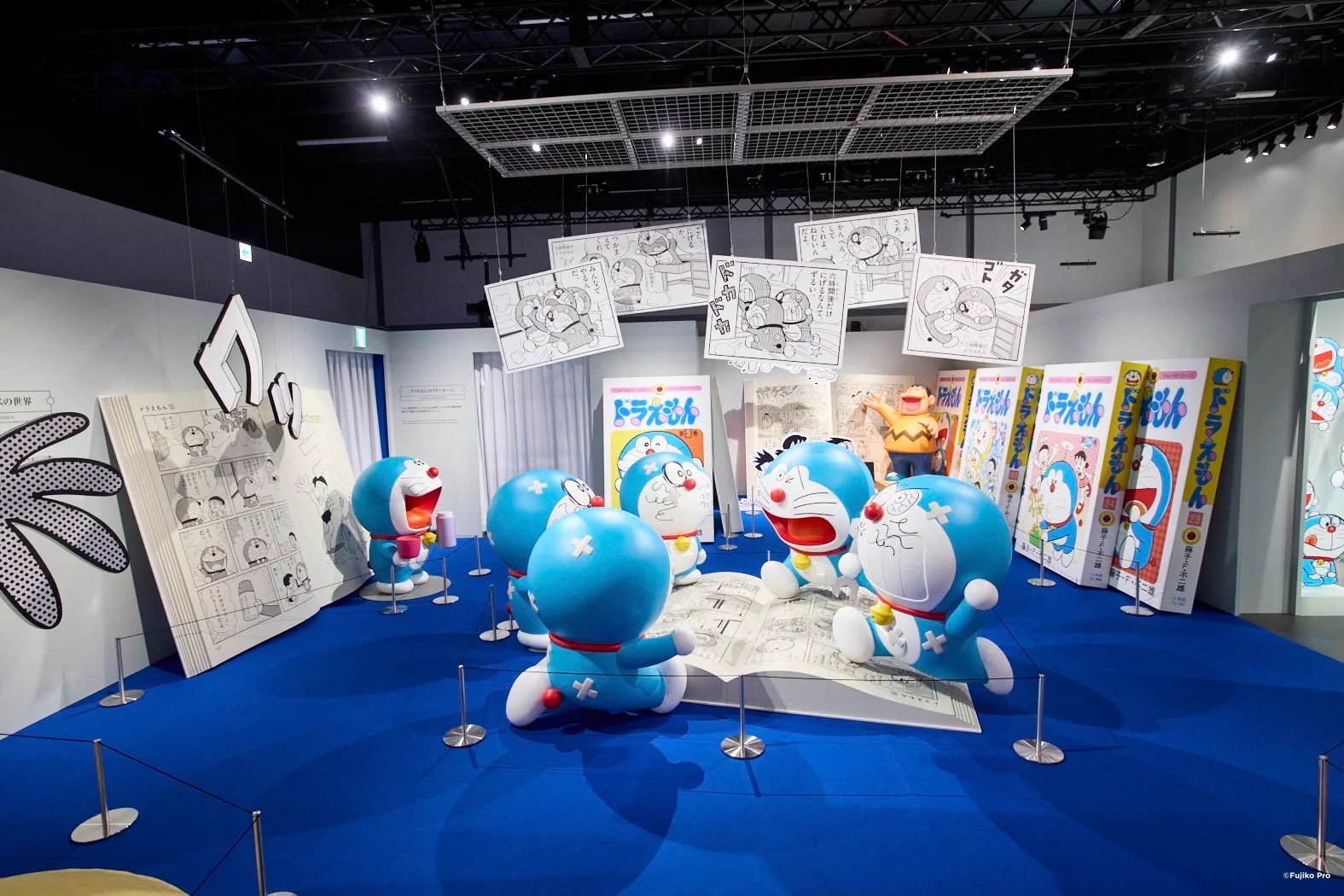
The two sites also imposed different journeys. Ariake was near Tokyo Big Sight Station and paired naturally with Odaiba, Tokyo Big Sight or another Tokyo Bay stop. Coming from Ueno or Shinjuku only for Doraemon added a cross-city return. The Kawasaki museum uses Noborito and its shuttle, making it a separate route with a reserved slot. For a four-day Tokyo trip that also includes Disney or Kamakura, the Tokyo trip-length comparison helps show which half-day a fan visit displaces.
That travel difference could outweigh the ticket difference for a short stay. An Ariake admission fitted an existing Tokyo Bay day with no second excursion, whereas a Kawasaki visit asked for the rail leg to Noborito, shuttle transfer and advance entry reservation. It also changed what the visit was about: the Ariake exhibition was deliberately theatrical and temporary, while the museum gives space to drawings and to how Fujiko developed his stories. Neither venue’s admission price alone measured those extra hours or the kind of material a visitor would see.
↔ Scroll table left or right
2026 Tokyo exhibition | Fujiko・F・Fujio Museum now |
Limited Ariake run ended 30 September 2026 | Kawasaki museum continues on its operating calendar |
Large Doraemon installations, paid photo areas and staged scenes | Original pictures, study, reading area and museum-only film |
Weekday adult standard admission was ¥2,400; weekend or designated-day admission was ¥2,600 | Current adult and university admission is ¥1,000 |
Ariake fitted a Tokyo Bay itinerary | Noborito plus a paid museum shuttle requires a Kawasaki excursion |
The ¥1,400–1,600 difference in adult admission existed for those historic ticket categories. It was not the whole decision: a visitor valuing the temporary array of installations could rationally have paid more, while a lifelong reader interested in the creator’s desk and drawings could prefer the museum. Both could fit a serious fan’s longer Tokyo stay. For a casual first trip, two separate Doraemon half-days carried a substantial opportunity cost.
Tokyo ticket and re-entry rules belonged to that run
A standard adult Tokyo ticket cost ¥2,400 on weekdays and ¥2,600 on weekends, holidays or designated dates. Middle and high school prices were ¥1,800 or ¥2,000; children aged four and up were ¥1,600 or ¥1,800. Children three and under entered free. General same-day tickets cost ¥100 more than advance tickets when available. These amounts are a record, not a quotation for Nagoya 2027, whose admission remains unpublished.
Tokyo’s 7F Manga World Exhibition used 30-minute admission windows: an 11:00 ticket admitted during 11:00–11:30, without imposing a 30-minute total visit. The other paid areas could be visited during operating hours on the same date, but each paid area allowed one entry only. Leaving a zone for lunch or a forgotten stroller item did not entitle the holder to go back in. Exceptional late arrival could sometimes be handled later that day if staff and crowding allowed; it was never a reliable planning method.
A sensible 2026 route therefore started by separating the scheduled 7F admission from the more flexible paid zones. Visitors could take their toilet break, ready their camera and settle a stroller before entering a one-entry area. A group could meet again outside a zone, but a member who had already passed through could not use the same ticket to repeat it with a late companion. The six-area layout also meant that seeing Doraemon outside the paid spaces did not prove the timed Manga World ticket was necessary for that visitor.
Operating time varied with the event calendar. August generally ran 09:00–19:00; September weekdays generally used 10:00–18:00, while weekends and designated dates began at 09:00 and closed at 18:00. Last admission was 30 minutes before closing. An old screenshot headed “10:00–18:00” would not have captured every date. None of those windows can be booked now, and the old ticket URL has been repointed to the Nagoya touring announcement.
Food and merchandise had opposite access rules
During the Tokyo run, the event shop admitted ticket holders only. Paying for entry allowed access to the shop, not a promise that a particular limited item would still be in stock. A fan whose sole aim was one product could have paid for an exhibition and still left without the item. The sounder reason to buy was interest in the paid event itself, with shopping as one additional benefit.
The special Doraemon menu at UMIKAZE KITCHEN was available without that event ticket. This gave a group a split plan: an exhibition fan could use a paid slot while companions joined for food afterward. An August update listed September service from 11:00 to 20:00, last order 19:00; those were dates for a completed menu, not current Ariake restaurant hours. At the Kawasaki museum, the present shop and café are inside the ticketed museum. Nagoya’s future food and shop rules cannot be inferred from either place.
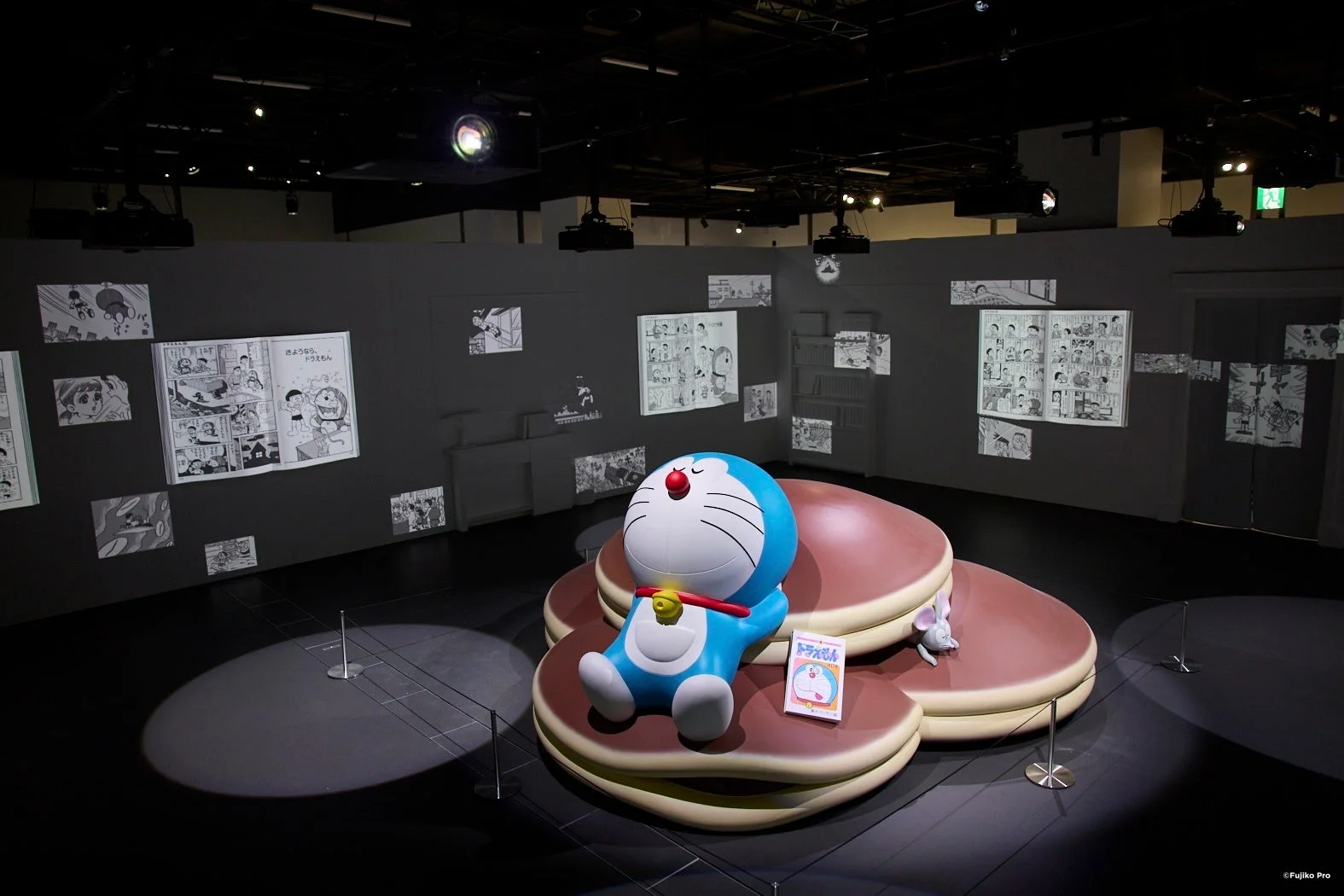
Weather affected the paid Tokyo product unevenly. Rain left the 7F exhibition’s manga and projection rooms usable, but lowered the value of outdoor character photography. A visitor buying principally for the open-air array faced a different risk from someone buying for the indoor exhibition. This also explains why a free exterior photograph could have been enough for a casual visitor while a ticket made sense for an exhibition-focused fan.
Families and luggage at the former venue
Tokyo admitted children three and under free and generally allowed strollers, with family facilities in the building. Suitcases, carts and similar bulky bags could not be brought into or stored by the exhibition. Travellers had to use a facility locker or other storage before entry. A timed fan event between an airport arrival, a hotel change and onward travel was particularly fragile because immigration, rail travel and bag storage could all consume the entry window.
For families, the free child ticket and permission to bring a stroller addressed different problems. The first reduced admission cost; the second helped inside the venue, but neither solved storage for full-size suitcases. A visitor who had just checked out of a hotel needed a bag plan before reaching Ariake. Outdoor character photographs also depended on weather and crowding, while the indoor exhibition remained a more predictable reason for holding the paid ticket.
The same broader travel logic remains useful. For a flight-arrival day, decide first whether to stay near Haneda or Narita and when luggage reaches the hotel. A timed museum ticket belongs after those fixed steps are secure. An exhausted family with bags should not turn a character visit into the only way to make a tightly stacked day feel worthwhile.
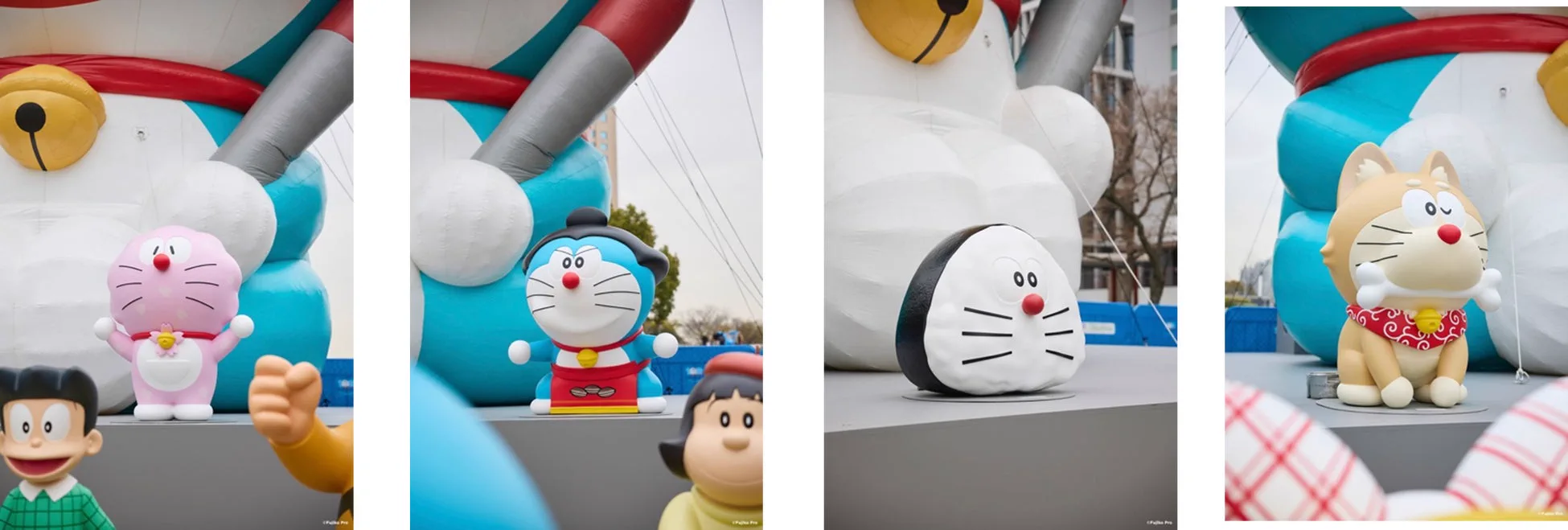
For the next touring edition, the only published essentials are Nagoya, the Sakae area around Nagoya PARCO, and a late-April to late-August 2027 period. Date-specific admission, zones, goods and food need their own future announcements. A Tokyo visitor in the meantime can book the Kawasaki museum with a dated entry ticket and choose it for the drawings, creator’s study and film rather than expecting a substitute for the finished Ariake spectacle.
Other day plans: Matsumae Castle · Hiroshima night food tour · Tokyo Game Show timing · Chiikawa Park ticket rules · Saitama Railway Museum · Tokyo National Museum tickets · Mount Fuji day-trip limits · Kyushu Odan Bus update · Hakone Open-Air Museum · Sendai Castle
If the current Fujiko F. Fujio Museum becomes the family day’s anchor, compare Kawasaki-area rooms for that visit with the route to your other Tokyo activities before changing hotels.