
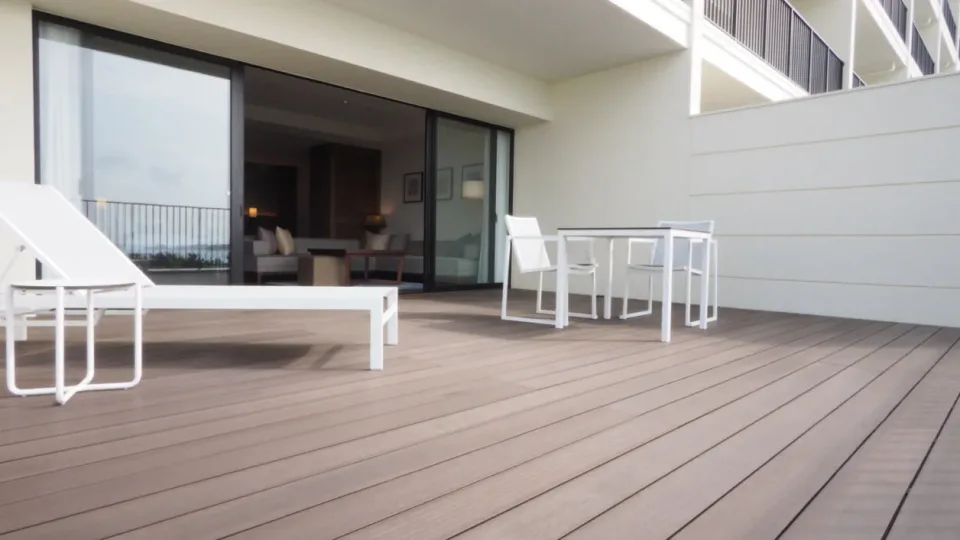
Three nights in Okinawa are short enough that a kitchen can remain untouched, yet long enough for wet swimwear to become tomorrow's problem. An in-room washer-dryer has clear value when you can name the load: a beach day, diving gear clothing, children's changes, a deliberately small suitcase or final-night repacking. A full kitchen needs a different answer. Which meals will you actually prepare in the room, and when will you shop for them? If the answer is vague, choose the better location before paying for a larger residential setup.
The three hotels below solve different routes. HIYORI Ocean Resort Okinawa is an Onna resort with washer-dryers and equipped kitchens in every room. Ala MAHAINA Condo Hotel puts a full kitchen into a Motobu suite near Churaumi but does not give the same clear all-room in-room laundry promise. Tokyu Stay Okinawa Naha makes laundry particularly easy to fit into a city or final-airport-night plan. Select the area before ranking appliances. The Okinawa hotel-area questions help decide whether Onna, Motobu or Naha should be on your booking screen at all.
| Your three-night pattern | First priority | Accommodation to test | Question before paying |
|---|---|---|---|
| Two wet activity days and evenings back in the suite | In-room washer-dryer, then room time | HIYORI in Onna | Will you use the kitchen, or mainly wash and rest? |
| Churaumi and north Okinawa on multiple days | Motobu base, then kitchen | Ala MAHAINA | Does the exact room have a washer-dryer, or only a kitchen? |
| Last Naha night before flying | Dry clothes and airport route | Tokyu Stay Okinawa Naha | Is its Tsubogawa location better than a Kokusai-dori evening? |
| Every meal out, no wash planned | Location and room price | Do not filter for appliances | What real task would a residential premium remove? |
Give the washer-dryer a job before adding it to your search filters
Use a simple laundry-friction score for this trip, rather than assuming everyone needs the same equipment. Add two points for two days of swimming, diving, snorkeling, SUP or another wet activity. Add two when children or heat make extra changes predictable. Add two if you intentionally pack fewer clothes because washing is part of the plan. Add two when the final night needs clean, dry clothing before an onward leg. This is an itinerary score, not a claim that one hotel's machine washes better than another.
| Score | Likely meaning | Booking direction |
|---|---|---|
| 0–2 | Laundry is a possible bonus, not an itinerary requirement. | Choose the better area and room first; communal laundry may suffice if plans change. |
| 3–5 | A load is plausible, but not necessarily urgent. | Compare an in-room machine with the price and repeated transport cost of the alternative. |
| 6–8 | Washing is part of the trip's nightly workflow. | Confirm a washer-dryer inside the exact room category, then check the base location. |
A communal laundry room and an in-room washer-dryer are not equivalent. The shared option requires finding a free machine, returning to collect clothes and sometimes moving them into a separate dryer. A machine in the room lets a load run during showers or packing. That difference is most useful when clothes must be dry by morning; it matters less when washing can wait until home. Hotels may both truthfully advertise “laundry” while offering completely different evenings.
A machine is not a reason to accept a poor route. If it saves one communal-laundry trip but causes three late returns across the island, the trade is weak. The Okinawa split-stay decision makes the same point for hotel moves: count long backtracks removed, rather than rooms gained. If you are still weighing rental cars against buses, settle whether your Okinawa trip needs a car before choosing a hotel for its washer.
The kitchen needs named meals, not just an appealing photograph
For three nights, write down at least two meals that will actually be prepared in the room. Breakfast before an early departure, food for an infant, a diet that is difficult to manage outside, or a deliberate evening in a resort suite can justify cooking equipment. Coffee, reheating a convenience-store snack or storing drinks generally needs a kettle, microwave or refrigerator rather than an IH cooktop with pans and tableware. A kitchen may be excellent on a longer stay and still be unused on this specific short one.
Keep the appliances separate in the price comparison. “Residence style” can mean kitchen, washer-dryer, larger fridge, living area and storage, but three nights rarely use every component equally. If you will wash twice and cook zero times, treat the kitchen as zero practical value. If two room meals are planned but no clothing needs washing, a kitchen-equipped room may be worth considering even without an in-room washer. The Okinawa trip-cost plan helps place a room premium alongside transport and food rather than treating hotel equipment as free savings.
The seven checks below keep the hotel assessment attached to the actual trip. “Strong” means a feature is supported and likely useful for the stated route; it is not an invented guest-review score. The area row should be read first because these hotels sit in different parts of the island.
| Decision check | HIYORI, Onna | Ala MAHAINA, Motobu | Tokyu Stay, Naha |
|---|---|---|---|
| In-room wash certainty | All rooms | Do not assume from the condo name | Residential room types list washer-dryers |
| Kitchen certainty | All rooms, two-burner IH | All rooms, IH and tools | Residential categories list kitchenettes and microwaves |
| Best route fit | Onna resort and water days | Repeated Motobu/north days | Naha city or final flight night |
| Room time needed | High to earn suite and kitchen value | High to use the larger north-side suite | Can work even with a short city night |
| Family workflow | Wash and cook after activity days | Large suite and room meals | Room-specific family layout and final packing |
| Location penalty | Weak for repeated Naha nights | Weak for only one Churaumi trip | Repeated Kokusai-dori returns take extra travel |
| What to verify at checkout | Exact room and total suite premium | Exact laundry arrangement | Named Residential category and guest count |
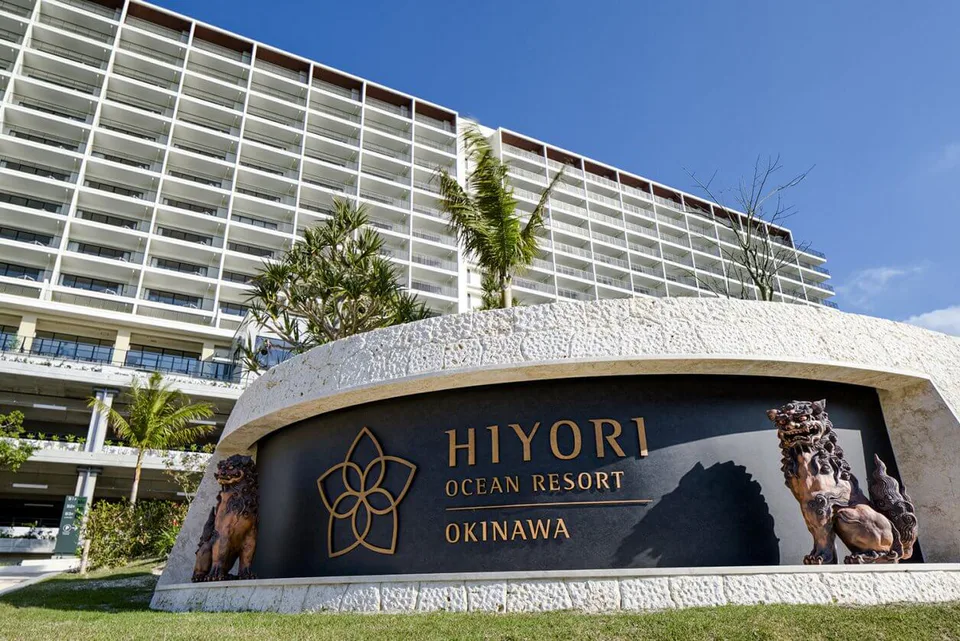
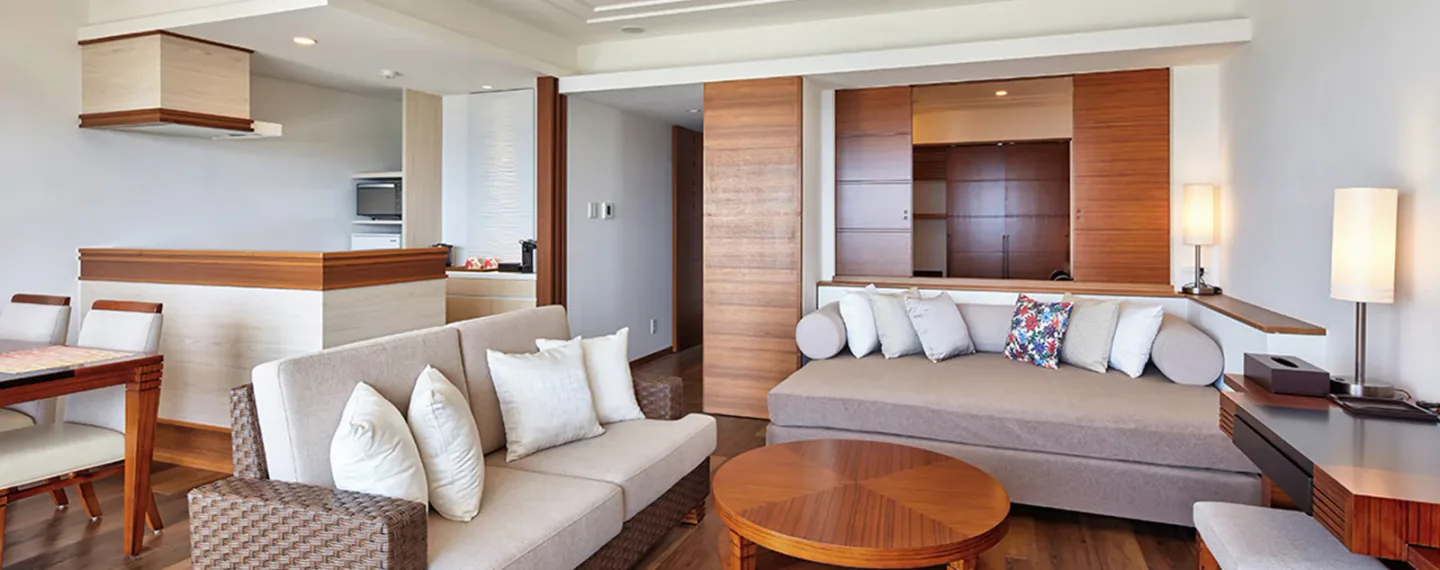
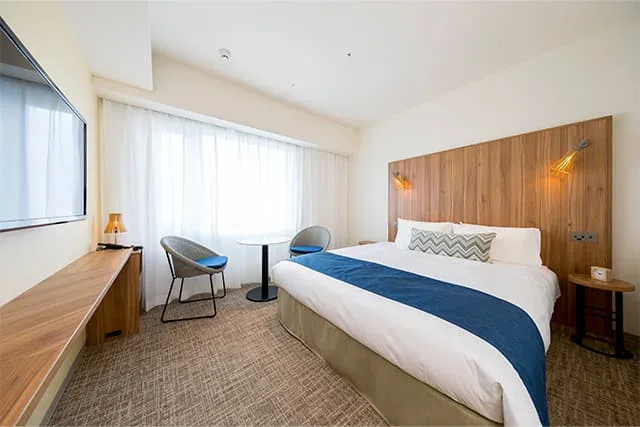
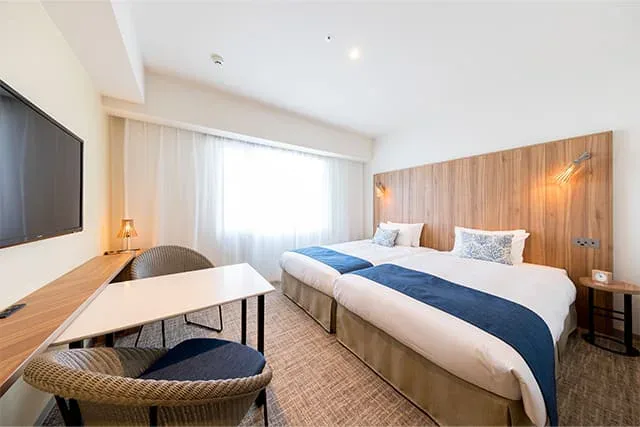
HIYORI: wash often, use the suite, cook only if the plan asks for it
HIYORI states that every guest room has a washer-dryer; liquid detergent and fabric softener are provided. Rooms also have a kitchen with a two-burner IH cooktop, pots, pans, tableware and cutlery. This removes the uncertainty about whether a residential-looking room really includes the appliance. A three-night Onna stay with two sea or pool days can use the washer immediately, while the suite becomes more valuable if the group returns for a midday reset or spends an evening indoors. Families with infants can use the baby-and-toddler hotel checklist to test whether naps and stroller movement matter more than either appliance.
The kitchen still needs the named-meal test. A family preparing children's food or two breakfasts can use it; guests dining out every night should not pretend the pans are a saving. HIYORI does not have a private beach, although beaches are nearby. Choosing it only because the room can wash clothes may be expensive if you leave early for northbound sightseeing and return solely to sleep. The HIYORI three-night room decision examines whether the suite itself gets enough use.
If the trip is mostly long drives from Onna, compare the cost of empty resort afternoons. A washer-dryer used twice can help, but it does not recover several hours of daily travel. A guest who wants a beach-front stay rather than a kitchen-heavy suite should test Onna resort beach and pool choices before assuming all western-coast hotels are interchangeable.
Ala MAHAINA: the kitchen is clear; the laundry claim must stay separate
Ala MAHAINA Condo Hotel says all guest rooms have a kitchen. Its listed equipment includes an IH cooktop, microwave, electric kettle, frying pan, pot, cutting board, knife and other tools; a rice cooker or toaster oven can be borrowed. That is a concrete cooking setup for a Motobu base. Its Superior Room is roughly 55 m², which can also support a slower northern stay. The hotel is near the Churaumi Aquarium area, so the strongest reason to sleep there is avoiding repeated northbound journeys from Naha or Onna.
Do not read “condo” or “all-room kitchen” as proof of an in-room washer-dryer. The room information examined here does not give the same all-room laundry assurance as HIYORI. If washing inside the suite is a deal-breaker, inspect the exact room equipment before paying or choose a property that states it explicitly. Ala MAHAINA can still be the better hotel when the location removes two long drives and meals in the suite are planned. The Ala MAHAINA Motobu decision deals with that specific north-side trade.
One Churaumi visit does not automatically call for a Motobu hotel move. Compare the five-day Naha–Onna–Churaumi route and the two Motobu hotel options if you are deciding whether the north gets one night or several. A useful kitchen may be a secondary reward of the right base, rather than the reason to relocate.
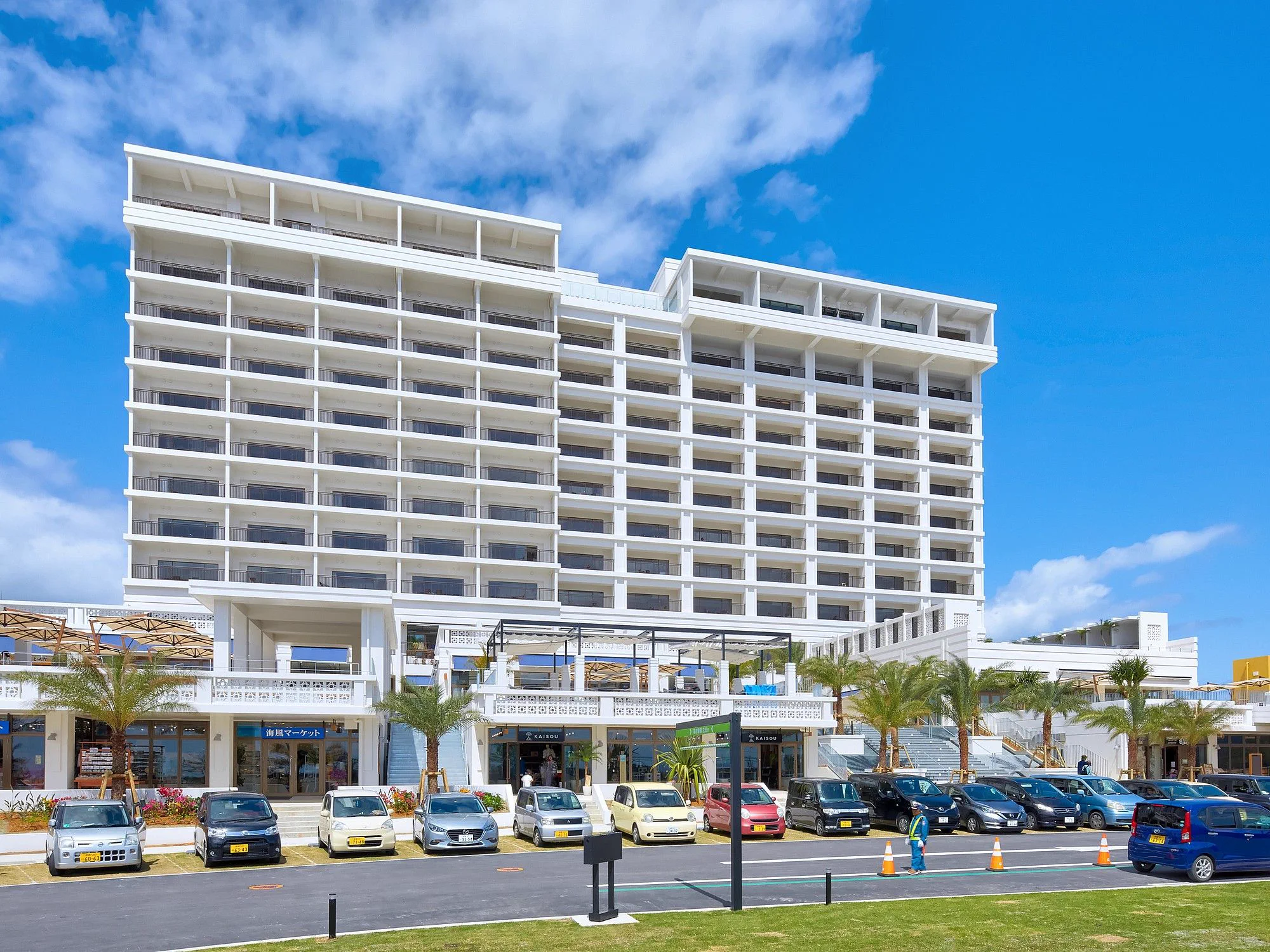
Tokyu Stay Okinawa Naha: the final-night laundry case is unusually direct
Tokyu Stay Okinawa Naha lists a washer-dryer, kitchenette and microwave in its Residential Double, Residential Twin and Residential Family categories. The Residential Family Room is 31 m², with capacity that depends on the exact standard or bunk-bed type, so match the party to the named room. The property's Tsubogawa location can work well when the final night is for washing, packing and reaching the airport. The load runs while ordinary departure preparation continues rather than consuming an Onna resort evening.
The counterweight is where you spend the other nights. Tsubogawa is not the centre of Kokusai-dori. A group visiting the street each evening should count the repeated rail or taxi movement against one laundry night. Compare Tokyu Stay's exact final-night route with two Kokusai-dori hotel choices; Blossom offers communal 24-hour washing in a more central street location, while COLLECTIVE trades in-house washing for a larger standard Twin.
If the airport transfer is your main reason for a Naha night, the late-arrival and early-flight hotel guide may reveal a simpler base. A car-free city schedule uses different routes again; see two days of Naha by Yui Rail. The in-room washer-dryer should support those plans, not decide the whole trip before location is settled.
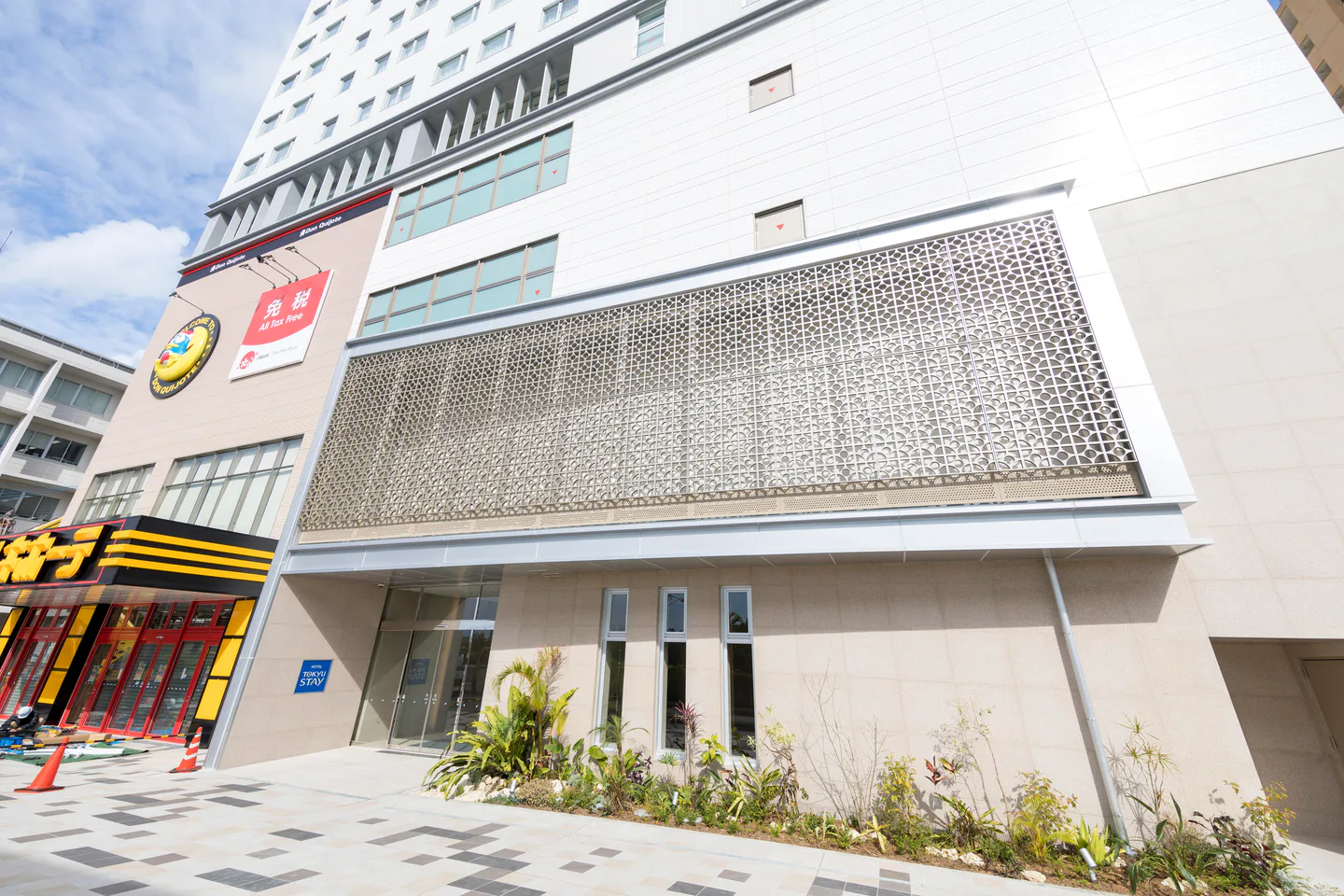
Price the task removed, then compare a like-for-like room
There is no useful universal yen ceiling for an in-room machine. Rates change by date, party size, room type, cancellation conditions and season. Instead, estimate the inconvenience the feature removes. One load on the final night may save a communal-laundry queue and let you pack dry clothing. Two loads after water days may justify a larger premium. Zero expected loads make the machine an incidental bonus, even when its photograph looks reassuring.
Keep the same guest ages, dates, breakfast basis and refund conditions in the rate comparison. HIYORI's room includes resort space as well as appliances, Ala MAHAINA's larger suite buys a Motobu location, and Tokyu Stay's smaller Residential categories buy a Naha workflow. A lower nightly number across different areas is not an apples-to-apples saving if it adds three days of driving. The self-drive hotel test gives repeated car trips their proper weight.
Before checkout, answer eight concrete questions: Which night will a load run? What creates it? Is the machine inside the named room or elsewhere in the building? Which two room meals will use the kitchen? Will the group return early enough to use the living area? How many extra trips does the location create? Does the room legally fit the party? What is the final three-night total on matching terms? If those answers point to no wash and no meals, remove both appliances from the must-have list. If they point to two wet activity days and one final-night repack, protect the washer-dryer in the exact room type.
For an Onna-centered resort stay, compare rooms on the Onna accommodation map. If the north is the real base, use the Motobu room map; for a final airport night, compare the Tsubogawa area. The Onna versus Naha last-night comparison is the next decision if you are unsure whether the final wash should happen before or after leaving the resort area. The correct map follows the itinerary. On a three-night trip, a room that solves one repeated task in the right place will usually do more work than a long appliance list in the wrong district.