
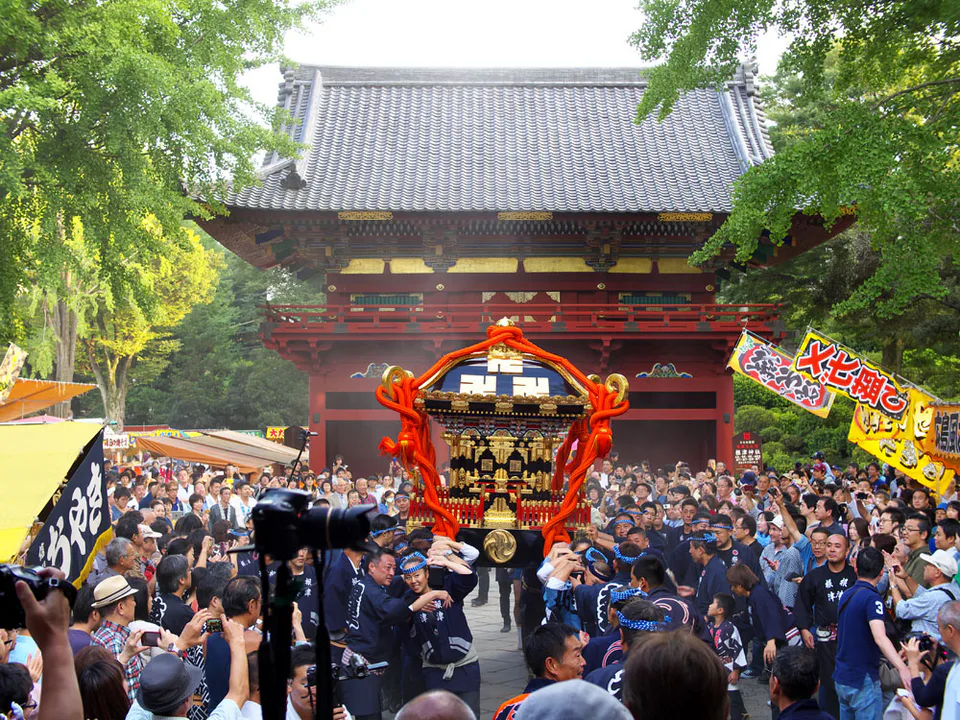
Nezu Shrine’s 2026 Reitaisai has ended. Its unusual feature was the Shinkosai procession on Sunday, September 27, held once every four years: the shrine set a 9:00 a.m. mikoshi departure and a 4:00 p.m. return. Those hours described a moving procession, not a seven-hour display at the shrine. The published programme is still useful as a record of how the weekend was arranged; dates and performances for a future edition need a new shrine announcement.
The public festivities were on September 26 and 27, while the formal annual ceremony took place on September 21. Saturday offered a shorter shrine visit with Urayasu Mai at 7:00 p.m. Gongen taiko had been listed for noon and 3:00 p.m. on Saturday, but the shrine later marked both performances cancelled because of rain. Anyone reading a preview saved before the weekend would miss that change.
↔ Scroll table left or right
Interest | 2026 date or time | Useful planning implication |
Seeing the shrine mikoshi set out | September 27, before 9:00 a.m. | Be at Nezu before the departure rather than opening the day at a museum |
Following part of the rare Shinkosai | September 27, daytime | Use the published road-control sections as clues, allowing for movement and crowds |
Sanza-no-Mai sacred dance | September 27, 2:00 p.m. | A fixed shrine event when a moving procession is difficult to follow |
Saturday evening ritual | September 26, 7:00 p.m. | Urayasu Mai remained listed; noon and 3:00 p.m. taiko were cancelled because of rain |
A brief festival stop | September 26, or a fixed Sunday anchor | The 2026 Sunday mikoshi was away from the shrine between departure and return |
Three dates carried different parts of the 2026 festival
The shrine’s final notice distinguished the ritual day from the public weekend and the once-in-four-years mikoshi route:
September 21: the formal annual ceremony, without the main public-festival programme.
September 26–27: the public festival weekend, with stalls planned on the grounds.
September 27: the four-year Shinkosai mikoshi route, 9:00 a.m. departure to 4:00 p.m. return.
A date-only festival listing could easily have sent a visitor on September 21 expecting stalls and a procession. The rite was on that day; the larger public programme belonged to the following weekend. For a later year, check which day hosts each element instead of transferring the 2026 pattern to a new calendar.
The 9:00 a.m. departure rewarded an early start
For the departure itself, arriving around 8:30 a.m. would have left time to reach the shrine before the mikoshi moved. That was a planning buffer, not an announced gathering time. Nezu and Sendagi stations on the Chiyoda Line are each listed as roughly five minutes away on foot; Todaimae on the Namboku Line is also about five minutes from the shrine.
A base around Ueno, Yanaka or another north-central Tokyo neighbourhood would have reduced the morning journey. A hotel move for this single event would rarely have paid for itself, though. A traveller staying near Tokyo Station or Shinjuku could still reach Nezu by train while keeping a room that served the rest of the trip.
The useful decision was where to place one early morning, not where to relocate the whole stay.
Where the mikoshi could be seen away from the shrine
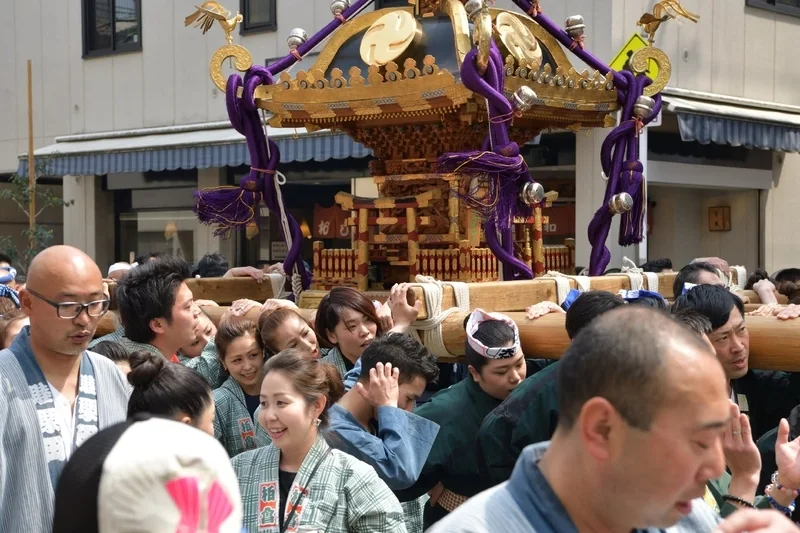
The shrine notice gave a 9:00 a.m. departure and a 4:00 p.m. return. It also identified road sections affected by the route. Around Nezu Shrine’s front approach, vehicle access was difficult from 8:30–9:15 a.m. and 3:50–4:30 p.m.; the notice named the Yomise-dori shopping street at 11:00–11:30 a.m. and Nippon Medical School’s Tsutsuji-dori at 3:00–3:30 p.m. These were road-control windows, not promises that every spectator would see the mikoshi at an exact minute.
The procession route mattered because waiting at the shrine between departure and return could leave a long gap. Visitors who wanted only a short stop had a better chance at a fixed event time than at an unplanned sighting along the streets. The final notice supplied more location detail than the early preview, illustrating why a festival plan should be refreshed close to the date.
Two approaches would have kept the day manageable:
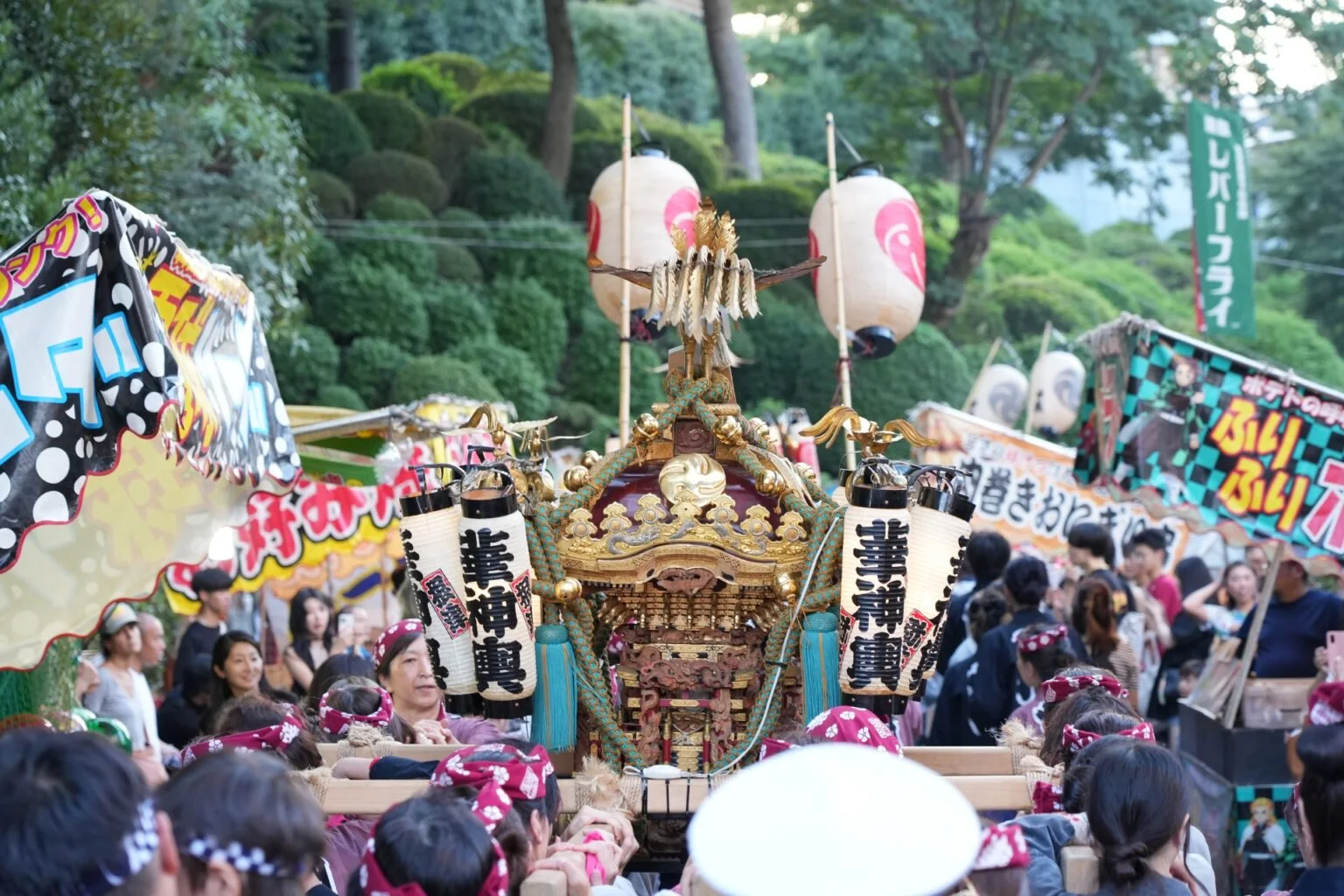
Departure first: watch at Nezu before 9:00 a.m., then use Yanaka or Ueno while the mikoshi is away.
Fixed shrine programme: make the 2:00 p.m. Sanza-no-Mai the centre of a short visit, with the procession route as an optional addition.
Saturday offered a shorter visit, with one important correction
The September 26 programme listed Nezu Koren and a 7:00 p.m. Urayasu Mai. The shrine had also scheduled Gongen taiko for noon and 3:00 p.m., then struck out those performances and recorded a rain cancellation. Stalls were planned for both public-festival dates. The final notice therefore should not be described as a Saturday taiko show that definitely took place.
A Saturday visitor could have explored Yanaka or Ueno earlier, then gone to Nezu for the evening dance. That demanded less open time than following the moving mikoshi on Sunday. The advantage depended on the event actually surviving the weather, as the taiko cancellation showed.
The shrine left stall opening hours to individual vendors. Their presence was part of the festival plan, but a late arrival did not guarantee every food stall would still be operating. The published ritual and performance times were firmer anchors than an assumed stall closing time.
Why September 27 was the distinctive day
The shrine described the mikoshi outing as an event held once in four years. That rarity made Sunday the stronger choice for someone whose main interest was the procession. The shrine buildings, torii and neighbourhood can be visited outside festival time; the 2026 Shinkosai could not simply be moved to another September afternoon.
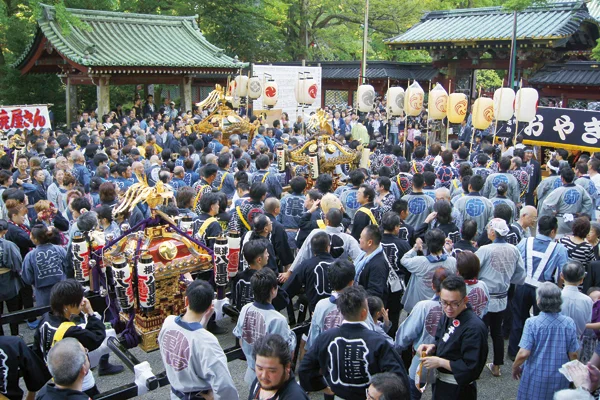
The procession also needed time in the itinerary. A permanent museum or shopping stop could be moved to another date, while the mikoshi’s departure and return fixed the most useful Sunday windows. A brief visit at an arbitrary midday hour risked finding the shrine between major moments.
For a short first-time Tokyo stay, weigh that rare Sunday event against the city sights still missing. How Many Days in Tokyo? gives a way to decide how much of the trip to reserve for neighbourhood events.
Keep the rest of the day near Yanaka and Ueno
Nezu sits naturally beside Yanaka, Sendagi and Ueno. A walk or museum in that part of Tokyo was easier to combine with the festival than a long trip across the city. The nearby sights also gave visitors something worthwhile to do while the mikoshi was away from the shrine.
A visitor who prioritised the departure could have used this sequence:
Before 9:00 a.m. — Nezu Shrine departure
Late morning — Yanaka or Ueno
2:00 p.m. — optional Sanza-no-Mai
About 4:00 p.m. — optional mikoshi return
That route used the 9:00 a.m., 2:00 p.m. and 4:00 p.m. shrine times without assuming the mikoshi would be stationary between them. It also left room to shorten the outing if crowds or weather changed the day.
A museum could fit between shrine visits if its entry was flexible. A non-refundable timed booking would have removed the option to return for the sacred dance or mikoshi, so it was a poor companion to a moving festival.
If only one or two hours were available
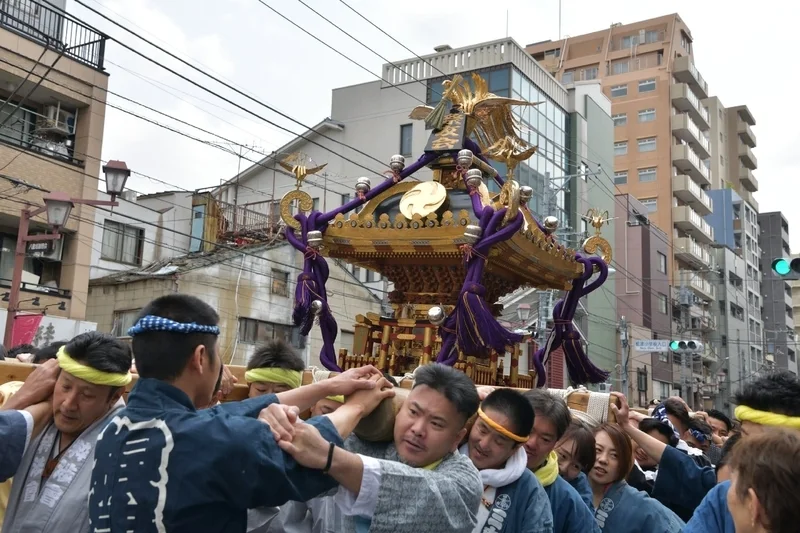
The best short visit depended on which fixed programme moment fitted the schedule. A random midday arrival was less reliable because the mikoshi was circulating through the neighbourhood.
Before 9:00 a.m., the departure was the clear target. It also avoided the uncertainty of finding the procession later.
At 2:00 p.m., Sanza-no-Mai supplied a scheduled shrine performance. It made sense for someone who wanted a known place and time rather than to follow the mikoshi.
Near 4:00 p.m., the shrine’s stated return offered another anchor. The notice placed the front approach road-control window at 3:50–4:30 p.m.; crowds and operational timing still meant arriving early was wiser than treating 4:00 p.m. as a precise show start.
A traveller with no access to the updated route and none of those windows free might have found Saturday’s shorter festival programme easier to manage, while accepting that rain could alter individual performances.
The updated notice changed the practical plan
The shrine’s published record now gives the main dates, procession hours, several road-control windows and the taiko cancellation. Those details supersede an earlier preview that lacked street information or still listed the drums as scheduled. Future festival visitors should check the notice issued for their own year rather than assume these 2026 times will repeat.
Rain did not produce one uniform festival outcome in 2026: the notice specifically cancelled Gongen taiko, while it continued to list the other programme elements. It would be inaccurate to infer the status of every dance, stall or procession from the taiko line alone.
The broader lesson is practical. Anchor a festival day to one published event, keep nearby sightseeing flexible and look for updates before travelling. A saved itinerary is only as current as the announcement on which it was built.
What the 2026 weekend showed
September 27 was the date for the rare Shinkosai, with a 9:00 a.m. departure and 4:00 p.m. return. The notice’s street windows made it possible to plan beyond the shrine gate, while still leaving room for the procession to run differently from a printed minute-by-minute expectation.
The September 26 programme offered the shorter festival visit and a 7:00 p.m. Urayasu Mai, but rain cancelled the scheduled Gongen taiko. September 21 was the formal rite. For any later Reitaisai, new dates and a fresh programme must come from Nezu Shrine; the 2026 schedule is a record, not a standing timetable.
Nearby Tokyo planning
Ueno vs Shinjuku · Tokyo National Museum · How Many Days in Tokyo?
Nezu Shrine pages
Nezu Shrine — 2026 Reitaisai and Shinkosai notice · How to reach Nezu Shrine. The 2026 programme now records the Saturday taiko rain cancellation and the Sunday road-control windows.
Related guides: Fukuro Matsuri Ikebukuro 2026: Mikoshi on Sep 27, Tokyo Yosakoi on Oct 11 · Kyushu Odan Bus 2026: Full Service Returns Sep 1 — But Aso Crater Access Does Not · Kyoto Kibune Kawadoko 2026: Prices, Rain, Bus 33 and Shrine Plan · Nezu Museum 2026: The Garden Isn’t Free — and That Changes Whether ¥1,400 Is Worth It · Gujo Odori All-Night Dance 2026 Is Over: What Still Runs This Year? · Kishiwada Danjiri 2026: Yoimiya or Honmiya for a First Visit? · Things to Do on Miyajima: Shrine, Mount Misen, Kayaking and Food · Kochi Yosakoi Festival 2026: Which Day, Which Venue and Do You Need Paid Seats? · Tokyo Attraction Passes 2026: Klook Pass Greater Tokyo vs Tokyo City Pass — When Do They Actually Save Money? · Kishiwada Danjiri October 2026: Districts, Transport and How to Plan the Day
For a shrine visit beyond the 2026 festival dates, the Nezu and Yanaka area makes a quieter Tokyo base than the main terminal districts. Compare rooms near Nezu Station with the rest of your Tokyo rail route.