
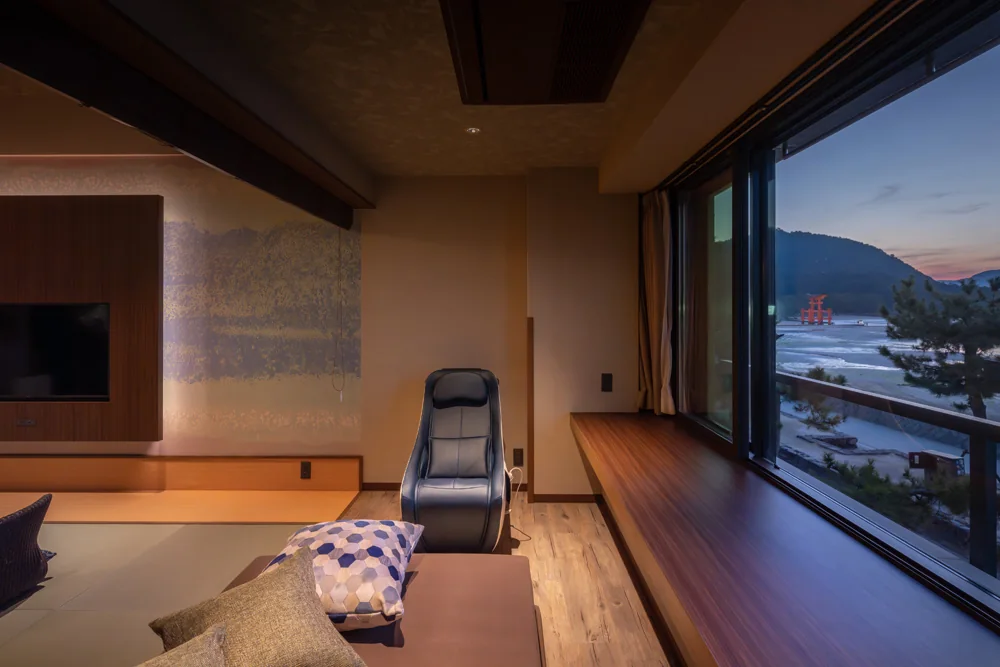
An overnight on Miyajima changes the autumn visit because the island is quieter after many day visitors leave. Kinsuikan and Miyajima Grand Hotel Arimoto both let you stay for that evening, but they place the room in different parts of the island. Kinsuikan is on the waterfront near the shopping-street and shrine approach. Arimoto sits behind Itsukushima Shrine, closer to the route toward Momijidani Park. The hotel decision turns on when you will reach the ferry, whether you want the waterfront at dusk, how much luggage you have, and which exact room and dinner plan you can book.
JapanLayer hotel assessment by dimension
↔ Scroll table left or right
| Hotel | Access | Space | Comfort | Cleanliness | Neighbourhood | Service | Value |
|---|---|---|---|---|---|---|---|
| Kinsuikan | 9.8/10 | Insufficient evidence | Insufficient evidence | 9.5/10 | Insufficient evidence | 9.6/10 | Insufficient evidence |
| Miyajima Grand Hotel Arimoto | 9.6/10 | Insufficient evidence | Insufficient evidence | 9.4/10 | Insufficient evidence | 9.4/10 | Insufficient evidence |
The island-night decision
↔ Scroll table left or right
| Booking detail | Kinsuikan | Arimoto |
|---|---|---|
| Evening focus | Waterfront and shared roof terrace | Shrine-side position and early inland walk |
| Pier arrival | Walk through island town; plan for luggage | Free pier shuttle; contact hotel on ferry |
| Room differences | Kiraku, Mizuori and suite have different views and baths | Japanese rooms, Misen-facing Sukiya, Junior and Royal Suites |
| Private bath | Check named category; Mizuori bath is heated water | Available in selected suites, not standard rooms |
| Meal decision | Compare dinner course and dining venue | Compare meal package, venue and arrival deadline |
Swipe to compare the hotels
Start with the island route, not the room photograph
Most travellers arrive at Miyajima Pier, walk through the town and eventually reach Itsukushima Shrine. Momijidani Park lies further inland toward Mount Misen. Kinsuikan is positioned on the waterfront side of that sequence; Arimoto is set closer to the shrine and the path toward the maple valley. If your main autumn objective is an early walk under the trees before day-trip crowds build, Arimoto reduces the backtrack from the room to that trail. If the evening view over the water is the stronger reason to stay, Kinsuikan's setting is easier to use repeatedly. The Momijidani Park guide helps decide how much time to reserve for the valley itself.
Do not treat either hotel as a substitute for checking the season. Leaves can change with weather, altitude and the week; a hotel room bought for a single predicted peak day does not guarantee red foliage. The park and the shrine also create different experiences. A morning in Momijidani is mainly a walk among the trees; a shoreline evening depends on light and tide. You can enjoy one without the other matching a photograph. The Japan autumn leaves guide and Hiroshima–Miyajima two-day itinerary help place the island night within the wider trip.
For a trip planned around a particular November week, compare the wider mid-November foliage outlook with the live autumn update nearer departure. Use that information to choose the walking days you have, rather than promising yourself a precise colour peak months ahead. A photograph from a previous year cannot establish what the trees will look like on your booking date.
If you can visit only as a day trip, the hotel choice may be unnecessary. The cost of one island night is easier to justify when you will actually use the evening and next morning, perhaps after a full day in Hiroshima. The Hiroshima or Miyajima overnight decision sets out that trade. For an island stay, arrive early enough to check in or leave bags and still have daylight. A late ferry followed by dinner and an early ferry out buys little time among the maples.
If the rest of the Hiroshima visit is centred on the Peace Memorial area, compare an island night with staying in the city and making one ferry excursion. The Granvia versus Hilton two-day hotel decision provides the city-side baseline. That comparison matters because the island room is an addition to the itinerary, not a cheaper replacement for every city journey.
Kinsuikan makes the shoreline part of the stay
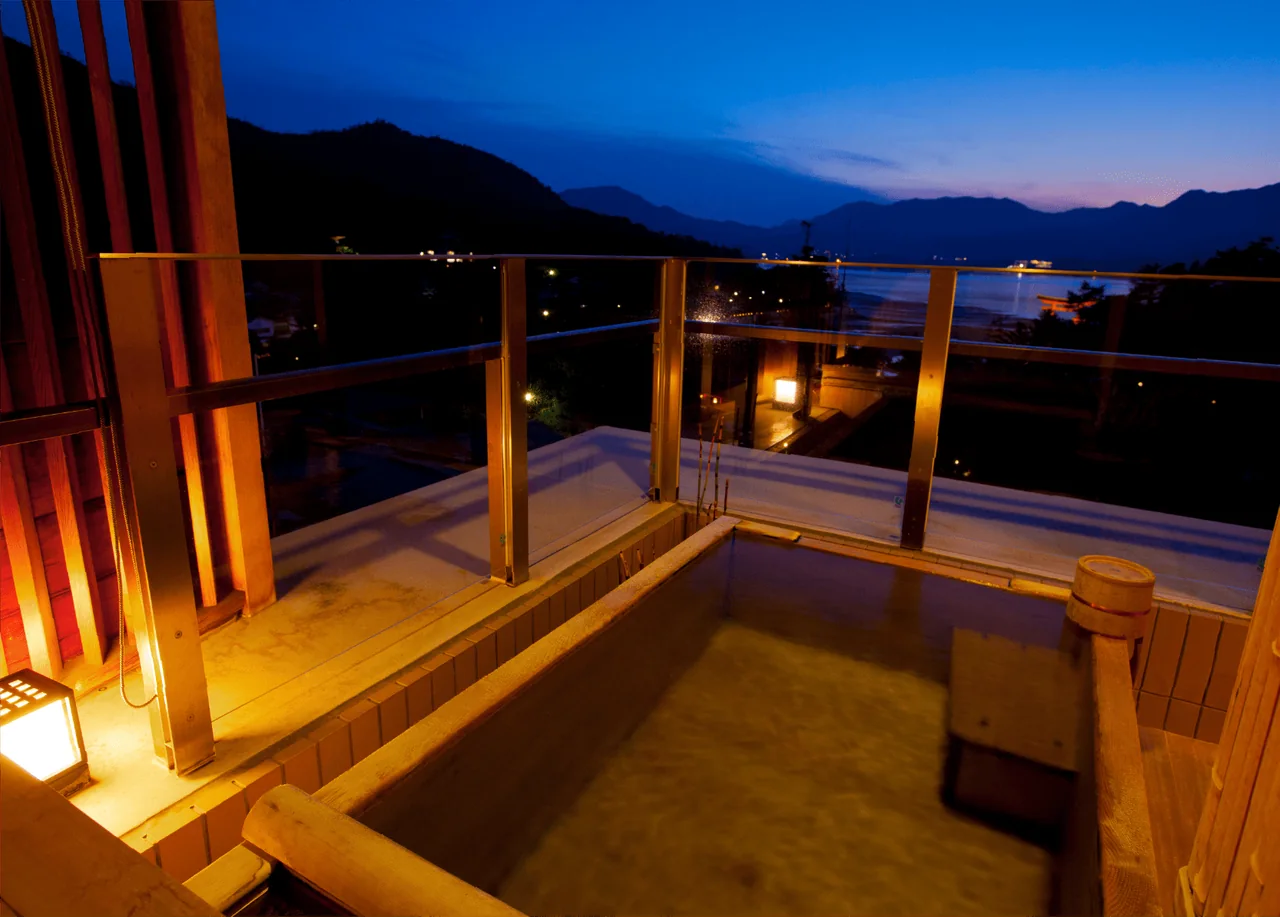
Kinsuikan's address is Miyajima-cho 1133, on the waterfront side of town. Its roof terrace looks across the Seto Inland Sea toward the Great Torii and island scenery. The terrace is a shared guest facility, so a rooftop view is not a promise that every bedroom faces the water. Some named rooms have sea views; the compact Kiraku category instead looks toward town, mountain or street scenery. Compare the exact room class before paying for an imagined view. The Miyajima food-street guide is useful if you want an afternoon that moves between the waterfront, snacks and the hotel without a longer inland walk.
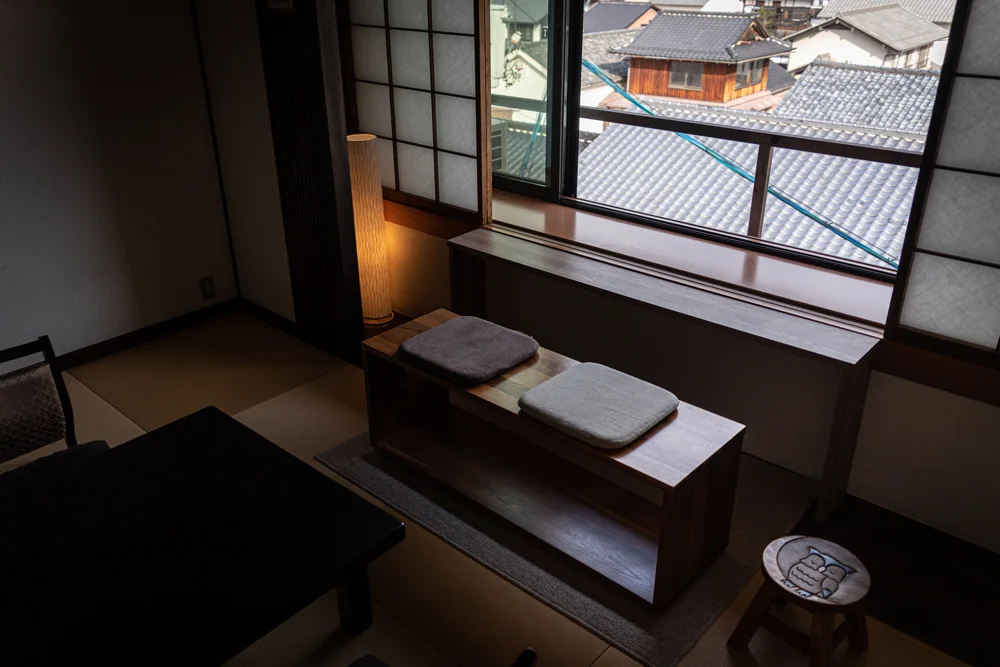
Room categories vary greatly. Kinsuikan's Heritage Suite Roku is an 86-square-metre, one-room category with a sea-facing setting and special inclusions, including dinner in the room under the stated booking conditions. The Mizuori rooms introduced in 2024 have a waterfront living area and a private-bath benefit, but that bath uses heated water rather than natural hot-spring water, and access has its own same-day booking rules. Kiraku is a 39-square-metre tatami room with a different outlook. These should not be compared as if they were the same room with different decoration. Ask which category, view and meal arrangement the available rate actually includes.
The terrace gives a fallback view when a sea-facing room is beyond budget. It is open to staying guests after check-in, subject to weather and any private-event restrictions. That makes Kinsuikan an option for someone who wants a sea-and-torii moment but prefers to spend on dinner instead of the most expensive view room. The distinction is practical: a shared terrace can close in strong wind or rain, while a paid room view remains yours. In the other direction, a guest planning to spend all evening outside may not get much value from a costly suite. The Miyajima sea-kayak and Misen guide helps if your afternoon is already occupied with a booked activity.
Kinsuikan offers ryokan dining built around local ingredients, with breakfast in a dining venue for the room classes described. Dinner style depends on room and plan; do not infer in-room dining from the fact that the property is a ryokan. If a specific dinner matters, compare the meal-inclusive package, course, time and any child meal separately from room-only rates. The Hiroshima and Miyajima food guide helps decide whether you want a planned ryokan dinner or the freedom to eat around the island.
Kinsuikan's bath offering also needs precise reading. Some accommodation has private-bath privileges, and the property has a bathing facility, but a bath's water source and booking conditions differ by category. The Mizuori private bath is expressly heated water rather than hot spring. A traveller choosing a room for a hot-spring experience should verify the exact bathing facility and whether it is included. Room photographs alone are a poor way to make that distinction.
Arimoto gives the shrine and maple-valley side more weight
Miyajima Grand Hotel Arimoto's address is Miyajima-cho Minamimachi 364, behind the Itsukushima Shrine area. Its location suits a morning that begins with the shrine and moves up toward Momijidani Park. That does not mean the park is attached to the lobby; there is still a walk through island paths. It does mean the route does not have to begin at the waterfront shopping street each time. The Momijidani Park guide can help choose a manageable loop rather than treating the valley as a quick stop before the ferry.
Arimoto has a free shuttle from Miyajima Pier. The property asks guests to tell it the ferry boarding time when they board, and seats are limited; a wait is possible when the service is busy. This can make a real difference for a traveller with a large suitcase or limited walking stamina. It is not a ferry shuttle from the mainland, and it does not remove the train and ferry parts of the trip. Confirm pick-up arrangements for your arrival rather than assuming a vehicle will be waiting without contact. The Hiroshima–Miyajima two-day itinerary helps plan that ferry arrival with the city day.
For a traveller who needs to limit walking, check the whole path rather than only pier-to-hotel transport. The shuttle can solve the luggage leg, while the shrine and valley still require walking on outdoor surfaces. The autumn trip with seniors guide helps set a gentler island day and choose whether a rest in the room will be possible before dinner.
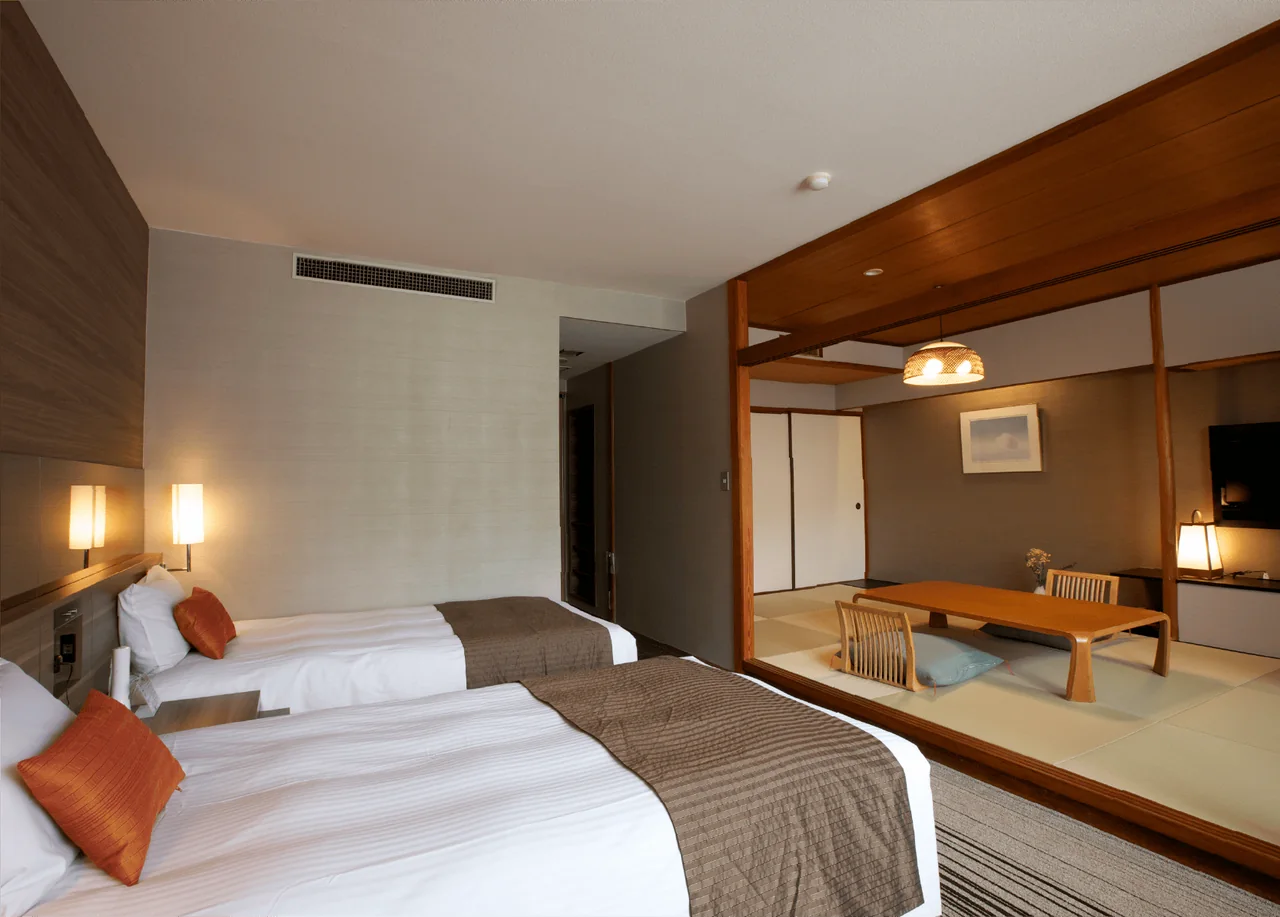
The room range at Arimoto is broad. Traditional Japanese rooms and Japanese-Western rooms form one level of choice; its Sukiya special rooms look toward Mount Misen's forest and accommodate up to six guests. Higher categories include a Junior Suite with a shrine-side outlook and an open-air bath, and Royal Suites introduced in winter 2024 with sea-facing features. A standard room booking should not be described as if it includes the bath, sauna or view shown for a Royal Suite. Match the quoted rate to the room name and check whether the beds are western beds or futon arrangements that suit your party.
For an autumn stay, a forest-facing room may make more sense than a sea-facing suite if your interest is the changing hillside. Yet an outlook toward Mount Misen is not the same as a close-up view of Momijidani's trees. Pay for the room you want to occupy, not for a vague promise of 'autumn view.' If the main objective is photography in the valley, an early walk can deliver more than a premium room category. The Miyajima walking and food guide helps divide the next morning between the inland path and the town.
Arimoto's meal choices require the same care as its room choices. A package can include dinner and breakfast, but the dining venue and privacy vary by plan and category. If room dining or a private dining space is essential, read the final package terms rather than interpreting a cuisine photograph as a service promise. Plan the meal time around the last daylight in the valley. A booking that fixes dinner too early may cut short the walk you paid an island night to enjoy.
The ferry and luggage determine the arrival evening
A Miyajima booking still begins on the mainland. Travellers by rail normally go via Miyajimaguchi and cross by ferry to Miyajima Pier. Ferry schedules, operators and any special sailings need checking for the date. If you arrive with a large case, the distance from pier to hotel feels longer than a map suggests because the island can be crowded on autumn weekends. Arimoto's pier shuttle is therefore a concrete advantage; Kinsuikan's waterfront position may instead suit someone comfortable walking through town with a small bag. The Hiroshima station food guide can help if you plan to eat before the rail and ferry leg.
The cleanest luggage plan is often to travel to Miyajima with an overnight bag and leave the large suitcase at a suitable mainland hotel or storage point, subject to that service's rules. If the next night is in Hiroshima, ask the city hotel whether it will hold luggage across the island night before relying on that plan. If you are leaving for another city the next morning, you may need to carry everything to the island or arrange a forwarding service with a confirmed delivery date. The Tokyo–Kyoto–Osaka luggage forwarding guide explains why delivery promises should be checked against the actual route, even though Miyajima has different logistics.
The broader Japan luggage-forwarding guide helps distinguish a hotel-held suitcase from one sent ahead. Those are different arrangements with different collection points. Do not send a bag to the next hotel without confirming that property's receiving rules and expected delivery date.
An evening ferry arrival deserves a cautious timetable. Many food stalls and shops cater mainly to day visitors. A room-only booking could leave limited dinner options if you arrive after the busiest hours, whereas a meal package has a set check-in and dinner deadline. Neither route is universally safer: a delayed train might make a fixed dinner awkward. Confirm the meal's latest arrival and cancellation terms. The Miyajima food-street guide can help distinguish a daytime snack plan from a reliable evening meal.
If driving, check both properties' current instructions before taking a vehicle on the ferry. Roads on the island are narrow, traffic restrictions apply and most sightseeing is on foot. Parking on the mainland and crossing as a passenger can be simpler. Arimoto can guide a guest who brings a car, but that needs advance contact. A car does not make the short distances between shrine and maple valley driveable sightseeing legs.
Choose dinner and bath before chasing a peak-week rate
Miyajima autumn dates can carry a strong room premium. Compare like with like: same number of guests, named room, dinner course, breakfast, cancellation policy and tax treatment. Kinsuikan's compact room with dinner is a different product from Arimoto's suite with a private open-air bath. A room-only rate at either hotel can appear attractive until dinner and any additional child meals are added. Do not use one property's luxury room photo to judge the other's standard-room rate.
The autumn hotel booking guide helps when you are balancing an early cancellable reservation against waiting for clearer foliage information. Read the actual cancellation deadline before relying on flexibility; peak-week ryokan meal packages can have different terms from a standard city hotel.
Children change the value equation. Kinsuikan's Mizuori category restricts infants because of a fall risk; the Heritage Suite's stated capacity includes children. Arimoto's Sukiya special room can take a larger group, but bedding configuration and child meals still need confirmation. Enter children's ages and desired bed count at the start of the search. A group of four adults should not assume that a room accommodating four has four permanent beds. If travelling with a child who needs an early dinner, a fixed ryokan meal time may suit the family better than searching for an open restaurant after dark.
Bath access is another booking-level decision. If you want a private bath, verify whether it belongs to the room, requires same-day reservation, or is a shared facility. Kinsuikan's Mizuori benefit has limited bookable times and is not a natural hot spring bath. Arimoto's suite descriptions include specific open-air bath types, but those do not transfer to its ordinary Japanese rooms. A traveller who would be equally happy with the shared bath should avoid paying for a suite feature they will not use.
The score of an island hotel changes with the reason for sleeping on the island. If your priority is the waterfront, roof terrace and a short return from the shopping street, Kinsuikan has the stronger fit. If the plan is an early maple-valley walk, easy luggage transfer from the pier and a quieter position behind the shrine, Arimoto has the stronger fit. The Hiroshima or Miyajima overnight guide is useful if the total island-room premium makes you reconsider the night itself.
A workable one-night sequence
For a Kinsuikan stay, cross to Miyajima before the late afternoon, leave bags, see the shrine and take a shoreline walk, then use the room or terrace before the planned dinner. The next morning can be for Momijidani before the shopping street becomes busy. This sequence uses the hotel's waterfront position more than once. If the weather closes the rooftop, the itinerary still has the island evening; do not make the shared terrace the only reason the booking works.
For an Arimoto stay, tell the hotel your ferry time, take the pier transfer if needed, and settle dinner timing before going toward the shrine and valley. An early next-morning walk from the inland side can be the main reward. Leave enough time to collect luggage and reach the pier after checkout. A shuttle return may need arrangement, especially when several parties leave at once. The Momijidani Park guide can help set the route so it fits checkout rather than rushing the final section.
If Mount Misen is in the plan, check the ropeway and walking times separately. The mountain changes an overnight from a relaxed shrine-and-maples visit into a more demanding excursion, particularly with children or older travellers. The Miyajima kayak, Misen and oyster guide shows why activities should be scheduled before a dinner package is selected. A hotel nearer the valley cannot make a late start and a full mountain route fit into a short morning.
For travellers moving on by rail, remember that both hotels are across the water from the station. Allow for hotel-to-pier time, a wait for the ferry, the crossing, the walk to Miyajimaguchi Station and the train connection. The island night is at its best when the following departure is not so early that the morning disappears. If the next Shinkansen is fixed, the Hiroshima and Miyajima two-day plan helps decide whether to place the island first or last.
My choice for a waterfront evening with flexible room time is Kinsuikan, after checking that the named room has the desired outlook. For an early Momijidani walk with heavy luggage or a planned inward-facing ryokan stay, Arimoto is the more coherent base, particularly if the pier shuttle is useful. In either case, book the actual room and meal combination, not a property's most photogenic suite. Autumn colour and ferry conditions can vary; the one thing the reservation should reliably provide is an island evening and morning that fit your pace.
Updated 4 October 2026. Room inclusions, meals, transport and autumn colour change with date and weather.