
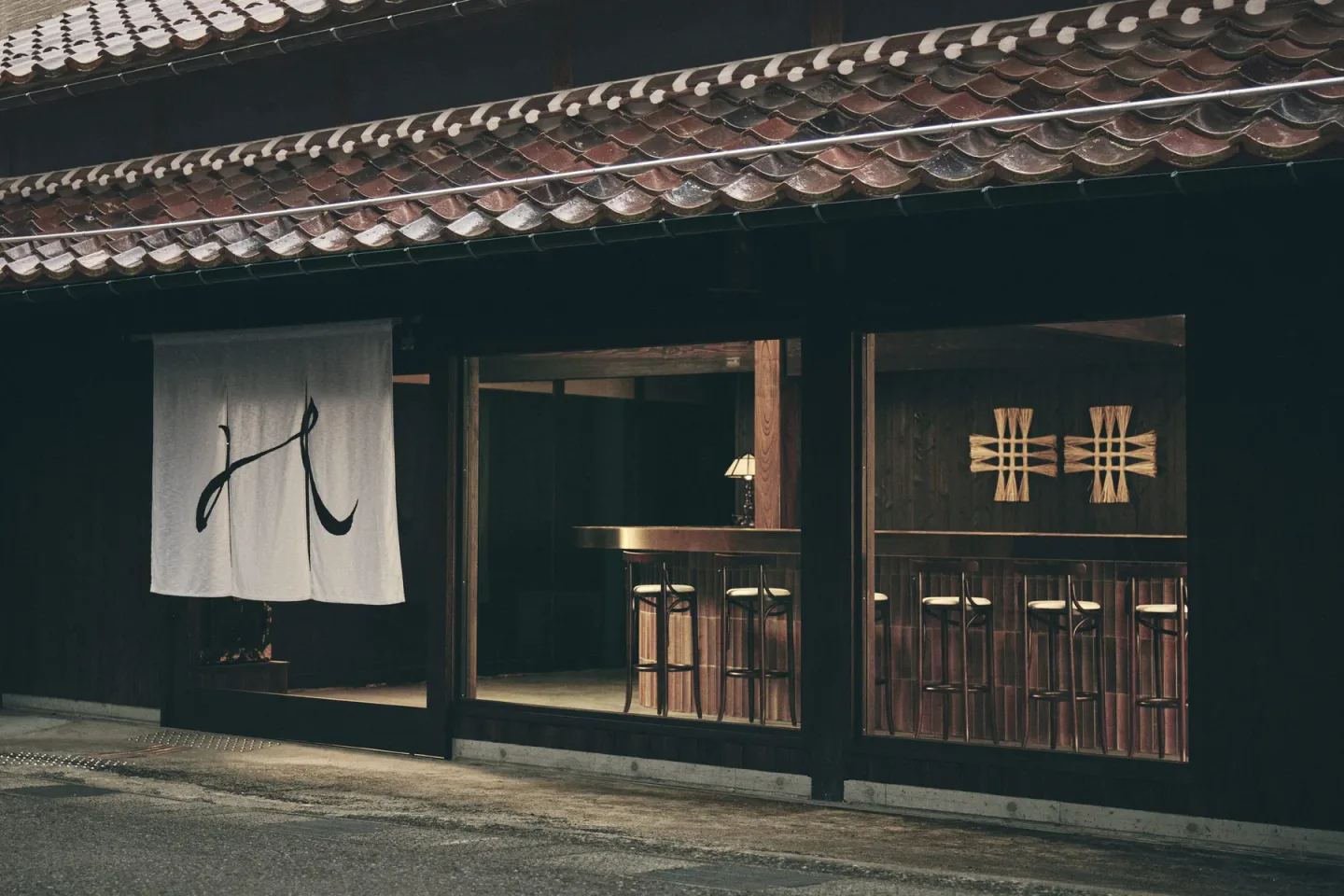
A night at KAZENO KURAYOSHI makes sense when the restored merchant houses are part of the trip, not simply the place you sleep between trains. The hotel opened on 17 July 2026 with 11 rooms across two protected houses in Kurayoshi’s historic district. An early station arrival gives you an afternoon among the old streets, dinner at the Takata House and an unhurried morning in the building. If you reach town after the last published station pickup, or need a fully step-free hotel, the same room can become an expensive complication. Misasa Onsen versus Kurayoshi is the better first decision if your overnight might belong in the hot-spring town instead.
This property rewards choosing a room number rather than a vague category. Room 7 has the fewest steps in the building group and sits beside the dining venue. Room 2 gives three adults a flat 91 m² plan near reception. The vast Room 3 places the bedroom upstairs and the bathroom in a detached downstairs part. Room 1 sleeps five but carries a small-child safety warning. Rooms 8–11 make dinner easy yet remain maisonettes. The hotel name alone says little about the route between bed, bath, reception and meal.
↔ Scroll table left or right
Booking condition | Room or base to examine first | Limit that can change the answer |
Older guest or step-sensitive family | Takata Room 7 | Still no fully barrier-free property; reception is a short outside walk |
Three adults wanting a large flat layout | Ogawa Room 2 | Dinner is in the other building |
Five people with older children | Ogawa Room 1 | Upper-floor passage is unsuitable for small children |
Couple seeking a dramatic private suite | Ogawa Room 3 | Bedroom and bathroom are on different levels |
Mobile couple prioritising dinner in the same house | Takata Rooms 8–11 | These two-person twins are maisonettes |
Late train or early onward departure | Station-area hotel | Heritage district and room time become secondary |
The two houses make the room number more important than the room class
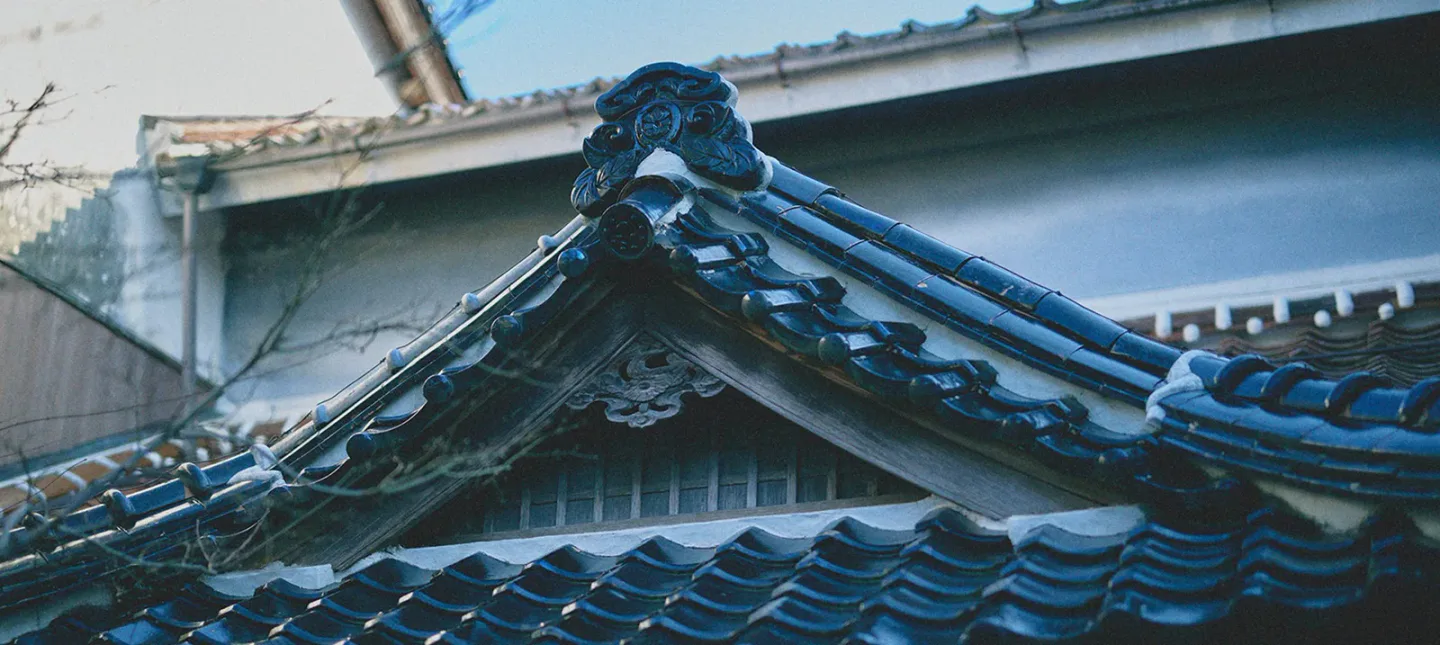
Ogawa House is the Tottori-prefecture designated cultural property and contains six rooms plus the front desk. Takata House, a partly registered tangible cultural property, contains five rooms and the restaurant. The buildings stand about three minutes apart on foot. In fine weather that sounds trivial; in rain, after dinner or with a cane and luggage it becomes part of the stay. An Ogawa room simplifies reception but requires the short trip to dinner. A Takata room reverses that balance. Note both building and room number before comparing rates. The two-house arrangement is the reason this hotel can feel like sleeping within the old town rather than inside a single hotel block.
The room pages describe each layout rather than hiding it under a standard twin or suite label. That is helpful because floor area does not predict ease of use in restored buildings. A larger category can add interior levels or an outside connection. A smaller plan may give a shorter path to the bathroom at night. Fujiya Hotel Hakone’s building and room choices pose a similar heritage-room question, although the actual layouts and access at the two hotels are different. At Kurayoshi, ask for the floor plan of the exact room offered, not a sample photograph of a category.
Four room choices that change the stay
Takata Room 7 is a first-floor, single-level 66 m² space with three beds including an extra bed and a three-person maximum. It has two Japanese-style sitting rooms, a bedroom and a Towada-stone bath. The hotel identifies it as having the fewest steps on the property. Dinner is in the same house; reception is about three minutes away. That combination makes it the first sensible enquiry for a parent with knee trouble, a family with a young child or someone concerned about getting to the bathroom overnight. “Fewest steps” is a relative comparison, however, because the property as a whole does not offer full barrier-free access.
Ogawa Room 2 is 91 m² and flat, accommodates three with an extra bed, and puts reception in the same house. The dining venue remains a short outdoor walk away. For three adults, its one-level circulation may be more useful than a larger suite with internal stairs. Its connected Japanese rooms and garden-facing design are distinctive; the practical advantage is that guests need not climb between sleeping and bathroom spaces. Compare the actual three-person room rate and meal inclusion with another city stay rather than treating square metres as the only value measure. A triple-room decision in Fukuoka shows how bed count and layout can matter more than the headline room size.
Ogawa Room 1 spans 126 m², uses a maisonette plan and accepts up to five guests with five beds including an extra bed. That capacity can look ideal for a family. Its preserved second-floor corridor, though, has gaps, and the hotel advises against booking this room with small children. A five-person legal occupancy is not a child-safety recommendation. Ask which floors the group would use and who would sleep upstairs. If the stay must work for a toddler, treat that warning as a reason to investigate a different room or property rather than hoping the extra floor area solves it. Family room versus connecting-room choices are worth comparing as a general layout decision.
Ogawa Room 3 is the largest at 164 m² and houses up to three. It is a maisonette with the sleeping area upstairs and toilet and bath in a detached section on the first floor. The garden, tea-room atmosphere and separation can make it a memorable retreat for a mobile couple. They also create repeated movement at night. A guest paying for the biggest suite should be buying its architectural character, not assuming the premium brings the shortest route to a bath. Harbour-view versus room-layout premiums at MiraCosta is another example of why the feature you pay for must be the one you will use.
Takata Rooms 8–11 are two-person storehouse twins of approximately 46–56 m². They keep the restaurant in the same building, but each uses a maisonette layout. Rooms 8 and 9 are 46 m², Room 10 is 48 m² and Room 11 is 56 m². A mobile couple might prefer their contained evening routine to crossing to Takata from Ogawa. An older couple choosing Takata solely because dinner is close could make the wrong trade: internal stairs remain. Room 7 is the Takata candidate for minimal steps. One-night ryokan dinner versus room-only plans helps compare meal convenience with what a night actually costs.
↔ Scroll table left or right
Exact room | Size and occupancy | Circulation / building | Reason to choose it |
Takata 7 | 66 m²; up to three | Single-level first floor; dinner same house | Least-stepped option, subject to whole-property access limits |
Ogawa 2 | 91 m²; up to three | Flat; reception same house | Three adults who want space without interior stairs |
Ogawa 1 | 126 m²; up to five | Maisonette; dinner three-minute walk | Larger older-child or adult group, not small children |
Ogawa 3 | 164 m²; up to three | Bedroom upstairs; detached downstairs bath | Architectural privacy for mobile guests |
Takata 8–11 | About 46–56 m²; two | Maisonettes; dinner same house | Couple happy with stairs and close dining |
Train arrival and dinner make the first evening time-sensitive
The property places its shuttle ride from JR Kurayoshi Station at about 15 minutes and currently publishes two station departures: 14:30 and 16:15. Availability can be limited by other reservations. Arrange the pickup with the hotel for your actual stay; do not assume turning up at the station is enough. An earlier article treated a 20:00 day-before booking cutoff from a date-specific holiday notice as a standing rule. The general site does not make that a universal promise. Check the booking deadline and where to meet the vehicle for your dates. The public directions do not give a fixed hotel-to-station return timetable, so settle the departure-day transfer separately.
With the 14:30 pickup, arrival falls around the 15:00 check-in opening and leaves a useful stretch before dinner. The 16:15 ride still permits a heritage evening, but the daylight part is shorter. A train after that second pickup changes the economics: add a taxi or another known local connection, then calculate how much of the room you will actually enjoy. A luggage-heavy night between trains is better placed by the station if the transport gap removes the reason for paying to stay in a cultural property. How to choose one-night stops on a first Japan trip keeps this booking in the context of the full route.
The published dining window is 17:30–22:00 with last order at 20:00. Breakfast is 07:30–09:30, last order 09:00. Check-in begins at 15:00 and checkout is by 11:00. A late arrival can cost both old-town time and the booked dinner. If the train is delayed, contact the hotel rather than treating the 22:00 restaurant closing time as an invitation to arrive at the table then. A meal package should be checked against the actual arrival and the restaurant’s last order. The front-desk or curfew details sometimes quoted for other Kazeno properties should not be copied into this hotel’s rules without a Kurayoshi-specific confirmation.
A traveller who knows the 16:15 pickup will be missed should calculate a taxi before booking. It is a vehicle journey from the station, not a comfortable finish on foot with a suitcase. Ask the hotel how it handles a missed pickup and return transfer on your particular morning. If carrying several large bags across a multi-city trip, Japan luggage forwarding may make the stop easier, provided this small property accepts and stores the delivery on the required date. Luggage storage is listed among the hotel facilities, but that does not establish every courier arrangement.
Sleep comfort here involves the building itself
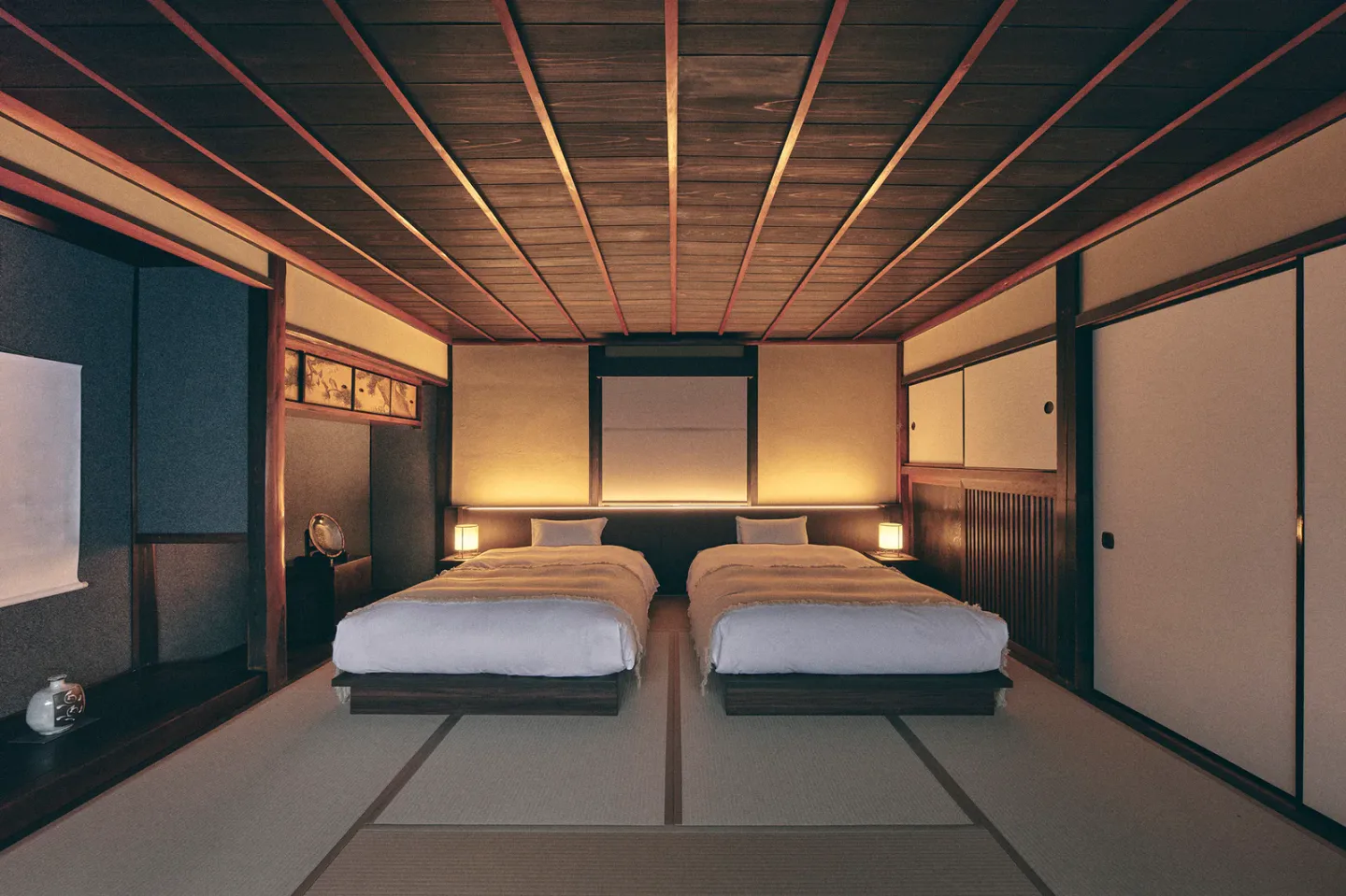
The restored houses preserve their historic fabric. Their room pages warn that insulation and airtightness do not match a modern purpose-built hotel. They also explain the deliberate absence of televisions, clocks and bright lighting. A guest who likes low light and timber interiors may regard these as part of the stay. Someone who needs a brightly lit work area, silent temperature control or the predictable lift-and-corridor plan of a contemporary hotel should think differently. The practical question is what will matter at 23:00 or 06:00, after the initial appeal of the photographs has worn off. Hotel Great Morning’s different comfort trade is an example of paying for a very different kind of room environment.
The property has Wi-Fi, parking, a lounge and luggage storage, but it lists no guest laundry and no barrier-free provision. Children may share a bed through age six under the hotel overview; pets are not accepted. These limitations matter on a long route. If the Kurayoshi night is the point at which a seven-day traveller expects to wash clothes, move that chore to a different stop. A child who can co-sleep is not thereby suited to a particular staircase or second-floor passage. For older parents, the repeated-walking test for hotel stays is more relevant than a generic luxury label.
One night gives the buildings a job; two nights need another plan
For most visitors, one night lets the stay do its distinctive work: arrive with daylight, walk Kurayoshi’s old district, dine in Takata House, spend time in the room and leave after a slow breakfast. Another night is justified when the middle day has a real purpose. That might be a carefully planned Misasa Onsen outing, local crafts, the wider central-Tottori region or a deliberate retreat day spent in the room and town. Merely sleeping twice after two unrelated day trips buys the architectural premium twice without using it twice. Otaru day trip versus overnight and the one-night test for Nara examine the same time-use question in more transit-friendly destinations.
Ask what the second evening and second morning would contain. If both are useful, stay longer. If a long excursion brings you back late and the following morning is an early departure, the extra night is mainly a logistical choice and a station base may serve it better. A Misasa stay is also a different purchase: a hot-spring-town night is oriented around bathing, whereas KAZENO KURAYOSHI is oriented around restored rooms and the merchant district. Misasa or Kurayoshi without a car gives the transport and overnight comparison. One night at an Oirase nature hotel shows how the same extra-night decision changes when the landscape rather than the architecture is the main reason to stay.
What the room premium actually buys
↔ Scroll table left or right
Dimension | What KAZENO KURAYOSHI offers | Check before choosing a rate |
Access | Shuttle around 15 minutes from JR Kurayoshi; 14:30 and 16:15 station departures listed | Pickup availability and return arrangement |
Room plan | Eleven individually different rooms in two historic houses | Exact room number, stairs, bed and bathroom placement |
Sleep setting | Restored timber, muted light and fewer modern fittings | Temperature, lighting and stair tolerance |
Meals | Restaurant in Takata House; dinner last order 20:00 | Meal plan, arrival time and walk from Ogawa |
Mobility | Room 7 has fewest steps; property is not barrier-free | Route from room to reception and dinner |
Services | Wi-Fi and luggage storage; no guest laundry | Where long-trip chores will happen |
Value | Time inside protected buildings and old-town evening | Whether the train schedule leaves enough room time |
There is no single defensible yen premium for every date and room. The hotel has only 11 rooms, and the spacious suites, smaller storehouse twins and meal plans are not substitutes. Compare the final quote for a named room with a station hotel or Misasa option on the same dates, including dinner and any taxi. If this is an anniversary-style night centred on Room 3’s layout, a cheap transit hotel does not provide the same experience. If the night is a rail connection, the cultural setting may be largely unused. A historic Yokohama hotel dinner-versus-room decision illustrates how to avoid paying for features outside the purpose of the stay.
For families, start with the youngest guest’s safe route rather than maximum occupancy. For an older visitor, start with the most repeated movement between bed, toilet, dinner and reception rather than total floor area. That puts Room 7 and Room 2 ahead of some larger plans. A mobile couple may instead enjoy the unusual Room 3 or the Takata storehouse twins. If none of the remaining inventory fits the party, choose another property; a larger paid category cannot erase the geometry of a preserved house. Compact Akihabara room versus station access is a useful opposite case where conventional logistics are the product.
For a booking centred on the heritage stay, compare Kurayoshi-area rooms for the same night, then request the exact KAZENO room number and station pickup before paying. If bathing is the priority, compare Misasa Onsen stays instead. The hotel’s two-house overview, Ogawa room plans, Takata room plans and dining hours show the details that should match the reservation.
Seven site scores for the named heritage room
Dimension | Site score | What decides this mark |
|---|---|---|
Location | The old-town setting is the attraction, while JR Kurayoshi still requires a roughly 15-minute shuttle or other transfer. | |
Room | Eleven distinct restored rooms offer unusually specific layouts; stairs, light and bathroom placement make the exact number decisive. | |
Cleanliness | Recent guest comments describe well-kept restored rooms and wet areas, but the published review sample is small. | |
Service | Station pickup and room-specific guidance help, although the small guest sample includes mixed detail about information given on site. | |
Facilities | Wi-Fi and luggage storage cover basics; there is no guest laundry or fully barrier-free route between the historic buildings. | |
Food | The Takata House restaurant supports a heritage-centred evening; dinner last order at 20:00 limits late arrivals. | |
Value | The premium buys time inside two preserved houses rather than station convenience, and a poorly matched room defeats it. | |
Overall | A persuasive Kurayoshi night for guests choosing a room by its actual circulation and spending the evening in the district. |
These /10 marks are site judgments for a heritage-centred stay, not a claim of personal inspection. The limited guest-review sample is supporting evidence for Cleanliness and Service, so those two marks carry more uncertainty than the documented room plans and transfer times.