
An early Shinkansen changes what “near Tokyo Station” should mean. Karaksa Hotel Tokyo Station and Hotel Ryumeikan Tokyo both sit on the Yaesu side, but neither hotel room is a platform. You must still leave the building with your luggage, choose the correct Tokyo Station entrance, find the train operator and reach the platform before boarding closes. The apparent one-minute difference between their published walks matters less than the room you book, the exit you practise the night before and whether breakfast begins before you have to leave. Karaksa gives groups several efficient twin and connecting-room options. Ryumeikan offers a larger Standard Twin and a different breakfast proposition. The right quote is the one that survives your actual departure time.
JapanLayer hotel assessment by dimension
↔ Scroll table left or right
| Hotel | Access | Space | Comfort | Cleanliness | Neighbourhood | Service | Value |
|---|---|---|---|---|---|---|---|
| karaksa hotel TOKYO STATION | 9.5/10 | Insufficient evidence | Insufficient evidence | 9.4/10 | Insufficient evidence | 9.2/10 | Insufficient evidence |
| Hotel Ryumeikan Tokyo | 9.5/10 | Insufficient evidence | Insufficient evidence | 9.2/10 | Insufficient evidence | 9.2/10 | Insufficient evidence |
What changes before the train
↔ Scroll table left or right
| Morning decision | Karaksa Tokyo Station | Hotel Ryumeikan Tokyo |
|---|---|---|
| Published Yaesu North walk | About five minutes | About four minutes on access directions |
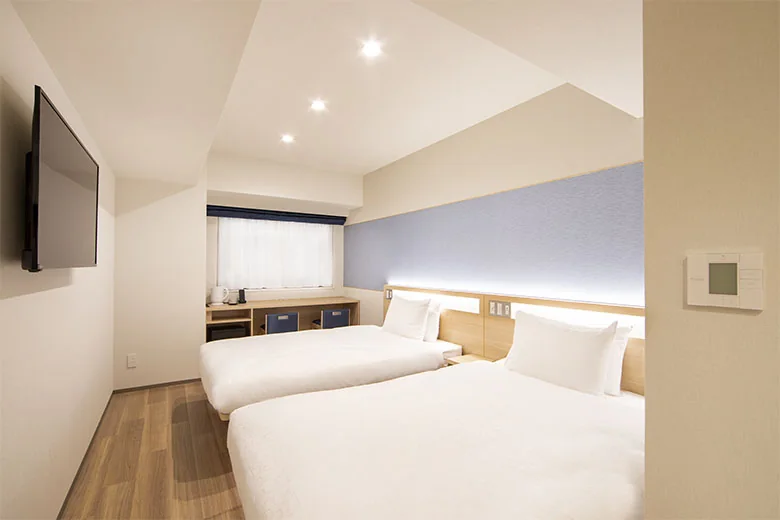
| Named twin example | Standard Twin 21.3–22.3 m², two 110 cm beds | Standard Twin 32.5 m², separate sink and large closet |
| Published breakfast opening | 7:00 a.m. at 8SYAESU Café | 6:45 a.m. at Tokyo Buffet |
| Bags after checkout | Same-day front-desk collection stated | Confirm your bag count and collection time |
Swipe to compare the hotels
Start with the platform, then choose the bed
Tokyo Station is not a single doorway. Karaksa places itself roughly five minutes from the Yaesu North Exit of JR Tokyo Station. Ryumeikan describes a roughly four-minute walk from the same side in its access directions, while some of its page headings round the walk to three minutes. Both figures are hotel-to-exit estimates, not a guarantee that you will be beside the correct Shinkansen gate. A train to Kyoto or Osaka, a Tohoku service and a local JR line can use different concourse routes. Identify the train and platform area from the ticket before you reserve either room. The Tokyo Station hotel comparison with Metropolitan Marunouchi and Karaksa explains why station side can outweigh a small hotel-to-exit difference.
If the train leaves at 6:30 or 7 a.m., work backward from the departure board. Allow time for elevators, a ticket-gate problem, breakfast or coffee, and children who need a bathroom stop. A five-minute walk outdoors can become longer in rain or with four cases. A station-hotel quote is valuable because it reduces uncertainty, not because the listed walk is an exact stopwatch promise. The Hotel Metropolitan Marunouchi versus Ryumeikan early-Shinkansen decision shows the trade-off between a station-linked hotel and a Yaesu-side room. If you only need a room before the train, compare all three actual totals rather than assuming two Yaesu properties are automatically cheaper.
Arriving by air the previous evening adds another route. A Narita Express traveller arrives at Tokyo Station but may still face a long internal walk and a surface exit. A bus arrival can place them on a different side. From Haneda, the rail route and a late flight can make a different final-night hotel easier. The Narita and Haneda airport transfer guide is the starting point for that inbound journey. If the flight lands very late, compare the Haneda late-arrival hotel decision before paying for a Tokyo Station room you will barely use.
Two twins with different floor plans
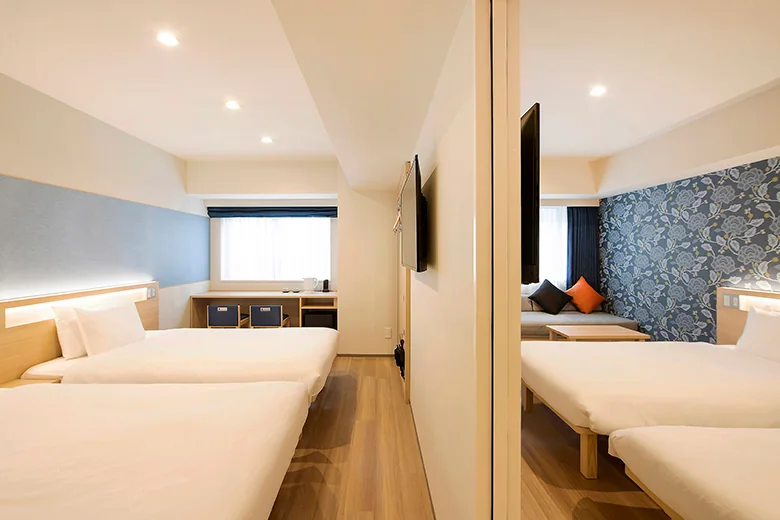
Karaksa's Standard Twin is 21.3–22.3 square metres, with two 110-centimetre beds. The hotel describes a shower booth and compact bathroom layout that frees more room for luggage, along with a second separate wash area. That is a useful arrangement when two travellers need to get ready quickly before the train. The same property also sells a Compact Twin at 13.6 square metres with two 90-centimetre beds. A search result that says only “twin” can therefore hide a large change in bed width and usable floor area. Do not judge the hotel's twin value from its lowest headline rate until the exact room name is visible.
Ryumeikan's Standard Twin is 32.5 square metres, with a separate sink and a large closet. The room may give two adults enough floor space to sort cases without placing them on the beds. That is most valuable after a multi-city trip, when the last evening involves repacking purchases and finding the next morning's tickets. Its entry Standard room is a different product at 17.5 square metres with a 140-centimetre bed and modular bath. Comparing that single-bed rate with Karaksa's full Standard Twin is not a like-for-like choice for two travellers who want separate beds. The Tokyo hotels for five to seven nights explains why room size and laundry needs grow more important when the Yaesu hotel is your base for the whole visit instead of a single train night.
The bed comparison changes again for a family. Karaksa's connecting-room concept can link adjoining rooms, giving a group separate bathrooms and a door between sleeping spaces. Availability, combination and child occupancy have to be confirmed for the exact booking; a single Standard Twin does not become a five-person room merely because some twins can connect. Ryumeikan also lists connecting-room options, but asks guests to inquire. Put the real party size and children's ages into both booking paths, then compare the total for two suitable rooms or a named family configuration. The Tokyo luggage storage guide may be more useful than a larger hotel if your main problem is bags during a daytime transfer, rather than sleeping space at night.
For a solo guest, the room hierarchy can reverse. Ryumeikan's Standard room may provide enough space for one person without paying for the 32.5-square-metre Twin. Karaksa's Compact Twin may be sufficient if the guest only sleeps there before an early departure and will not open a large case. A couple sharing a bed should compare Karaksa's named double or king with a Ryumeikan Double or Standard rather than forcing a twin comparison. Every room choice has a different bathroom, bed width and cancellation price. The hotel name is too broad a unit for the final decision.
Breakfast is constrained by departure time
Karaksa's first-floor 8SYAESU Café lists a light buffet breakfast from 7:00 to 9:30, with last entry at 9:00. It is a practical option for a later morning train, and a ticket is required. For a 7:15 train, it is effectively unavailable; paying for a breakfast-included rate would not make the café open earlier. Its public information also describes the café as a free-drink space later in the day, which is a different benefit from an early meal. If you arrive the night before and leave at dawn, price the room without breakfast and plan a station purchase or a prior-evening snack instead.
Ryumeikan's Tokyo Buffet has a published 6:45 opening. That fifteen-minute lead over Karaksa can be useful for a train in the later part of the morning, but it is not enough time for every early departure. Its breakfast price was revised for October 2026, so compare the current booked rate and today's restaurant terms rather than using an older menu or a dated review. The right question is whether your party can sit down, eat and reach the platform without rushing. A 6:45 opening followed by an 8 a.m. Shinkansen may be comfortable for some adults; a family with children or a long walk to its gate may need more margin. Do not turn breakfast into a hotel-scoring point unless the schedule lets you use it.
If the trip continues to Kyoto or Osaka, breakfast on the train can be a pleasant alternative. That may let you choose Karaksa for its room configuration or Ryumeikan for its room space without treating the restaurant as a tie-breaker. Confirm food availability at the station for your actual departure hour; a famous shop may open after your train. The Tokyo first and last day itinerary helps separate mornings when a hotel breakfast adds value from mornings ruled by a fixed departure. If the early train is from Shin-Osaka later in the trip, the Shin-Osaka early-Shinkansen hotel guide shows the same scheduling problem in a different station.
Luggage before and after the room
Karaksa states that luggage can be left at its first-floor front desk before check-in or after checkout, with after-checkout collection requested on the same day. That is useful when the early train is not on checkout day: you can leave bags, spend a final Tokyo afternoon and return to collect them. The final walk to the station still includes that pickup. A guest with another future reservation at the same hotel may have a different storage arrangement, but that should not be assumed for a normal one-night booking. Ryumeikan's luggage conditions should be checked directly for the number of cases and collection time you expect, rather than inferred from general hotel custom.
If you are travelling between Tokyo, Kyoto and Osaka, forwarding a suitcase can reduce a train-day burden but introduces deadlines. The Japan luggage forwarding guide sets out the normal handoff questions. The Tokyo–Kyoto–Osaka delivery discussion shows why “same day” must be verified by route and cutoff. An early departure often makes sending the case the previous day more plausible than trying to hand it over at dawn. Yet a traveller with essential medication or same-day clothes should keep those items in hand luggage. Choose the room after the luggage plan is set; the value of a larger closet changes if the main case has already been sent onward.
For a group, luggage can make the two-wash-area Karaksa layout more useful than its area suggests. Two people can prepare while cases remain packed, then walk to the train. Ryumeikan's larger Twin can instead make the evening before less cramped and reduce the chance that someone leaves a charger behind during hurried packing. These are distinct benefits. You cannot infer which group values them more from a generic hotel star rating. Count bags, identify what must be retrieved in the morning and consider whether one traveller will leave earlier than the others.
Which Yaesu night is the better buy?
Build a simple comparison with five lines: the train departure and gate area, room category, total price, breakfast you can actually use, and the bag plan. If two adults need separate beds and only stay one night, Karaksa's Standard Twin at 21.3–22.3 square metres may be enough, especially when its shower and second wash area fit the morning routine. If those adults are consolidating large luggage or staying for several nights, Ryumeikan's 32.5-square-metre Standard Twin has a clear room-space reason to command a premium. If either hotel offers a cheaper single-bed room, do not silently treat it as equivalent.
Consider the evening as well. A visitor arriving from Ginza may have a straightforward Yaesu return; a late event in Shinjuku could make another district a better final hotel despite the next morning's train. The Art Aquarium Museum in Ginza guide helps place a nearby attraction on a Yaesu-based day. The Tokyo Station versus Shinjuku hotel base expands the district comparison. If most of your trip ends in Shinjuku, moving to Yaesu for just one night may be worthwhile only when it saves enough morning stress to offset checkout, luggage movement and a second check-in. The Tokyo split-stay hotel guide provides that broader test.
A final detail is the direction you leave the hotel. Karaksa's and Ryumeikan's published station walks point toward Yaesu North, yet the shortest indoor route to a particular platform may differ. Save the train ticket, map the relevant gate and walk the approach once after dinner if the train is important. This is especially helpful for a reserved Shinkansen during a busy travel period, when a missed departure may not be trivial to replace. The Obon Nozomi booking guide illustrates how train rules and crowding can alter the cost of a missed plan, even though the specific 2026 Obon dates have passed.
A different station-side hotel may be worth pricing if the weather or mobility requirement makes the outdoor Yaesu walk difficult. The Metropolitan Marunouchi Shinkansen guide describes a more station-linked route, though the hotel sits on another side of the station and should be assessed against your train's actual gate. A shorter outdoor walk does not automatically mean a shorter total platform journey. For travellers carrying a stroller or managing a wheelchair, inspect the specific lift route rather than relying on the hotel's walking-minute claim. This is a practical comparison to make before buying a non-refundable room, especially on a day when missing the train would disrupt a timed onward reservation.
For an early train with light luggage and two people who only need a functional room, open Karaksa's Standard Twin quotation first. For a longer stay or a last evening spent repacking, price Ryumeikan's Standard Twin alongside it. A solo traveller should compare smaller categories, and a family should compare actual connecting configurations. The winning reservation should state the room name, beds, total cost and cancellation cutoff. Its morning plan should show when you leave the room, whether breakfast is possible and which Tokyo Station gate you intend to enter.
Updated 4 October 2026. Check room category, breakfast price, train gate and storage terms for your travel date.