
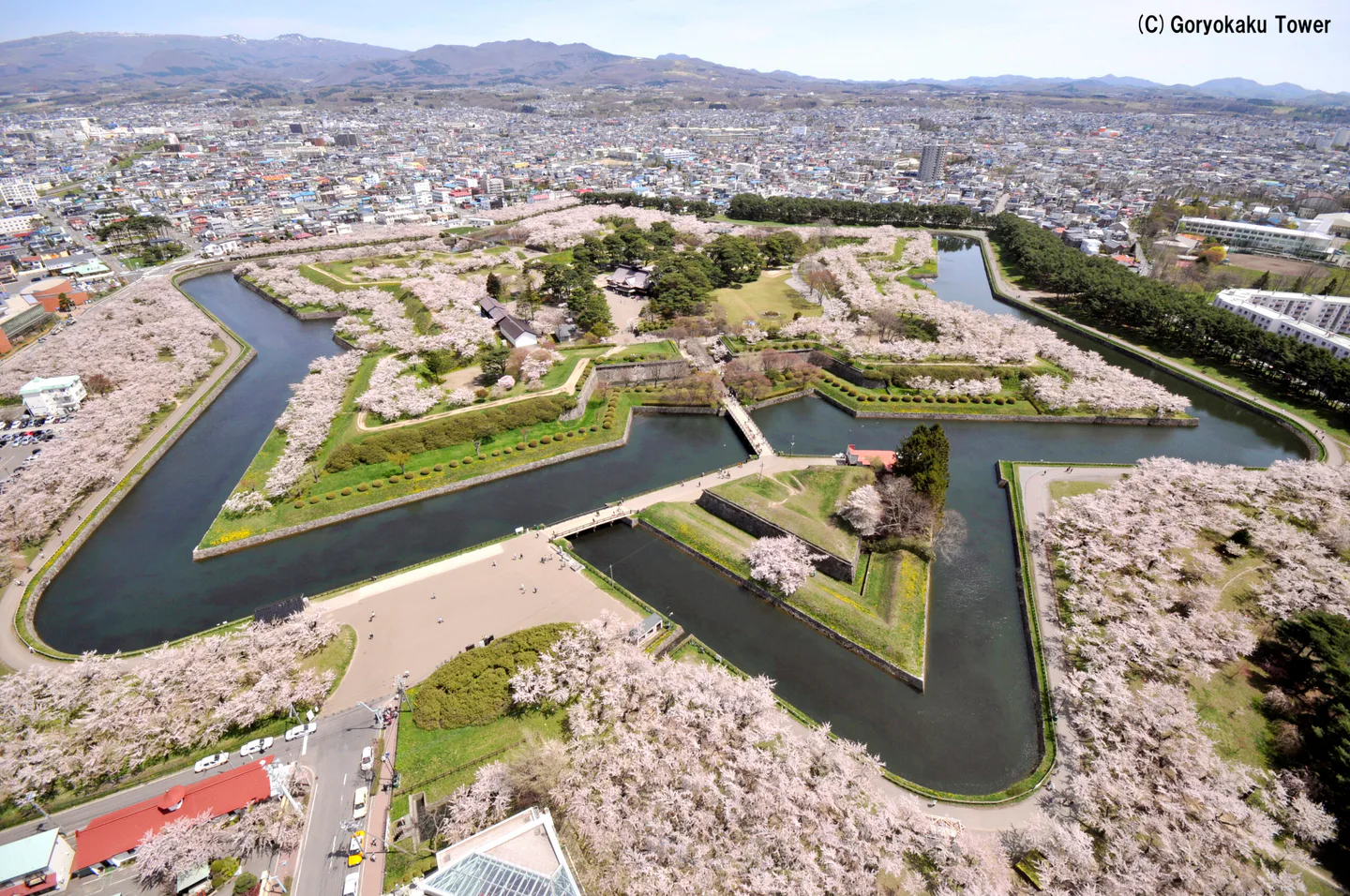
Goryokaku gives a visitor three distinct ways to understand one fort. Walking among the moats and earthworks costs nothing. The ¥1,200 tower lets you read the complete five-point star at once. The reconstructed Hakodate Magistrate's Office, now ¥500 for an adult, explains what stood at its centre. Japan's 100 Famous Castles No. 2 stamp is a fourth, separate stop: since April 2026 it has been outdoors at Oyasumidokoro Itakura Yanagino opposite the Magistrate's Office, not inside the tower. That makes the order of the visit a question of visibility, time and interest rather than a compulsory three-ticket bundle.
If the sky is clear enough to see the outline, the tower earns its price on a first visit because it turns separate ground-level angles into one legible structure. If cloud or snow hides that geometry, start with the free park and perhaps spend the smaller fee on the office. A castle collector can obtain the stamp without buying either admission. No. 1 on the Nemuro Peninsula shows how different a stamp-and-landscape decision can be; the numbering does not describe a practical Hokkaido route.
↔ Scroll table left or right
| Purpose | Admission or access | When it adds value |
|---|---|---|
| Walk moats, bridges and earthworks | Park free | Every visit, even when visibility is poor |
| Recognise all five points from above | Tower adult ¥1,200 | First visit with an unobstructed view |
| See the reconstructed government building | Magistrate's Office adult ¥500 | Interest in late-Edo administration, construction or Boshin War history |
| Collect castle No. 2 | Outdoor stamp free | Any park-open hour; no paid attraction required |
The stamp moves the collector's first stop into the park
Instructions that send stamp collectors to Goryokaku Tower are out of date. The April 2026 notice places the stamp at the entrance of Oyasumidokoro Itakura Yanagino, facing the Magistrate's Office inside the fort. It is accessible during park gate hours: 05:00–19:00 from April through October and 05:00–18:00 from November through March. The outdoor location lets an early traveller stamp before the paid buildings open and a late traveller stamp after their admission counters close.
The tower runs 09:00–18:00, with observation-ticket sales ending 17:50. The office opens 09:00–18:00 in April–October and 09:00–17:00 in November–March; its last entry is fifteen minutes before closing. These are not interchangeable clocks. A 17:55 arrival in October can still reach a park-open stamp but has missed tower ticket sales and office entry. Taga Castle's changed stamp route is another reminder to save the precise current location rather than an attraction name copied from an older guide.
Bring the stamp book to the position opposite the office, not to the tower desk. There is no reason to buy the ¥1,200 observation ticket solely to confirm No. 2 in a collecting book. The park gate hours also mean a collector with a train later in the morning can separate the stamp from a decision about weather. That is especially useful if you are staying by Hakodate Station: JR Inn Hakodate makes a quick rail departure and luggage retrieval simpler than carrying bags into the fort.
The tower solves a problem the ground-level walk cannot
Inside Goryokaku Park, the moat, tree lines, angled banks and bridges are tangible, but the overall five-sided plan is hard to hold in one view. The tower supplies the overhead perspective that joins them. In the retained cherry-blossom photograph, the angular water and ramparts can be read at a glance; the office sits near the middle. The image shows spring rather than conditions on an October visit, and the copyright credit remains on the photograph.
For a first-time visitor, going up before the park walk can be useful. From the observation deck, identify the five points, the moat crossings and the office. On the ground, the same pieces then feel like parts of a fort rather than disconnected paths. Someone visiting mainly for cherry-blossom photographs might reverse that order to catch the preferred light. A collector racing an early train might stamp first and leave the tower entirely. The tower is the strongest paid addition for understanding the star, not a rule every itinerary must obey.
Weather changes that value. Fog, low cloud or heavy snow can erase the outline that makes the ¥1,200 expenditure worthwhile. The free park still offers the physical earthworks, and the office offers indoor historical material for a separate ¥500. Do not lock yourself into a non-refundable tower product before a highly uncertain weather day unless the price saving matters more than flexibility. The tower's on-site fee is the reference point for any online comparison; a voucher that requires counter exchange may not save a line.
There are two parts of the photograph that a ground visitor will see differently: the moat and the interior tree canopy. The park path can feel spacious and attractive without revealing the entire geometry. In late autumn or winter, bare branches and snow produce a different image from the credited spring aerial. Hakodate and Onuma foliage timing is more relevant to an October landscape plan than assuming a blossom image predicts the present view.
The ¥500 office is a historical upgrade with a luggage condition
The reconstructed Hakodate Magistrate's Office occupies the centre of the fort. Its materials and building methods recreate a late-Edo government complex, giving a visitor more context for the Bakumatsu and Boshin War period than a tower panorama alone. It is an appealing second paid stop when architecture or administrative history is the point. If you have only about an hour and the weather is clear, the tower plus a short park walk may answer the question of why Goryokaku is a star fort more directly.
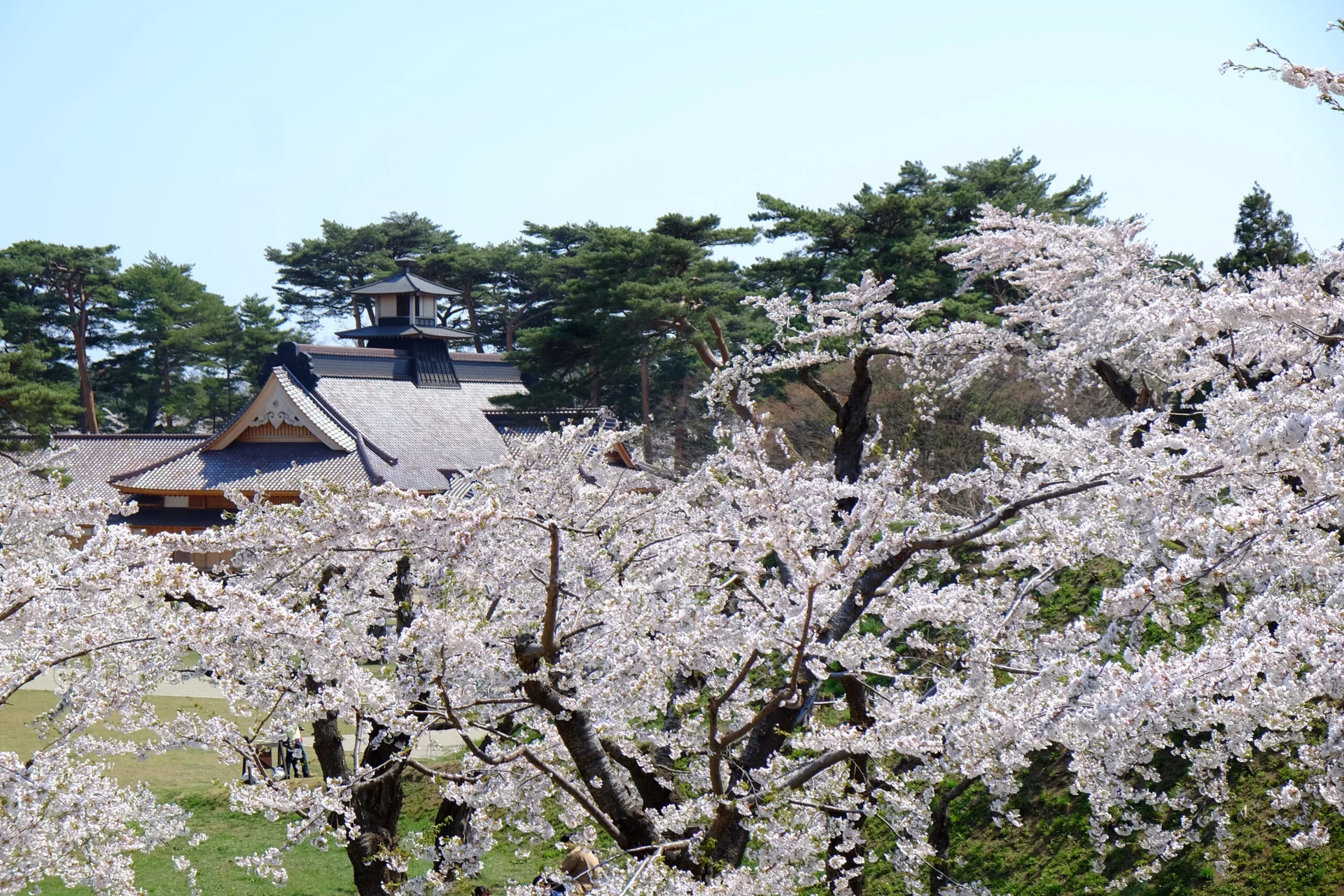
That retained photograph shows the office's dark roof behind spring blossoms. It is not a view of its interior, and the flowers are not a promise for travel in another season. Visitors remove their shoes to enter. The building has no luggage-storage counter and can refuse entry to someone carrying a large suitcase. If the office is on your route after a train arrival, leave the bag at the hotel or station first. The tower has lockers near its entrance: ¥300 small and ¥500 large, accessible only during its opening hours. These current on-site figures are safer for planning than an older third-party product description showing lower locker prices.
The office has a regular closure from 31 December to 3 January and can announce temporary closures. Its 17:45 summer/autumn and 16:45 winter last-entry cutoffs matter more than its closing hour when approaching late. A family that needs time to remove and replace shoes should leave additional margin. For a visitor arriving with an early onward train, the free park and stamp provide a more forgiving alternative than a rushed interior visit. A station-front hotel can help with that bag-handling sequence, while a bay-area stay puts a different part of the Hakodate day closer to the room.
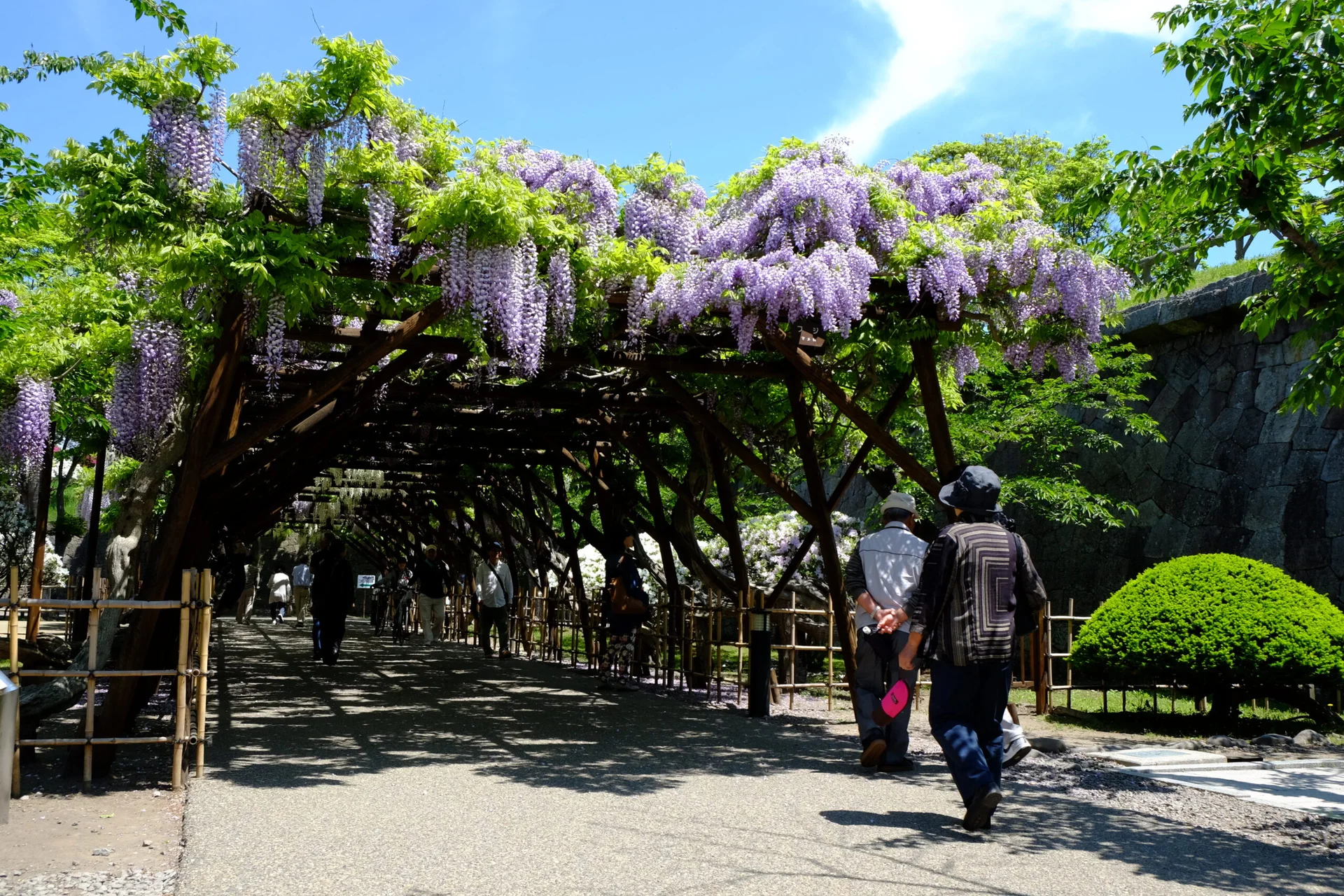
The other retained park photograph is a wisteria-covered path, not the generic earthwork scene described by the former alt text. It shows a seasonal ground-level experience and reinforces why walking the site can be worthwhile without any paid admission. Its flowers should not be confused with the cherry blossoms in the office and tower pictures.
Digital tower tickets do not all remove the counter step
A cheaper displayed admission is only a better purchase if the date, traveller type, cancellation conditions and redemption work for your route. At the time of the original comparison, the listed Klook and KKday vouchers required exchange for physical tower tickets at the counter and were non-cancellable. The tower's own convenience-store advance arrangement can send ticket holders toward the elevator queue instead. Recheck the product details for the exact day rather than treating the word “e-ticket” as a skip-the-line promise. The tower's ordinary adult price remains ¥1,200; a digital booking can change payment convenience without changing the time spent in the building.
A person with only a narrow opening between a cruise, a train and a night-view plan should weigh flexibility. Buying at the counter after seeing the weather can protect against a foggy view, though it may involve a queue. Buying a fixed voucher before the day can suit a non-negotiable itinerary if the redemption rule is understood. A castle collector does not need either product to reach the stamp. Matsumae Castle No. 3 involves a very different travel cost; comparing these castles by their admission prices alone is misleading.
The city pass needs other uses to overcome its ¥3,700 price
The 2026 Hakodate Special Ticket runs from 1 April 2026 through 31 March 2027. One ¥3,700 booklet combines a voucher exchangeable for a city-tram day pass and twelve attraction points. The tower uses four points and the office two. A traveller using only these two admissions and a tram day pass would otherwise pay ¥1,200 + ¥500 + ¥800, or ¥2,500. That is ¥1,200 below the booklet's cost, so the presence of Goryokaku on its list does not itself make the pass good value.
Mount Hakodate Ropeway's return uses seven points. Together with the four-point tower that makes eleven, leaving one. Add the two-point office and the trio requires thirteen points, one more than the booklet contains. A visitor can still use the pass and pay separately for the missing attraction, but the arithmetic has to be explicit. The city also describes a possible tram, ropeway, tower and Old Public Hall combination worth more than the booklet, which shows why the value depends on the whole day. Point restrictions and venue hours remain relevant even when the arithmetic works.
↔ Scroll table left or right
| Use pattern | Points or direct price | Decision |
|---|---|---|
| Tower + office + tram day pass only | Direct ¥2,500 | Cheaper than ¥3,700 booklet |
| Ropeway return + tower | 7 + 4 = 11 points | One point remains for an eligible use |
| Ropeway + tower + office | 7 + 4 + 2 = 13 points | One booklet's twelve points cannot cover all three |
| Several other city attractions | Recalculate from actual visits | Can make the booklet useful if times and locations fit |
If the pass is being considered largely because of the tram, check how many city rides are actually planned. A bus or shuttle to Goryokaku may suit a traveller with limited walking tolerance better than tram use. Pass eligibility does not force a less convenient route. The car-free winter Hokkaido plan puts these city transfers into the larger trip rather than treating a single day ticket as a routing instruction.
Goryokaku-koen-mae is still a walk from the centre of the fort
The tram from Hakodate-ekimae to Goryokaku-koen-mae is listed at about sixteen minutes and ¥230. From that stop the tower gives about ten minutes on foot to its entrance; the Magistrate's Office estimates about eighteen minutes to its location inside the park. The stop name is not the park gate. A person who has difficulty walking on winter surfaces or is accompanying young children should compare buses before defaulting to the tram.
The office lists walks of about eight minutes from Keisatsusho-mae, ten from Goryokaku-koen-iriguchi and nine from Chuo-toshokan-mae. Route 5's Goryokaku Tower shuttle costs ¥300 from Hakodate Station and stops around one minute from the tower, or about eight minutes from the office. The tower's access page also lists a ¥280 regular bus to Goryokaku or Goryokaku-koen-iriguchi. Route 5 can have seasonal service changes; read the exact-day timetable, not just the stop name. A tram-only day pass cannot be assumed valid on that bus.
Drivers do not park at either paid attraction's door: neither tower nor office provides ordinary private-car parking. The nearby Goryokaku sightseeing lot has 97 spaces, and another shared art-hall/museum lot has 215. Their published 2026 charge is ¥200 for the first hour and ¥100 per additional thirty minutes. The office access page already announces an increase from 1 April 2027 to ¥300 and ¥150 respectively, so a spring 2027 driver must not reuse today's amount. A rental car is useful when connecting more distant stops; its city-centre parking does not automatically beat the bus.
Cherry-blossom peak can add road congestion and parking queues. In winter, parking is the small question compared with the safety of any longer snowy drive. Hokkaido winter road conditions deserve their own decision before treating a straightforward urban parking lot as evidence that an intercity drive is easy. A region-led Hokkaido itinerary also makes clear that southern Hakodate and the far east are separate travel commitments.
Exterior work continues, while the tower remains open
The tower's 2026 notice covers repainting its shaft and repairs just below the observation deck. Its scheduled project period runs 19 May to 15 November, with the main physical work planned from early August after surveys in June and July. The venue says it continues ordinary operation during construction. Seeing work equipment on the outside is therefore not a reason to assume the observation deck is closed. Someone who specifically wants a clean photograph of the tower itself should allow for visible work, because operating normally does not guarantee an unobstructed exterior.
For a castle collector, the work changes less than an outdated stamp map does. The stamp is outdoors in the park. For a first-time visitor wanting the star from above, the tower's operation and the weather remain the key variables. For a photographer who values the structure's exterior, the work can matter even if the interior view is unaffected. Hirosaki's moving keep is another case where construction and visitor access need separate treatment.
Build the visit around a Hakodate day, not castle numbers
Japan's castle list numbers identify sites; they are not route legs. No. 1's Ainu fortified enclosure sites are on the Nemuro Peninsula in far eastern Hokkaido. No. 2 sits in Hakodate in the south. Visiting them consecutively just because the stamps are consecutive would consume a substantial regional transfer. Goryokaku fits better with a Hakodate station, bay, Motomachi or Mount Hakodate day and often an overnight. A station-area hotel can make onward rail travel and bag storage simple; a waterfront room trades that for easier bay-area evenings. A five-, seven- or ten-day winter route shows why southern Hokkaido must be chosen deliberately rather than slipped into a Sapporo day.
Allow roughly an hour to ninety minutes for stamp, tower and a brief moat look, subject to walking and queue time. Around two hours permits an unhurried tower and park visit with an optional office entry. Half a day makes the office and a longer earthwork walk more comfortable. Between 05:00 and 09:00, park and stamp are available, but the paid buildings are not. Those are planning patterns rather than guaranteed visit durations. Nejo's ground-level remains are a useful comparison if the appeal is history rather than the overhead star.
When a plan starts to fail, cut the element whose value has diminished. In fog, park and stamp first, with the office for history; leave the tower unless the view clears. Near closing, read the tower ticket cutoff and office last entry separately, then secure the outdoor stamp while the park is open. With a large bag, use hotel or station storage before approaching the office, or the tower's lockers if their opening hours fit. For a family with tired walkers, favour a bus stop with a shorter final approach over the neatness of a tram-only route.
For a clear first visit, the tower is a sound paid choice because its overhead view explains what the free paths cannot. The office is an additional history visit rather than a substitute for the star panorama. The stamp requires neither ticket. Before choosing an online admission, compare the live price, weather flexibility and whether the voucher must be exchanged at the counter. Before choosing a city pass, list every point use and add the totals. For an overnight Hakodate plan, compare Hakodate stays by luggage route and next-day departure rather than by the castle number.
Other castle guides and ticket information: JR Inn Hakodate · Compare Goryokaku Tower ticket price and redemption rules for your date · Compare the exact Goryokaku Tower ticket for your date · compare the Goryokaku Tower ticket and redemption conditions on · Using the tram and Mount Hakodate too? Recalculate the 2026 Hakodate Special Ticket · Japan Castle Foundation / Japan’s 100 Famous Castles list · Goryokaku Tower’s April 1, 2026 stamp notice · Goryokaku Tower prices and hours · Goryokaku Tower construction notice · visitor information · access page · Hakodate tourism site · Sakura Castle: The Stamp Is Open 24/7 — The Castle Is in the Moats, Not a Keep · Japan’s 100 Famous Castles No.6: Morioka Castle — The Ruins Are Free, but Is the ¥450 Museum Worth It? · Japan’s 100 Famous Castles No.9: Kubota Castle Is Free — Spend ¥150 Before You Spend ¥1,200 · Japan’s 100 Famous Castles No.8: Sendai Castle — The Ruins Are Open 24 Hours, but the Stamp Is Not · Japan’s 100 Famous Castles No.12: Tsuruga Castle — ¥410, ¥520 or ¥730? Pick the Upgrade That Fits · Japan’s 100 Famous Castles No.13: Shirakawa Komine Castle — Don’t Follow the Old Kiyomizu Gate Route in 2026 · Japan’s 100 Famous Castles No.11: Nihonmatsu Castle — Stamp First, Then Decide Whether to Climb · JR Tower Hotel Nikko Sapporo Review: Is Sapporo Station Access Worth the Premium? · Hiroshima Night Food Tour 2026: Worth US$100 If the Menu Is Not Guaranteed? · Japan’s 100 Famous Castles No.14: Mito Castle — Stamp First, Otemon Last