
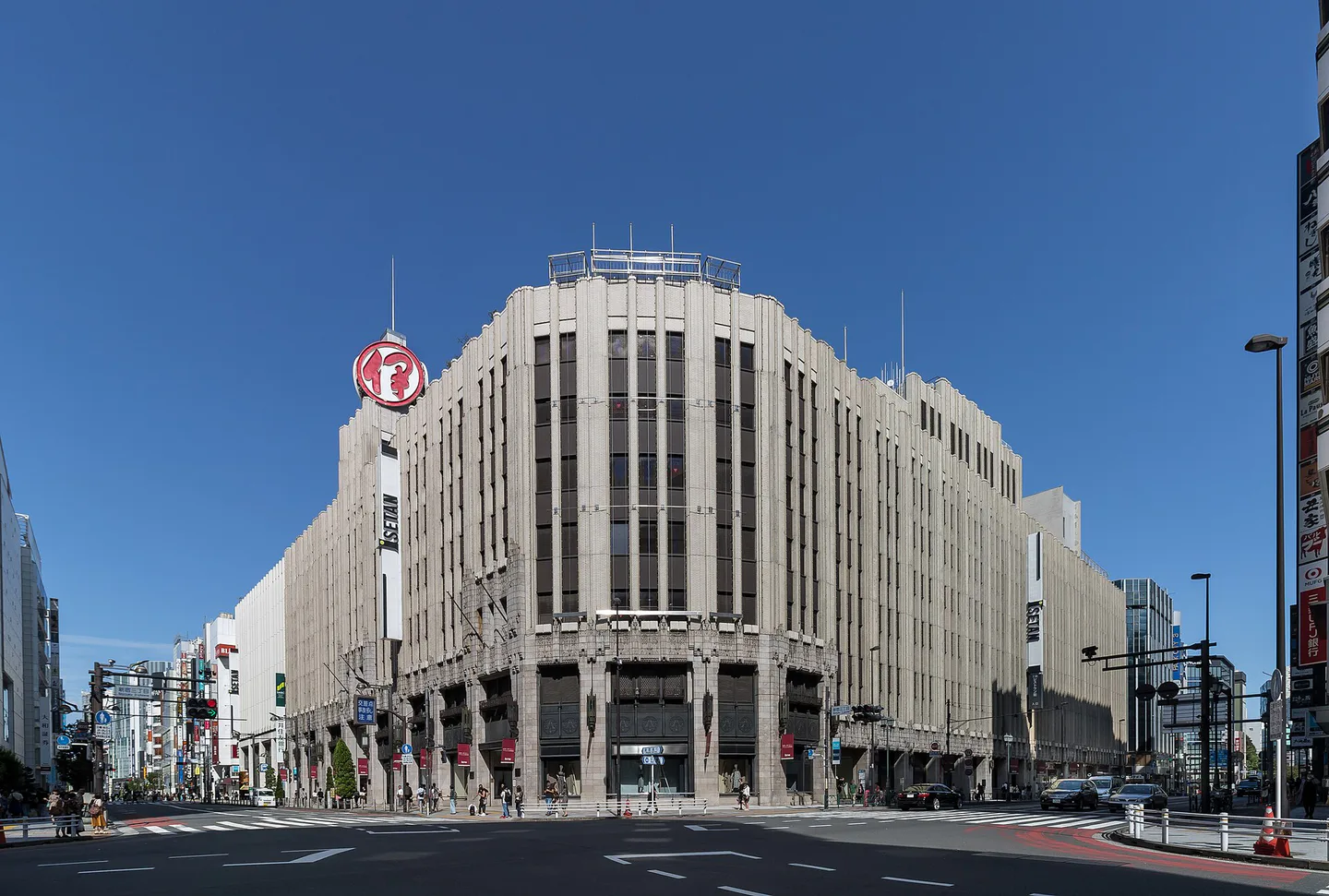
A sale sign is useful only after you know what you want to buy and how it will travel home. A department store near the hotel gives you several brands in one stop; an outlet can offer deeper reductions but may consume half a day and still lack your size. An urban mall sits between those choices when shopping can share time with lunch or a rain plan. Compare the entire errand, including return transport and baggage, before treating the percentage on the tag as the saving.
The named 2026 summer outlet event is now over. Premium Outlets ran its Bargain from August 21 to 30; its published calendar confirms those dates. A traveller planning a later visit should use the calendar for that season rather than assume the August discounts continue. The method in this guide still applies: start with a specific item and route, then decide whether the shop format is worth the journey.
Sale timing depends on the store and item
↔ Scroll table left or right
Your shopping need | Try first | Where time or money can disappear | Choose differently when |
Several brands to compare | Department store near your base | A smaller discount than an outlet | One confirmed outlet item is the only target |
Shopping plus food or rain shelter | City mall on an existing route | Browsing can consume the rest of the day | You need a specific specialist shop |
Several flexible fashion targets | Outlet on an existing journey | Transport, sold-out sizes and luggage | The detour is a standalone half-day |
One precise model or size | Stock enquiry before travelling | The advertised sale may exclude your item | A central branch has the item ready to buy |
A long trip to an outlet is easier to justify when several stores carry things you would buy and your sizes are flexible. If you need one precise model, ask the shop about stock before spending the travel time. A department store near a station may cost more on the tag but free the afternoon for a museum or neighbourhood you came to Japan to see. The useful comparison is the whole day, not the biggest advertised markdown.
What the August 2026 sale covered
Premium Outlets listed its summer Bargain for August 21–30, 2026. The operator describes this as a dated campaign across its outlet network, not a standing discount that can be carried into October. Individual shops could have had their own clearance periods and exclusions. If you bought during that window, the receipt and store terms decide what you actually saved; a calendar entry by itself never guaranteed a specific size or price.
Summer sale calendars are easy to misread when planning months ahead. July department-store reductions, a late-August outlet campaign and a brand-specific clearance rack are different opportunities. For a future summer, establish the shop and its active dates before reserving a suburban day. This is especially important if the outlet trip would displace a fixed sightseeing booking.
End-of-season shopping tends to make the rail of sizes and colours thinner. A brand may be clearing warm-weather stock while another is preparing autumn displays. If the target is a particular shoe size or compatible electronic item, call the relevant branch or be willing to buy elsewhere. The existence of a sale says little about a single product remaining on the shelf.
The lowest price can come after the useful item disappears
Clearance creates a trade-off between the reduction and the range of stock. The trade-off depends on why you need the item.
For a travel essential, buy the first acceptable fit at a price you can live with; waiting for another markdown risks losing the size during the trip. For an optional piece of clothing, walking away is painless, so the later reduction may be worth the gamble. For a model-specific purchase, compare model number, warranty and return rules before debating a few percentage points.
A last-day outlet visit works best as a leisure outing where buying nothing is a possible outcome. It is a poor plan for shoes needed for tomorrow’s walk or a replacement charger required tonight. Give each item a deadline based on use, not a universal “best sale day.”
Tax-free shopping through October 31, 2026
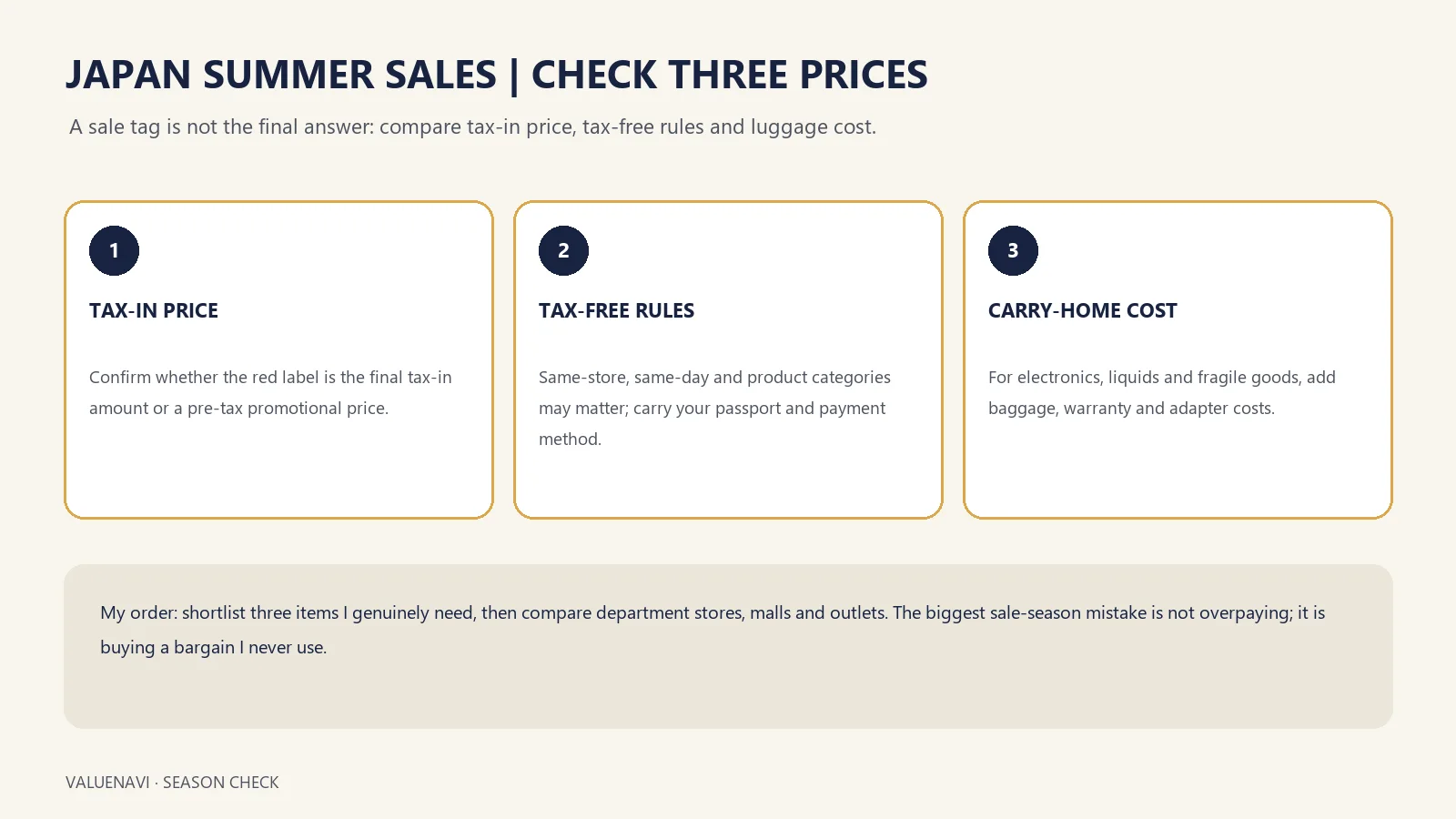
Under the system in force through October 31, an eligible visitor can buy qualifying goods without Japanese consumption tax at a participating tax-free shop by presenting the required travel document at purchase. The goods must leave Japan with the visitor, and Customs can inspect them at departure. Tax-free is a legal eligibility rule, not an extra shopwide discount; an ordinary sale item is only eligible if the purchase and the buyer meet the conditions.
The threshold is ¥5,000 before tax in one shop on the same day. Consumables such as food and cosmetics also have an upper limit of ¥500,000 under the current system. Keep the amounts in yen rather than translating them into a dollar target: exchange rates move, but the threshold does not. A traveller who falls below the threshold should not add unwanted goods simply to cross it.
Consumables and general goods can be treated differently, including packaging and use before departure. If a purchase combines categories, the shop’s tax-free counter should apply the conditions to that transaction. Keep the passport and purchased goods available for the departure procedure, and do not assume that a sign at the till means every shopper or every product qualifies.
Purchases from November 1 use a refund process
Japan’s announced change begins with sales on November 1, 2026. The shop charges a tax-included price first; the visitor presents the purchased goods for departure confirmation within 90 days, after which the shop operator refunds the consumption-tax amount. The order of payment and confirmation is different from an immediate tax-free till price. Plan enough time at the departure airport or port for the procedure when travelling under the new system.
The implementation details that matter to a buyer are the retailer’s refund channel, the required passport information and whether the purchase can be shown at departure. For a November trip, read the shop’s current instructions before buying bulky or fragile goods. A summer receipt example cannot tell you when a future refund will reach a card or account.
Calculate the cost of taking the item home
Start with the sale price. Subtract only a tax benefit for which you qualify, then add the extra rail or bus fare, packaging and any airline baggage fee. Time is also part of the decision: a distant outlet uses hours that could have been spent elsewhere.
Suppose a single item is ¥4,000 cheaper at an outlet. That figure can be overtaken by a suburban return fare, another meal, a large box or an additional bag on the flight. The difference is even less persuasive if the item can be compared and returned more easily near your hotel. Work with the actual route and purchase, rather than an invented universal break-even percentage.
An outlet beside the airport route or an existing road trip is different. Most of the transport is already happening, so the additional cost may be a short stop rather than a separate day. Even then, build in enough time to inspect the product and return a rental car or reach check-in. A shopping stop that threatens the flight is not a saving.
Test the outlet detour before leaving the city
Write down the fare or fuel, the return travel time and the amount you realistically expect to save on your shortlist. Then ask whether you would still enjoy the visit if the leading item had sold out. If the answer is no, look for a store stock check or a central branch instead of committing to the journey on an advertisement.
The stronger outlet day has several target stores, flexible preferences and room in the itinerary for browsing. A weak one depends on one size at one shop and a narrow return connection. Check the outlet’s opening hours and the journey back before buying anything large enough to make the final train or bus awkward.
Tokyo: put the shops on a route you already travel
Shinjuku is useful when the hotel or other plans already place you on the west side. Around Tokyo Station and Nihombashi, shopping can sit beside a Shinkansen arrival or departure. Ueno suits some Narita-facing routes. Where to Stay in Tokyo for First-Time Visitors gives the area context; Tokyo Station vs Shinjuku and Ueno vs Shinjuku narrow the base decision. Pick a district that saves a separate trip rather than one with an abstract reputation for bargains.
A purchase is easier to carry when the hotel is close enough to drop it off before the next activity. This matters for shoes, cosmetics and gifts more than it does for a small accessory. Look at the walk back to the room as well as the way to the store.
Osaka: an airport-side outlet needs a real airport-day fit
Umeda combines shopping with Osaka Station and JR departures. Namba fits a south-side hotel, Dotonbori and Nankai access towards Kansai Airport. Where to Stay in Osaka and Namba vs Umeda help place the hotel before you choose a shopping district. If either area already contains the shops you need, a dedicated outlet excursion needs a substantial expected benefit to win.
Rinku Premium Outlets can work before or after a Kansai Airport movement when luggage, opening hours and flight timing allow. From central Osaka on an otherwise free sightseeing day, count the full outward and return legs. The same outlet has a very different value in those two itineraries.
Big purchases have a baggage cost
Clothing and small gifts may slide into an existing case. Cookware, boxed electronics or fragile purchases can require packing material, another bag or an airline fee. Check the airline allowance before committing to the item, especially on a domestic connection followed by an international flight. Warranty and voltage compatibility can also matter more than a tax saving for electronics.
The Japan luggage-forwarding guide can help move a heavy case between Japanese hotels. It does not change the final flight’s baggage allowance, and it will not make a fragile purchase safe without suitable packaging. Solve the last leg before buying the first large box.
Reasons to leave a sale item on the shelf
Walk away if the item was never on your shortlist, the size or model is wrong, the return policy is unclear, or the journey to the outlet exists only because of the advertised percentage. Also check whether the tax-free procedure applies to this product and whether the item can leave Japan in your baggage. A discount does not repair a bad fit or a missed train.
Let the route and the product decide
The 2026 August Premium Outlets Bargain was a dated event and has ended. For another season, read the current calendar and the participating shops. A central department store is often the efficient comparison stop; a mall can cover shopping and lunch; an outlet earns its longer trip when multiple targets and the day’s route support it. None of those formats guarantees a better purchase by itself.
The tax process also changes at a fixed date. Purchases through October 31 follow the existing at-till system where eligible; sales from November 1 use the refund sequence after departure confirmation. Leave room in the budget and airport schedule for the system that applies to your purchase date. Carry the item home only after checking that the price, fit and baggage plan still make sense.
Next decision: check whether the purchase still fits your luggage plan
Sale calendar and tax rules
Premium Outlets 2026 sale calendar
Japan Customs tax-free purchase rules
National Tax Agency refund method from November 2026
All purchase thresholds above are in yen. For a later trip, use the tax rules and shop instructions applying on the date of purchase.
Related guides: Nezu Museum 2026: The Garden Isn’t Free — and That Changes Whether ¥1,400 Is Worth It · Sumida River Fireworks 2026: Viewing Without a Seat, Two Venues and Exit Strategy · Tohoku Summer Festival One-Week Itinerary 2026: Morioka, Aomori, Akita and Sendai · Akita Kanto 2026 Is Over: What S, A, B and Free Viewing Taught Us · Lake Biwa Fireworks 2026: Free Viewing, Closures and Otsu Access · Free Autumn Leaves in Kyoto 2026: Parks, Paths, Ginkgo and Routes · Edogawa Fireworks 2026: The Best Free Side to Watch, When to Arrive and How to Get Out · Takachiho Gorge Autumn Leaves 2026: Boat Booking, Kagura and Overnight Strategy · National Museum of Nature and Science 2026: The ¥630 Ticket Is Cheap — Your 3–5 Hours Aren’t
If your shopping day is concentrated around Ginza, a nearby room can make a midday bag drop realistic. Compare Ginza accommodation with the store locations you have actually chosen.