
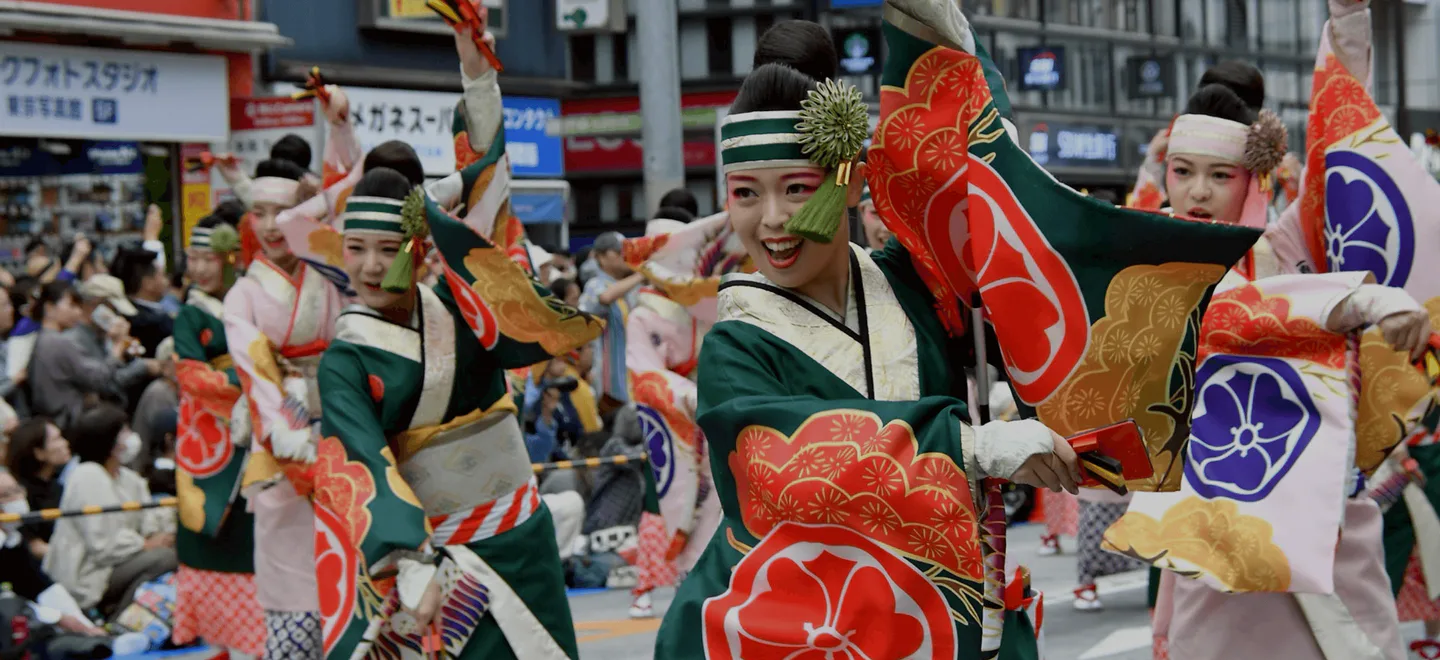
Tokyo Yosakoi filled Ikebukuro on October 10 and 11, 2026. Those dates have passed, so the useful question now is what each day actually offered and how the seven venues worked. The October 11 main festival offered the broadest choice of teams, two styles of dancing and the contest finale. October 10's eve festival made sense for visitors with a particular Saturday team or a fixed Sunday commitment. If you are considering a later edition, use this year as a planning model; no 2027 date or timetable is established here.
The distinction matters because September's Fukuro Matsuri mikoshi procession and October's Yosakoi dances are separate festival weekends. The Ikebukuro festival date comparison puts the two experiences in their correct months. A reader planning for a specific dance group should also check whether it appeared on both 2026 days: the 2026 team roster labels many entries as October 11 only. The main day's wider roster is the strongest reason to favour Sunday when you have no preferred group.
The dates on the festival home page are a useful historical marker, but they should not be recycled as dates for a later edition. That distinction also matters when searching for accommodation: a weekend attached to a past article is not a reason to reserve a future room before a new event date exists. A reader arriving here from a search for “Fukuro Matsuri” should use the September mikoshi and October dance comparison first, then choose the event rather than treating them as interchangeable names.
What October 10 and 11 offered
The 27th Tokyo Yosakoi was held on Saturday October 10 and Sunday October 11. Saturday was the eve festival; Sunday was the main festival, with seven performance locations and the awards. That does not make Saturday an inferior version of the same itinerary. It means a visitor following a team that performed on Saturday could arrange a shorter Ikebukuro visit, while someone who wanted variety, street movement and the ending should have reserved Sunday. The choice depended on the event, rather than the number of hours you could stand outside.
| 2026 visit | What it gave you | Best reason to choose it | Limitation |
|---|---|---|---|
| October 10, eve festival | A smaller programme with participating groups | Your target group was on the Saturday roster, or Sunday was already committed | It did not reproduce the full seven-venue main day |
| October 11, main festival | Seven venues, broader team participation and the contest finish | You wanted a first encounter with different styles or the finale | The extra choice increased walking and crowd pressure if you chased every appearance |
| A short stop on either day | One focused block of performances | Yosakoi was part of a larger Tokyo trip | You would miss teams appearing elsewhere or later |
The August 17 timetable announcement linked the Saturday schedule, Sunday venue schedule and a team-by-team Sunday schedule. Its version was marked ver.20260803 and the announcement warned that revisions were possible. The old advice to treat the homepage's “preparing” labels as a schedule problem is now obsolete: the published files were available before the festival, and the homepage now links schedule material. For a future edition, a dated timetable and its version tell you more than an old screenshot or a search snippet. If you have only three, four or five days in Tokyo, wait until the date and programme are known before giving an entire day to one event.
Seven venues did not mean seven sensible stops
The 2026 main festival split its locations into four nagashi odori procession routes and three stage venues. In a procession, a team advances along the street; the view changes as dancers move past spectators. On a stage, the team faces a more stable audience position, making formations and a full piece easier to follow. Visitors who want street atmosphere and changing backgrounds may prefer a route. Visitors who want to watch the complete choreography or keep one stable sightline may find a stage more satisfying.
Five central locations were described as roughly five minutes apart on foot. That is a map distance, not the time required to leave a viewing position, pass a barrier, reach another street and obtain a usable sightline. The remaining Otsuka and Sugamo venues extend the event beyond that central cluster. A seven-venue checklist would therefore spend a disproportionate part of the day between performances. Use the venue access map to locate the street or stage you actually want, then allow for crowd movement around it.
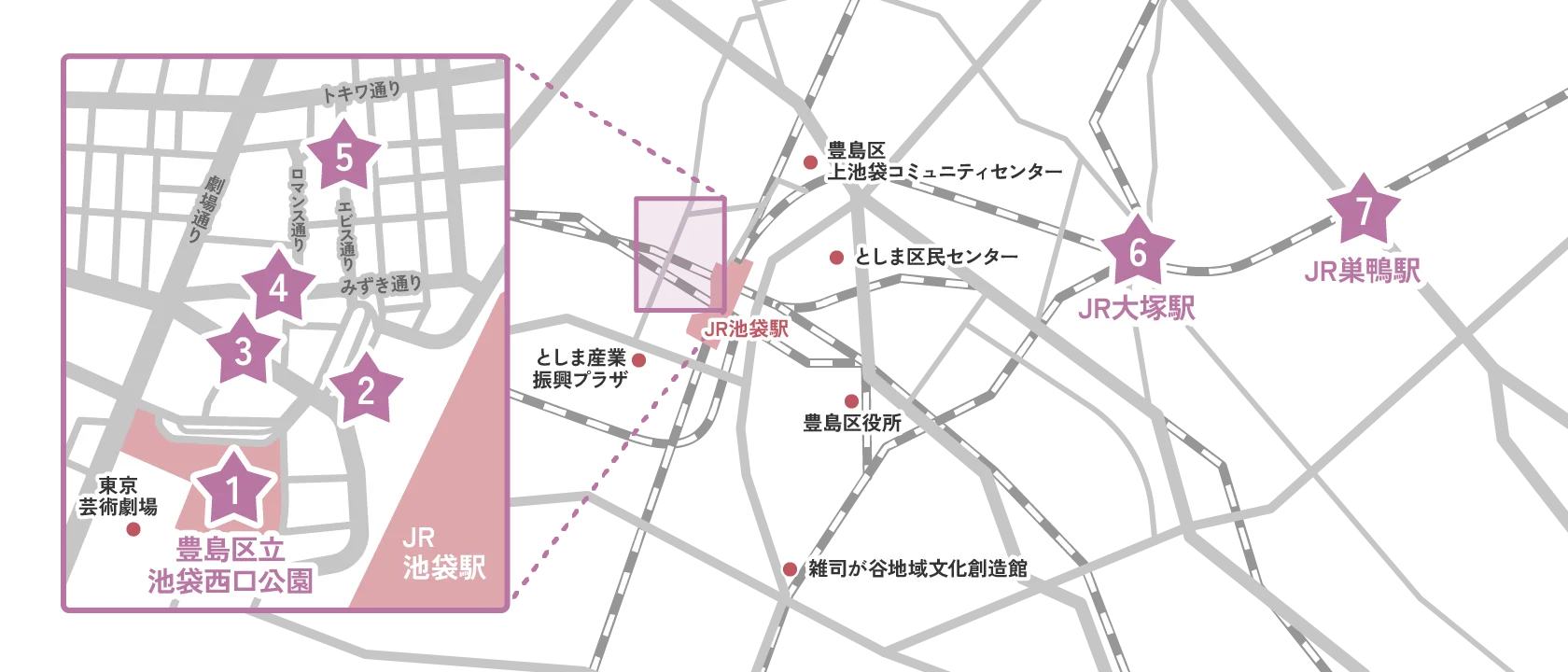
A better first visit has one anchor position for sixty to ninety minutes and, if useful, one deliberate change of venue. You will see several groups from the same setting, which makes their costume, music and formation choices easier to compare. A second block can then give you the other format: stage after a procession, or street after a stage. The short central walks make that possible, but do not force a move whenever a team you like appears elsewhere. If rain or a dense crowd removes the second sightline, remaining at the first location can preserve more actual dancing than a long chase.
For someone using Ikebukuro as a stop between two other appointments, start at the station exit nearest your chosen venue rather than walking to an imagined “festival entrance.” This event occupied streets and stages in several places. On arrival, a short walk to the correct performance point was more valuable than circling the station in search of a single gate. Leave time to find a lawful standing area, especially if you need a front row for a child. If that space is full, watching a later group from a calmer position is a better outcome than repeatedly cutting across a moving crowd.
| Viewing plan | What you gain | What it costs |
|---|---|---|
| Stay at one stage | Full pieces and steadier front-facing views | Less sense of the citywide procession |
| Stay at one procession point | Movement, street setting and changing formations | Position matters more; the view can be brief |
| One block in each format | Clear comparison without constant relocation | One crowd-aware move and a gap between blocks |
| Follow a specific team | You may see that group in two settings | The timetable and walking buffer become binding |
The 2026 programme made team-following unusually tempting because it listed Sunday appearances by group. A timetable answers where a team is scheduled, but it cannot promise you a place at the rail when you arrive. If two performances were separated only by the theoretical five-minute walk, the safe reading was that they conflicted. This matters even more to a photographer carrying equipment: losing a clean background to obtain a second scheduled appearance is often a bad trade.
The finale changes how to use the afternoon
The Sunday contest finished around the Azalea-dori venue with awards and the festival's shared dance, “Hifumi.” If that closing sequence was your reason to choose October 11, the logical plan was to work backward from it. Watch an earlier stage or procession block, take a proper food and toilet break, then settle near the finale rather than filling every intervening minute with another venue. Standing for hours from the first dance can make the most distinctive ending the point at which you are too tired to stay.
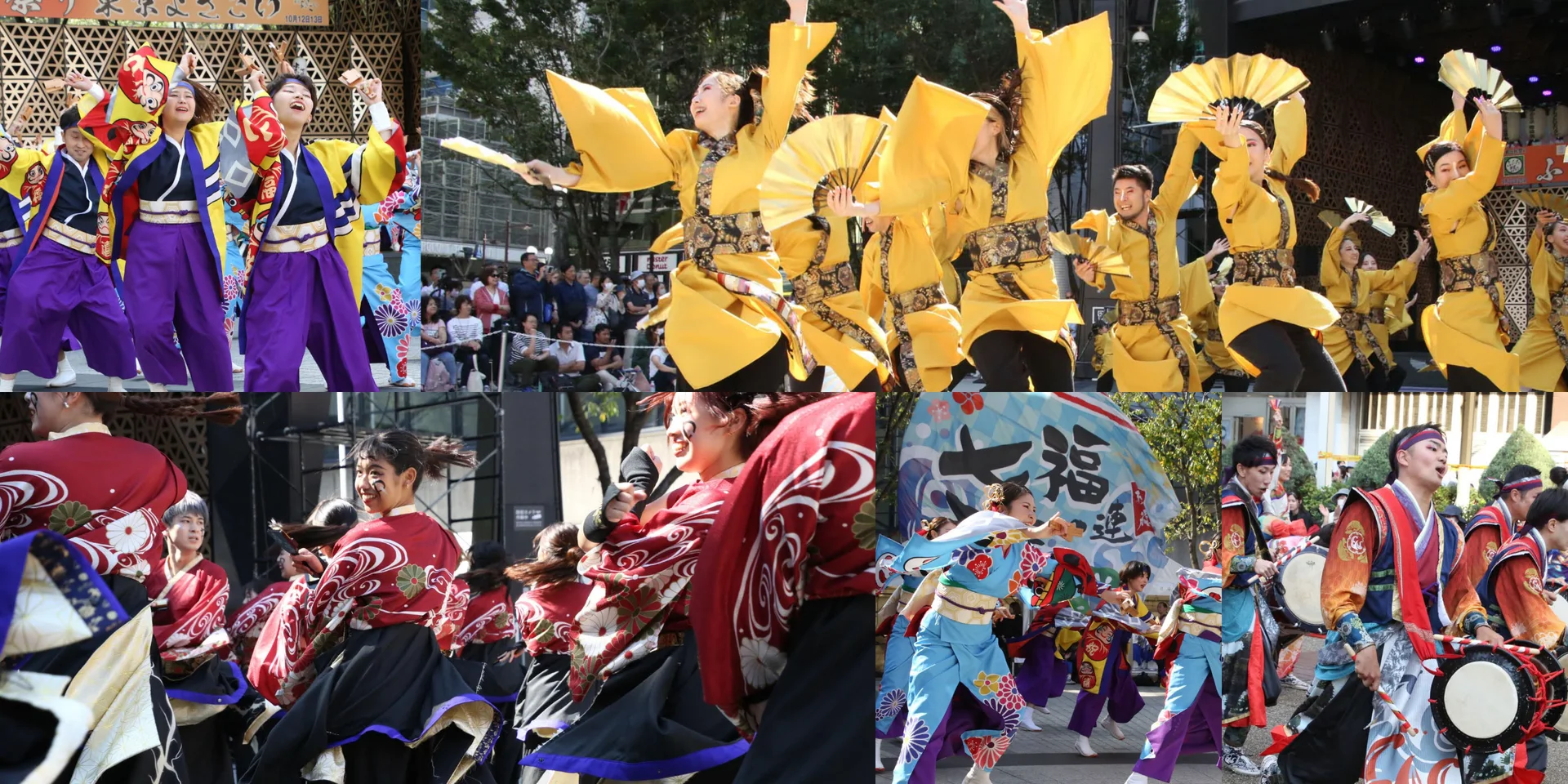
The result was published on October 12. Kochi group Hamanaga Hanakagura received the Tokyo Governor's grand prize. San-SUN-, Wakka and Shichifuku Yosakoi Ren Iwai Medeta took the three runner-up awards listed in the 2026 results. These are retrospective results, not a prediction about a later festival. They give a reader comparing clips or deciding which groups to follow a concrete starting point. The result alone does not establish which street and hour each team performed; use the corresponding timetable for that.
A result list also gives context to the geography of the festival. The grand-prize group came from Kochi, where yosakoi began; other awarded groups came from Tokyo and beyond. The Ikebukuro setting therefore showed more than neighbourhood dancers. It brought teams with distinct regional styles into a compact urban programme. If the point of a visit is to see that range, settle at one venue long enough for several groups rather than hunting only the eventual winner. A contest result can guide later viewing, but it cannot replace the experience of watching how different teams use the same stage or stretch of road.
If you were making only a two-hour stop, leaving before the awards was a defensible choice. A festival visit can consist of one strong performance block without consuming the whole day. On a busy autumn route, compare what that extra time would displace: autumn colour planning, a reserved museum visit or a second Tokyo neighbourhood may matter more than watching the full contest. For a different Tokyo street-dance tradition, the Koenji Awa Odori viewing guide explains its routes and exits, while the daytime Koenji stage option suits people who cannot stand through a long street programme. The Omotesando Super Yosakoi comparison is closer in dance form but has a different layout.
Photography works better with fewer targets
A photographer can use the team-by-team timetable to identify an appearance, then choose a background before the group arrives. On a procession route, dancers advance toward and past you, so light, barriers and permitted standing areas control the frames you can make. A stage offers more repeatable front-facing positions and lets you anticipate formations. Trying to get both kinds of image for every favourite group usually creates a gallery of hurried transfers rather than a considered account of the performance.
In 2026, the practical sequence was to secure one stable position for several teams, then make only one move if a particular second image was worth it. The programme's photographer notice included event-specific shooting guidance; future editions may set different conditions. Keep equipment out of the pedestrian flow and respect any marked no-stop section, especially on a procession route. These are crowd conditions, not just etiquette: a tripod or bag in the wrong place can change how people reach an exit. If travel photography extends beyond the festival, placing your luggage for the next stop is more useful than carrying a suitcase through Ikebukuro.
Choose the Ikebukuro hotel for the whole route
Ikebukuro is a major rail hub, so a visitor staying in Shinjuku, Shibuya, Ueno or near Tokyo Station did not need to move hotels solely for this festival. A relocation uses part of a travel day and adds a bag-handling problem that the rail network already solves. Read the Tokyo area guide before choosing a base on the strength of one October evening. The Shinjuku–Shibuya hotel comparison is useful if your non-festival days are mostly on the western side of the city.
Ikebukuro becomes a stronger hotel choice when it improves more than the journey home: perhaps you are spending another day in northwestern Tokyo, adding Saitama, or expect to stay until the Sunday awards. In that case, the benefit is the combined route and the ability to return to a nearby room after a long viewing day. Compare rooms around the relevant station exits in the Ikebukuro hotel shortlist; a cheap room across the station complex may still require a substantial walk from your last venue. If the next day's itinerary points elsewhere, keeping your existing base is usually simpler.
Ikebukuro also tempts visitors to stack attractions. Chiikawa Park uses timed admission, so treat it as one fixed indoor booking, then leave the festival block flexible. The Doraemon event ticket distinction illustrates why a shop or café stop should not be assumed to work like a walk-in break. A full Tokyo day can have one appointment and one open viewing window; several closely spaced bookings make a revised dance timetable hard to use.
If the indoor booking is the main reason for going to Ikebukuro, check the Chiikawa Park time slot before placing any festival block around it. A late slot can leave the best dance viewing period before entry; an early slot can turn Yosakoi into an afternoon extension. Travellers filling other Tokyo days with fixed attractions, such as the Warner Bros. Studio Tour or Shibuya Sky at sunset, should resist turning this street festival into a third timed obligation. Those attractions have entry windows; a dance venue is valuable because you can leave room to respond to the programme and weather.
If a later Yosakoi edition gives you a confirmed date and a late Ikebukuro finish, compare Ikebukuro rooms for that weekend with the next morning’s rail direction before moving your Tokyo base.
Using the 2026 layout for a later visit
The specific 2026 dates, teams and winner belong to the completed 27th edition. A later date, venue list and running order need their own announcement. Start with the date and team participation days, then pick procession or stage for the kind of viewing you want. Only after that should you decide whether a finale, a named group or a timed indoor booking deserves an immovable place in the day. The 2026 three-part schedule shows how to separate the general running order from an individual team's appearances.
If an autumn trip is being built around several festivals, compare the commitment each one demands. Kawagoe's evening float encounter can make an overnight stay matter more than it did in Ikebukuro. Takayama's lantern floats similarly reward a particular night. Tokyo Yosakoi's central rail access allowed a shorter, more flexible visit. The ten-day Tokyo–Kyoto–Osaka route helps test whether a festival needs a full day or can sit within a longer itinerary.
For the next edition, resist carrying forward a 2026 screenshot as a promise. A published schedule can change version, and a short station-to-venue walk can become longer once the streets fill. Decide what you would regret missing, leave one uncommitted interval, and choose a hotel that makes sense for the rest of the trip. That is enough structure to see actual dancing instead of spending the day travelling between pins on a map.