
The first comparison is between two specific eSIM packages, not between the Klook and KKday logos. A Klook product that permits tethering and another Klook product that forbids it cannot be scored as though they were one service. KKday has a similar spread of suppliers, network arrangements and activation clocks. For a traveller who needs a laptop online, the hotspot line can settle the choice before price enters it. Someone landing at 23:30 should start with the validity clock instead.
The current Klook 109393 Japan eSIM is a useful reference point: its daily-data packages name SoftBank 5G, its total-data packages name Docomo 4G LTE, and the page permits hotspot sharing. The unlimited tier publishes a 10GB daily full-speed allowance, followed by 128kbps. These are properties of that product and package, not a promise about every eSIM on Klook. KKday's KDDI/SoftBank roaming product 283944 also permits hotspot sharing, but it has a different network route, purchase policy and installation rules. Neither marketplace wins every trip.
Four listings show why the platform label is too broad
↔ Scroll table left or right
Product page | The useful distinction | The condition that could rule it out |
Klook 109393 | SoftBank 5G on daily packages; Docomo 4G LTE on total-data packages; hotspot permitted | Its unlimited tier falls to 128kbps after 10GB in a day; the selected package still determines the paid period |
Klook 39586 | QR delivered by email, with several day counts and data sizes | Product details say no hotspot; the page excludes refunds for device incompatibility and lists a 30-day QR voucher window |
KKday 283944 | KDDI/SoftBank access through a roaming supplier; hotspot permitted; daily and total allowances | No cancellation; it has a 90-day order-to-use window and a 24-hour day-counting rule after activation |
KKday 160650 | Native SoftBank product that permits hotspot | The listing says the usage period starts immediately upon installation, a poor fit for an early install before a long flight |
The Klook 39586 product details are particularly instructive. They say “Hotspot Sharing No”, warn that incompatibility is not refundable, and give installation instructions for a QR code that can only be scanned once. The voucher expires 30 days after confirmation. These rules are materially different from those of Klook 109393. A high review count for either listing cannot make a forbidden hotspot work. If your companion needs a separate connection while you split up, the two-person eSIM decision matters more than the marketplace badge.
KKday 283944 calls its service roaming data supplied by China Mobile International, while naming KDDI and SoftBank as Japanese access networks. Its current specifications permit hotspot sharing and list no top-up. Its order is non-cancellable. A buyer may install before arrival and activate after reaching Japan; a three-day package then runs in 24-hour blocks from activation. The page also says the profile can be deleted and reinstalled up to ten times on the same device while the QR or package remains valid. That is a product-specific exception to the common one-scan warning. Do not apply that reinstall allowance to a Klook or another KKday QR code.
The KKday native SoftBank listing 160650 creates a different trade-off. It says hotspot is supported and describes a native network, but it also says service starts as soon as the eSIM is installed. If you normally load the profile at home several days before departure, that timing can waste paid validity. A native label is only valuable after the installation clock, phone compatibility and package allowance fit the journey. The general Japan eSIM guide explains the network terms without treating a carrier name as a coverage guarantee.
Tethering is an eligibility question
Suppose two people buy one larger data package because the daily cost is lower. That can work when they remain together and the product explicitly allows tethering. It becomes fragile when one person goes to a museum while the other navigates to a restaurant: the second phone loses its connection. The host phone also carries both users' battery demand. A pair of smaller packages can therefore be the better purchase even when the advertised total gigabytes look less generous. Our shared-versus-separate eSIM comparison covers that operating choice.
For laptop use, do not infer permission from “unlimited data”, 5G, or the presence of a hotspot switch on your phone. Klook 109393 says yes to sharing; Klook 39586 says no. KKday 283944 and 160650 say yes, but another supplier or package could differ. Tethering permission and a usable high-speed allowance are separate tests. A plan that allows a laptop to connect and then slows to 128kbps after heavy uploads may still fail the workday you intended to cover. The data sizing guide for a seven-day trip is more useful here than counting product reviews.
If the phones will travel independently, buy for independent navigation rather than an optimistic assumption that tethering will always be available. If one person handles every train ticket and reservation, save the booking details offline on the second phone as well. A mobile-data interruption should not strand the traveller who is carrying neither the active eSIM nor the tickets. The digital ticket backup plan gives a practical sequence for that separation.
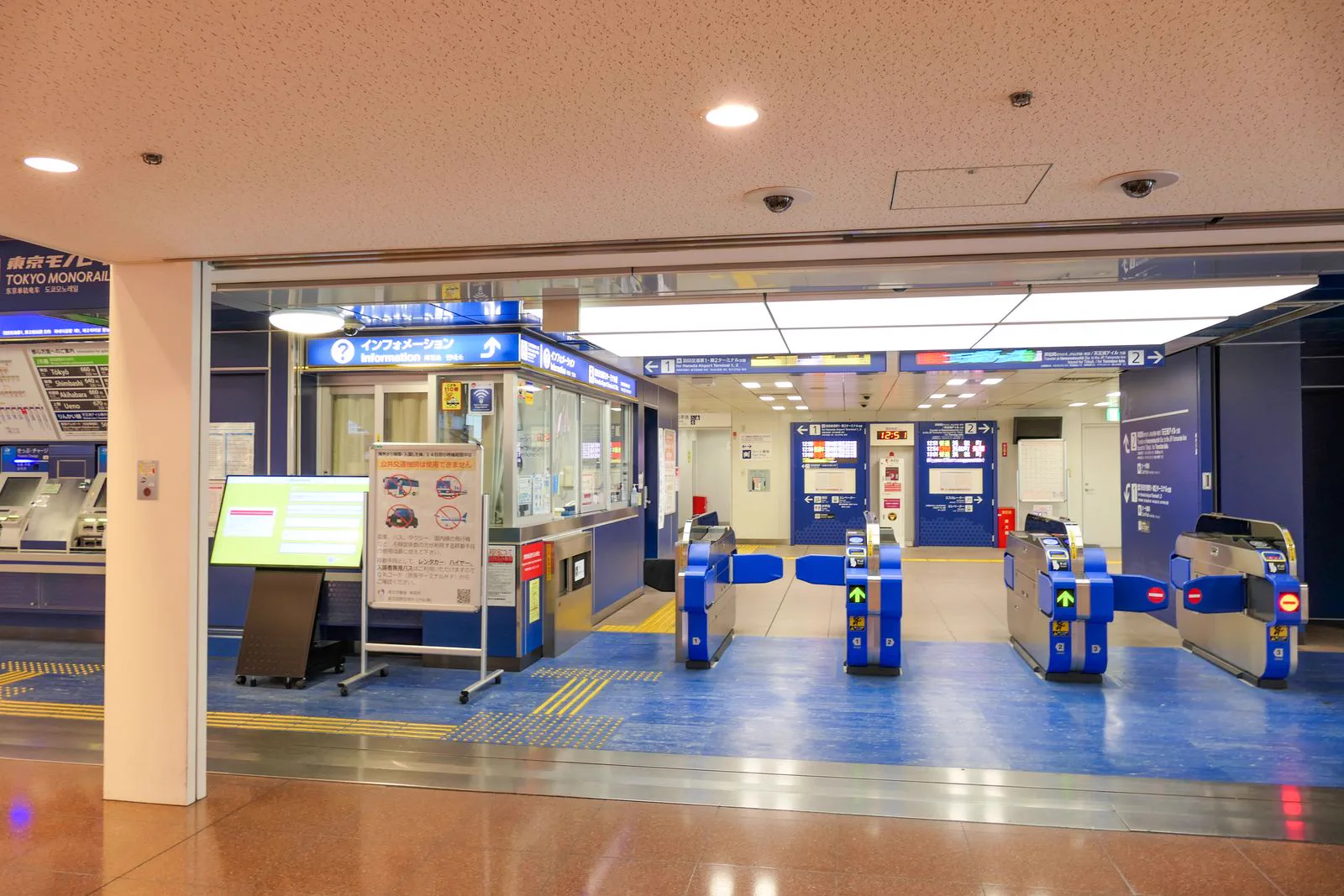
At Haneda's rail gates, a working data line helps with a changed train or a ticket stored in an app. The photograph shows the gates, not a particular eSIM's signal strength; save the essential ticket details before reaching them.
“Unlimited” still has a speed profile
Klook 109393 defines the point at which its unlimited tier changes character: 10GB per day at full speed, then 128kbps. That threshold is generous for maps, messages and ordinary browsing, yet 128kbps after the threshold is not a useful substitute for a video call or a large cloud upload. KKday 283944 lists an unlimited option but describes traffic management under a fair-use policy without giving the same universal post-threshold speed in the main listing. An unspecified limit should be treated as uncertainty, not as evidence that full speed continues indefinitely.
This is why a fixed 10GB or 20GB total package can sometimes be easier to price than an unlimited one. You know the size of the high-speed pool, then check whether top-up is available. KKday 283944 currently says top-up is unavailable. Do not buy a low fixed allowance on the assumption that more data can always be added. For a normal Tokyo–Kyoto–Osaka holiday, first estimate the phone's use for maps, messages, uploads and streaming. The 1GB, 2GB and unlimited comparison turns those activities into a more useful choice than the plan label.
Remote work changes the risk calculation. Ask for both the high-speed quota and the speed after fair-use controls; also inspect hotspot limits and the ability to buy more data. If a work meeting must happen, keep another connection path, such as a separate eSIM on another network or reliable accommodation Wi-Fi. One consumer travel plan, whether sold by Klook or KKday, cannot promise performance inside every building. The Hokkaido eSIM guide shows why a ski or driving route deserves more attention to network identity than a central-city stay.
Installation and paid validity are different clocks
There may be a deadline to use a QR voucher, a safe period in which to install the profile, and a separate trigger that starts paid service. Read all three. Klook 39586 lists a 30-day voucher life; that does not, by itself, explain how every selectable three-, seven- or fifteen-day service package begins. KKday 283944 permits installation before arrival, says the package starts upon activation, and counts days in 24-hour blocks. KKday 160650 instead says usage begins immediately after installation. A rule copied from one listing can cost a day on the other.
Picture a flight reaching Japan just before midnight. If the package uses calendar days, activation at 23:30 may consume a large share of the first paid day. If it uses 24-hour blocks, that same timing has a different result. There is also a practical question: will airport Wi-Fi be available if you postpone installation until landing? The late-arrival eSIM validity guide breaks down natural-day and 24-hour products. The New Chitose arrival plan, Haneda late-night hotel choice and Narita after-dark route show how a short validity window interacts with the actual onward journey.
Installing a profile on Wi-Fi before travel can be sensible when installation does not start paid use. It is a mistake when the chosen supplier starts the clock on installation. Keep the QR and setup instructions available offline, and check whether the product permits a second scan before deleting anything. Klook 39586 says one scan; KKday 283944 currently allows reinstalls on the same device under stated conditions. If a newly installed eSIM connects poorly, work through data roaming, APN and network selection while the profile is still present.
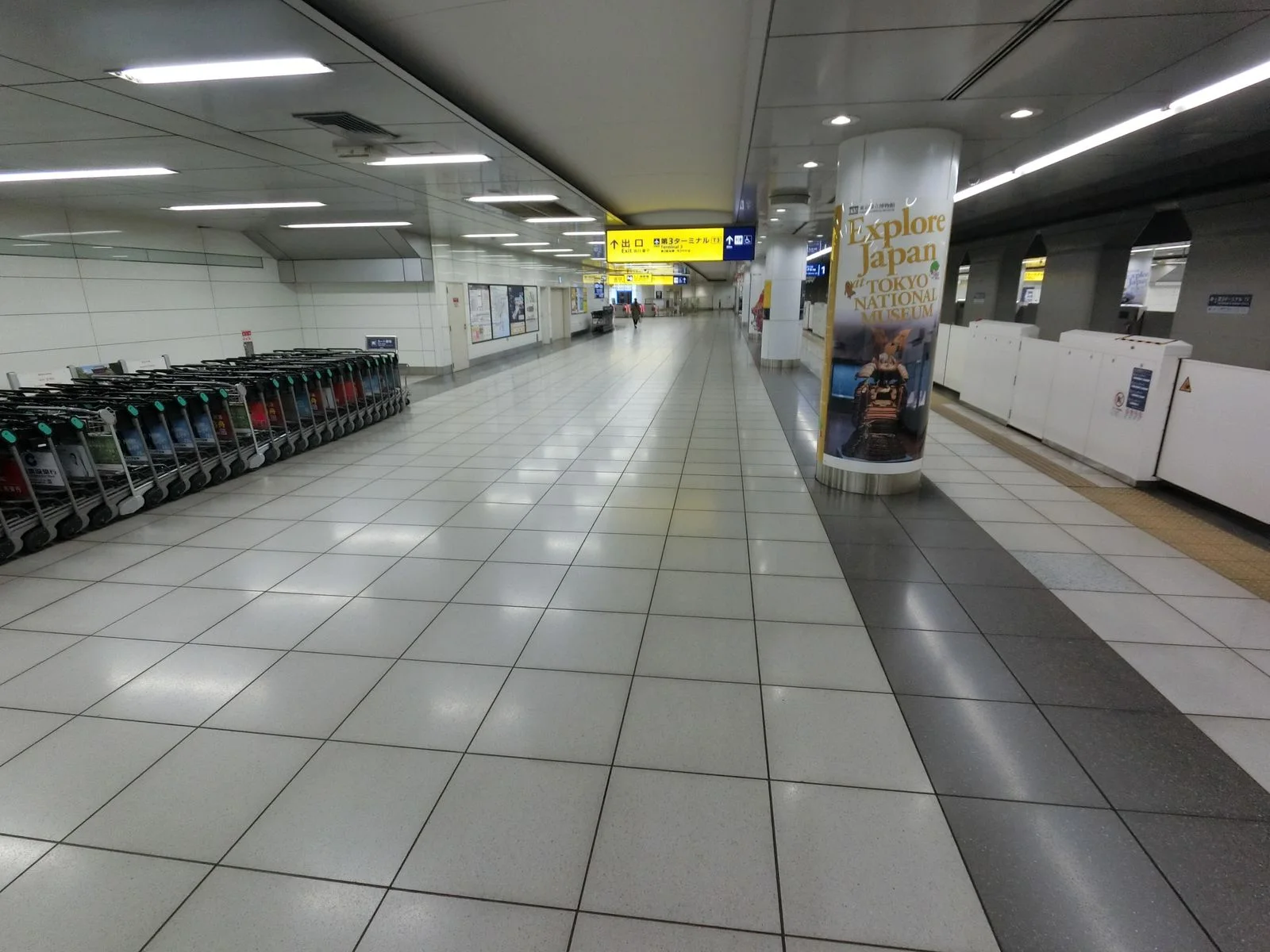
The Haneda arrival concourse is the kind of place where the three clocks become immediate: the traveller needs data for the next train and hotel, but may also be guarding the first paid day of a short package. With a 24-hour plan, note the exact activation time. With a calendar-day plan, a late landing may justify a longer package or a later activation after reaching the hotel. The same logic applies at Narita, Kansai or New Chitose; the photograph is Haneda, not a claim about those other terminals.
Refund wording should name the failure
“Refundable” can mean cancellation before use, a supplier-approved network fault, or a consumer-rights remedy under narrow conditions. They are not interchangeable. Klook 109393 advertises a quality guarantee including before-use refunds or qualifying problems. Klook 39586 explicitly excludes refund or cancellation for phone incompatibility. KKday 283944 is marked no cancellation and warns that weak signal in a few locations is not, by itself, a refund ground. The KKday unlimited product 121004 advertises a network-issue guarantee while also saying a completed order cannot be cancelled. The guarantee applies to a different kind of claim from a simple change of mind.
Before paying, confirm that the exact handset and its regional variant support eSIM and are not carrier locked. A Samsung model name alone is not enough across markets; KKday 283944 specifically warns about some Taiwan-purchased Samsung phones. If the phone is uncertain, run the model, EID and lock checks before ordering a non-cancellable QR. A small coupon is poor compensation for a profile the device cannot install.
If service fails after arrival, save the order number, voucher, screenshots of the phone settings and any support exchange. Try the supplier's setup steps while you still have airport or hotel Wi-Fi. Do not delete the profile as a first troubleshooting step; a one-scan QR may be impossible to reissue, and even a reusable one can have device and validity restrictions. The eSIM recovery checklist separates a disabled data line from an actual network failure that may support a claim.
Native network or roaming: what changes in practice?
KKday 283944 uses roaming service while naming KDDI and SoftBank for access in Japan. KKday 160650 advertises a native SoftBank arrangement. That distinction may matter for an app that expects a Japanese network path, for roaming configuration, or for a traveller with a specific network requirement. It does not guarantee reception in a basement, mountain valley or crowded station. Device radio bands, the partner network, local capacity and the exact location remain relevant. Klook 109393 names SoftBank for daily packages and Docomo for total packages, so even the network changes within one product page.
For ordinary city sightseeing, do not pay a substantial premium solely for the word “native” without a reason tied to your device or service. For remote driving, a ski resort or a work-critical trip, compare the underlying network and plan a backup. The Okinawa coverage guide explains the difference between a city base and island travel; the Hokkaido guide does the same for longer rural journeys. Those are route decisions, not a universal ranking of eSIM sellers.
Three shopping baskets
↔ Scroll table left or right
Traveller | Start by excluding | Compare among survivors |
Seven to ten days in major cities, one phone, modest use | Wrong phone model, early-start validity, unclear high-speed pool | A fixed-data package or daily allowance with an understood network and checkout price |
Two people relying on one hotspot | Products that forbid tethering; a shared phone that will often be elsewhere | Two independent smaller plans versus one bigger hotspot-capable plan |
Laptop uploads or scheduled calls | Small high-speed allowances, vague throttling, no backup, restricted hotspot | Published full-speed allowance, post-limit speed, network identity and a second connection |
For the first basket, Klook 109393 offers an unusually explicit comparison point because its carrier split, hotspot policy and 10GB/day unlimited threshold are easy to identify. A KKday alternative may still be cheaper or better suited to the phone. In the second basket, Klook 39586 fails at the hotspot line regardless of its other attractions. KKday 283944 may survive, but the two travellers still need to decide whether they can tolerate separation. In the third basket, an “unlimited” badge without a usable post-limit connection is not sufficient. The Airalo, Saily and Klook comparison broadens the supplier choices after the hard requirements are clear.
There is little value in a platform-wide 100-point score here. Change the phone, travel dates, need for hotspot or daily upload size, and the eligible set of packages changes with it. Freeze those requirements first; compare only products that satisfy them, including the final checkout currency and any discount conditions. A named benefit can justify paying more, but a higher review count cannot override a prohibited use. The Japan eSIM complete guide is useful when the decision turns on data accounting rather than a particular marketplace.
After selecting the eSIM, keep the practical travel arrangements separate. A Tokyo or Kyoto station base can reduce the number of unfamiliar transfers after a late arrival, while a functioning data line helps with tickets and route changes. If you are still comparing lodging near your arrival station, see accommodation around Tokyo Station. Confirm the eSIM's activation trigger before leaving home; then buy the exact package whose hotspot, speed, validity and failure policy fit the trip.