
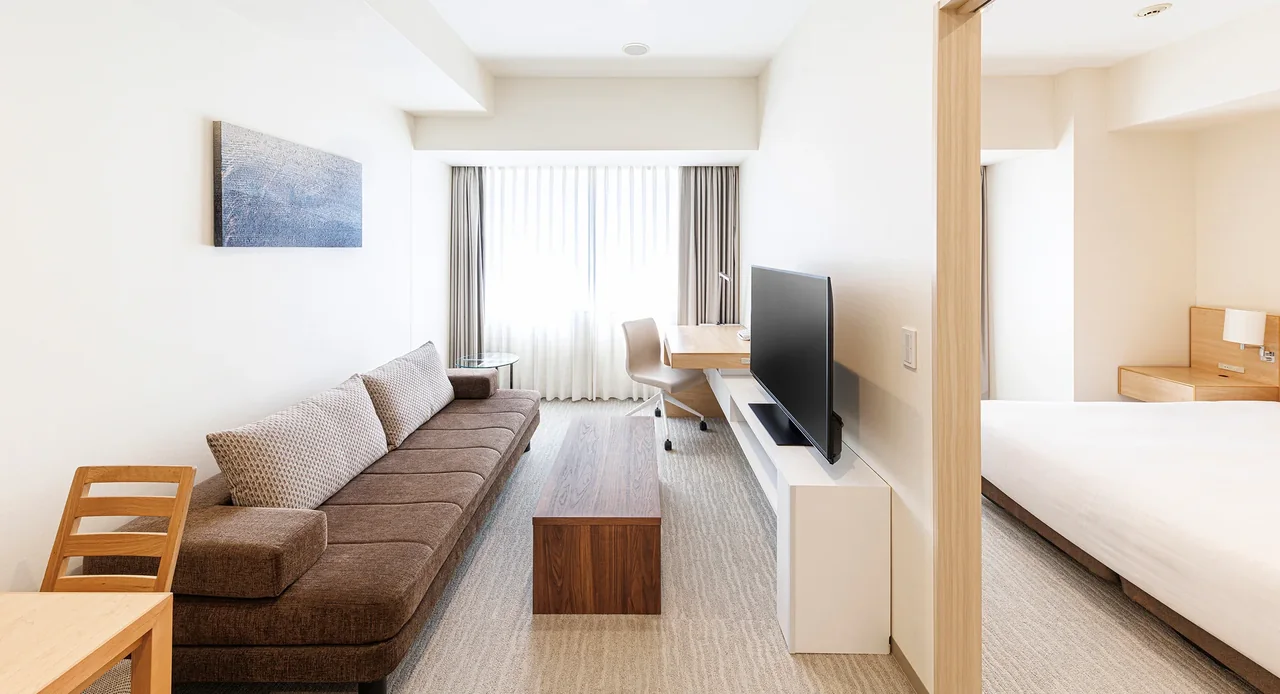
Four adults searching for an “Osaka room share” can get misleading results. A room that permits four names on a reservation may contain one bathroom, beds that suit only two couples, or so little open floor that nobody can repack. Fraser Residence Nankai Osaka and MIMARU Osaka Shinsaibashi Central solve different versions of that problem. Fraser's 77 m² Two Bedroom Deluxe separates sleeping and living spaces and supplies a kitchen and washer-dryer near Nankai Namba Station. MIMARU's newly opened Shinsaibashi Central has several four-person arrangements, including a 40 m² Two-Bunkbed Apartment with two shower rooms but one toilet. For four adults, the deciding question is often who needs privacy at night and who needs the bathroom at 8 a.m.
JapanLayer hotel assessment by dimension
↔ Scroll table left or right
| Hotel | Access | Space | Comfort | Cleanliness | Neighbourhood | Service | Value |
|---|---|---|---|---|---|---|---|
| Fraser Residence Nankai | 9.1/10 | Insufficient evidence | Insufficient evidence | 9.5/10 | Insufficient evidence | 9.5/10 | Insufficient evidence |
| MIMARU Shinsaibashi Central | Insufficient evidence | Insufficient evidence | Insufficient evidence | Insufficient evidence | Insufficient evidence | Insufficient evidence | Insufficient evidence |
Four adults: count the bottlenecks
↔ Scroll table left or right
| Check | Fraser Nankai | MIMARU Shinsaibashi Central |
|---|---|---|
| Sleep | Confirm the two-bedroom apartment, not a studio | Confirm four dedicated sleeping places in the named apartment |
| Morning queue | Check bathrooms and toilets in the exact unit | Check bathrooms and toilets in the exact unit |
| Last walk | Namba rail and airport-facing routes | Shinsaibashi evenings and local subway routes |
Swipe to compare the hotels
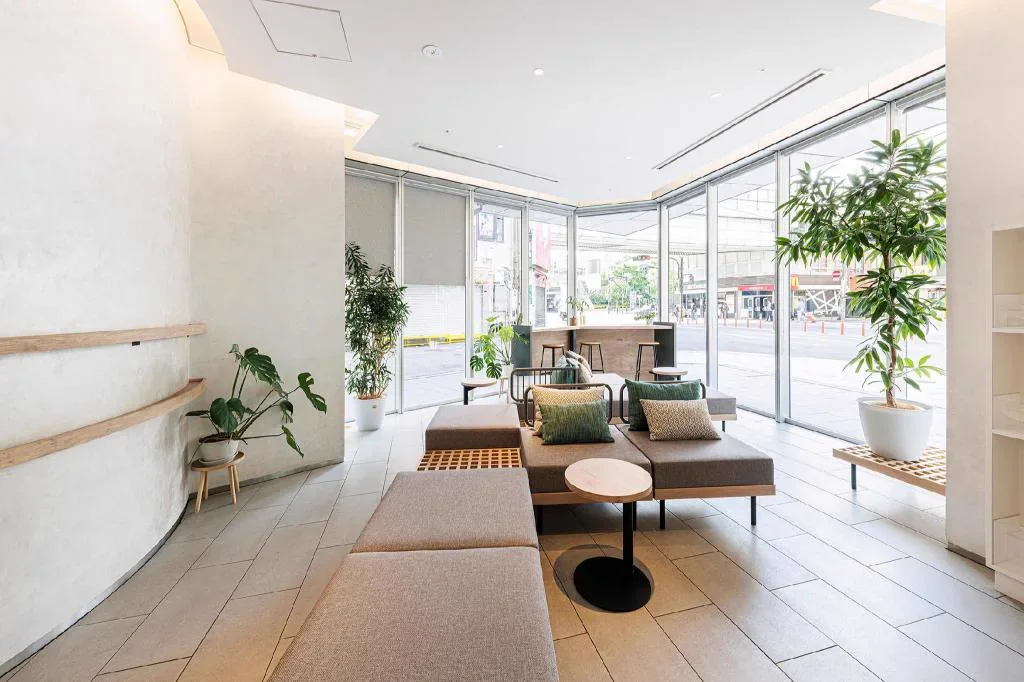
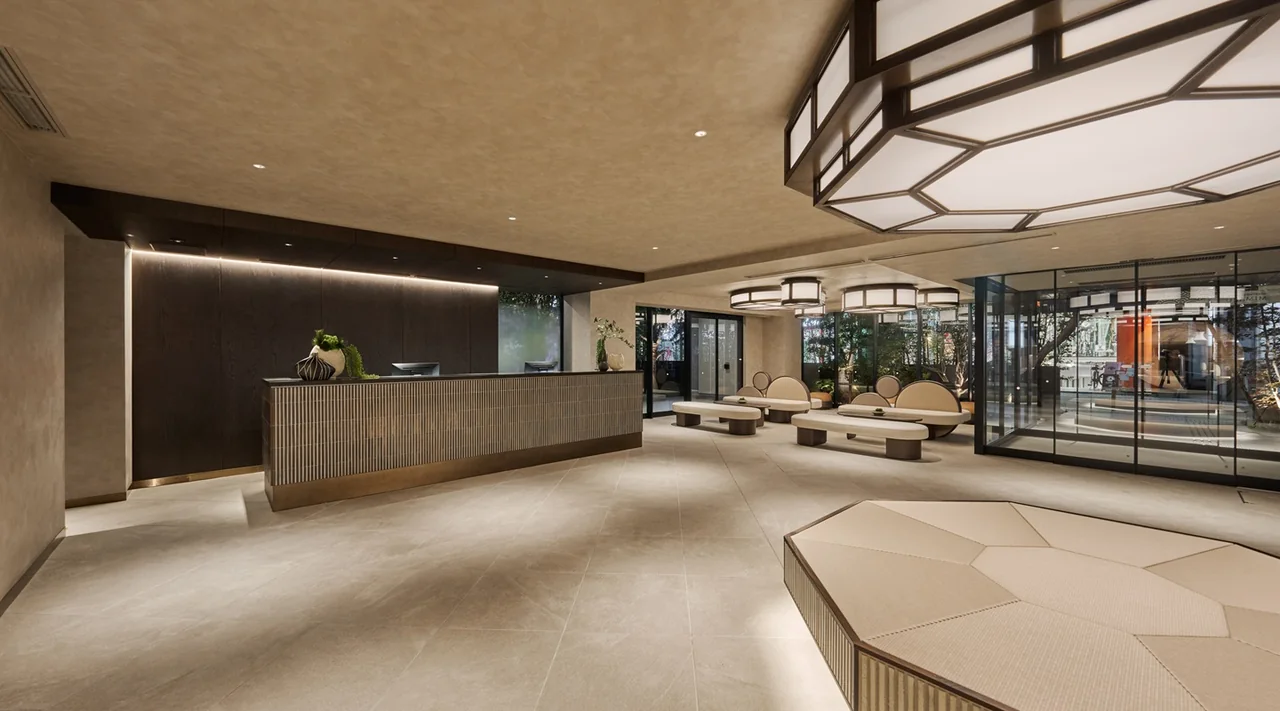
This is a comparison of specific room categories, not a claim that every room at either property fits four adults. Fraser sells studios and one-bedroom apartments as well as two-bedroom units. MIMARU sells bunk, one-bedroom and larger two-bedroom arrangements. A booking page may surface the lowest price for a room that does not sleep the group. Before reading the headline nightly rate, put the exact party size and dates into both booking tools. The Osaka group hotel guide on one room versus two gives the wider decision; here the question is whether these two apartment-style hotels can keep your particular group together without turning every morning into a queue.
Start with the sleeping relationship, not the advertised capacity
Fraser's Two Bedroom Deluxe lists one 180 cm-wide bed and two 120 cm-wide beds in a 77 m² apartment. This is a natural arrangement for a couple plus two friends, or a family whose members are comfortable with one pair sharing. It is less neat for four unrelated adults who each insist on a separate bed. Do not assume a sofa in the living room becomes a fourth independent bed. The hotel's stated capacity and the bedding shown on the selected room plan should both match the party. If four separate beds are essential, ask about the actual two-bedroom configuration available for those dates before treating Fraser as the obvious “bigger is better” choice.
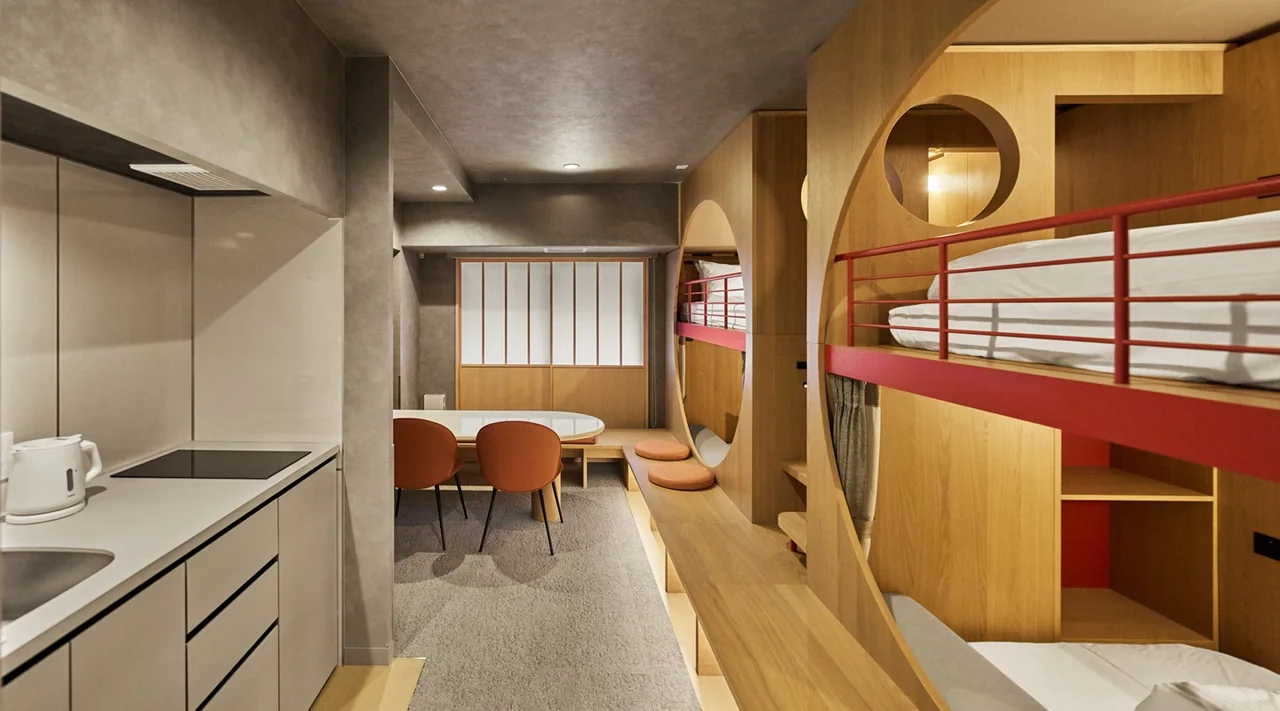
MIMARU's Two-Bunkbed Apartment is 40 m², lists two bunk-bed sets and capacity for four guests. That is compact, but each adult can have a separate sleeping place if everyone accepts a bunk. Check upper-bunk access for mobility and comfort; a photograph of a stylish bunk does not tell you whether a traveller recovering from a long flight wants to climb to bed. The 40–42 m² One-Bedroom Family Apartment lists two single beds and one bunk bed, also suitable for four adults on paper. Its one restroom and one bathroom make a different morning from the Two-Bunkbed Apartment's two shower rooms. Choose the layout, not just the MIMARU brand name.
The larger MIMARU Two-Bedroom Family Apartment spans roughly 60–61 m² and lists four single beds plus a bunk bed, with two restrooms, a bathroom and a separate shower room. For four adults who each want their own bed and some separation, this is the closer competitor to Fraser's two-bedroom apartment. Its exact rate may also be far from the 40 m² entry-level room. If a search engine shows “MIMARU sleeps six or eight,” do not apply that number to a 40 m² category. The MIMARU Shinsaibashi Central four-person review explains the shower and toilet math; use that alongside the room-specific quote.
Four adults are not automatically better off in one apartment. Two ordinary hotel rooms can buy two private bathrooms and two closing doors, while sometimes costing less than a premium two-bedroom unit. The Swissotel versus MIMARU Namba four-adult comparison provides another price framework. Before choosing either apartment, quote two rooms in a nearby conventional hotel for the same dates. If privacy and quiet matter more than one shared table, that alternative deserves real consideration.
The bathroom bottleneck is not solved by square meters
Fraser's 77 m² gives the group more total living area, but space alone does not tell you how many people can shower at once. Read the floor plan for the exact Two Bedroom Deluxe or Executive unit being sold. Count bathrooms, toilets and basins separately, then estimate the morning sequence. If all four adults need to leave for a 9 a.m. train, a beautiful living room cannot compress four showers. If the party wakes at different times and returns from sightseeing separately, the bathroom count may matter less than private bedrooms and a larger common area.
MIMARU's 40 m² Two-Bunkbed Apartment explicitly lists two shower rooms and two washbasins, with one restroom. That arrangement can allow parallel showers but still has a single toilet. The One-Bedroom Family Apartment has one bathroom and one restroom; the Two-Bedroom Family Apartment offers two restrooms and two washing areas. These details make the three room types different products for the same headcount. Do not book the cheapest MIMARU category after reading a review of the room with two restrooms. The final confirmation needs the full room-type name.
An evening routine can reverse the morning preference. A group returning from Universal Studios Japan on a two-day visit may want to shower quickly and sleep, making two shower rooms valuable. A group that spends more time eating and talking in the apartment may value Fraser's separate living and dining areas. Write down the first two mornings and last two evenings of the trip. If those are full of early departures and late returns, you will use bathing facilities more than a kitchen table. If the stay includes slower days and shared meals, the larger communal room may be worth a premium.
Namba and Shinsaibashi create different last journeys
Fraser sits a short walk from Nankai Namba Station. That matters when the group arrives from Kansai Airport by the Nankai line or leaves by an early Nankai train. The hotel gives directions from the Nankai central gate and the subway, but the quoted few minutes start at the relevant exit, not the airport-train platform. Four adults with four cases may take longer than a couple with backpacks. The Kansai Airport to Osaka guide lets you check which rail service reaches your actual terminal and departure time. The Royal Classic Namba airport-access review offers another hotel benchmark if minimizing the airport exit is the main priority.
MIMARU Shinsaibashi Central lists a two-minute walk from Shinsaibashi Station. That puts the group in a different pattern for shopping and evenings around Shinsaibashi, Amerikamura and Dotonbori. The exact building entrance and station exit still matter with luggage. A party arriving at Nankai Namba must either walk farther or take another segment to Shinsaibashi; a party using the Midosuji subway repeatedly may appreciate being close to that station. The Namba versus Umeda hotel decision explains the broader geography. Here the relevant trade-off is Nankai airport access versus where the group will actually spend its evenings.
If sightseeing is centered on Dotonbori, Kuromon Market and southern Osaka, both bases can work. If the group returns nightly from Umeda or takes repeated Kyoto day trips, Shinsaibashi Station may be more useful than the proximity of Nankai Namba, but the total rail route should be checked. The Osaka and Kyoto seven-day split-stay guide can tell you whether one Osaka apartment is a sensible base for the whole week. The Osaka first-visit lodging guide is a better starting point if you have not chosen southern Osaka at all.
Food and shopping can change the value of the address. A group that buys groceries and cooks breakfast may care more about a nearby store and the walk back with bags than about a late-night bar street. A group that eats out every meal may barely use the kitchen and could prefer access to the restaurants around its evening route. The Osaka shopping hotel guide helps locate that repeated return. Do not book an apartment for its kitchen simply because it looks like a saving; calculate how many meals the group actually plans to cook.
A washer-dryer is useful only if the stay needs it
Fraser lists an in-apartment washer-dryer in the Two Bedroom Deluxe, alongside a kitchen and work desk. MIMARU lists an in-room washer-dryer for the relevant Shinsaibashi Central apartments. For a seven-night trip, this can reduce the number of clothes each adult carries and avoid a shared laundry room late at night. For a two-night city stop, the machine may never run. The Osaka five-to-seven-night hotel guide helps estimate how many laundry cycles the trip needs. Check detergent arrangements, the drying time and any quiet-hours rules rather than assuming one wash will finish during dinner.
Housekeeping differs from laundry. Fraser describes daily housekeeping, with reduced frequency for longer stays; verify the threshold on the rate you book. Apartment hotels can have different towel replacement and cleaning practices from a conventional hotel. For MIMARU, check the stay-length cleaning policy on the specific booking before comparing it with Fraser. Four adults generate more towels and rubbish than two. A kitchen with pans and dishes also creates cleanup work. If the group expects daily full service, include that expectation in the booking comparison rather than treating every serviced apartment like a standard hotel room.
The kitchen setup has practical limits. MIMARU lists an induction hob, refrigerator, microwave, utensils, cookware and a dining area. Fraser lists a well-equipped kitchen and separate living and dining space in its larger unit. Neither list guarantees that four adults will enjoy cooking every day. Look at the dining table size in the room plan and decide who buys food, who cooks and who cleans. If everyone prefers the city’s restaurants, a standard twin in two nearby rooms may be simpler. A five-day Osaka itinerary with USJ often has less time at the apartment than a week of Osaka-based day trips.
Quote three baskets before deciding
Build three comparable totals: Fraser's two-bedroom unit, the exact MIMARU room that meets the bed and bathroom requirements, and two separate hotel rooms. Use the same check-in and check-out dates, four adults, taxes, cancellation terms and any breakfast or cleaning charges. Divide the final total by four only after you have checked who shares a bed, who gets a private bedroom and whether somebody must climb an upper bunk. Equal payment may be fair for a group with equal beds; it can feel less fair if one couple has a private room and two friends have bunk beds.
Do not use a sample “from” price as if it applies to peak autumn weekends or a USJ holiday. A new hotel may offer promotional dates and then price differently later; Fraser's room categories can have different cancellation and minimum-stay rules. If flights are still uncertain, a cancellable quote has value. If one friend may join late, find out whether the booked category permits another adult and what happens to the rate. Changing from three to four guests may alter not just price but bedding and taxes.
The Osaka hotel decision hub is useful if these two apartments fail the cost test. A Tokyu Stay Osaka Hommachi five-night stay may suit two separate pairs with laundry needs; a MIMARU Osaka Namba Station apartment is another one-room option near the airport rail. This comparison should lead to a room you can name on the reservation, not a vague conclusion that “apartment hotels are best for groups.”
For four adults who need two private bedrooms, a large shared living area and a direct Nankai arrival, begin with Fraser's Two Bedroom Deluxe. For four friends who want separate sleeping places and parallel showers near Shinsaibashi, inspect MIMARU's Two-Bunkbed Apartment. For two couples or a mixed family who need more privacy and two restrooms, price MIMARU's larger Two-Bedroom Family Apartment against Fraser and against two conventional rooms. The best result depends on the room configuration available on your dates and the group's real morning and evening routine.
Updated 3 October 2026. Confirm room layout, occupancy, housekeeping and the total price for the selected dates.