
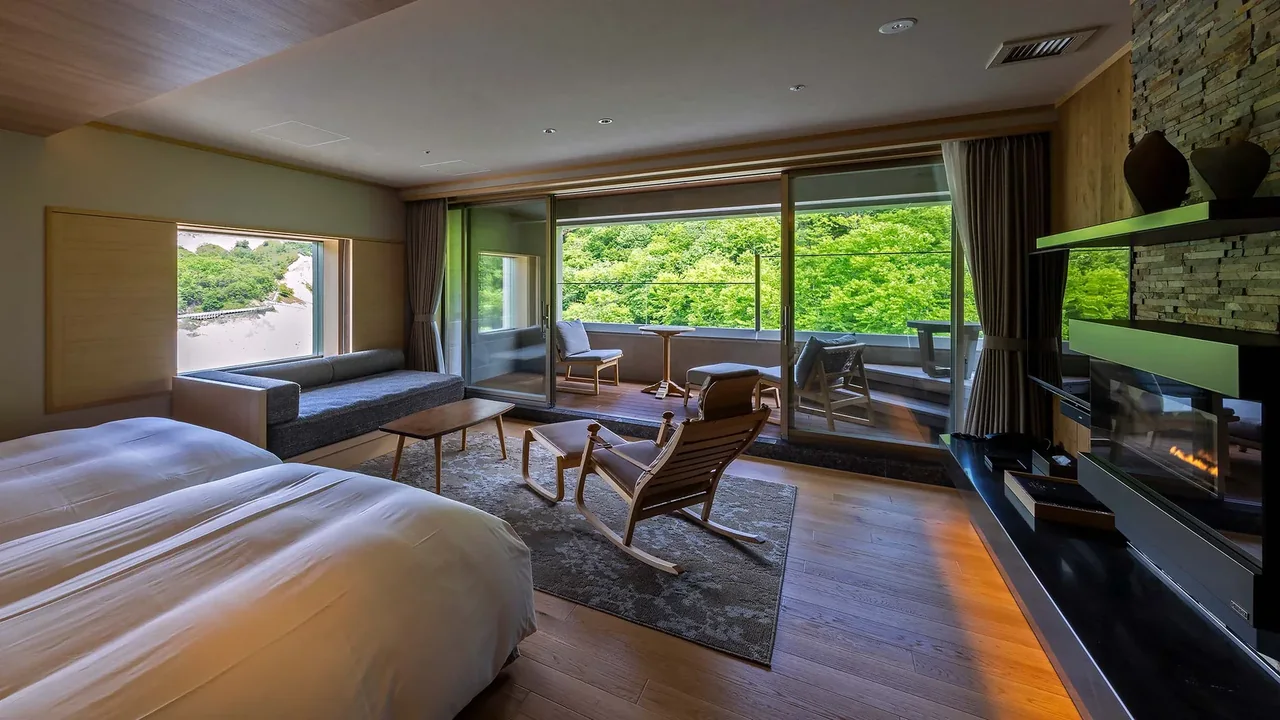
At Dai-ichi Takimotokan, the room category is only half the booking decision. The property has four accommodation wings, and the distance from your room building to the Grand Bath ranges from about 40 metres in the West Building to about 210 metres in the South Building. That difference matters little to a guest who takes one bath. It matters repeatedly to a family returning to the room between swims, dinner and another soak, or to a parent who finds long internal walks tiring. My starting point is therefore the number of times you expect to cross the hotel, followed by the sleeping arrangement and dinner plan. I would not pay for a premium room solely because its listing contains the word “onsen” without checking which bath is actually in the room.
Which wing changes the daily route?
↔ Scroll table left or right
| Building | Use it for | Before choosing |
|---|---|---|
| West | Repeated Grand Bath visits | Confirm the exact room and bed type |
| Main | Dinner and central hotel movement | Confirm the dinner venue and walking route |
| East | A specified western-bed or tatami layout | Check the internal walk and occupancy |
| South | Town-side entrance | Allow for the longer Grand Bath walk |
Swipe to compare the hotel rooms
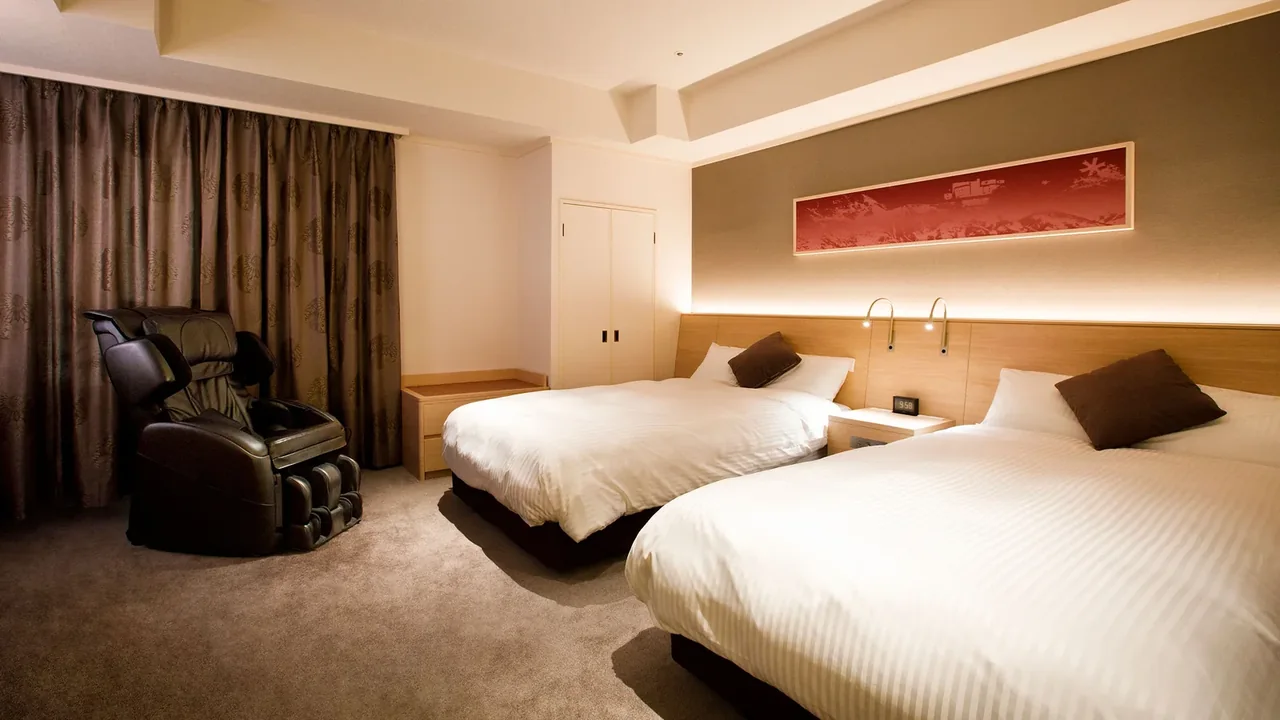
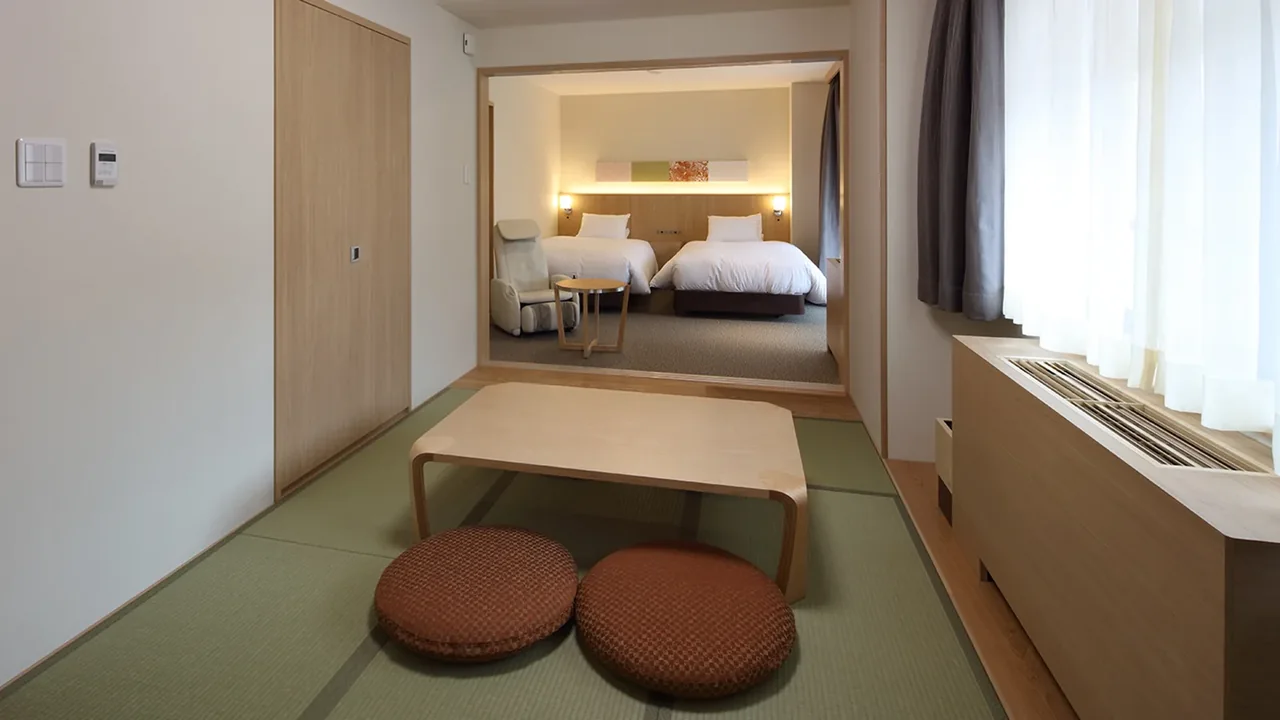
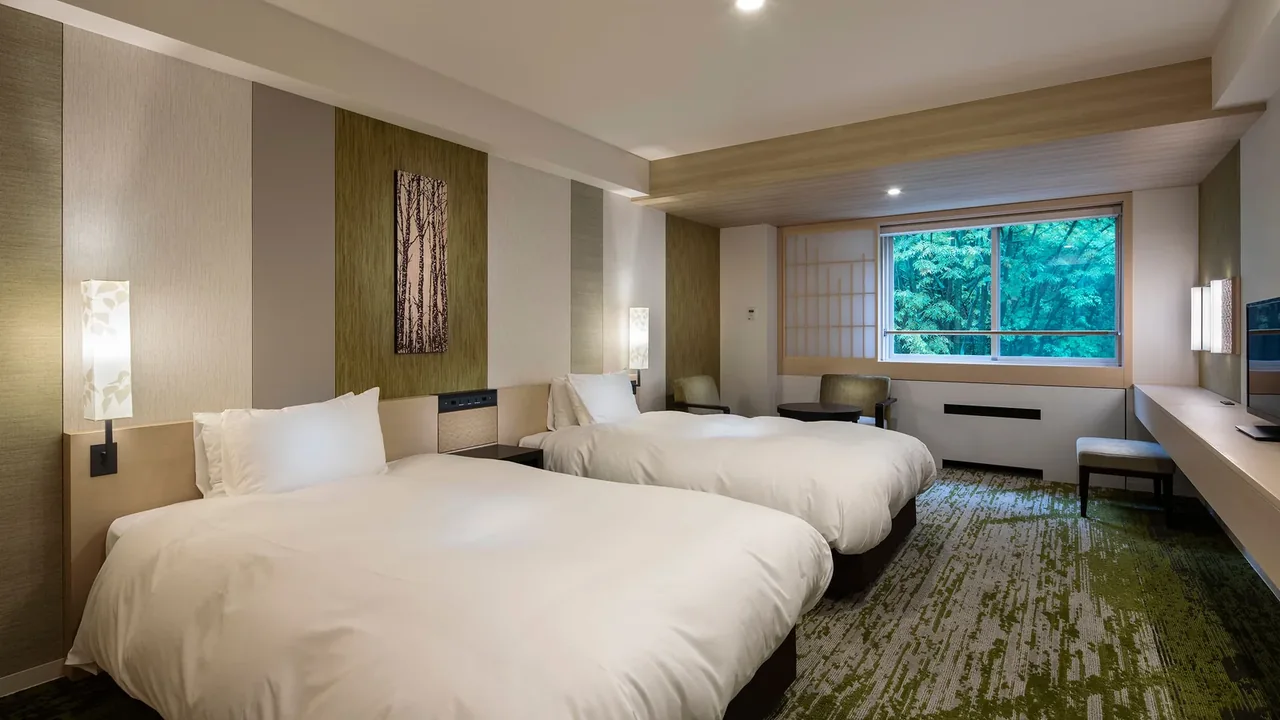
For a one-night winter stay, the hotel makes the most sense when Noboribetsu is a deliberate onsen stop rather than an expensive bed between two train rides. Guests can use the Grand Bath and pool before check-in and after check-out, so an arrival in the afternoon and a departure after breakfast can still provide two bathing windows. That does not make a rushed late arrival good value: a fixed dinner sitting, the transfer from Noboribetsu Station and an early departure can consume almost all the useful hours. If the whole Hokkaido route is still open, compare the time lost changing hotels in a five-, seven- or ten-day winter itinerary before locking this night. If you have not chosen the onsen town, the Noboribetsu–Jozankei decision belongs earlier in the process.
The four wings buy different daily routes
The West Building is closest to the Grand Bath at approximately 40 metres. It includes selected rooms with their own open-air hot-spring bath, but neither the view nor the private bath applies to every West Building booking. The Main and East Buildings are each around 150 metres from the Grand Bath. Main is the central wing with convenient links to dining and shops; East is adjacent to it. South is around 210 metres from the baths but nearer the main entrance and the onsen street. These are wing-level distances, not measurements from every door. A room on a different floor still requires the lift or corridor route. When comparing rates, keep the full wing plus room-category name visible until payment.
I would start with West if bathing several times is the main reason for the stay, particularly when a child wants to swim while adults want to use the onsen at different times. Main or East can be a sensible compromise when the room size, bed type or meal access is a better fit. South is a defensible choice for a party that will go out to the onsen street and uses the Grand Bath once or twice, provided everyone accepts the longer internal walk. There is no universal “best wing” because the walk you repeat depends on the day you actually plan. A guest with mobility concerns should also ask about the precise room-to-bath route; the existence of an accessible room does not establish that the large communal bathing area is accessible to them.
The range of room products is large enough to make building alone an insufficient filter. A West Premium Corner Twin with an open-air bath is listed at 61 m² for up to three guests. East has a 38 m² Superior Twin with Tatami Area that can take up to four. South includes a 53 m² large Japanese-style room for up to eight. Those capacities do not tell you whether four adults get four fixed beds, whether children use futons, or where two large cases and wet winter coats will go. On a four-person booking, I would compare the exact bedding plan before the floor area. If you mainly want a predictable western bed, do not assume that a higher nominal occupancy will be more comfortable. If you want a private bath because one traveller cannot use the communal baths, confirm the exact room's bath type and whether all guests can use it comfortably; paying for a view alone does not solve that need.
Count bath sessions before paying for bath access
The Grand Bath has five spring-water types and numerous pools. Indoor baths currently run from 04:00 to 01:00 the following morning, with open-air baths and saunas to midnight; the heated pool runs from 08:00 to 22:00. The generous hours are useful only if they match your meal and transport times. A family arriving at 18:30 with a reserved dinner does not have the same first evening as a couple arriving at 14:00. Write down when you will arrive, when dinner starts, when younger children need to sleep and when you will leave. The repeated walk from South or the shorter one from West becomes obvious on that schedule.
Keep three water experiences separate. The communal onsen is a bath, not a swimsuit pool. The indoor heated pool has a deeper 25-metre area, a shallower children's area and a slide. A swimsuit outdoor jacuzzi by the pool may close for the snow season, even while the indoor pool remains open. If your child is looking forward to the jacuzzi, check the operating day rather than treating “pool available” as proof. If a member of the party cannot use the communal bath, selected private-bath guest rooms may be relevant, but the hotel does not list a family reservable bath that every guest can book. These distinctions affect both room choice and the amount of value a family will actually receive from the bath complex.
For travellers deciding between this onsen night and another city hotel with a bath, compare the reason for stopping. An onsen-themed stay in central Sapporo avoids a Noboribetsu transfer, while a Sapporo public-bath hotel comparison focuses on short snowy walks and city convenience. Neither replicates a dedicated multi-spring bath building. Equally, the Grand Bath cannot compensate for an itinerary that leaves you too little time to use it. If the choice is fundamentally where to sleep around Sapporo, settle the Sapporo Station, Odori and Susukino base first and price Noboribetsu as a separate excursion.
Noboribetsu Station is not the hotel lobby
The JR station is about a 15-minute local bus ride from the onsen area. Depending on the service, you may alight at the Noboribetsu Onsen bus terminal, roughly seven minutes on foot from the hotel, or at the Dai-ichi Takimotokan stop, roughly two minutes away. Those last five minutes are small on a summer map and less small with two cases on winter pavement. Verify which stop the specific departure serves; a timetable that only says “Noboribetsu Onsen” does not promise the closer hotel stop. The hotel's indicative taxi journey from the station is around 13 minutes and ¥2,800, which is useful as a comparison for a family but not a fixed winter fare.
Arriving from New Chitose Airport is a separate decision. First confirm the arrival terminal, baggage collection, onward bus or JR connection and last local bus. A late international flight may make a first night at the airport, Chitose or Sapporo more realistic than forcing an onsen dinner arrival; a terminal hotel at New Chitose is one specific option to price when the next day's transfer matters more than nightlife. If the morning flight is on your departure day, consider whether the last Hokkaido night should be Sapporo or Chitose rather than Noboribetsu. Travellers who prefer rail for the main route can use a car-free seven-day Hokkaido plan to expose the extra local-bus leg before booking rooms.
Driving simplifies the station transfer but adds a different winter risk. The route should be evaluated with snow tyres, weather, parking and an alternative when visibility or a road closure defeats the intended drive. The Hokkaido winter driving guide is the appropriate place to decide whether the car belongs in this trip at all; the full versus partial rental comparison helps when the only reason for keeping a car overnight would be one hotel transfer. A vehicle is not automatically cheaper than a bus and one taxi once rental days, parking and driver fatigue are included.
Dinner is a booking condition, not a detail to settle on arrival
Takimotokan sells different meal plans. “Dinner included” may mean a buffet, a Japanese set meal in a restaurant or a room-dining option attached to a specific category. Check the restaurant, course, start time and child meal terms on the rate you select. For set dining, the normal service window starts between 18:00 and 19:30, and a start after 19:30 may not be available. Buffet service is generally around 18:00–20:00, with seats and meal time arranged around the booking. Those details make an evening transfer from Sapporo or the airport consequential. A lower room rate can be a poor purchase if the dinner you meant to use is missed because the local bus did not line up with the train.
For one night I would make two versions of the same schedule before paying. In the first, arrive early enough to leave luggage, walk through Jigokudani or the town, bathe and sit down to dinner without rushing. In the second, arrive after 19:00 and leave early. If only the second is possible, compare a room-only stay, a different dinner arrangement, or moving the onsen night. Do not buy a more expensive meal plan and then assume there will be a late tray waiting in the room. For two nights, ask whether the selected booking system permits different meals on each date; separate linked reservations may be needed if one night is buffet and the other is a set meal. What matters is the meal actually available to your party, not the word “half board” in a search result.
A family with children may value a buffet because it lets different eaters choose at the same sitting. A couple who deliberately reserves time for a slower meal may make better use of a set dinner. These are schedule choices, not claims that one kitchen is universally better. Likewise, bathing before and after dinner sounds appealing only if dinner begins late enough to leave a comfortable first bath and ends early enough for the second. The bath hours are broad; your personal evening is not. If the hotel is part of a multi-stop route, the luggage forwarding decision can also change dinner day: sending a large case ahead may make the station transfer easier, but you must keep the clothes and toiletries needed that night.
One night or two: spend the extra night where it changes the day
One night works when you can reach Noboribetsu in the afternoon and leave after a relaxed breakfast and another bath. It is less convincing if the hotel becomes a late arrival and an early departure. In that case, the higher-category room, the five spring types and the longer bath hours become features you have paid for but barely encountered. Check-out does not mean you must stop bathing immediately, because guests may use the Grand Bath and pool afterward; it does mean you need a plan for luggage, changing and the onward journey. A post-check-out bath has little value if your train or flight forces you out of town at once.
Two nights are worth considering when the middle day has a genuine purpose: time for Jigokudani and the onsen town without surrendering both evenings to travel, or a slower family rhythm with pool and baths at different times. They are not automatically better because the hotel has 35 bathing options. If the next destination is far away, keeping a second Noboribetsu night can create a long transfer on day three. First establish how many nights Sapporo needs; a Sapporo-versus-Niseko night split is a separate reminder that a ski morning has a different time cost from an onsen morning. If the trip also includes Otaru, inspect Otaru winter hotel locations and luggage routes before assuming a day trip and a hotel move are equivalent.
↔ Scroll table left or right
| If your trip looks like this | Start with | Check before payment |
|---|---|---|
| One night, repeated Grand Bath visits, easy mobility | West Building room with suitable beds | Exact wing and whether the quoted rate includes the meal you want |
| One night, dinner and shops central to the stay | Main Building | Room category, dinner venue and walking route to the baths |
| Family wanting a specific western-bed or tatami configuration | East or the correctly specified larger room in another wing | Fixed beds, futons, age-based occupancy and luggage space |
| Town walks matter more than repeated baths | South Building | Longer internal walk and the entrance-side advantage |
| Private bathing is necessary | A named room with its own hot-spring bath | Bath type in that room; do not infer it from wing or hotel name |
| Late arrival, early departure | Reconsider the meal plan and possibly the onsen night | Final bus, dinner cut-off and how many hotel hours remain |
This table narrows the first search; it does not turn all rooms in a wing into identical products. The South Building has both ordinary and larger Japanese-style rooms. The West Building has ordinary rooms as well as premium rooms with a private bath. A search filter for “West” can therefore return prices for products with very different views and bathing rights. Compare two final quotes only after aligning dates, number and ages of guests, bedding, meal venue, cancellation terms and taxes. The lowest number on an aggregator page is not evidence of a cheaper version of the same stay if half those conditions differ.
My final booking sequence
I would first settle whether Noboribetsu deserves a full onsen night in the route. Then I would select the wing by the daily walk, eliminate rooms with the wrong bedding, and check dinner against actual arrival time. Only then would I compare the total price of two or three room categories. On a winter arrival with luggage, I would write the exact station bus stop into the travel plan. If anyone has mobility or bathing-access needs, I would confirm the route and bath setup directly for the room being booked. The goal is a stay whose facilities you can use, not merely a reservation at a famous onsen address.
If the plan still contains a large uncertain transfer, book the more flexible cancellation condition rather than treating the room as a promise that trains, snow roads and dinner will all cooperate. Before departure, check the bus departure serving your day, the meal sitting and bath or pool operating hours once more. Seasonal changes can affect an otherwise sound booking decision; that is why the relevant unit is the exact night and room, not a general hotel rating.
Updated 3 October 2026. Room availability, meal sittings, bus services and seasonal pool features should be checked against the final booking and travel date.