
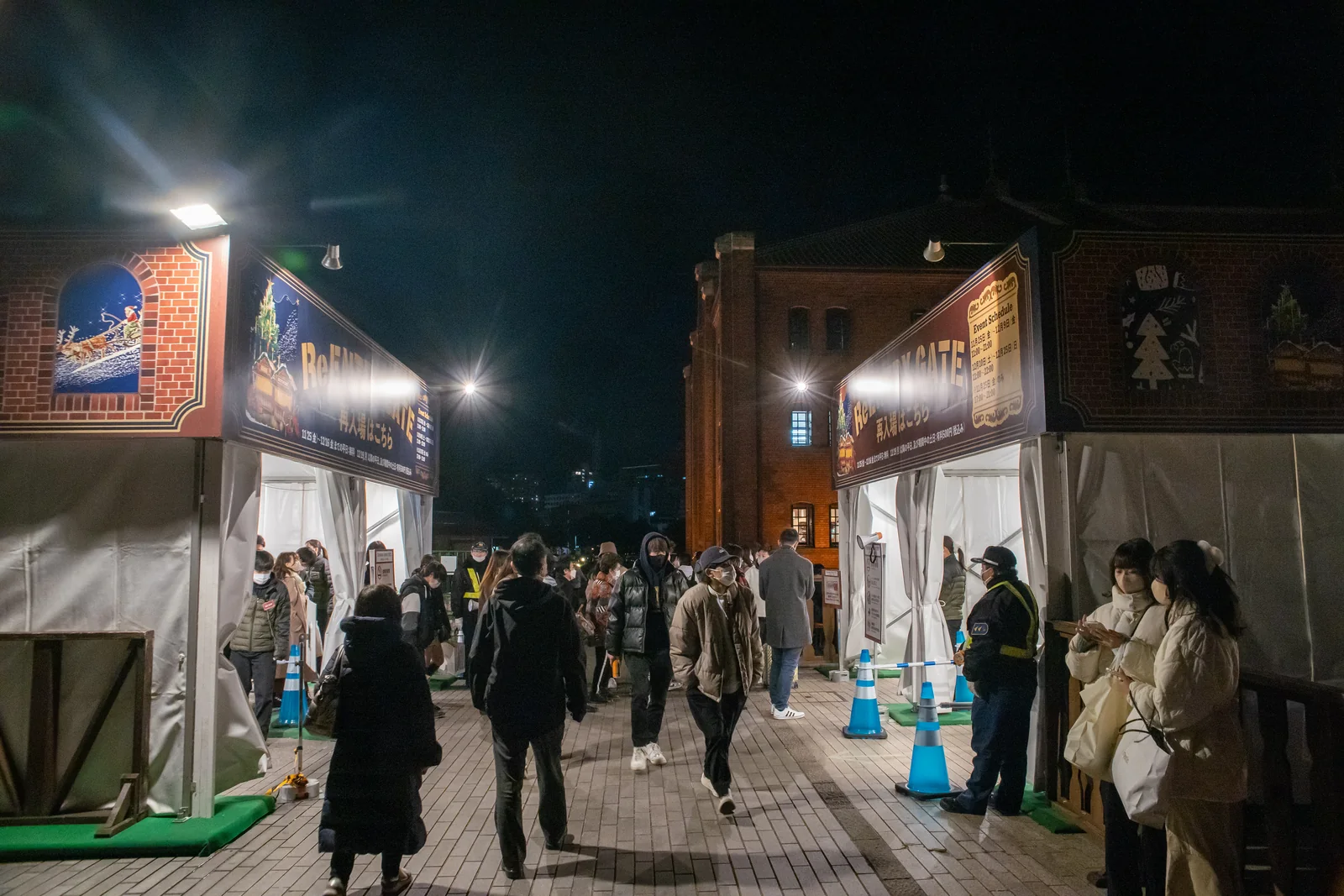
The Yokohama Red Brick Warehouse Christmas Market opens on Friday 20 November 2026, but opening night is shorter than the following days: the organiser lists 17:00–21:00, with last orders at 20:30. From 21 November through 4 December, its general hours are 11:00–21:00. A visitor arriving by train on the 20th cannot assume a full afternoon market. The booking question is whether a Sakuragicho station hotel gives you the safest arrival and exit, or whether a room nearer the Minatomirai waterfront is worth the additional walk with luggage.
New Otani Inn Yokohama Premium is a real Sakuragicho-side hotel you can search by name. Its position makes it a useful rail-base comparison, not a claim about availability, price or a room view. The Red Brick Warehouse is on the waterfront, and “Minatomirai” covers a wider area than many booking maps suggest. The Yokohama night walk guide helps place the market in an evening by the harbour; this page concentrates on the first fortnight's shorter hours and the hotel trip on either side.
Swipe through earlier event photographs
Three 2026 dates change the hotel calculation
The organiser's 2026 market page gives 20 November–25 December as the event period. It separates opening night, 21 November–4 December and 5–25 December by operating hours. Opening night begins at 17:00. The next two weeks open at 11:00 and close at 21:00, while the later December period is scheduled until 22:00. Areas and individual activities can have different hours, and severe weather can cause a closure. Check the current page again shortly before travel.
Admission is also a real budget line. The market page lists ordinary tickets from ¥500 to ¥1,000 and priority entry from ¥2,000 to ¥2,500, with date-specific quantities; food and purchases are separate. A premium priority option is listed too. The exact choice depends on the date, group size and your willingness to wait, not on a generic claim that “Christmas markets are free”. Check whether the part you want to visit requires a ticket, and do not buy a non-refundable hotel solely because an entry slot appears available before you have confirmed both transactions.
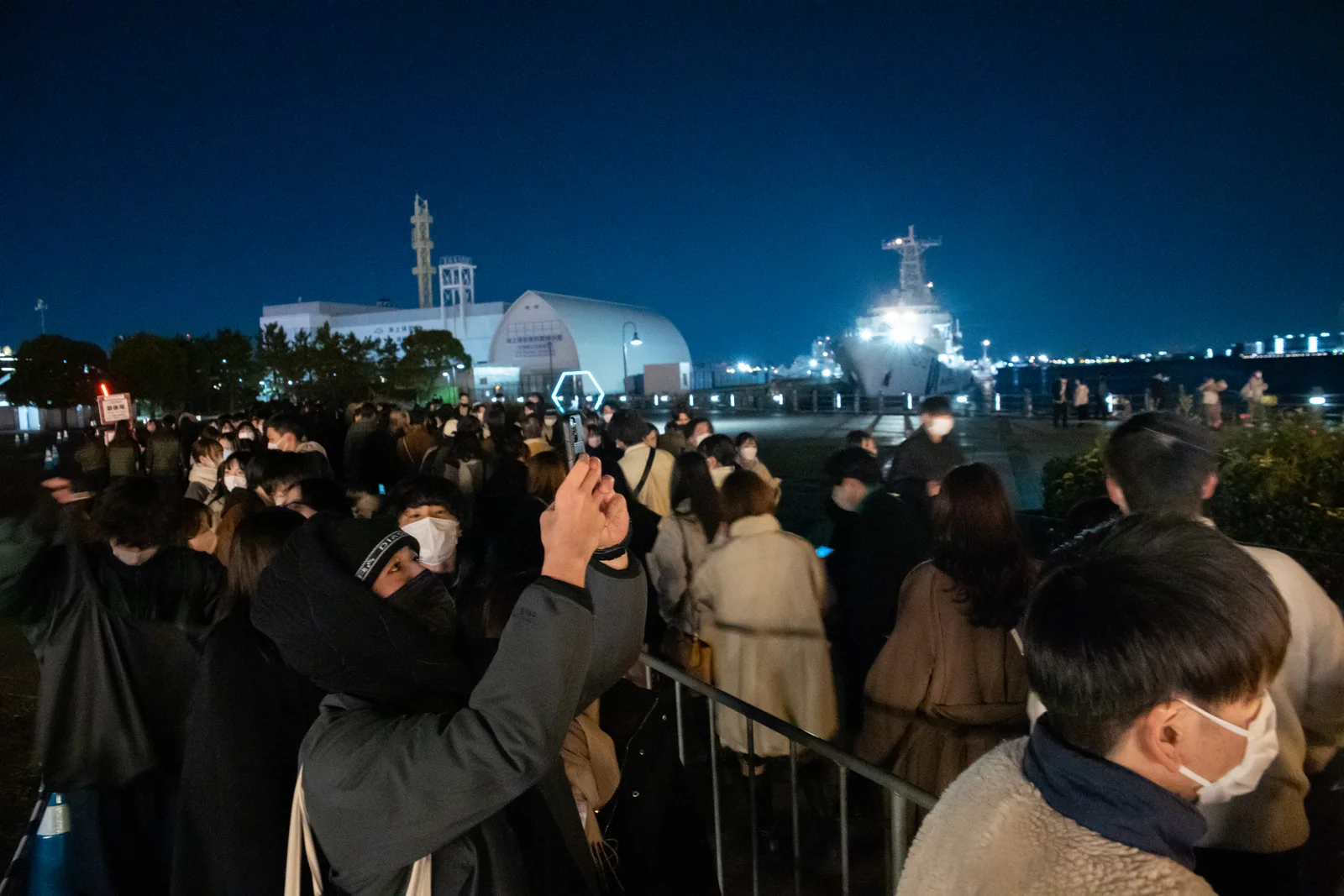
The gallery shows this market in an earlier year. It supports the place and seasonal atmosphere but does not promise 2026 stall names, lighting or crowd levels. Vendors and layouts can change. If a particular food or craft item determines your visit, wait for the organiser's current vendor information before making it the main reason for a hotel night. A broader Yokohama Christmas hotel plan examines a different hotel and itinerary; it should not be read as an opening-night timetable.
| Date you will attend | Published general hours | Why the hotel base matters |
|---|---|---|
| Friday 20 November | 17:00–21:00 | Rail arrival and check-in can consume much of the market window |
| 21 November–4 December | 11:00–21:00 | You can choose day or evening, with more room for a waterfront walk |
| 5–25 December | 11:00–22:00 | Later exit changes dinner and transport choices |
| Any date with severe weather | Check live notice | An outdoor plan needs a useful alternative and flexible room |
Those are the announced hours for the market as a whole, not a promise that every area or vendor operates throughout. The article's accommodation choice is especially sensitive on 20 November: a hotel across town may turn a four-hour event into a rushed check-in, a long transfer and a late meal. On a later November day, you can give the waterfront much more time without changing hotels.
Sakuragicho is the stronger rail-first base
Sakuragicho works when you arrive by JR, plan to leave for Tokyo or another city the next morning, or have several bags. Check in near the station and walk to the market without luggage. New Otani Inn Yokohama Premium is a station-side example; compare the actual entrance, room type and cancellation policy with alternatives. A hotel described as “Sakuragicho” might still be across a busy junction or farther into Minatomirai. Calculate door-to-market and door-to-platform routes separately.
This base is particularly forgiving on opening night. If your train reaches Sakuragicho in the late afternoon, you can leave bags quickly and head toward the Red Brick Warehouse for the 17:00 opening. That sequence still needs margin. A delayed train, a check-in queue or a long walk on a wet evening could leave less time than the published four-hour window suggests. The Tokyo first-and-last-day itinerary gives a useful principle for a regional arrival day: avoid stacking a fixed evening opening immediately after too many transfers.
Sakuragicho can also be a more rational room location for a one-night visit that includes the Cup Noodles Museum or harbour transport. The Cup Noodles Museum guide and Sea Bass harbour boat comparison show different ways to use the waterfront. Verify each attraction's own hours; do not assume it stays open until the market closes. If you have children, the Anpanman Children's Museum guide may shape the daytime plan more than the evening market does.
The weakness of a station hotel is the return walk after a cold, crowded outdoor event. It may be perfectly pleasant for a fit adult, but less so with a small child or rain. Decide whether you will walk, use available transit or take a taxi, and check the final distance to your particular hotel. A property directly at the station may be a good trade even if it is not the closest room to the warehouse, because the next morning's departure is easier. The Yokohama versus Tokyo two-night base guide helps decide whether an overnight in Yokohama makes sense at all.
An alternative station-led base is the Yokohama Station area rather than Sakuragicho. It is helpful for some onward rail journeys but adds a local connection to the warehouse. The Shinagawa Prince versus Yokohama Bay Sheraton comparison shows how a rail hub can serve a broader regional itinerary. On a short opening-night visit, however, count the extra connection against the limited 17:00–21:00 market window. A station hub is a good choice only if its benefits on the other days outweigh this evening's travel.
Waterfront rooms make the market part of a harbour stay
A Minatomirai or Bashamichi room can make the evening feel less like a commute. You can visit the market, step outside for the harbour lights and return without a long rail trip. The value is strongest when you also want a morning by the water rather than an early train. The Yokohama night walk itinerary suggests how the Red Brick area connects to a wider harbour evening. If you have no interest in that walk, paying a waterfront premium for a market that closes at 21:00 may be unnecessary.
Waterfront hotel descriptions vary. Some properties are near the warehouse; others are farther into Minatomirai despite sharing the same district label. A room with a “harbour view” does not necessarily face the market, and a view category is not a substitute for checking the floor and direction on the hotel's own site. The Hotel New Grand Christmas plan concerns a historic hotel in a different part of the waterfront; it illustrates why the precise address matters more than the word “harbour”.
Arriving with bags is the main friction. Depending on the chosen property, you may need a longer walk from a rail station or a taxi before you can check in. On a four-hour opening night, that extra first leg can erase the time you hoped to save after the market. Book a waterfront room when the whole evening and next morning justify it, not simply because a map pin appears closer to one side of the event space. The Tokyo luggage storage guide discusses the general trade of moving with bags; confirm hotel storage directly rather than assuming lockers will be available.
| Base | Best use of 20 November | Cost to acknowledge |
|---|---|---|
| Sakuragicho station side | Arrive by rail, drop bags, reach the opening | Walk back after 21:00 |
| Bashamichi or close waterfront | Market plus harbour stroll, then short return | Possible longer arrival with luggage |
| Deeper Minatomirai | Museum, shopping and waterfront hotel stay | “Waterfront” can still be a long walk to the warehouse |
| Central Tokyo | Event as an evening excursion | Return train after closing and less weather flexibility |
Tokyo is reasonable if your hotel is already there for a longer trip. It is less attractive if you are buying a new one-night room solely for the market and can stay in Yokohama. The Tokyo Station versus Shinjuku guide can help work out the return to an existing Tokyo base. A fixed last train should be checked against the actual event finish and your walking time, even though the market itself is not a late-night festival.
Decide how much the entry ticket is worth to your group
An ordinary ticket may be enough when you can arrive early and tolerate a queue. Priority entry has a clearer use on opening night or a weekend if your visit is short, but the organiser's price ranges and availability vary by date. Paying more to enter faster cannot extend the 21:00 closing time or guarantee that a particular stall has no line. Budget the entry for everyone, then add food, travel and the hotel. A “cheap” room can be false economy if its transfer consumes the visit you paid to enter.
If you are travelling with children, agree on the expected length of the outdoor portion. A warm hotel within a manageable return distance is useful even if the market itself has festive food. The Tokyo family hotel guide is for a broader regional trip; on this one night, the decisive feature may be a room layout that lets a tired child settle without everyone going to bed at once. Check that the chosen Yokohama room actually sleeps your group, as Japanese “double” labels do not answer that question by themselves.
For a couple, the waterfront can be worth a premium if dinner and a harbour walk are the trip's purpose. For a solo traveller, a compact Sakuragicho room may be more efficient. For someone catching an early train, station access can dominate both preferences. The Tokyo honeymoon hotel guide is useful only if the wider trip is a special-occasion stay; the market entry and hotel need their own price comparison.
Keep the first fortnight distinct from Christmas week
The 21:00 close through 4 December gives a different rhythm from the 22:00 close starting 5 December. You can combine an afternoon museum with a November market evening; you should not assume you can arrive after a late dinner and still browse. A December Christmas-week visit may have longer general hours but also different demand and date-based ticket pricing. If you are comparing hotels across the period, compare the actual date and entry product, not a single “Christmas market” search price.
Weather is another reason to keep the itinerary flexible. The organiser says rain does not automatically cancel the event, but severe weather can close it. A refundable hotel rate or a Yokohama day with museums and food reduces the downside of a lost outdoor evening. The Yokohama Hakkeijima Sea Paradise guide is a different, farther outing and should not be treated as an instant indoor substitute beside the warehouse. Choose a realistic nearby alternative rather than promising to cross the city if weather changes.
The Kannai side of central Yokohama is another possible base if the rest of the trip points there. The Basegate Yokohama Kannai guide explains a new local stop, but a Kannai hotel would still need a deliberate route to the Red Brick Warehouse. For an overnight bought chiefly for the market, Sakuragicho or the closer waterfront normally keeps the plan simpler. If you are staying several nights for work or other attractions, avoiding a hotel change may be worth one extra event transfer.
If you arrive by air through Tokyo, allow for airport-to-hotel time before buying a dated entry. The Narita and Haneda to Tokyo guide helps identify the first part of that journey; you still need the onward Yokohama leg. Opening night is especially exposed to arrival delays. If the market is the main reason for your trip, a full 21 November visit may be more robust than racing to the 20 November opening.
The booking answer for November
Choose Sakuragicho when train arrival, baggage and the next departure are the hard constraints. Choose a genuine near-waterfront room when the market is part of a longer harbour evening and you will use the location again the following morning. Do not choose solely from a “Minatomirai” label. Put the hotel door, station and warehouse entrance on one map, then add the four-hour opening-night window or the 21:00 close on later November days.
The organiser has published the dates, broad hours and ticket ranges. It has not promised your preferred stall, a clear sky or a particular queue. Verify the current event notice and ticket for your exact date before the room becomes non-refundable. A hotel is a useful solution when it protects the time you have actually bought at the market and the journey you must make after it.
If you are visiting with another household, do not assume everyone needs the same hotel district. The group can meet at the warehouse entrance, then return separately after 21:00. Sharing a waterfront room location only makes sense if both households value the harbour morning and can find suitable bedding at the same property. A Sakuragicho room may be easier for one group arriving by rail, while another family already in Yokohama may prefer to travel home. Coordinate the dated admission product and meeting time before optimising the rooms.