
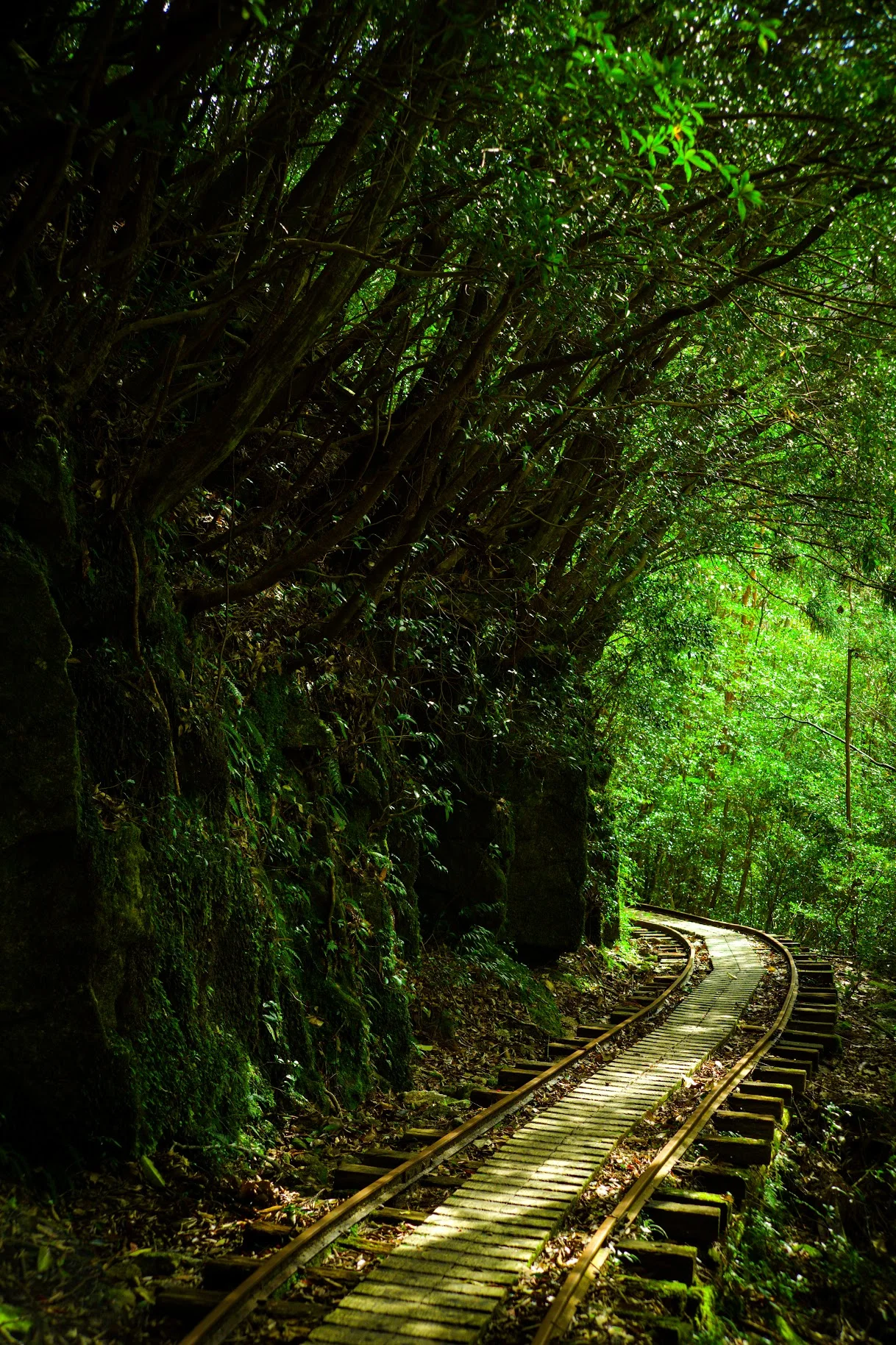
Three Yakushima forest days can look alike on a booking screen and ask completely different things of your legs. The Jomon Sugi walk is about 22 km return and the town’s current English mountain guide allows 10–12 hours. Shiratani Unsuikyo offers mossy streams, old trees and an optional Taiko-iwa viewpoint on courses of very different lengths. Yakusugi Land has five marked walking options, beginning at 30 minutes. A tour advertised as a day out can include driving, interpretation and stops; it does not tell you how long you will actually walk.
Begin with the forest scene you most want and the distance you have recently managed on uneven ground. Then look at transport and the following morning. This choice sits inside a larger island plan: the five-day Yakushima route leaves room for the weather rather than expecting every ambitious walk to happen on the first booked day.
The effort behind each name
A person determined to reach the famous Jomon Sugi cedar needs a long, early and fairly relentless walking day. The historic logging railway accounts for a substantial stretch before the steeper mountain path. For someone who wants moss, streams, photographs and a viewpoint, Shiratani gets to those experiences sooner. Yakusugi Land is the adaptable choice for a family or a group whose walking speeds differ. Its longest option is still a real forest hike; the name does not mean a token stroll.
The distinction matters when guided products have similar prices. Money paid for a guide does not shorten the Jomon Sugi distance. It can, however, help with the predawn departure, group pace, equipment, return timing and a route decision in poor conditions. On a shorter forest day, transport to the trailhead or the chance to interpret what you see may be the larger part of the service.
Jomon Sugi has a second timetable before the walking starts
The town describes the return from Arakawa Trail Entrance as roughly 22 km and currently gives 10–12 hours. The first two to two-and-a-half hours outward follow the old trolley track, with another roughly one-and-a-half to two hours on the mountain trail before the cedar area. It is not a technical summit climb, yet the long repeated track can wear down somebody who is accustomed only to city sightseeing. Begin slowly enough to preserve energy for the return, eat before fatigue becomes a problem, and leave time for the final bus.
From 1 March to 30 November, the Arakawa road has private-vehicle restrictions. A rental car does not take an ordinary visitor to the trail entrance during that period. The transfer for the mountain bus is by Yakusugi Museum near Anbo. Taxis and charter buses have separate access rules, so a guided pickup should spell out exactly where it meets you and how the road restriction is handled. The fare and departures can change; arrange the relevant mountain bus and return margin for your actual date before deciding that a hotel pickup solves everything.
The night before this route should be deliberately unexciting. Put the shoes, rain gear, food, water and ticket arrangements in place before dinner; determine whether breakfast or a bento is available at the hour you leave. Anbo usually reduces the early transfer compared with Miyanoura, though the individual hotel and pickup arrangement still matter. A dawn bus followed by a full walking day is also a poor lead-in to a fixed flight or high-speed ferry the next morning. The Kagoshima-Chuo versus Tenmonkan hotel decision belongs to that same transport chain if the island leg begins or ends there.
Jomon Sugi is a strong choice when reaching that particular cedar is the point of the trip and you can carry the walking, early start and possible wet footing. It is a weak upgrade when your actual wish is simply to spend a few hours among Yakushima trees. If the longest recent walk was about 10,000 city steps, a 22 km mountain day deserves preparation rather than an assumption that going slowly will be enough. Nor should a group with knee pain or sharply different fitness levels feel obliged to purchase the longest route because a guide charges similar fees for the alternatives.
Shiratani gives the moss forest a different rhythm
Shiratani Unsuikyo offers three principal courses in the town’s descriptions: about one hour to Yayoi Sugi, around three hours for Bugyosugi, and around four hours for Taiko-iwa. A separate round-trip planning reference for Taiko-iwa is closer to five hours, so leave slack instead of treating the shorter figure as a deadline. The forest reward begins before a distant single endpoint: water, moss-covered ground and trees fill much of the route. A visitor who wants to stop for photographs can make a shorter course feel like a substantial outing.
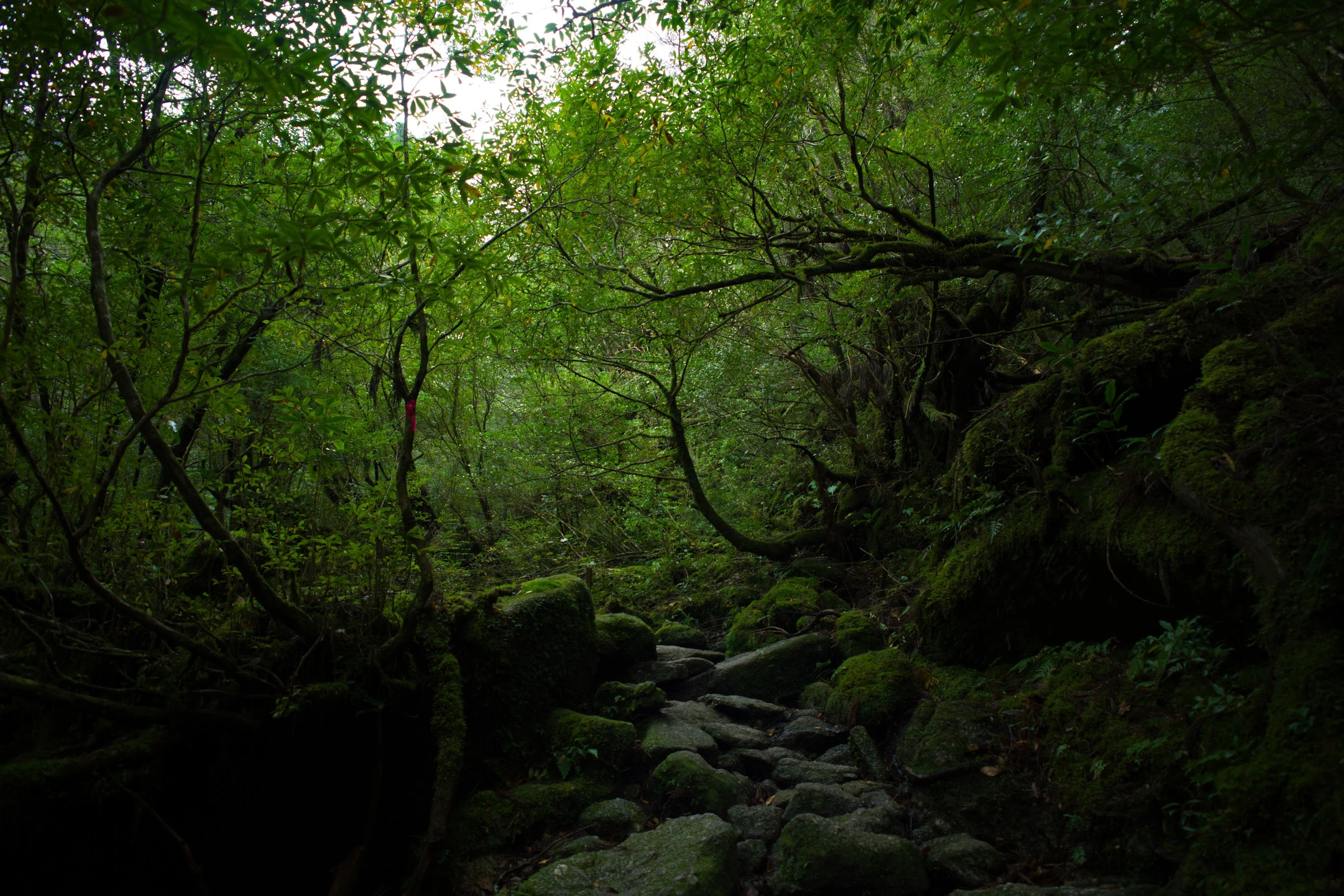
Taiko-iwa adds the open viewpoint, but the climb and ground beyond the easiest forest sections are not identical to the one-hour loop. Choose the viewpoint because that change of scene appeals to you and because the party can walk back safely, not because every Shiratani tour mentions it. Miyanoura is the natural base for this side of the island: the town describes the drive as about 22–25 minutes and lists seven bus services daily. That is a far easier public-transport starting point than the Yakusugi Land bus frequency.
The Satsuki suspension bridge and Bugyosugi sections reopened on 2 May 2026 after the damage from Typhoon No. 10. Reopening removed a closure from the route map; it did not remove the risk from rising streams. The town warns that high water can restrict courses. Before committing to Taiko-iwa, learn which shorter trail remains useful if the upper route is shut, and be willing to turn the day into a forest walk without the viewpoint. The Yakushima five-day plan is especially useful when more than one hiking day competes for the same clear-weather window.
There is also an emotional difference that a distance table cannot settle. If your trip will feel unfinished without seeing Jomon Sugi itself, a beautiful moss-forest day will not necessarily replace that ambition. If the image that brought you to Yakushima is damp green forest and a view from Taiko-iwa, the long logging-track approach to Jomon Sugi may spend a lot of energy before reaching the part you imagined. That preference is a better guide than which route has the most famous name.
Yakusugi Land changes length without changing forest
Yakusugi Land has marked options of 30, 50, 80, 150 and 210 minutes, at roughly 1,000–1,300 metres. The shorter choices use more developed paths; the longer choices give a fuller old-cedar forest walk for people ready for more uneven terrain. In a party with a child, an older traveller or somebody managing a knee, selecting the 50- or 80-minute option is still a real visit to the forest. Someone comfortable hiking can deliberately take 150 or 210 minutes instead of assuming that the entrance offers only a brief boardwalk.
This flexibility is valuable after a tiring previous day or when rain makes a long objective undesirable. It also lets a mixed group agree on a shorter common course without forcing its slowest member to finish a full-day commitment. A guided day may take much longer than the marked walking time because it includes the drive, stops, food and an interpreted longer course. Ask for the actual route and expected walking hours before comparing the product with a four-hour Shiratani booking.
Yakusugi Land sits about a 30-minute drive from Anbo, but its local bus service is much thinner than Shiratani’s: the town lists two buses daily. Car-free visitors therefore need to solve the timetable even though the walking can be easier. A rental car, arranged transfer or guided pickup can have genuine value here. Confirm the return, not merely the outward ride; a course that fits your legs is no use if it leaves you stranded after the last bus. For an island itinerary with several hikes, the Yakushima day-by-day route helps assign the car and the weather window to the day where they matter most.
What a guide buys on each trail
A guided product can bundle hotel pickup, equipment coordination, pace management and route judgement, but those inclusions belong to a specific listing, date and pickup area. A currently listed Yakushima hiking product offers Jomon Sugi, Shiratani/Taiko-iwa and Yakusugi Land choices, says equipment may be requested without an extra charge, and shows a group maximum of six. Check those terms on the selected date and request sizes or rain gear ahead of time. A generic “equipment included” label does not tell you whether your shoes will fit or whether the pickup reaches your hotel.
For Jomon Sugi, the help concentrates in the lengthy day and early Arakawa connection. On Shiratani, a guide can make the most of flexible forest routes and respond to slippery paths or high streams. On Yakusugi Land, the organised drive may be the biggest saving for someone without a car. A similar price across all three is therefore a poor basis for choosing the hike. Decide the physical day first, then judge whether paid support removes a specific problem you actually have.
Before paying, establish the walking route and likely hours, the hotel pickup boundary, the Arakawa bus arrangement if relevant, whether equipment has to be requested, maximum party size, how a slower member is handled, and what happens with heavy rain, high water or a road closure. Look particularly hard at the return transport and any fixed journey on the following morning. A tour can make logistics simpler, but it cannot promise a route will remain open in mountain weather.
Your sleeping base changes the early morning
Anbo is generally the easier launch point for Jomon Sugi because the Yakusugi Museum bus connection is on that side; Yakusugi Land is also reached from the Anbo direction. Miyanoura has the shorter drive and more frequent buses for Shiratani, while keeping port access and evening food practical. None of those advantages is universal to every hotel: a property’s exact pickup offer, breakfast hour and distance to the correct bus stop can outweigh the broad town label.
A traveller planning both Jomon Sugi and Shiratani may keep one base and accept one longer transfer. A hotel change can be useful if it actually removes a predawn movement, but two moves in a short island stay may consume the buffer day that Yakushima’s weather requires. Choose the sequence before the room, and give the hardest hike a proper preparation evening. An early trail start after a late arrival from Kagoshima is a fragile plan even if the property looks attractive on a map.
Does Yakushima fit the Kyushu journey at all?
The island is a substantial detour within a five- to seven-day Kyushu holiday. Reaching it adds a flight or ferry, island accommodation and at least one full hiking day. The five- or seven-day Kyushu itinerary is a place to decide what must leave the mainland plan. Fukuoka, Yufuin, Beppu and Aso cannot all remain at their original pace when several nights move to Yakushima. If you first need to work out how many days Fukuoka needs, do that before buying an island trek.
Someone who wants a single substantial nature outing without the sea or air connection can compare the Takachiho route with night kagura or a Fukuoka-to-Aso outing. Those are different experiences, but they expose the time cost of making Yakushima a short side trip. If the island forest is the main purpose, give it three or four nights and a realistic weather margin rather than compressing a 22 km walk between transfers.
Four situations in which Jomon Sugi should wait
First, the group has no recent experience of a long hike on uneven ground. A city step count does not predict the return after hours on a wet track. Build walking fitness or select a shorter forest course. Second, the morning after the hike contains a non-refundable flight or high-speed ferry with no room for fatigue or weather delays. Change the order of the itinerary before buying the long day.
Third, the actual hoped-for scene is moss forest and Taiko-iwa. Shiratani reaches that goal with a different effort profile. Fourth, the party has a wide fitness gap or a member with knee pain, yet everybody feels pressured into the longest trail to justify the guide fee. Yakusugi Land’s course range exists for precisely that kind of group. A shared forest day that everybody can complete has more value than an ambitious route selected for its name.
Make the final choice by the next day as well as this one
Jomon Sugi is the memorable endurance choice for someone who specifically wants the great cedar and has the time, legs and early-bus plan for it. Shiratani is the route for moss, streams, photographs and possibly Taiko-iwa within a more adjustable day. Yakusugi Land offers old-cedar forest with the widest range of walking commitments, though it asks more planning from car-free visitors. All three can fill a guided day on a sales page; the track beneath your feet and the timetable afterward remain different.
Look for stays around Anbo if Jomon Sugi or Yakusugi Land leads your plan, or compare Miyanoura rooms for a Shiratani-centred stay. Pick the route and pickup first; then the hotel area can do useful work.
Routes and related journeys
The island detour belongs in the Yakushima five-day itinerary, the wider Kyushu five- or seven-day route and, if the ferry connects through Kagoshima, the Kagoshima hotel-area comparison. Autumn travellers can also use the Kyushu foliage transport comparison.
Other area and hotel decisions in the site library: Okinawa Guys’ Trip Hotels: The Best, Where to Stay in Osaka: Start, Sapporo Shopping Hotels: Stay Where You, How to Plan a Trip to.
Other area and hotel decisions in the site library: Where to Stay in Tokyo: Start, Nara Ikimono Museum Is Great With, Tokyo Bay Private Cruise 2026: Yacht,, Fukuoka Budget Hotels: The Cheapest Night.
Other area and hotel decisions in the site library: Arashiyama Guide: How Long to Spend,.
Other area and hotel decisions in the site library: Okinawa Split Stays: Change Hotels Only, Tokyo Budget Hotels: A Cheaper Night, Japan Travel Insurance: Don’t Start With, Hotel Monterey Okinawa Spa & Resort:.
Route and product detail: Yakushima Town — Jomon Sugi and mountain access information.
Route and product detail: Yakushima Town — Shiratani Unsuikyo 2026 routes and access.
Route and product detail: Yakushima Town — Yakusugi Land 2026 routes and access.
Route and product detail: Klook — Yakushima hiking tour, pickup and equipment information.
The three-route guided walk listing can be compared with direct operators only after confirming the specific trail, pickup, equipment and cancellation terms.
The town’s October 2026 storm update also makes a general point concrete: a trail may reopen after a storm while another road or course still needs separate checking. Leave a buffer in the island plan and use the current transport and forest notices on the walking day.