
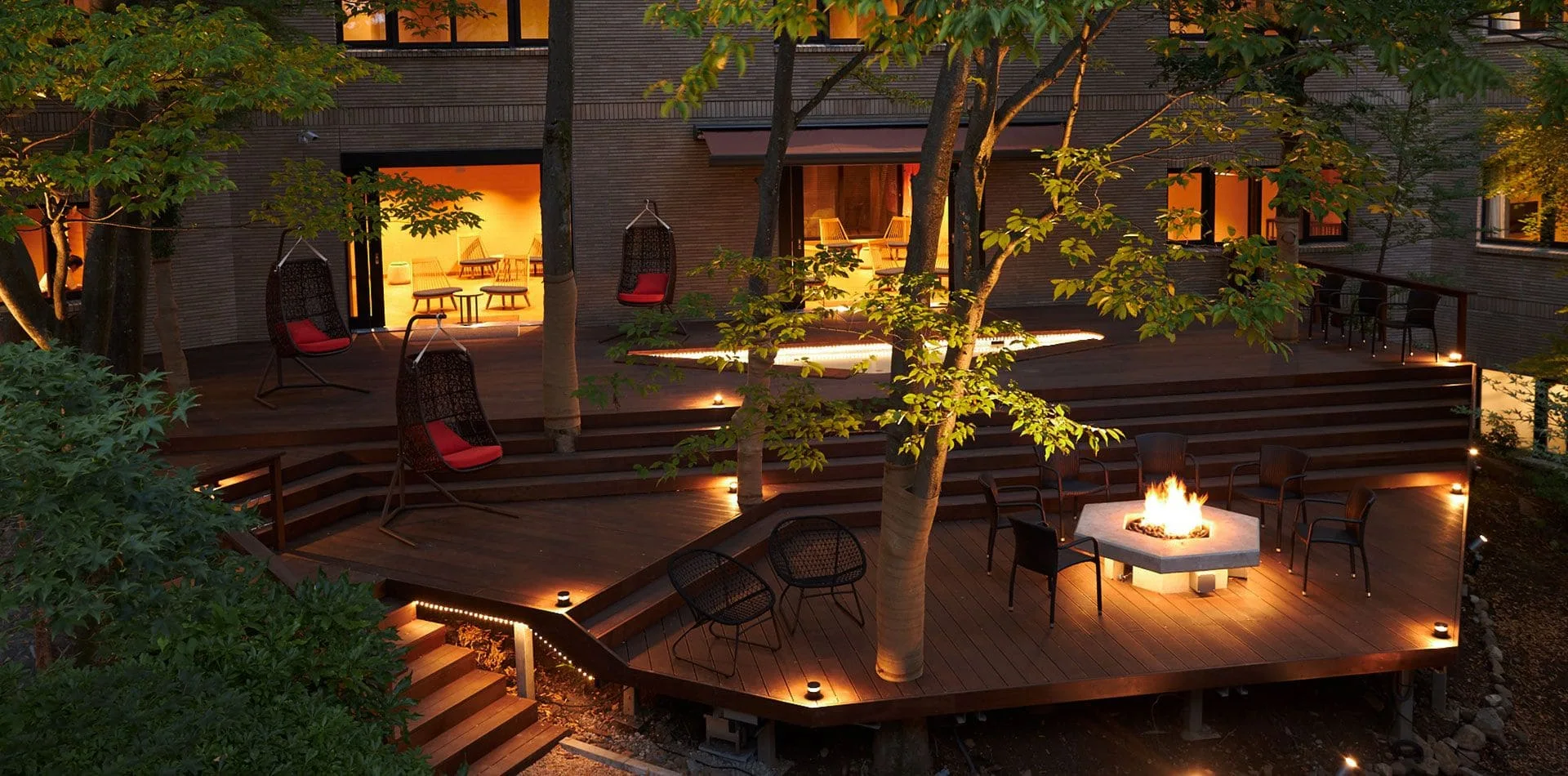
For a single night in Hakone, the most attractive hotel area depends on which transport risk you can afford. Hakone-Yumoto lets a late arrival stop travelling and makes an early Odawara departure easier. Gora places the next morning near the cable car and ropeway, provided you arrive with daylight and a workable bag plan. A Lake Ashi hotel can buy the quiet shore after day visitors leave, but the exact port, dinner and next-morning exit matter more than the words “lake view.”
This is a route-order decision as much as a hotel choice. A traveller reaching Hakone-Yumoto early can send a bag ahead, explore upper Hakone and finish by the lake. Someone reaching it in late afternoon may be paying for a ryokan meal they cannot safely reach if they keep travelling uphill. Before pricing rooms, place the slowest mountain segment either before check-in, after breakfast or outside the one-night plan. The Tokyo-to-Hakone rail and pass guide and the loop-before-or-after-check-in comparison help settle those edges.
Where the single night performs useful work
| Base | The night protects | The journey it adds | Book it when |
|---|---|---|---|
| Hakone-Yumoto | Late arrival, luggage and a fixed morning exit | The upper-Hakone climb waits for sightseeing day | Dinner or an onward train matters more than waking near the ropeway |
| Gora | A morning start near the cable car and museums | Mountain railway and possible uphill hotel approach before check-in | You arrive early enough to protect dinner and have light bags |
| Southern Lake Ashi | Evening water, shrine or shoreline morning | Longer final transfer and thinner evening alternatives | The named port and next-day bus exit fit the plan |
| Togendai side | Ropeway-to-cruise transfer on a northern route | Southern-shore sights remain across the lake | Owakudani or the Gotemba side sets the journey |
These are not hotel ratings. Yumoto can be a better decision than Gora even if the upper mountain looks more “central” on the loop. Gora can save a repeated ascent when you reach it comfortably on Day 1. A lake hotel may be the only one that gives the stay a truly different evening, yet that benefit disappears if you arrive after dark and leave immediately. With one night, a single poorly timed transfer can consume a large share of the accommodation value.
Arrival time changes the practical map
Before noon at Hakone-Yumoto, a lake stay becomes feasible when your hotel participates in the same-day luggage delivery and you plan to cross upper Hakone before check-in. Noon is a real service boundary: the station counter accepts bags for same-day hotel delivery only from 08:30 to 12:00. An early-afternoon arrival often makes Gora the useful middle point. You ride the mountain railway on the first day, then begin near the cable car after breakfast. In mid-to-late afternoon, Yumoto normally protects more of the night because the upper-Hakone sightseeing services are already winding down.
These are planning windows, not guarantees that any one train meets a hotel meal time. The Hakone Ropeway normally operates 09:00–17:00 in February through November and 09:00–16:15 in December and January; weather or maintenance can suspend it. The final segment from Gora to a hotel may also involve a steep path or shuttle. A delayed inbound train can turn an “early afternoon” plan into a late arrival before anyone reaches the bath. Check the dated live operating status and the booked property’s dinner cutoff.
A late winter arrival has an especially narrow reason to continue uphill. Even if the railway still gets you to Gora, it may buy no Owakudani or lake time that day. If the room-only rate is excellent and the hotel transfer is straightforward, it can still work. If the rate includes a fixed dinner and the bag must be dragged uphill, the station area is a more resilient purchase. The Hakone one-versus-two-night guide is useful when an extra day might remove that pressure.
Hakone-Yumoto: pay for a simpler first and last movement
Romancecar services from Tokyo terminate at Hakone-Yumoto, with local rail onward to Odawara. The station also houses the luggage-service counter and offers more nearby food and shopping than a remote lake address. That makes Yumoto a natural base after a late train, with young children, after a long-haul arrival, or before an early Shinkansen. You can reach the room without first solving the mountain railway, a bus, a hill and a restaurant closing time.
The cost arrives on sightseeing morning. To visit Gora, Owakudani, Togendai and Lake Ashi, you must still ride uphill from Yumoto. An early start can make that workable, but the hotel has not minimized the loop. A station-area premium is justified when it deletes two difficult legs—perhaps the arrival with suitcases and the onward departure to Kyoto. If the train out of Odawara leaves after lunch and your bags can travel separately, that premium has less work to do.
Yumoto Fujiya Hotel illustrates what a station-side property can offer: Western, Japanese and mixed room types, public hot-spring baths and reservable private baths. Its tattoo rule is specific. Public-bath use is allowed when tattoos can be covered by no more than two 10 × 14 cm stickers; otherwise ask about a private bath. That rule belongs to this property, not to Yumoto as a district. A useful booking check is whether the particular room plan and bath access fit your party as well as the station location.
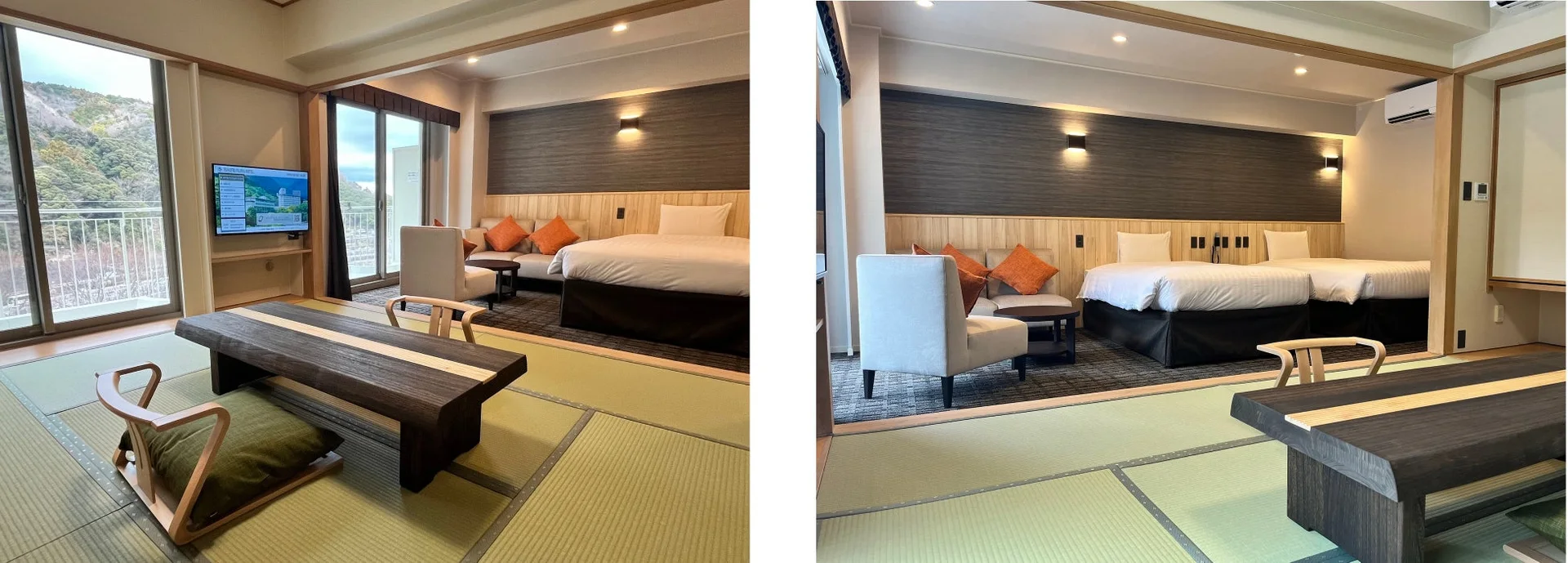
Yumoto also provides a fallback when upper transport stops. You can shorten the day, choose lower-Hakone activities or exit via Odawara without first crossing the ropeway or lake. That resilience matters most on the final night before a non-refundable onward connection. The Hakone ryokan bath and tattoo guide can help compare bath arrangements if the onsen is as important as the rail exit.
Gora: a midpoint that needs a workable doorstep
Gora is the interchange between the Hakone Tozan Railway and cable car to Sounzan. It gives a first-time one-night visit a useful shape: arrive by mountain railway, then start the next day with the cable car, Owakudani, ropeway toward Togendai and possibly the cruise. The Open-Air Museum and Gora Park can occupy remaining daylight or replace part of the loop in poor weather. That is why Gora often wins for an early-afternoon arrival with light or forwarded luggage.
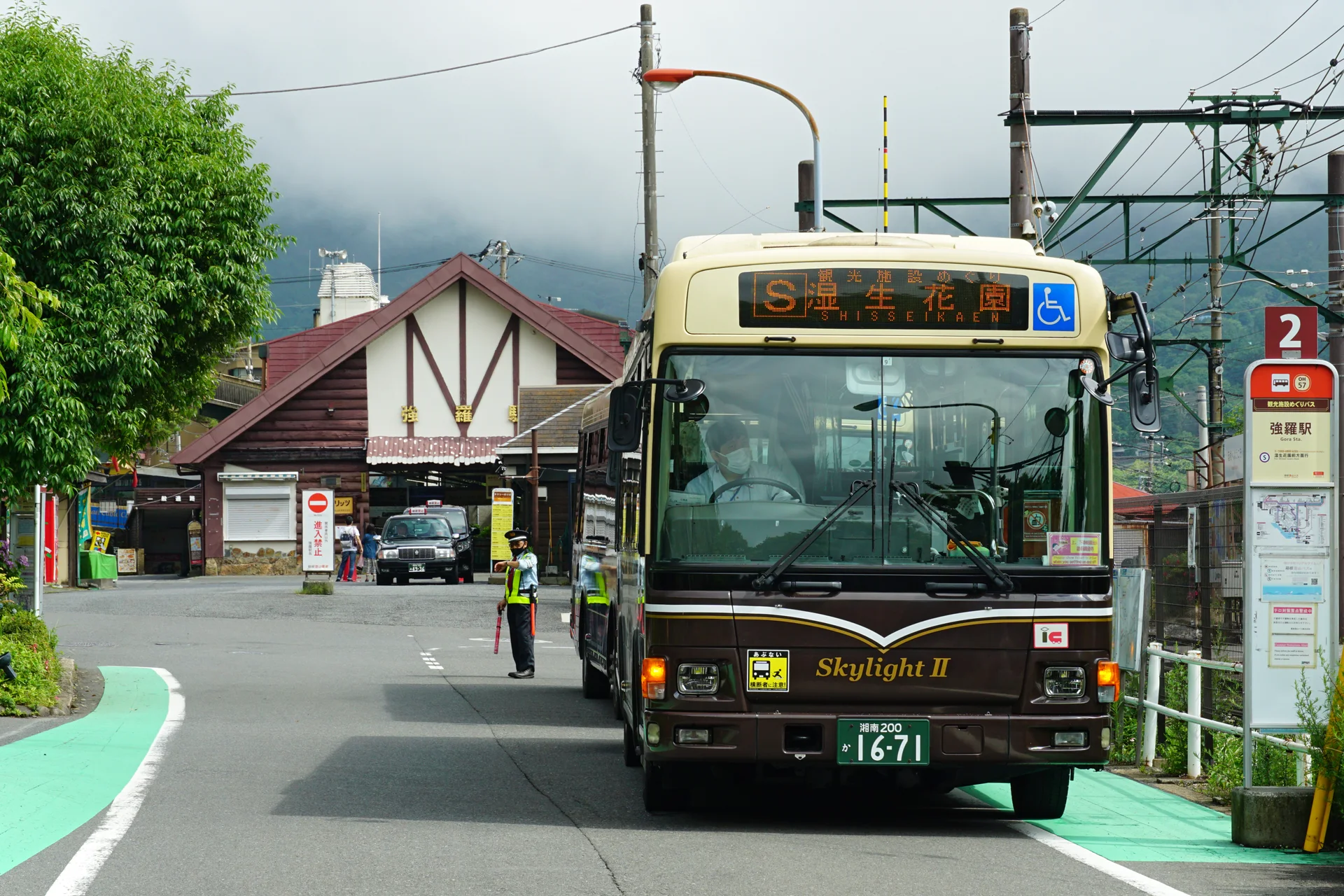
The area is not a level station precinct. A hotel described as seven minutes away can sit up a steep road or above steps. For a stroller, heavy cases or limited mobility, inspect the exact exit-to-lobby path and shuttle timetable. A map showing a short straight line does not disclose a slope. A property that needs a taxi on arrival and a separate bus the next morning may weaken the supposed convenience of a Gora base.
Dinner needs equal attention. Gora has places to eat, but late restaurant choice is thinner than around a major city station. A room-only booking does not create late-night flexibility automatically. If you plan the Hakone Open-Air Museum before check-in, leave enough time to see it rather than merely reach the last ticket window. Museum, hotel arrival and a meal all compete for the same afternoon.
HAKONE YUTOWA is a concrete Gora example. The property places itself roughly five minutes on foot from Gora Station and offers hotel rooms and condominium units. Its current dinner service gives 19:30 as the latest entry. It has two guest private baths with a 30-minute use period and currently says advance reservation is not required; an older brochure described reservations differently, so use the present property instructions for a dated stay. The hotel announced fully cashless payment from 1 July 2026. Access, meal hour, bath method and payment are property details that can matter more than the broad Gora label.
Even with a well-placed hotel, Gora is a conditional winner. A missed inbound connection, poor weather and a long suitcase route can erase the advantage of waking near the cable car. Conversely, a smooth arrival leaves time for a museum, quiet check-in or hotel bath, followed by an efficient upper-Hakone morning. Decide which of those versions your train, bags and dinner plan can actually support.
Lake Ashi is several hotel geographies
The sightseeing cruise uses Hakonemachi-ko, Motohakone-ko and Togendai-ko, but the three ports are not interchangeable after the boats stop. The southern shore around Moto-Hakone and Hakone-machi fits Hakone Shrine, the lakeside torii, the checkpoint and the old Tokaido route. It can also give a simpler bus descent toward Yumoto or Odawara the next morning. A hotel there should be chosen for its evening lake hours and a named bus exit, not a vague promise of “near Lake Ashi.”
Togendai joins the ropeway and cruise, with bus options toward Yumoto, Odawara and Shinjuku. It makes sense when you arrive from Gora and Owakudani or when the northern Hakone and Gotemba side is central. The shrine and southern-shore sights remain across the water. If wind suspends the cruise, a neat loop can become a bus rerouting problem. A northern-lake hotel therefore needs its own next-day route instead of borrowing the southern shore’s assumptions.
Both shores become quieter after day visitors leave. That quiet can be the point of the overnight, especially for a shoreline walk before other travellers arrive. It also means fewer late dining and transport fallbacks. Book a meal plan or establish the available dinner option before treating a room-only rate as cheaper. The lake view should be checked by room category as well: a hotel can stand on the water while a specific room faces a courtyard or sees the lake indirectly.
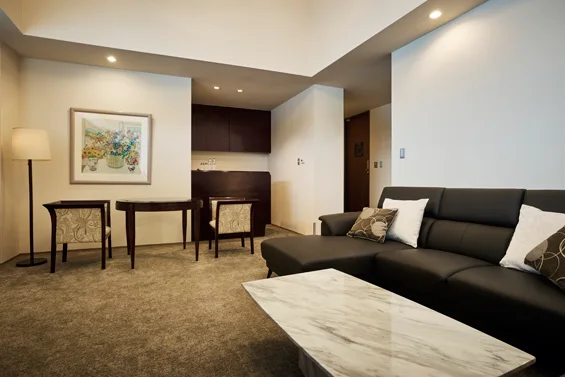
Hakone Hotel near Hakone-machi Port shows the difference. Its access material gives about 35 minutes by bus from Hakone-Yumoto. Some room types have direct lake framing, while the Moderate Twin overlooks the courtyard toward the lakeside banks. The hotel presents two communal hot-spring bath areas, but a guest who needs a private bath should not infer one from a generic onsen icon. Check the exact bath arrangement and room view before paying for a lake stay, particularly if tattoos or privacy are the deciding factor.
Three workable one-night routes
After a late arrival, stay in Yumoto. Protect the room, meal and bath first. Begin the next day early for Gora, Sounzan, Owakudani, Togendai and the lake, shortening the loop if weather intervenes. This gives up a quiet upper-Hakone morning but keeps the first evening intact. It is the strongest pattern after a long flight, a delayed rail day or a winter arrival that leaves little light.
With an early-afternoon arrival, Gora can divide the loop well. Complete the mountain railway before check-in, use remaining daylight for the museum, Gora Park or the property, and climb to Sounzan and the ropeway after breakfast. This route needs a luggage solution and enough margin for dinner. The Hakone loop order guide helps if the specific museum or cruise departure changes the order.
After a morning arrival, a southern-shore lake hotel can earn its premium. Leave eligible bags at Hakone-Yumoto before noon, travel via Gora and Owakudani to Togendai, cross the lake and finish near Hakone-machi or Moto-Hakone. The following morning can belong to the shrine, checkpoint or quiet water before a bus down. Arriving at the lake after dark without a meal plan buys little of that sequence. For a trip connecting onward to Fuji Five Lakes, the Tokyo–Kawaguchiko–Hakone three-day route avoids pretending both destinations can fit a single effortless transfer day.
The noon luggage cutoff can move the hotel downhill
The current Hakone luggage service accepts same-day outbound bags at Hakone-Yumoto Station between 08:30 and 12:00, with hotel collection after 15:00. Participating hotels can send bags back if they accept them by 10:00; station pickup runs 13:30–18:30. A regular item up to 140 cm total and 15 kg costs ¥1,500 one way, while a large item up to 200 cm and 30 kg costs ¥2,500. The service only covers partner accommodation, so check the hotel name before relying on it.
Strollers, portable chargers, precision and fragile equipment and some other categories are excluded. After noon, a Gora or lake booking may require you to carry the suitcase through the exact mountain transport you hoped to enjoy without bags. Storage at Yumoto helps a day trip but does not deliver the case to a lake hotel; you would have to return. If the trip continues Tokyo–Hakone–Kyoto, forwarding the main luggage to the next city and carrying one overnight bag may create a more useful route than moving the room purely to avoid the case.
The local station-to-hotel service should not be confused with luggage movement between Hakone and Kawaguchiko. The Fuji Five Lakes and Hakone baggage guide handles that separate problem. A one-night traveller should also keep medication, documents, rainwear and tomorrow’s clothing in hand, because the bag delivered to a hotel after 15:00 cannot help during a wet sightseeing afternoon.
For a longer Tokyo–Hakone–Kyoto journey, the Japan suitcase-forwarding guide explains when to send the main case to the following city instead of using the local Hakone counter. That option may leave only an overnight bag on the mountain railway and can reopen a Gora or lake booking that looked too difficult with full luggage. Confirm the receiving hotel and delivery timing; an intercity shipment is not the same service as the noon station-to-Hakone-hotel handoff.
Dinner is a deadline, and weather can remove the loop
Half-board ryokan dinners are prepared for a booked seating. A hotel’s latest check-in may be later than its final dinner arrival. Ask for the meal cutoff, children’s meal options, allergies, vegetarian requirements and any raw-food exclusions before buying inflexible rail tickets. Build enough time for the next transport departure if one train or bus is missed. When a late arrival is likely, a room-only Yumoto stay with an established dinner option may be better than paying for a kaiseki meal that the transport chain cannot protect.
Bath policy is also specific to the hotel. “Private bath,” an in-room hot spring and a public bath with a tattoo-cover rule are three different products. The Hakone private-onsen ryokan guide can narrow that choice; the district name cannot answer it. If the room and bath are the entire point of the night, the property can remain valuable even when a ropeway plan fails.
The ropeway can stop for wind, poor weather or maintenance, and a busy bus may be too full for the first waiting group. A Freepass makes covered modes simpler to pay for, but it cannot make a suspended link run. Yumoto allows a shorter outing or an Odawara exit. Gora retains museums, park and hotel time when the upper loop is closed. At Lake Ashi, fog can remove the view and a cruise cancellation may force a different exit. That is why a lake hotel is a fragile final night before an early, non-refundable Shinkansen or flight.
Sengokuhara and two-night splits answer different questions
Sengokuhara is not another equal answer for a first one-night classic loop. It becomes relevant when the Pola Museum, Venetian Glass Museum, susuki grassland, Gotemba side or a particular resort is the actual centre of the trip. Confirm the bus stop and hotel shuttle; a lower room rate can be consumed by an awkward final transfer. For a foliage-led visit, the Hakone autumn route guide can decide whether Sengokuhara belongs in the journey at all.
Two Hakone nights do not automatically call for two hotels. One Gora base works for the loop and museums without repacking. One Yumoto base serves mobility, luggage or repeated Odawara access. One lake hotel suits a stay built around the property and shoreline. Move only when the second hotel changes the experience: Gora then Lake Ashi for a deliberate lake evening, Gora then Yumoto to protect a fixed final train, or Yumoto then lake after a late first arrival if Day 2 genuinely contains enough time for the move.
A two-night hotel change costs checkout, luggage storage, travel and another check-in. Saving a short bus ride is not enough. The Hakone one-night-or-two-night comparison evaluates whether the extra day buys a museum, ryokan time or weather opportunity. If the wider route still includes Kawaguchiko, the Hakone-versus-Kawaguchiko decision and Mt Fuji day-trip-versus-overnight guide should be settled before adding a second Hakone postcode.
A few hotel decisions the area name cannot settle
A well-known property can change the transport calculation without changing its postcode. The Fujiya Hotel Hakone building-and-room comparison is a useful example: choosing a specific building, room layout and bath experience can matter more than whether its wider corridor appears central to the classic loop. If that individual hotel is the purpose of the night, allow the route to serve the stay rather than forcing the hotel into a complete ropeway-and-cruise checklist.
For a first onsen night, bathing customs and room privacy can matter as much as a district. The Japanese onsen etiquette guide helps a traveller understand shared baths before interpreting a listing’s icon, while the first-onsen experience guide helps decide whether a private bath would actually change comfort. The answer can alter which ryokan plan is worth paying for in Yumoto, Gora or by the lake; it does not make one entire district more tattoo-friendly than another.
A family needs to check the route after the hotel shuttle as well. If the next morning begins at Gora, reaching the cable car with a stroller can be different from reaching it with daypacks. When a shuttle has limited departures, a five-minute map distance may be less flexible than a longer but straightforward walk. A parent travelling with children may prefer Yumoto’s simple checkout even if the day starts farther from Owakudani. Those are room and doorstep questions: bed arrangement, lift access, the slope and the breakfast hour should be compared before a scenic thumbnail.
A trip that combines Kawaguchiko and Hakone also changes the relevant pass and bus assumptions. The Tokyo, Lake Kawaguchi and Hakone transport comparison can expose whether the arrival comes through Gotemba or Odawara, which in turn affects whether Togendai, Gora or Yumoto is the natural first night. Read that route with the actual hotel exits in mind; a regional pass never fixes an ill-timed ryokan dinner.
If the journey includes another fixed, non-refundable departure after Hakone, treat the final morning as a hard edge even when the hotel package invites a slow breakfast. A lake room may be excellent for an unhurried shrine walk and poor for a very early Odawara train. A Gora room may be the right midpoint one night earlier and the wrong last bed. Comparing the two mornings separately can reveal that one hotel for both nights is easier, or that a final Yumoto move earns its packing cost by eliminating an uncertain descent.
The one-night booking sequence
First, fix the arrival at Hakone-Yumoto and whether the bag can be delivered before the noon cutoff. Second, identify the next-day onward departure and whether it allows a leisurely descent. Third, decide whether the night is mainly for dinner and baths, a midpoint on the loop, or the lake after dark. Only then compare hotels within Yumoto, Gora or a named lake port. A Gora room on a steep approach and a flat room five minutes from the station are not equivalent, just as Togendai and Moto-Hakone are not interchangeable lake addresses.
The resulting answer is usually Gora for an early-afternoon first-time arrival with light luggage, Yumoto for any fragile arrival or exit, and a named Lake Ashi port when the shoreline hours themselves justify the longer route. A late arrival can turn a well-rated Gora ryokan into a rushed meal; a calm morning can turn a lake stay into the best use of the night. The area follows the route, not the other way around.
Compare Hakone-Yumoto stays, Gora rooms or Lake Ashi hotels after confirming the individual property’s access, dinner, bath and room-view terms.