
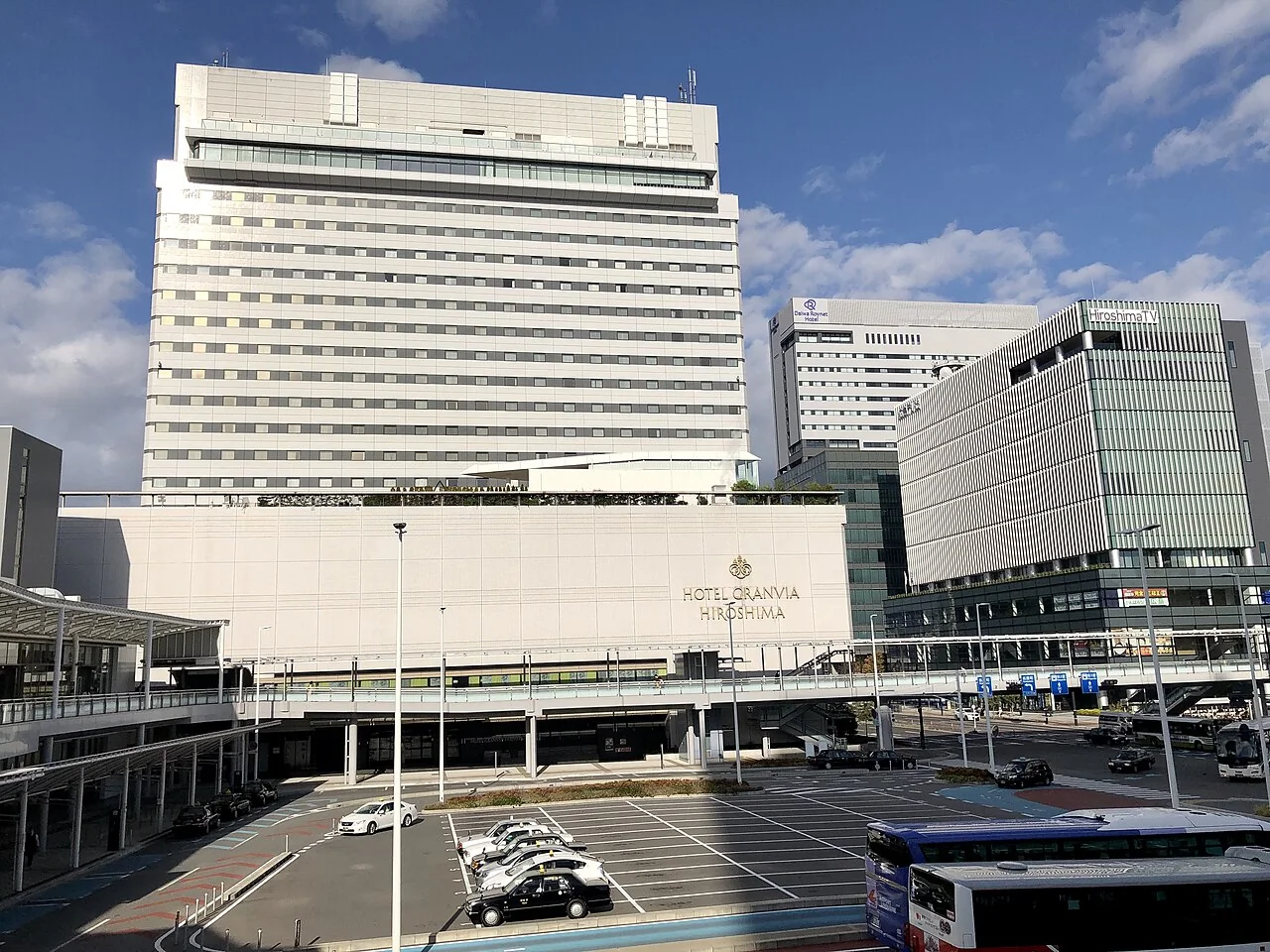
Hiroshima is easy to underestimate on a short December stay. A visitor can arrive by Shinkansen, visit the Peace Memorial Museum, eat downtown and depart for Miyajima or another city the next morning. Each move looks simple on a map; together they decide how much of two nights is spent in transit. Hotel Granvia Hiroshima and ANA Crowne Plaza Hiroshima place the hotel at opposite ends of that pattern. Granvia is attached to the Shinkansen side of Hiroshima Station. Crowne Plaza is in Nakamachi, closer to the Peace Memorial Park and central evening streets. The right choice depends on which journey you will repeat, not which hotel has the stronger general score.
Swipe through the hotels
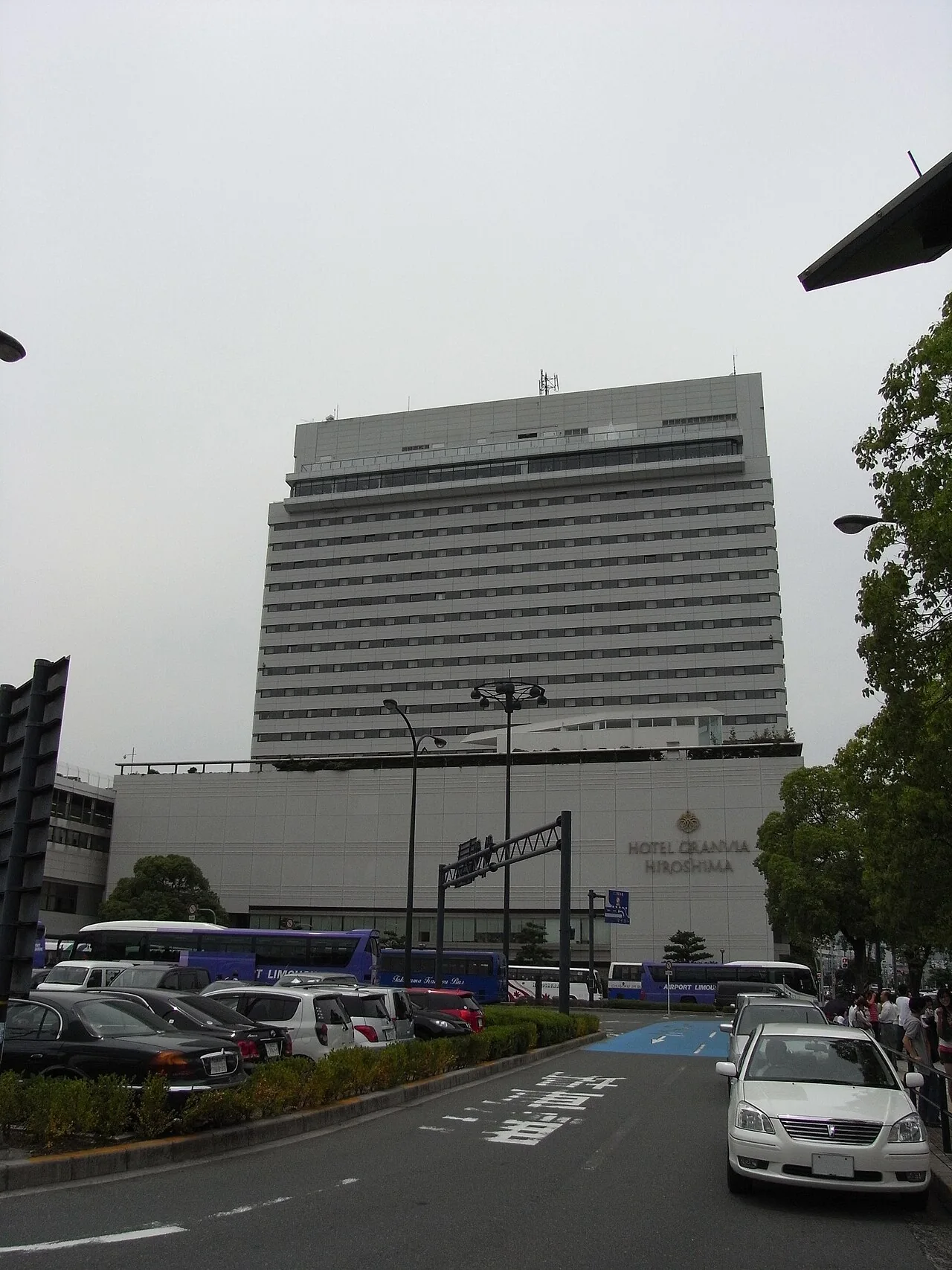
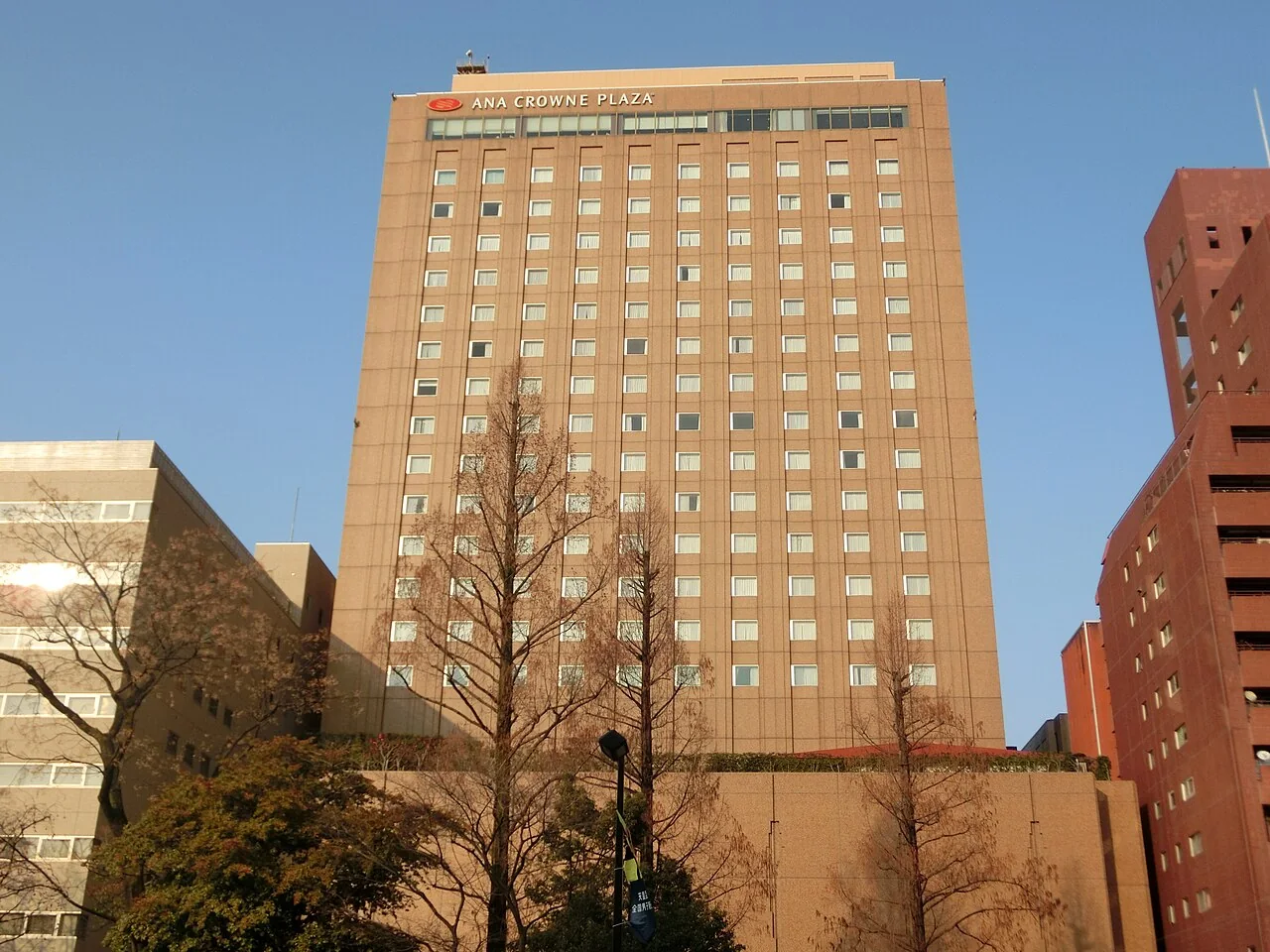
Do not book the first night before writing the arrival and departure times. A 21:00 rail arrival followed by a morning train is a different trip from a 13:00 arrival with a full next day in the city. The Hiroshima station versus Peace Park neighbourhood guide lays out the wider geography. This article narrows it to two named properties and a December itinerary whose daylight, opening hours and holiday meals need deliberate handling.
Draw the two nights as journeys
On the first evening, Granvia converts the last rail leg into a short route from the platform to the room. That is valuable when the traveller is tired, the weather is poor or the party has cases that should not cross town. Crowne Plaza makes the next morning's memorial visit and a downtown dinner more natural, but requires one more transfer after arrival. The hotel's own access information and the destination guide describe buses from Hiroshima Station; a taxi may be simpler with several cases, though its time and fare change with traffic. Decide before arrival which mode you will use, and keep the hotel's Japanese name or address available for the driver.
The second evening may reverse the preference. If the Peace Memorial Museum, park and nearby dinner occupy the day, returning to Nakamachi is a short end to it. Returning to Granvia means another ride, but the reward is a room beside the next morning's train. The one-day Hiroshima route through Peace Park, the castle and Shukkeien helps test whether your day genuinely stays around the memorial area or spreads across the city. If the museum is your main reason for visiting, check its current hours and admission before committing to a narrow arrival window. Year-end schedules may depart from normal hours; neither hotel can fix a museum visit planned for a closed or insufficient slot.
| Shape of the stay | Granvia Hiroshima removes | Crowne Plaza Hiroshima removes |
|---|---|---|
| Late Shinkansen arrival | A city transfer after the train | A longer journey back from dinner near Peace Park |
| Museum first thing next day | Less useful; you still travel across town | A long morning approach from the station |
| Early onward train | The return journey to the Shinkansen side | Less useful; you still need departure transfer time |
| City dinner after sightseeing | A final cross-town ride if you stay downtown | The need to go back to the station district |
| One-night stop with heavy luggage | A second luggage move | Less advantage unless the central location is the purpose |
This is a journey count, not a universal hotel ranking. A party arriving on a Saturday afternoon and departing Monday at midday can enjoy Crowne Plaza's central location without a stressful final morning. A traveller sleeping only one night between long rail days may get more from Granvia even if Crowne Plaza has a more appealing room on paper. The Hiroshima or Miyajima one-night stay decision is the more important question if the island is the actual priority. Moving the night to Miyajima changes the experience more than shifting between these two Hiroshima addresses.
The room and meal terms matter after the location choice
Granvia's operator shows multiple room classes and describes lounge access for qualifying categories. Crowne Plaza likewise separates standard and club rooms. A club label is not a safe shorthand for “breakfast included” or “lounge open at the time we arrive.” Read the booked rate and current hotel terms. A basic room at the better-located hotel may be enough for a two-night city visit; a higher category becomes rational if you will use the space, the view or the specific benefit. This is especially true when December weather encourages a mid-afternoon break between the museum and dinner.
Breakfast is a small scheduling decision that can become expensive in time. If your first morning starts at the museum, you can eat near the hotel and leave with a clear route. If it starts with a train or a ferry transfer, confirm that the purchased breakfast can be taken before you need to leave. The hotel's published breakfast hours are a starting point, but the date-specific rate and holiday notices control what you receive. A room-only rate may be better if you intend to eat at the station; the Hiroshima Station restaurant guide offers a way to plan an actual meal there instead of treating the station as only a corridor.
If a visitor has mobility limits, the map distance between an attraction and a hotel is only one part of the journey. Ask which entrance has step-free access, how far the route is from the bus stop or tram stop, and whether the room's bath arrangement is suitable. A station-connected property can be excellent for luggage and still involve a long indoor walk through a complex building. A central property can be near the park yet require a transfer from the arrival platform. Neither marketing phrase answers those questions. Request the specific accessibility information from the hotel and compare it with the actual route you expect to use. If rest during the day is essential, place the room near the attraction that will be visited for the longest stretch, even if that makes arrival night slightly less direct.
For couples or friends with different priorities, write down the one non-negotiable for each person before looking at rates. One may need a quiet room and a slower breakfast; the other may care about leaving for Miyajima early. Those needs can be reconciled by changing the order of the two sightseeing days rather than by paying for a category that solves neither. A shared two-night reservation should make the whole trip easier, not merely give one traveller a better photograph of the hotel exterior.
Do not plan a winter trip around an assumed oyster dinner either. Hiroshima has several distinctive foods, but individual kitchens close, change menus or fill reservations. The Hiroshima food guide to okonomiyaki, oysters and anago can help select a district and dish. If dinner is the centrepiece, Crowne Plaza's location may be useful, yet a confirmed restaurant near Granvia can erase much of that advantage. The night food-tour assessment is also a reminder to ask what a paid experience actually guarantees before placing the hotel around it. A hotel room and a dinner booking are independent reservations.
Where the seven scores help, and where they cannot
| Dimension | Hotel Granvia Hiroshima | ANA Crowne Plaza Hiroshima |
|---|---|---|
| Location | ||
| Room | ||
| Bath | ||
| Breakfast | ||
| Service | ||
| Cleanliness | ||
| Facilities |
Granvia leads the listed categories, especially location and breakfast. That is a useful signal about past stays, but the location number is not a measure of distance to the Peace Memorial Museum for your itinerary. It reflects a broader set of guest experiences. Crowne Plaza can still be the better December booking when the central city is where you will spend both evenings and most of the full day. Conversely, a discounted Crowne Plaza room does not make a 07:00 departure from Hiroshima Station effortless. Apply the scores only after the journey count and the actual room offer are clear.
The room score does not settle a club-room upgrade. Compare the exact area, bed type and inclusion for the available category. If a companion needs a separate bed, do not infer it from a photo of a double room. If the stay includes children, check the age and breakfast rules shown on the payment screen. Ratings of cleanliness and service are helpful background, but they cannot predict a particular room assignment. Keep a copy of the precise terms if you are booking far ahead for the holiday period.
Two ways to fit Miyajima into a short stay
A Miyajima day changes the hotel calculation because the route begins at a station or ferry connection rather than at Peace Park. A traveller can use Granvia as a convenient rail base, leave large bags behind under confirmed storage terms and return after the island. Crowne Plaza offers a more pleasant central evening after returning, but adds a city leg to the outbound or return. The two-day Hiroshima–Miyajima itinerary shows how the order of the island and memorial visit affects the two nights. If the island day will be long, avoid a restaurant reservation across town that assumes a punctual return.
| Day-two plan | Hotel implication | What to verify |
|---|---|---|
| Museum and Peace Park first, city dinner later | Crowne Plaza reduces the repeated central journeys | Museum hours, timed entry if applicable, restaurant reservation |
| Early train toward Miyajima, late return | Granvia simplifies the rail ends; Crowne Plaza may reward the evening | Ferry and train schedules for the actual date, bag storage |
| Onomichi or another regional side trip | Granvia gains value if the rail departure is early | Whether the side trip deserves a full day or an overnight |
| Early flight or onward Shinkansen | Station-side room can protect departure margin | Airport route, platform or bus stop, checkout time |
The Onomichi day-trip test for a three-day Hiroshima visit is relevant if you are trying to add a second excursion. Two nights can support Hiroshima and Miyajima well, but adding Onomichi may turn both evenings into recovery time. If the third destination is only a line on the itinerary, drop it before changing hotels to make it fit. A good hotel choice cannot create another half day. For a longer route, the Hiroshima versus Fukuoka extra-night comparison helps decide where those additional nights will do more work.
There is an important difference between storing bags during a day trip and moving the hotel. If you keep the same Hiroshima room for both nights, the party can carry only day bags to Miyajima and return to familiar surroundings. If you switch from Granvia to Crowne Plaza after the island, you must collect luggage, cross the city and complete a second check-in at the end of a long day. That can consume the central evening you hoped to gain. A split stay is sensible only when it supports another change that was already necessary, such as an early Shinkansen after a separate island night. It is rarely an improvement for two consecutive Hiroshima nights. Ask both hotels about luggage storage rather than assuming that any desk will hold bags before check-in or after checkout for the hours you need.
The calculation also changes when Hiroshima is a stepping stone toward the Seto Inland Sea. If the next day begins with rail travel via Okayama toward Uno or a ferry connection, station access matters more than proximity to Peace Park on the last morning. The Uno, Takamatsu or Okayama base comparison for Naoshima and Shodoshima helps decide where to sleep after Hiroshima. A traveller who will cross the region with luggage may be better served by a straightforward station departure than by a late hotel checkout in the centre. A traveller with a full free morning in Hiroshima can make the opposite choice. Do not pay twice for convenience at different points of the journey when one well-timed transfer would suffice.
Plan the arrival and exit as seriously as the sightseeing
An arrival through Hiroshima Airport or Iwakuni Airport is not equivalent to stepping off the Shinkansen. Bus and rail routes put you at different points in the city, and the last hotel leg can change the better choice. The Hiroshima Airport versus Iwakuni Airport guide should be used with your flight time and onward route. If you arrive by air in the evening and leave by rail, Granvia's station location gains weight; if you stay for a central city visit and leave later, the first-night transfer to Crowne Plaza may be worth making once.
For a wider Japan itinerary, ask whether Hiroshima is a deliberate stop or an overpacked detour. The first-trip Hiroshima decision helps frame that choice. A traveller based in Osaka can also compare the day-trip options from Osaka before adding two hotel check-ins. Hiroshima deserves enough time for the memorial sites and meals to be experienced without racing, but a one-day visit may be better than two shallow nights if the rest of the route is already crowded. That is a trip-design judgment, not a criticism of either property.
In December, short daylight makes the order of activities visible. Give the museum the time it needs, keep an outdoor walk flexible around rain or cold, and reserve dinner only after the day's route is believable. The December weather and clothing guide helps with the practical layers you will carry into a museum or station. A room near the park allows an easier break and coat change; a room at the station makes tomorrow's departure simpler. Both are legitimate reasons to pay, but they solve different hours of the trip.
If the itinerary spends its full day around Peace Park and the downtown streets, I would favour Crowne Plaza when the room and cancellation terms are comparable. If the stay is a late arrival, a Miyajima rail day or an early onward train, Granvia is easier to justify. The Granvia versus Hilton two-day city stay provides a third comparison if neither of these two room offers works. Make the final choice with the actual rate, meal inclusion and luggage plan in front of you; a generic “best Hiroshima hotel” list cannot see those three details.
One useful way to test the choice is to write down where the party will be at three moments: immediately after arrival, at the point of greatest fatigue on the full day, and just before departure. Granvia is strongest when the first and third moments happen at the station. Crowne Plaza can be stronger when the middle moment is an afternoon return from Peace Park and the evening remains in the centre. If the full day goes to Miyajima, the second moment may instead happen on the train back, shifting value toward a quick station arrival. This exercise is more precise than counting straight-line kilometres to attractions that you will visit only once.
Also price the room as a two-night product. A breakfast package can be useful before a relaxed museum morning and useless before an early ferry or train. Check whether the meal can be purchased for one morning rather than both, and whether every guest needs the same package. A refundable rate may be worth more if an excursion depends on weather or a timed entry that has not yet been secured. Keep a copy of the actual room name and cancellation terms; hotel comparison pages can show a different category the next time you search, making the earlier price look cheaper than the room you are now considering.