
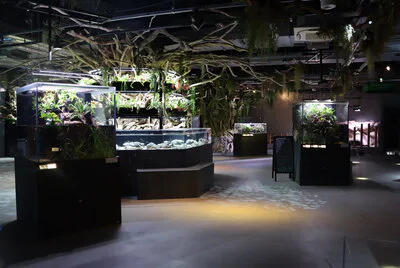
A ticket to átoa buys an exhibition sequence as much as an aquarium visit. The tanks sit inside rooms shaped by light, sound, planting and architecture; the experience changes as you move between them. That makes the Kobe waterfront venue a strong choice for someone who wants designed spaces and live animals together. Anyone seeking the largest fish collection or a full conventional aquarium day may find the standard ¥2,600 adult ticket harder to defend.
The other cost is reaching it. From Sannomiya, the walk is about 18 minutes over roughly 1.4 km; from Motomachi it is about 15 minutes over 1.2 km. On a Kobe afternoon already passing Nankinmachi and the port, this is a reasonable leg. If you come from Osaka solely to spend two hours indoors and then reverse the whole journey, the walk and rail trip may take nearly as much attention as the exhibits. Place átoa in the waterfront route before comparing it with another aquarium.
↔ Scroll table left or right
| What matters most on your Kobe day | Does átoa fit? | Why |
|---|---|---|
| Art-led spaces, animal observation and photographs | Strong fit | Changing environments are the reason for the ticket |
| Very large tanks, broad species count or an all-day marine park | Weak fit | The building is relatively compact and deliberately exhibition-led |
| Nankinmachi, harbour walk and dinner already on the route | Strong fit | The last walk becomes part of a coherent waterfront afternoon |
| Only a short Kobe stop between Osaka commitments | Conditional | Local approach and return can crowd out other city priorities |
| Preschool child interested in designed habitats | Potentially good value | One child aged three or over enters free with each paying adult |
| Visited before July 2026 | Reassess one floor | ELEMENTS has changed, but a renewal alone does not require a repeat visit |
The ticket is for the sequence, not one spherical tank
PLANETS is the recognisable room: its spherical tank makes a memorable central image. Yet one photograph is a thin basis for a Kobe detour. The stronger reason to go is the progression through CAVE, MARINE NOTE, MIYABI, ELEMENTS, PLANETS and the outdoor SKYSHORE area. Each zone uses a different way of placing animals and visitors together. A person who wants the environments to change around the tanks can spend time noticing those choices; someone mainly checking a famous photo may be done quickly.
That distinction matters on a short Kansai itinerary. A three-, four- or five-day Osaka plan cannot absorb every attractive Kobe stop without giving up another city block. Comparing day trips from Osaka helps decide whether Kobe is the right city for that day; only then does átoa's admission price become the useful question. If your favourite photographs are the whole goal, it may still be worth buying a ticket, but budget a compact visit rather than inventing a half-day need.
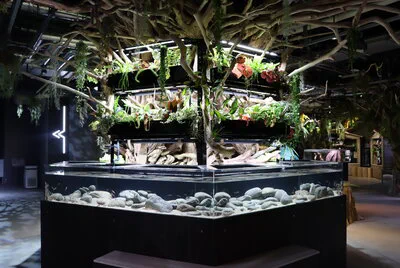
The retained image above shows a planted central display and a shallow tank in a dark exhibition room. It communicates how much of the experience comes from installation design. It does not show the PLANETS sphere, and the ticket should not be sold as though every room resembles that famous photograph. Kobe Animal Kingdom is another animal-focused Kobe outing with a different location and time profile; compare the kind of contact and journey you actually want.
ELEMENTS has changed since older visitor photos
The second-floor ELEMENTS area reopened on 11 July 2026 after a renewal. It added a Garra rufa tank for a hands-in doctor-fish experience, turtle feeding, aquaponics and explanations of designs inspired by nature. The previous Parma wallaby and veiled chameleon displays ended. A review written before the work may accurately recall its own visit while sending you toward animals that are no longer there. For a repeat visitor, the practical question is whether these new interactions are enough to revisit a venue whose other zones may already be familiar.
The Garra rufa experience is posted for 10:00–19:00 without a separate charge or reservation; it should not be assumed available during a special shortened opening or a temporary animal-care closure. Turtle feeding is an optional paid activity, so a ticket to the aquarium does not automatically purchase every interaction. Aquaponics connects tank water, microbes and plant growth; part of the plant output is intended to return as tortoise feed. That makes the renewed area more than a visual refresh. It gives families a concrete subject to discuss after the room's mist and greenery have made their first impression.
The renewal does not turn átoa into a traditional all-day aquarium. It adds a reason to slow down on a floor that earlier guests may have passed quickly. A family choosing a Kobe animal day should compare it with the separate Animal Kingdom route rather than assume both products serve the same age group or schedule. Similarly, the Nada brewery route offers a completely different adult Kobe afternoon; the city day should be built around the group's actual interest.
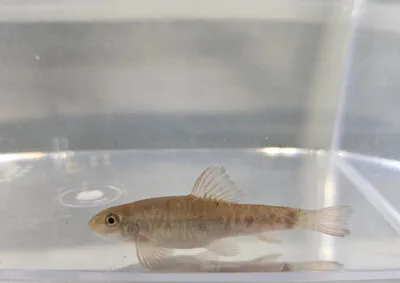
This retained close-up is a small fish in a clear container. Its original generic “art-led animal exhibit” label overstated what the photograph itself shows. It is a reminder that the venue contains living animals, not only projected scenes, although a single close-up cannot establish the species range or the animal's permanent display room.
Admission and the family calculation
The current standard admission is ¥2,600 for adults and junior-high students or older, and ¥1,500 for elementary-school children. On designated variable-price dates those figures rise to ¥2,800 and ¥1,600. Children under three enter free. With a general-admission adult, one child aged three or older also enters free; another eligible child costs ¥500. Group admission has different conditions, and discounts cannot necessarily be stacked. Work out the actual party before assuming the standard ticket grid is the final family bill.
For two paying adults and two eligible preschool children, the free-child rule can remove both child charges under the present arrangement. That is real money saved, but it should not decide the afternoon on its own. A child who enjoys unusual rooms, animals viewed at close range and a short interaction may be satisfied. One who wants large sharks, rides or hours of hands-on play may run out of interest long before the adults finish photographing PLANETS. The family test has both a money side and an attention side. Choosing a Kobe hotel base also affects how easy it is to stop when the child is ready to leave.
Átoa currently operates 10:00–19:00 on its ordinary schedule, with final admission 30 minutes before closing. It sells tickets from one month before the intended day and may assign entry times when capacity is tight; private events and maintenance can alter hours. Once inside, visitors have no normal fixed stay limit. The ¥200 adult difference between standard and designated variable-price days rarely justifies rearranging a whole city route. A timed slot and whether the attractions around it remain open are more consequential. Check the date's admission category before fixing a waterfront dinner or boat outing.
Currency conversions can make a yen price look steadier than it is. The older version estimated a US-dollar amount at ¥160 per dollar; exchange rates move, while the admission table is set in yen. Price this stop in the currency used for payment and compare it with your other Kobe choices at the time you book. A seven-day Kansai budget is useful if several paid attractions compete for the same allowance. Pass comparisons matter only after confirming the exact venue and visit date are included in the product.
The walk from Sannomiya belongs in the schedule
The station-to-door distance is modest on a map and material on a hot, wet or luggage-heavy day. From Sannomiya, allow around 18 minutes south on foot; from Motomachi, around 15 minutes. Buses link the Sannomiya side with the waterfront, but boarding, traffic and the final walk still need room in the plan. Arriving at Shin-Kobe with a suitcase is a different journey again. Leave luggage at a suitable facility or hotel before making átoa your sightseeing route. Sannomiya versus Shin-Kobe is the relevant base decision, rather than the shortest straight line to one museum entrance.
When Kobe is a day trip from Osaka, the transport arithmetic has two parts: the intercity rail journey and the local leg between the station district and the port. An Osaka hotel near the right station can reduce repeated morning and evening friction, but does not erase the Kobe walk. A one-hotel Kansai itinerary shows when that trade-off is worthwhile across several days. If the party is already near Nankinmachi or the port, the last leg to átoa is simpler and the ticket carries less transport overhead.
Weather changes the perceived distance. Humid August heat, heavy rain or tired children can make 1.4 km feel much longer than it sounds. A bus may solve the exposed part but can also add a wait. If this is an autumn or winter evening, the harbour may be part of the appeal; if the waterfront is unpleasant that day, the indoor visit can replace some outdoor time. The Kobe harbour evening guide helps decide whether to remain by the water after the aquarium or return inland for dinner.
Two hours inside, plus the city around it
There is no normal timer pushing visitors out after entry. Roughly two to three hours is a useful planning range for most first visits, not a promise about any individual's pace. A steady walk through the designed zones with pauses at the animals can fit the lower end. Children, photography, feeding activities, a café break or a visitor absorbed in the interpretive displays can push it toward the upper end. Counting only the indoor time understates the trip if you must also reach the building from a rail station.
A coherent half-day could begin in Motomachi and Nankinmachi, then move toward átoa for a two-hour indoor block, continue along the Kobe waterfront or toward Port Tower, and end with dinner. The reverse can work too if ticket times or weather favour an earlier entry. The important feature is one direction through the district rather than a return to Sannomiya between every stop. The four-day Osaka, Kobe and Koyasan route provides one example of giving Kobe a meaningful half-day rather than inserting a single aquarium mission between trains.
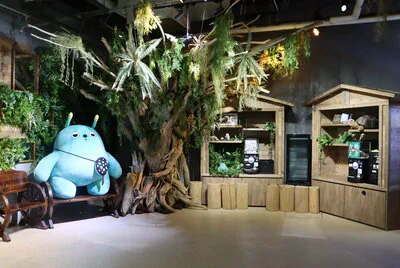
The third retained image shows another designed indoor room: planting, display cabinets and a blue character figure. It supports the point that átoa's visual setting is part of the admission. It should not be labelled as a marine tank panorama or proof of a specific live-animal encounter. If photography is important, give each room space in the schedule rather than planning only the spherical PLANETS image.
The same geographic principle applies to longer Kansai stays. A friends' seven-day plan may split in Kobe when interests differ. A couples' itinerary might reserve the waterfront evening for dinner and use átoa earlier. A solo itinerary can leave the aquarium unbooked until weather and energy are clear, unless a designated entry time is essential. These are different schedule problems, not different reasons to call the venue a larger aquarium than it is.
If the Kobe waterfront is part of an overnight stop rather than a detour from Osaka, compare rooms around Sannomiya and allow for the walk to the aquarium and the next morning’s train.
The reason to skip is usually time, not dislike
Átoa can be appealing and still be the wrong purchase for a particular day. Skip it if the group cares much more about a conventional large aquarium than staged rooms. Skip it when Kobe has only a brief slot and the ticket would remove the neighbourhood, meal or harbour walk that drew you there. A repeat visitor should decide whether ELEMENTS' new content interests them rather than treating a reopening announcement as a duty to return. From Osaka, a standalone there-and-back visit is reasonable only when the exhibition itself is the objective.
For a waterfront day with room to linger, the standard adult ticket buys a distinctive progression through real animal habitats and designed environments. It works best when the station walk, Nankinmachi or the harbour are already part of the plan. Check the date's ticket and entry conditions at átoa's admission page, route from its access page, and current ELEMENTS features in the July renewal notice. The existing átoa ticket option and Kobe bundle options are useful only if their dated terms fit the same visit you have planned.