
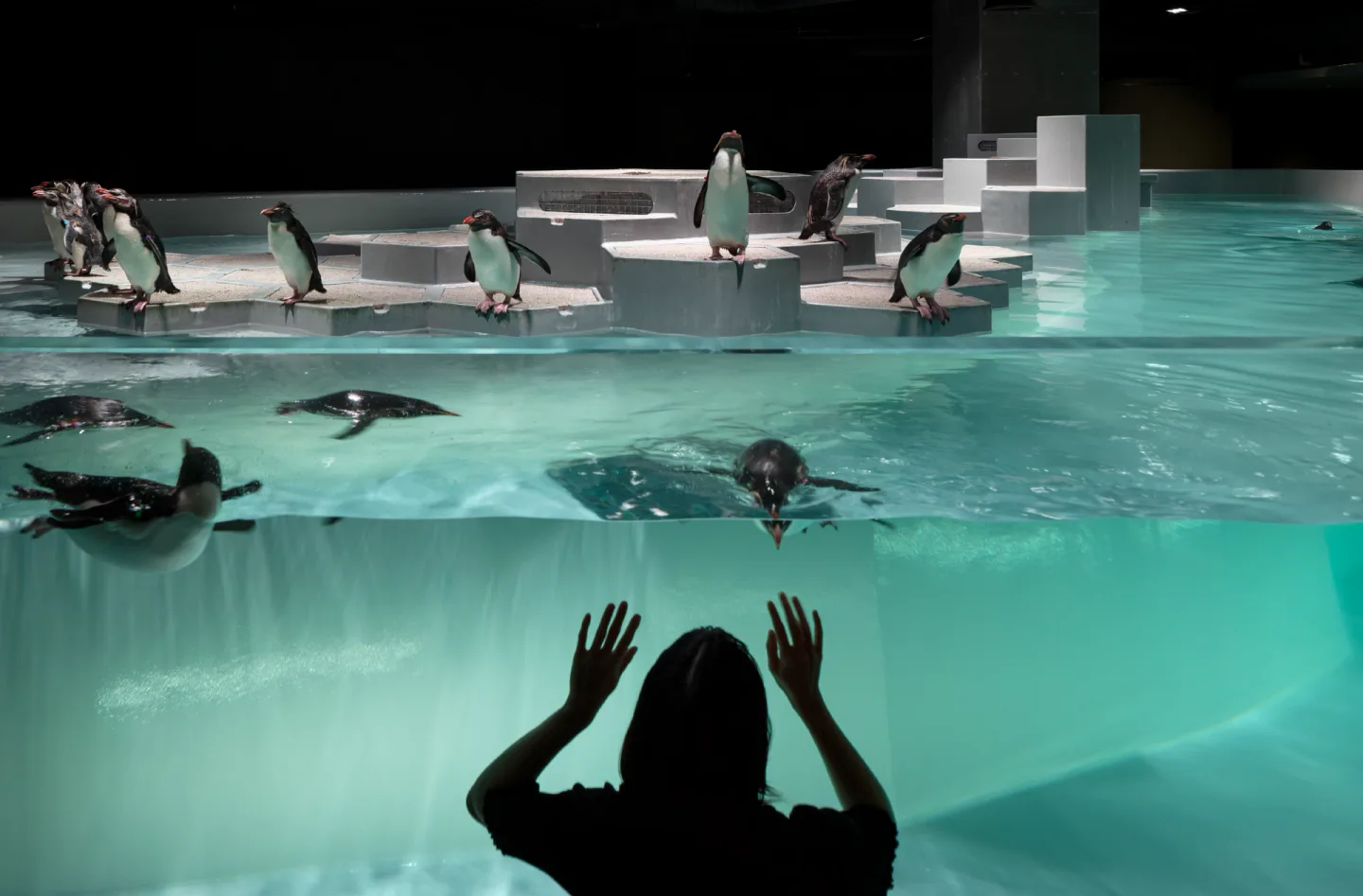
A late aquarium visit makes sense in Sapporo for a practical reason: AOAO remains open when most outdoor plans have already lost their light. It occupies three floors of moyuk SAPPORO, close to Odori and Tanukikoji, and normally admits visitors until 21:00 for a 22:00 closing. A traveller returning from Otaru or an out-of-town winter excursion can still spend a deliberate hour with its penguins and jellyfish. The same visit at midday may be harder to justify if it consumes the only clear-weather window of a short trip.
AOAO is a small urban aquarium built around close observation, books, laboratory spaces and digital environments. It is enjoyable on those terms. A family expecting a large marine park with scheduled sea-mammal performances should set aside a daytime visit to Otaru Aquarium instead. The ¥400 difference between the current adult admissions—¥2,200 at AOAO and ¥1,800 during Otaru's 2026 normal season—does less to settle the choice than location and the hours each place needs.
↔ Scroll table left or right
| If your day looks like this | More useful aquarium plan | What drives the choice |
|---|---|---|
| Outdoor Hokkaido activity occupies the daylight; you return to central Sapporo for the evening | AOAO after dinner or before it | Its 21:00 admission cut-off leaves a genuine indoor window |
| Otaru is already a full-day destination and animal programmes are the main draw | Otaru Aquarium during the day | The Shukutsu site and programme schedule merit their own block |
| Rain or snow removes a short central-city plan | AOAO when the gap appears | It can fit into about one to two hours without another regional transfer |
| Only one brief Sapporo visit is available | Usually prioritise the city first | A paid indoor stop can displace food, streets or an outdoor viewpoint you cannot move later |
| Children need a flexible exit, food break or shorter visit | AOAO if penguins and close-up exhibits appeal | There is no fixed maximum stay, and staff can arrange re-entry |
Why an evening ticket changes the itinerary
The aquarium itself does not transform at sunset. What changes is the alternative use of your time. In summer, an Otaru or Furano/Biei day benefits from long light and unhurried transport. In autumn, foliage drives and walking routes are even more dependent on the available hours. In winter, the early sunset compresses sightseeing while AOAO's normal 10:00–22:00 window remains long. An indoor evening can preserve a slope day, a city walk or a train outing without asking the group to race back to Sapporo by late afternoon.
That logic has limits. If a child is tired by 18:00, a late admission does not restore their attention. A clear afternoon with no better outdoor plan may be the right time to go. On a heavy-rain day, the weather itself may move AOAO forward. The useful question is which activity loses the most when shifted to night. For a car-free winter trip, use the Hokkaido rail-and-bus itinerary to decide which days return to Sapporo early enough for a comfortable evening; the wider winter route shows where overnight moves make a late city attraction impossible.
A ski day may end near dusk, but travel back to the hotel, wet clothing and dinner still take time. AOAO is a useful option after a Sapporo-area ski outing only if the group has energy for the journey into Odori. Visitors staying in Niseko or Rusutsu should not treat a 22:00 city closing as a reason to add another winter road transfer. The Sapporo-versus-resort-base decision comes first.
AOAO and Otaru Aquarium serve different days
Otaru Aquarium is at Shukutsu, beyond the canal district, and works best as a planned daytime stop. Its normal 2026 season runs through 23 November. Since 16 October, the posted closing has been 16:00 rather than 17:00; the autumn animal-programme schedule changes with that shorter day. AOAO stays in the middle of Sapporo and normally closes six hours later. An Otaru ticket costs less, but the journey and the part of the day it occupies are larger. For an Otaru day trip or overnight, work out whether Shukutsu fits alongside the town sights before comparing admission prices.
At AOAO, the principal draw is observation: northern rockhopper penguins on changeable modular platforms, jellyfish in the Plankton Room and an immersive projection space in the BLUE ROOM. Otaru offers a more conventional aquarium outing with marine-animal programmes. The two could both belong on a longer Hokkaido trip, but a short first visit rarely needs two separate aquarium blocks by default. If Otaru is for its canal, food and streets, AOAO can supply a compact aquarium experience after the return train. If the animals are why you are going to Otaru, allocate the hours there and leave the Sapporo evening free.
↔ Scroll table left or right
| Decision point | AOAO SAPPORO | Otaru Aquarium |
|---|---|---|
| 2026 adult admission cited here | ¥2,200 headline rate | ¥1,800 normal-season admission |
| Usual role | Central-city indoor evening or weather fallback | Daytime aquarium destination |
| Time available on 24 October 2026 | 10:00–22:00; last admission 21:00 | Autumn closing 16:00 after the 16 October change |
| Exhibit emphasis | Observation, penguins, jellyfish, lab and digital ocean | Traditional aquarium and seasonal animal programmes |
| Transport | Inside moyuk SAPPORO by Odori/Tanukikoji | Shukutsu, requiring an Otaru-area journey |
These are planning baselines, not a claim that both operate identically every day. AOAO can shorten hours for events or maintenance; Otaru has a separate announced winter season from 12 December 2026 to 23 February 2027. A traveller choosing an aquarium for a particular day should use that day's admission and programme schedule, especially around season changes. The main comparison still holds: one fits a central Sapporo evening, while the other asks for a daytime excursion.
A short visit should begin with the sixth floor
If you have about an hour, the sixth floor gives the most recognisable AOAO experience. Its penguin habitat lets visitors watch the birds on land and in water at close range. The Plankton Room uses tanks of drifting jellyfish and other small organisms; the value is in slowing down long enough to notice movement and light. The BLUE ROOM is a projected Shiretoko sea, with large images across screen and floor. Its whale imagery is digital rather than live. That distinction matters to a child who expects to see a real whale in a tank.
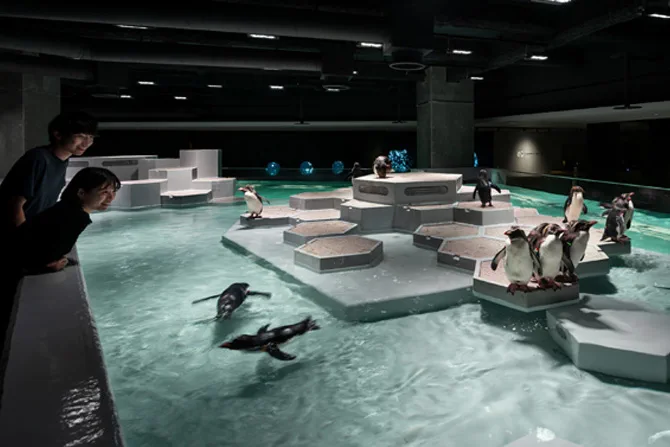
The retained photograph shows the modular penguin pool with people at the viewing edge. It captures the closeness of this floor better than a general image of an aquarium façade would. People who enjoy watching behaviour can give the penguins much of their hour; a group moving quickly may continue straight to jellyfish and projection. Neither pace is a test of whether the ticket was used properly.
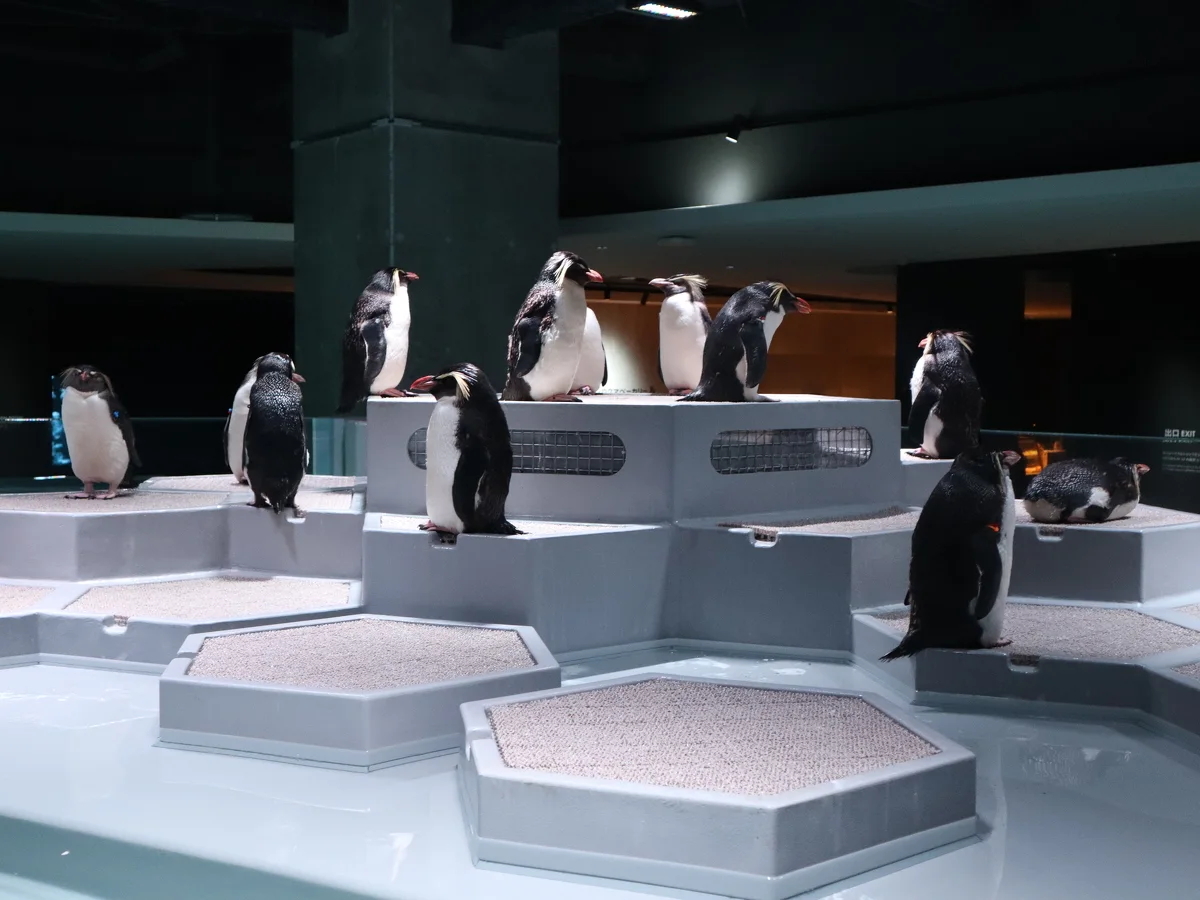
With about two hours, start more slowly on floors four and five. The laboratory spaces expose part of the work behind animal care and water systems. Aquascapes, small tanks and books suit visitors who like to look and read rather than wait for a show. The floor guide also records a renewed exhibit from 24 July 2026, so descriptions from the first year of opening may no longer match every room. Leave enough time to return to the sixth floor for the exhibit your group actually enjoys.
A three-hour stay makes sense for someone who wants to read, photograph without flash, sit with a drink and revisit an exhibit. It is not necessary simply because the ticket covers an unlimited stay during opening hours. The aquarium has no published fixed visit duration. For an arrival night, an hour can be enough; for a rainy afternoon, two can feel unhurried. A two-, three- or four-night Sapporo plan gives room for AOAO only after the larger day trips and meals have places.
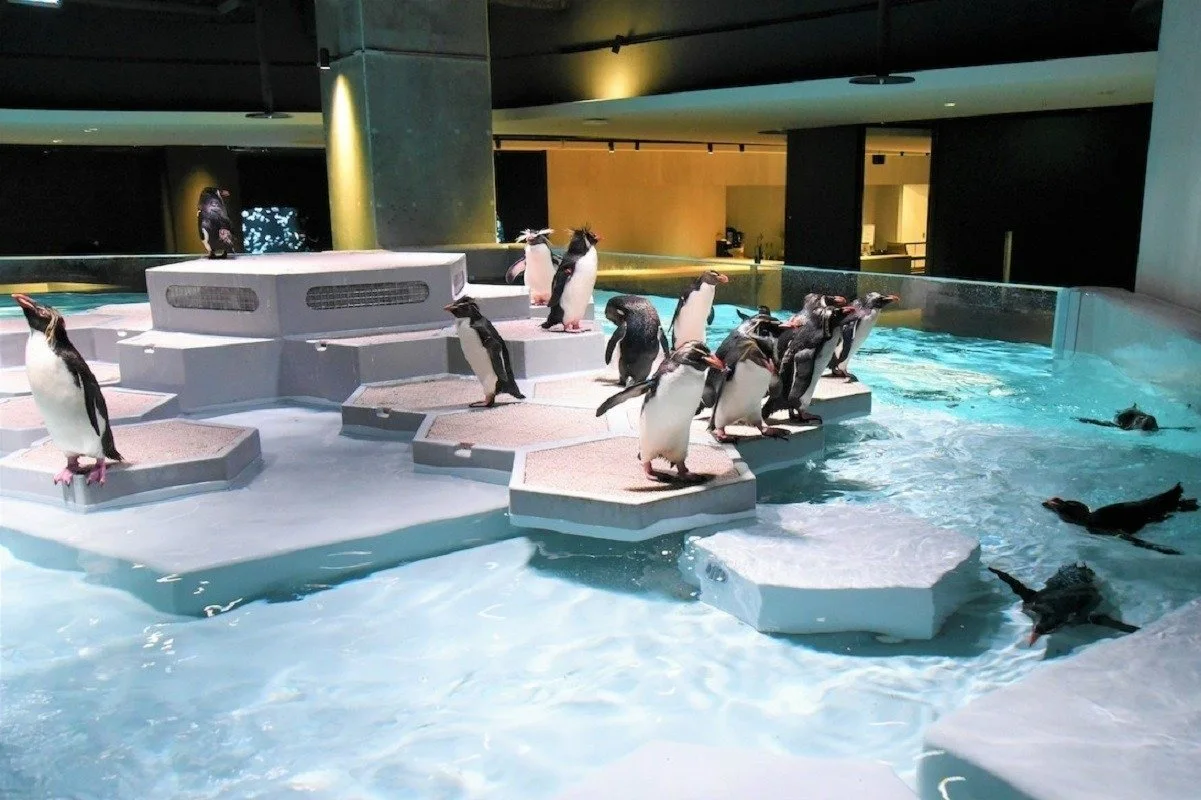
The third retained photograph is another angle of the same penguin space, including birds in the pool. It is useful as a visual expectation for the close indoor habitat, not evidence that every animal is active at any particular time of day. Animal care or a room closure can change the exact visit on the date you arrive.
Re-entry and food can break up the evening
AOAO allows visitors to ask nearby staff about re-entry, and it specifies no maximum stay within the operating day. Do not simply walk out and assume the original QR code will reopen the gate. Speak to staff first, keep whatever proof or instruction they give you, and respect the final admission time. This creates a useful option for a group split between the aquarium and a nearby meal, but it does not promise unrestricted exits on future dates.
Food and drink are permitted across all aquarium floors. SHIROKUMA BAKERY & sells croissants and drinks, including beer and cocktails, and its hours follow the aquarium. That can turn a pause in front of the tanks into part of the visit instead of a reason to leave. Food brought from outside is also permitted. The bakery is a light-food option, however; it should not be assumed to replace a substantial dinner or to meet every dietary need. The surrounding Odori, Tanukikoji and Susukino areas give a group more choices before or after entry.
One workable evening is to reach AOAO before a dinner reservation, spend an hour on the penguins and slower exhibits, then leave. Another is to eat first and enter by 20:00 for a quieter final hour. A family could split the visit around a snack after confirming re-entry. The absence of a time limit is freedom to match the visit to the day, not a reason to plan an exhausting multi-hour stop. The Station, Odori and Susukino base comparison helps judge the last walk home, while the family hotel guide covers room and winter-return trade-offs that a late attraction can expose.
Tickets, children and the cost of committing early
The current headline admission is ¥2,200 for adults aged 16 and over, ¥1,100 for elementary and junior-high children, ¥200 for children aged three and up, and free for those under three. The venue provides a date-based rate calendar, so the displayed headline figure should be compared with the actual visit date before paying. Time slots can reach their planned allotment, after which same-day counter sales for that slot may stop. A busy weekend or a fixed family schedule argues for a timely purchase; an uncertain weather-backup day argues for keeping the plan open until the date is genuinely useful.
Online purchases are not ordinarily changeable or refundable at the guest's request, and a no-show is not refunded. AOAO says late arrivals can speak to staff on the booked day within operating hours, but that is individual handling rather than a promise of priority entry. If snow or a delayed train makes the visit uncertain, a small ticket discount may have less value than deciding later. Use the current ticket calendar and product conditions rather than an old reseller's cancellation wording. The existing admission option is AOAO admission for a selected date; compare its terms and price with the venue's ticket page before checkout.
A child who wants the penguins, jellyfish and small discoveries may have plenty to do in 60–90 minutes. A child expecting rides, a giant tank or animal show may be disappointed by the compact format. Adults travelling with a stroller should note that AOAO does not lend strollers; a baby room is on the fifth floor inside the paid area. The venue has elevators and accessible toilets, and lends a limited number of wheelchairs without advance reservation. Large luggage is restricted; paid lockers inside AOAO are limited and moyuk's other areas do not provide an overflow set. Arrivals directly from a flight should deal with bags first. The New Chitose late-arrival guide can help decide whether a Sapporo evening is realistic at all.
Reaching moyuk SAPPORO without adding a transport project
The building stands at Minami 2-jo Nishi 3-chome, with the aquarium on floors four through six. Odori subway station is roughly a three-minute walk; the Tanukikoji streetcar stop is about one minute away. Susukino is another reasonable approach. AOAO has no partner car park, so a self-drive party should use a surrounding paid facility or public transport. The Sapporo self-drive hotel guide shows why parking and the final winter walk should be considered together.
From a hotel around Odori or Susukino, the short return is a real advantage. From Sapporo Station, reaching the central shopping area is straightforward but still takes a conscious extra leg after a long travel day. If you are choosing accommodation, do not change a whole multi-night base solely for one aquarium visit. A station hotel can better serve repeated JR trips; Odori may suit city walking; Susukino may suit dinner and later returns. Shopping-base logistics and travelling with parents in snow expose those daily costs more clearly than one attraction's map pin.
For a broader Hokkaido trip, the AOAO stop belongs to a Sapporo overnight, not an arbitrary detour inserted between distant regions. Choose the Hokkaido regions first; if a final city evening falls naturally between travel days, AOAO is available. The Sapporo-versus-Chitose last-night choice may be more important when an early flight makes a late attraction costly. An Otaru overnight likewise changes the calculation: an Otaru canal-side hotel makes an extra return to Sapporo less appealing.
For an evening built around Odori and AOAO, compare rooms near Odori for your dates with the walk back after dinner, especially during snow season.
When to give the evening to something else
Skip AOAO if the aquarium would replace the only meal, night walk or meeting the group cares about in Sapporo. Skip it on a short trip that already gives Otaru Aquarium the marine-animal day, unless someone specifically wants AOAO's penguins, jellyfish or digital room. Avoid forcing a late visit after a long winter transfer if tired children will be ready for bed before they see the sixth floor. The attraction's closing time tells you what is possible, not what will be enjoyable.
For the right itinerary, the value is simple: a central, manageable indoor visit can use an evening that a scenic drive, ski run or Otaru walk cannot. Keep the date flexible if weather decides the day, buy a timed admission when the slot is essential, and give the sixth floor enough attention even if the whole visit lasts only an hour. AOAO's current hours and ticket details are at the aquarium's site; the visitor FAQ, floor guide and access page cover re-entry, exhibits and approach. Otaru's admission page and October closing notice matter if you are choosing between the two on a 2026 date.