
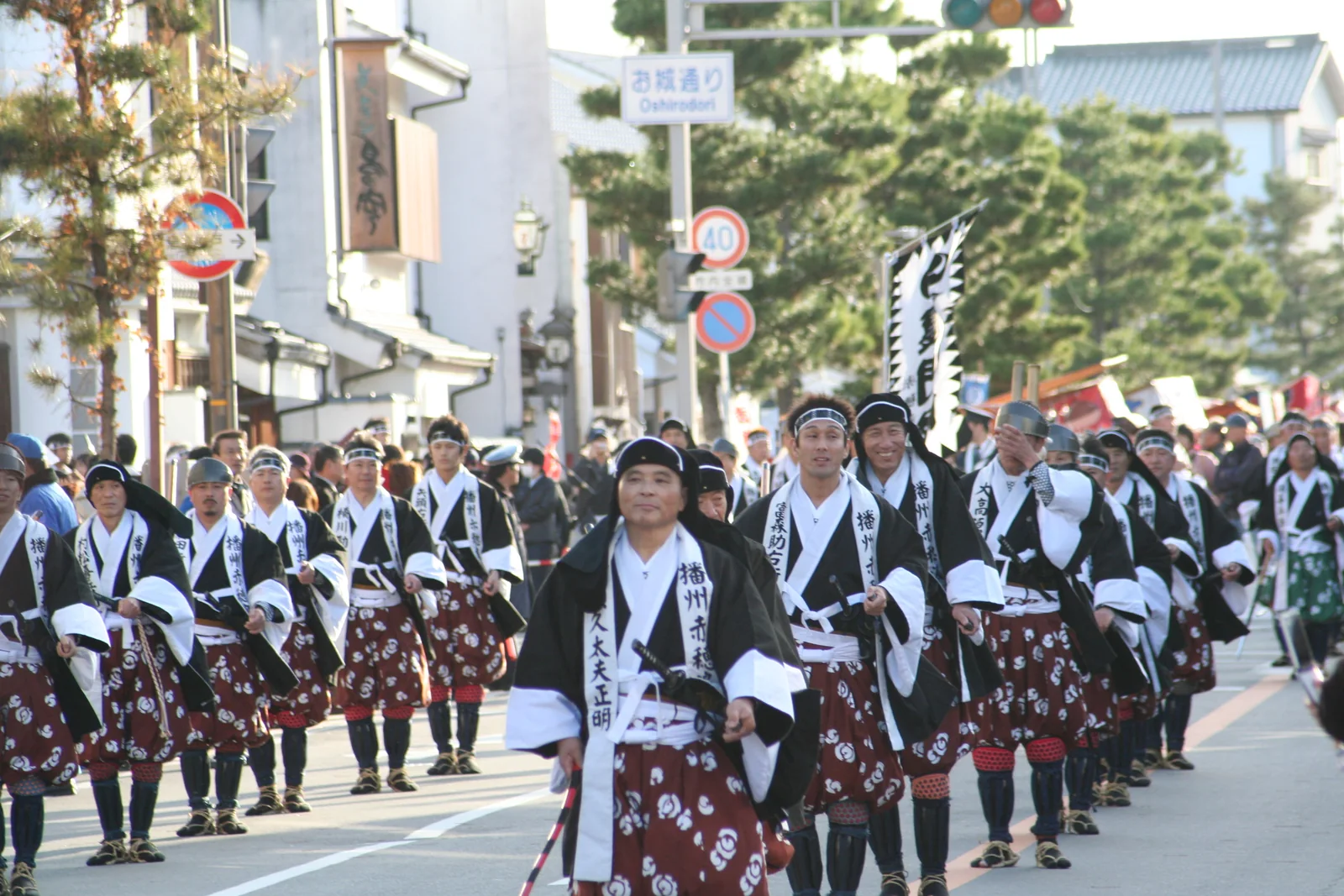
The 123rd Ako Gishi-sai is scheduled for Monday 14 December 2026. Ako City lists the main festival from about 10:00 to 16:00, with the parade planned from about 10:00 to 15:00 around Ako Castle ruins, Oshiro-dori and the Ikitsugi Plaza area. It is a daytime event, which makes the accommodation decision different from a late fireworks festival. A room in Banshu-Ako lets you arrive the evening before and start without a rail deadline; a Himeji hotel may serve a wider Kansai route better if you can reach the parade in good time.
Hotel Yamachou is a real Ako hotel. Its own site places Banshu-Ako Station about a ten-minute walk away, and the city lists it among local accommodations. That is a useful location reference, not a claim that a room is available on festival night. Himeji has a larger hotel market and stronger onward rail connections, but a room there gives you a morning commute on the exact date of the parade. The Osaka, Kyoto, Nara, Kobe and Himeji day-trip comparison puts Himeji in a broader itinerary; Ako needs one more rail and local walking calculation.
Swipe through earlier event photographs
What Ako City has actually announced for 14 December
The city's 2026 festival page confirms the date, approximate 10:00–16:00 main event, planned 10:00–15:00 parade and central venues. It also describes a product market and other activities. “Planned” matters: the detailed route, order of groups and traffic restrictions should be checked against the later programme. The city has announced paid viewing seats, but buying one is a separate decision from the hotel. Do not assume a room includes a seat or that a seat gives access to any hotel.
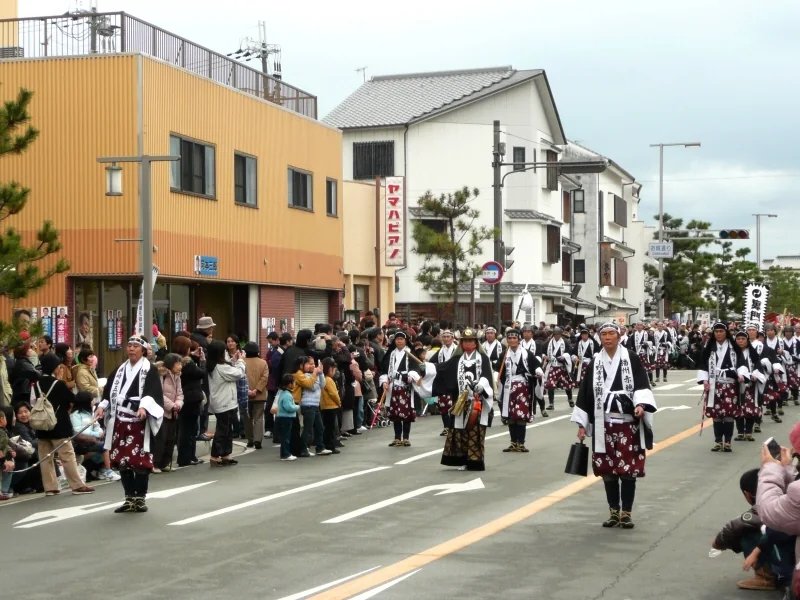
The viewing-seat notice says seating is sold for the 2026 event and includes its own timing and conditions. Read those terms if a fixed seat is important for someone in your group. A visitor content to stand along an authorised public section may not need a paid seat, but must follow the city's route and crowd instructions. The images in the gallery show earlier Gishi-sai parades; they establish the character of the event, not the exact 2026 group order or a guaranteed view from a particular street corner.
This festival commemorates the Ako retainers and draws on the Chushingura story. A first-time visitor should set aside some daylight to understand the town's castle and shrine context instead of treating the parade as an isolated costume performance. The city's visitor information helps with current local sites. If you have only half a day, choose whether you want the parade, historic stops or the product market; the announced hours do not make all three effortless when crowds slow movement.
| Your 14 December plan | What the 2026 notice supports | Hotel implication |
|---|---|---|
| Be present before the parade starts | Main event around 10:00 | Ako night before removes morning rail risk |
| See the parade and leave in afternoon | Parade planned until about 15:00 | Himeji can work if trains fit both directions |
| Explore Ako historic sites too | Daylight beyond one viewing point | Local overnight gives more room |
| Continue by Shinkansen next morning | Himeji is a stronger rail hub | Compare one commuter leg with a hotel move |
The table is a planning aid, not a claim that all activities begin exactly at 10:00. Check the final timetable before choosing a fixed rail ticket. It does show why the hotel choice is not merely “closest is best”. A visitor whose onward train leaves Himeji early may gain more by sleeping at that hub after the parade; a visitor who wants an unhurried festival morning may gain more by arriving in Ako on the 13th.
Banshu-Ako buys the morning
A local room makes the festival morning simpler. You can reach the central streets on foot, watch the town come to life and adjust if the parade route or viewing position is different from an older map. Hotel Yamachou's official site identifies a roughly ten-minute walk from Banshu-Ako Station. Check its actual room categories, check-in hours and cancellation terms for 13 or 14 December. A small property may have limited inventory; do not infer a vacancy from its presence in a city accommodation list.
The strongest booking pattern is often the night of 13 December. You arrive in Ako while there is time to find the hotel and orient yourself, then wake near the festival on the 14th. If you book only the night of the 14th, you still have to arrive from somewhere that morning, so it does not remove the parade-start risk. The second pattern can be sensible if you want a relaxed evening after the event and no early onward train. State which morning or evening the room is meant to protect before paying.
A local stay also changes meals and baggage. You can leave a small bag at the hotel if it permits storage, avoid carrying a suitcase among parade spectators and return for a late lunch or break. Ask about baggage handling rather than assuming every property offers it. Ako's restaurant inventory is smaller than Himeji's, and festival-day hours may differ; check a specific meal option if dining matters. The Okayama and Kurashiki December hotel-base guide illustrates a similar smaller-city trade: local atmosphere can be worth an overnight, but transport and food options need attention.
Do not confuse the station with the parade route. The city lists several central sites, and temporary restrictions may alter the easiest walk between them. The hotel's ten-minute station walk is not a ten-minute promise to the precise viewpoint you choose. Wait for the 2026 route map, then put the hotel door, public viewing section and station on one map. If someone in the group has difficulty standing or walking, consider the paid seat and verify the path to it rather than paying for a geographically close room without a usable route.
Himeji is the network choice
Himeji offers more hotel choice, intercity trains and restaurants. If Ako Gishi-sai is one daytime stop on a wider Kansai journey, sleeping in Himeji can avoid a move into a smaller hotel market. It is a reasonable base when you can leave early enough on 14 December to be in Ako before the parade, and when you are comfortable travelling back after a day outdoors. The Kansai seven-day Osaka-base itinerary is useful for deciding whether to stay in one hub or change towns; Himeji can play that hub role on a western leg.
The morning rail connection needs a live timetable. “Himeji is nearby” is not enough if you must walk from your hotel, reach the right platform, travel to Banshu-Ako and reach the viewing area before the parade. Check the service on Monday 14 December 2026, including any transfer, before booking a room whose appeal is convenience. The Nada Fighting Festival Himeji guide concerns an October event; it can show how a Himeji hotel serves a festival excursion, but its transport and crowd pattern do not apply in December.
If you plan to see Himeji Castle or another attraction the following day, a Himeji hotel has a second use. A local Ako room may be more atmospheric for the festival but make the next morning a baggage move. Conversely, if Ako's history is your main interest and you want time in the town after the parade, the Himeji commute may feel like an interruption. The Osaka to Kobe, Koyasan and western Kansai itinerary shows how a fixed western stop can reshape a multi-day route.
| Where you sleep on 13 December | Festival-morning advantage | Following-day advantage | Main risk |
|---|---|---|---|
| Banshu-Ako | Walk into the town before the parade | Time for local history | Limited room and dining inventory |
| Himeji | More hotel and dinner choices | Stronger intercity rail hub | Morning train and local walk must fit |
| Osaka | Keep an existing big-city room | No hotel change | Longest day-trip start of these options |
| Okayama | Useful on a westbound itinerary | Onward Okayama and Kurashiki plans | Festival journey needs timetable verification |
Osaka and Okayama can work when a hotel is already booked there, but they are not automatically more efficient because they have more trains. The parade's daytime window is finite. The Osaka hotel base for Kobe and Kyoto day trips and Okayama Korakuen–Kurashiki day-trip guide help place those cities in a wider trip. A visitor who has to leave Osaka at dawn to reach a chosen Ako viewpoint may prefer one purposeful local night.
If Osaka is your only hotel, use the Osaka first-time hotel guide to choose a station area that also serves the rest of your holiday. The Osaka seven-day budget itinerary can show where a full-day western excursion competes with other plans. On a short stay, keeping the same room may be worth more than a single easier festival morning; on a history-focused trip, a local Ako night gives the parade a less hurried place in the schedule.
The seat, the room and the train are separate purchases
If a paid parade seat suits your group, check the city's current seat sale and refund conditions before buying a rigid hotel rate. The 2026 seat notice gives a seating time and sale mechanism; it does not make the whole parade predictable to the minute. A seat can reduce uncertainty about where to stand, but you still need to reach it through festival crowds. A room near the town is useful for arrival; it is not a substitute for the seat.
When comparing hotel prices, search the full stay including tax, breakfast and guest count. A cheaper Himeji room may be good value even after the rail fare; a modestly dearer Ako room may repay itself in a much calmer morning. Cancellation flexibility is worth something while the final programme and your transport are settling. Do not base the decision on an old festival attendance figure or an average room price. Your actual Monday-night and Sunday-night rates may differ from a published generalisation.
For a family, check bed layouts and bathroom time. A small local inn can be charming yet unsuitable for four people if the only available category has too few beds. The Osaka hotel rooms for groups guide is not an Ako property list, but it explains why one room versus two can dominate the budget. With young children, the convenience of a local morning may be worth more than a larger hotel breakfast. With older parents, a fixed seat and short, verified path can be more valuable than a station distance advertised in minutes.
The December weather is another practical variable. The parade is outdoors for hours, so carry a warm layer and shoes suited to standing. If rain is forecast, check the city's operational notice; do not claim a cancellation policy the organiser has not published. You can shorten the visit and still see a meaningful section if the group is cold. The room location should give you a place to recover afterward, whether that is a short Ako walk or a planned train to Himeji.
Keep the festival's historical context in the itinerary
The Ako retainers' story is central to the event, but the page does not need to turn it into an unverified play-by-play. The city describes the 123rd parade and cultural events. Use local displays, castle ruins and the organiser's interpretation to learn more while you are there. If history rather than the parade is your main aim, a non-festival day may be quieter and less expensive. That is a different lodging decision from 14 December, and a Himeji base may be more practical then.
A visitor arriving from Kobe can combine Ako with a western Kansai route, but should not overfill the day with several attractions. The Kobe Sannomiya versus Shin-Kobe hotel guide can help plan the previous night. The Kobe harbour fireworks hotel guide describes another December event with a later finish; do not transfer its night-return assumptions to Ako's daytime parade. The distinction reinforces why Himeji may work here when it would be less comfortable for a late festival.
If Kobe is the previous night's base, settle dinner there and travel light the next morning. The Kobe restaurant guide helps identify a meal for that separate evening. An Ako festival day already has a parade, historic streets and a return train; treating it as a chance to add a full Kobe food tour on the way back risks arriving too late for a booked restaurant.
If your onward direction is Hiroshima, check whether changing hotels in Ako interrupts a simple rail journey. The Hiroshima versus Fukuoka extra-nights guide and Hiroshima-Miyajima two-day plan can help place the next leg. A one-night festival stop is justified when you use the morning it buys; it is less useful if you spend most of the following day transferring back to a hub you could have slept in.
Make the date work before choosing the town
For a first visit focused on the full 14 December parade, I would search Banshu-Ako for the night of the 13th, then compare the real room and route with Himeji. If local inventory is unsuitable, a Himeji room can still work with a verified morning train and a planned place to stand. If Ako is only a short addition to a Kansai trip, keep the existing hub hotel and accept that the visit may need to be shorter.
The city has published the Monday date, broad hours and main venues. Check its final route and any traffic notice before the room becomes non-refundable, and check the actual Banshu-Ako train timetable for both directions. The lodging decision is then based on the morning you need, the parade portion you intend to see and the next place you must reach.