
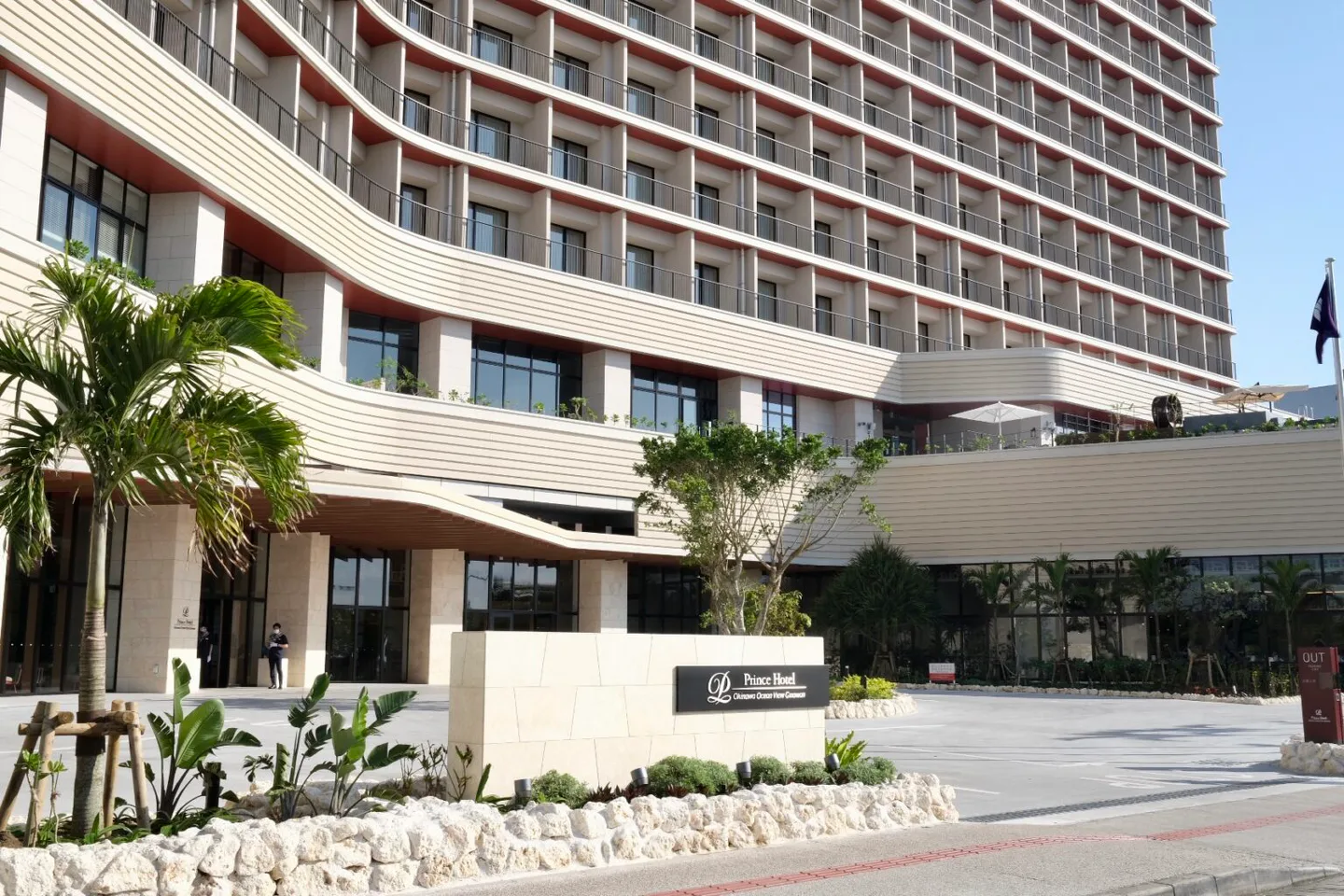
Two nights at Okinawa Prince Hotel Ocean View Ginowan make sense when the route actually pauses on the central west coast. A Chatan or Ginowan day, followed by unhurried time at the hotel, can justify the move from Naha before continuing toward Onna or the north. If both days are spent sightseeing in Naha, the hotel trades away Yui Rail access without removing the commute. If the reason for coming is Onna’s beaches or Blue Cave, Ginowan leaves that main experience farther up the coast. The location decision should come before a room upgrade.
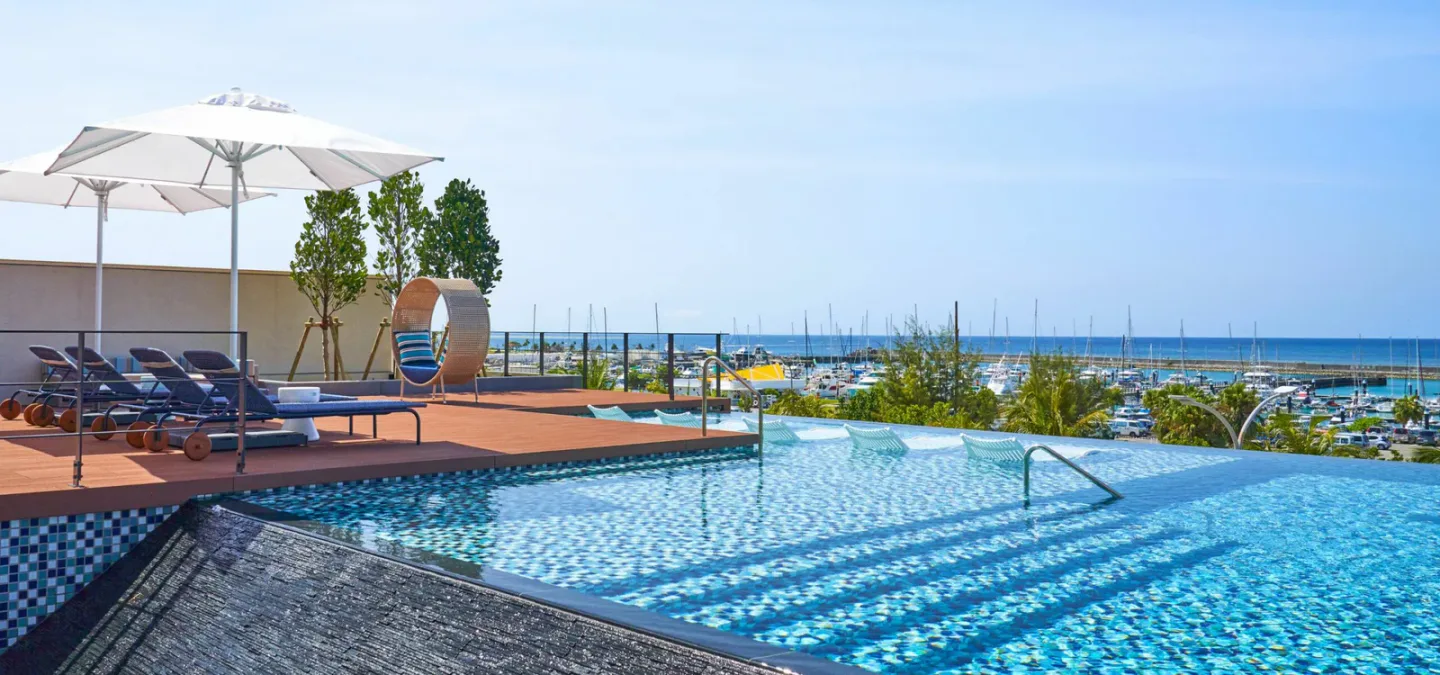
The ordinary room is a stronger starting point than the word “resort” might suggest. The hotel puts a sea or harbour view and balcony in every guest room, and the second-floor infinity pool is for staying guests. A Club room therefore buys a different set of facilities and a higher floor, rather than the first chance to see the water. The question for a two-night booking is how many usable hours those additions create. This Okinawa hotel-area guide can settle the broader Naha–Chatan–Onna choice first.
The itinerary that gives Ginowan a job
↔ Scroll table left or right
Two-night plan | Better base | Reason |
Central west coast day plus time at hotel | Ginowan is credible | Avoids a return to Naha while leaving pool and terrace hours |
Kokusai-dori and Shuri on both days | Naha | City evenings and monorail access remain central |
Blue Cave or Onna beach is the anchor | Onna | Stay near the activity instead of driving north each day |
Early departures and late returns both days | Check a simpler hotel | The paid facilities may be unused |
No car and frequent spontaneous outings | Naha is usually easier | Ginowan needs a bus or taxi plan for each movement |
Club Floor with children at the hotel mainly after dinner | Check access hours before paying more | The 14F pool restricts younger children after 17:00 |
A useful progression is Naha, then a central west-coast stop around Ginowan or Chatan, then Onna or Motobu. In that order, the Prince can prevent a late return to a Naha room after the middle day and stop the next morning from starting with another northbound city exit. But a location on the map is not proof of a saving. Write down the actual trips it removes, including hotel changes, parking, bus waits and the next morning’s departure. If you cannot identify about two backtracks avoided, the second stay needs to earn its place through substantial hotel time instead. A four-day Okinawa route shows how easily a short trip becomes crowded when it tries to cover every region.
The opposite pattern is city sightseeing, a move to Ginowan, then more city sightseeing. That introduces luggage handling and a new transport leg while much of the trip still points toward Kokusai-dori or Shuri. A traveller depending on Yui Rail loses its most forgiving feature: walking to a station when plans change. Hotel Strata Naha’s two-night room decision is relevant if evenings and transit remain in the city. Hotels for a late arrival or early flight address the airport bookends separately.
Nor is Ginowan a private-beach stand-in for Onna. The hotel faces Ginowan Port Marina, while Tropical Beach in Ginowan Seaside Park is roughly a ten-minute walk away; there is no beach attached to the guest-room building. That can be a pleasing waterfront setting for a pause, but it differs from choosing a northern resort primarily for sand, marine outings or a Blue Cave booking. Compare Onna resorts for two nights if those are the main purpose, and consider Hilton Okinawa Chatan if the Chatan coast is where your days finish.
What the room price is buying before any upgrade
The Superior Twin has 33.6 m² of interior space and a 6.5 m² balcony. Its two regular beds measure 120 × 206 cm and its stated capacity is two. For a couple or two adults, that already provides the balcony and water-facing outlook that define this hotel. Check the exact rate and meal plan, of course, but do not assume that a larger category is necessary just to obtain a sea view. The hotel room overview and Superior Twin details describe the actual baseline.
↔ Scroll table left or right
Room category | Published space and party | What could justify the difference |
Superior Twin | 33.6 m² room plus 6.5 m² balcony; two guests | The core view, terrace and two equal regular beds are sufficient |
Deluxe Twin | 37.7 m² plus 6.5 m² balcony; up to three | A third sleeping place or extra circulation is needed |
Family Room | 49.6 m²; up to four | Four-person layout and more room matter to the party |
Premium Twin | 50.0 m²; two guests | Two travellers will use the much larger interior |
Club Twin | 33.6 m² plus balcony; two guests | Lounge, upper-floor position and 14F pool will be used |
The Deluxe Twin layout has two 120 × 206 cm regular beds and a 120 × 188 cm stacking bed for the third occupant. Three-person capacity therefore does not mean three identical beds. A group of adults should decide whether that shorter third bed is acceptable before treating the Deluxe as a simple three-way split. The Family Room’s 49.6 m² and four-person capacity answer a different need. The Premium Twin’s 50.0 m² is chiefly a space upgrade for two. Neither should be bought from a thumbnail alone; compare the actual room plan, guest ages and breakfast inclusion at checkout. How Okinawa room upgrades earn their cost helps distinguish useful room time from paying for a photograph.
The Club Twin remains 33.6 m², matching the Superior Twin’s interior area. Its reason to exist is access: the lounge and Club-only 14F infinity pool, alongside the higher-floor setting. The Club Twin room specification makes the floor-space comparison plain. For a two-night stay, calculate the difference for the exact dates and ask whether you can name a morning, afternoon or evening lounge session you will actually attend. A bigger number on the rate card is not a substitute for time in the facility. A two-night resort comparison in Onna provides a different case where more private interior space itself may matter.
Pool and spa hours can make one night feel very short
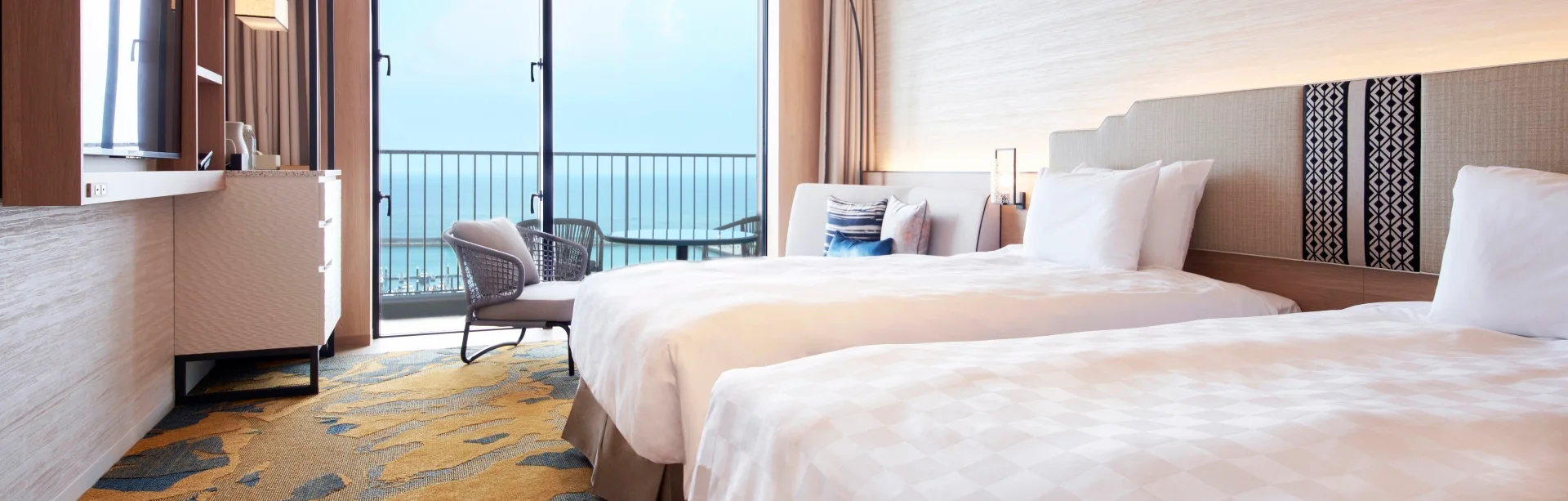
The heated second-floor infinity pool is open to staying guests, with published hours of 09:00–21:00 from April through October and 09:00–19:00 from November through March. Weather or operations can alter a day’s access. On a single overnight stay, arrival, check-in and dinner can consume much of the available window, especially in winter. Two nights can create an arrival-afternoon swim and another period on the middle day without racing checkout. The second-floor pool details should be checked for the dates you book.
The second floor also has an indoor bathing and relaxation area, while the large communal bath closes later than the outdoor pool. Published facility information places the spa area around 06:00–22:00 and the large bath until 23:00; confirm the current schedule before building a late return around it. The hotel facilities list is the place to verify any seasonal change. A short stay works when those windows intersect your route: arriving in time for a pool visit, leaving a middle-day break, or using the bath after a moderate outing. A programme that starts before breakfast and ends after closing reduces the hotel to its room and balcony.
Laundry can matter on a road trip, particularly if this is the midpoint after Naha. Five washer-dryers on the second floor operate around the clock. The listed standard wash-and-dry course handles up to 3 kg in 120 minutes for ¥800; other courses exist, so check the machine before starting. Five machines do not guarantee one is free the moment you return from a late day. Set the wash early enough that it does not swallow the only pool or dinner window. Travelling Okinawa with children by car covers the wider equipment and nap-time constraints that can also erase a hotel afternoon.
The Club floor changed in July 2026
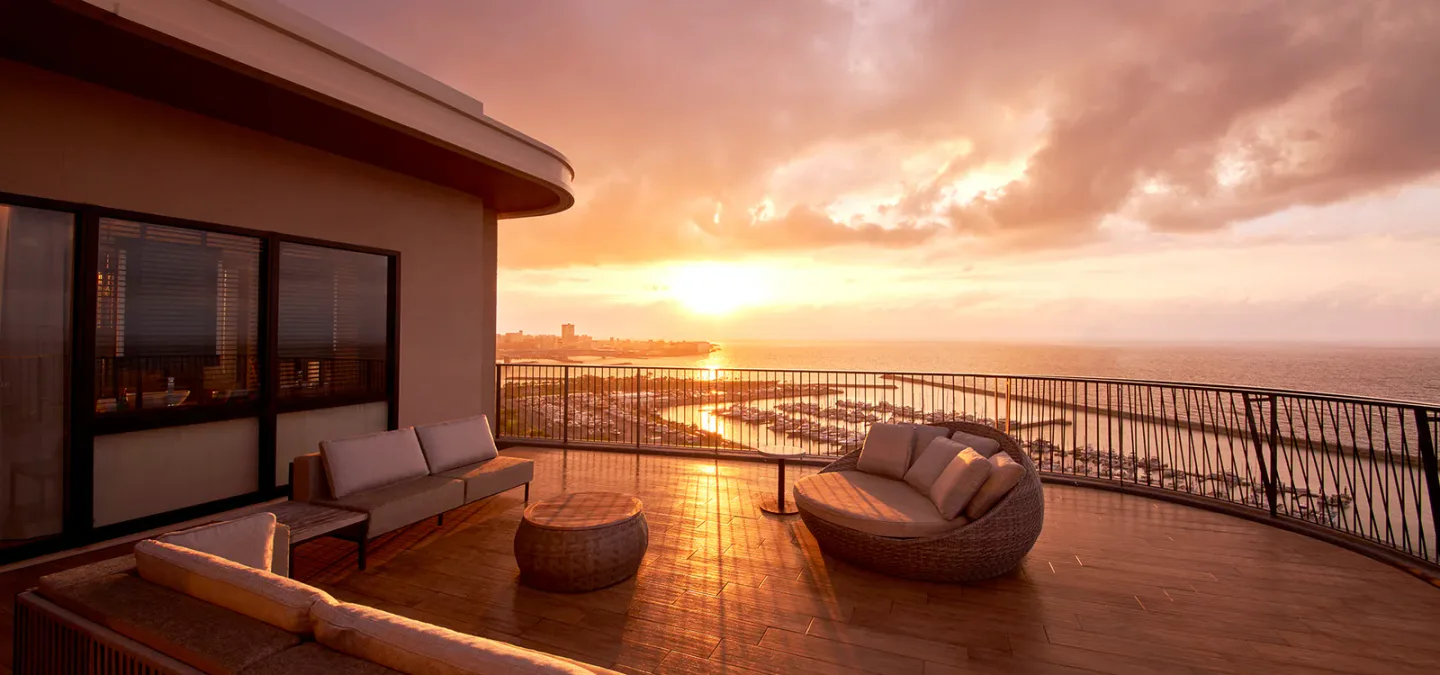
Club Lounge UMIKAJI was refreshed in July 2026, adding breakfast service and changing its daily sessions. Its published pattern now runs morning lounge 07:00–10:00, daytime 10:30–16:30, sunset 17:00–19:00 and night 19:00–22:00. Club-floor guests can choose breakfast in the 14F lounge or at the first-floor Jinon dining room, subject to their plan and current conditions. This makes a Club rate more tangible for someone who will be present for breakfast and a sunset session. It is less persuasive if both days end near closing. Club Lounge UMIKAJI describes the space, and the hotel’s July 2026 lounge update sets out the revised service.
The 14F pool is restricted to guests staying on Club floors and follows the same published seasonal span as the 2F infinity pool: 09:00–21:00 April to October and 09:00–19:00 November to March. Its family rule is the important difference. The hotel’s pool guidance bars elementary-age children and younger from 14F after 17:00; other child and swim-safety rules also apply. A family reaching the hotel after an afternoon excursion should not count the Club pool as an evening benefit for the youngest travellers. The 2F pool remains the more relevant facility for many ordinary-room families, subject to its own current entry rules. The Club pool and its hours and pool questions give the latest operational detail.
None of this makes Club a universally poor buy. A couple spending the middle afternoon on property, taking breakfast upstairs and using the sunset service may receive a distinct experience. A three-person party should first solve the bed arrangement; the Club Twin’s two-person limit may make the decision for them. For children, write down which member of the party can use which pool and at what hour before paying extra. A honeymoon split between ordinary and premium nights is a more useful comparison than upgrading every night by habit.
Transport decides whether the hotel is restful or awkward
There is no Yui Rail stop at the hotel. The property’s airport and route information points travellers toward airport limousine bus, taxi or rental car. Naha Airport is roughly a 30-minute drive in ordinary conditions, but an arrival transfer should not be treated as a fixed half-hour promise; roads and airport processing vary. Car-free travellers should match the actual bus to their flight and establish a taxi fallback, especially for late arrivals. A local bus stop may exist, yet the existence of a bus is not equivalent to being able to walk into a rail station at any hour. Car or public transport in Okinawa puts that trade-off in wider island context.
For a self-drive stay, parking is a real line in the comparison. Since 1 April 2026 the hotel has charged staying guests ¥1,000 per vehicle per night, with a ¥3,000 cap. Two nights therefore add ¥2,000 if one car is parked both nights. Spaces are first come, cannot be reserved, and the paid guest period runs until 16:00 on checkout day; a full lot can mean a nearby paid facility instead. An older review calling parking free is out of date. Check the current parking notice when booking. OTS, Toyota and ORIX rental choices matter more than shaving the room rate if the vehicle itself does not suit the route.
A rental car makes Ginowan more natural, but should still earn its cost. If most outings end in central Naha, you are paying for the car, parking and the daily return to a non-city base. If Chatan and the central coast are the focus, a car can connect those stops without relying on bus timing. A family must also check car seats, boot space and how an outing intersects a nap. If the second hotel night is followed by a northbound departure, the move toward Onna or Motobu can make geographical sense. A five-day Naha–Onna–Churaumi plan tests whether changing hotels on this particular trip is actually less work.
Without a car, ask where dinner will be, what time the pool day ends, whether the airport bus fits the flight in both directions, and what a missed bus would require. Those answers can outweigh a larger room. A Naha base is often better for a traveller who wants to choose dinner on impulse or return from Shuri without planning each transfer. Ginowan can still work car-free if the purpose is a largely on-property stay and transfers have been checked in advance. It is the repeated spontaneous movements, rather than one airport ride, that make the location costly.
One night, two nights, or a different coast?
↔ Scroll table left or right
Base | Hours it protects | Trade-off to accept |
Naha | Airport bookends, rail, Kokusai-dori and city evenings | West-coast excursions can mean repeated outward journeys |
Ginowan at Okinawa Prince | Central west-coast positioning plus scheduled hotel time | No direct Yui Rail and no hotel-owned beach |
Onna | Beach, marine trips and fuller resort days | Longer transfer to Naha and its city nights |
One night is a workable pool-and-sleep pause when arrival is early enough to use the facilities. It is less convincing if check-in follows a long day and the next morning starts with immediate checkout. Two nights let you keep the same room through a middle day, which is the only compelling reason to move here for a short segment. The middle day need not be empty: Chatan, the marina area or a measured central-coast outing can leave time to return for the pool and dinner. The point is to preserve a real session at the property, not simply to insert another hotel marker into an already crowded itinerary.
If the middle day instead goes to Motobu before breakfast and returns late, book nearer the north or keep a more straightforward base. The Orion Hotel Motobu as a two-night base is one northern comparison. If the last night is mainly about shopping and an early flight, compare Chatan with Naha for the final two nights and Onna versus Naha for the last night. Ginowan does not have to win every part of the holiday for two nights to be useful; it has to solve this particular middle segment.
For a two-night central-coast stop, the standard twin already supplies a balcony and water view. The shared second-floor pool has different entry rules from the Club-only fourteenth-floor pool, while a family needs the actual bed layout and evening age restriction before choosing a floor. Parking adds ¥1,000 a night and cannot be reserved. The scores below assume enough hotel time to use the pool; a Naha-heavy, car-free itinerary would reduce the location and value marks.
↔ Scroll table left or right
Decision dimension | What is supported | Check before paying |
Location | Marina-facing middle base between Naha and northbound coast | Which journeys actually disappear? |
Car-free movement | No direct Yui Rail at the property | Bus match and taxi fallback |
Ordinary room | Superior Twin 33.6 m² plus 6.5 m² balcony for two | Whether two regular beds suit the party |
Shared pool | 2F heated pool for staying guests with seasonal hours | Arrival and middle-day access |
Club upgrade | 14F lounge and pool, without a larger Club Twin interior | Usable sessions and child rules |
Family fit | Deluxe third bed differs from the two regular beds | Guest ages, beds and pool access |
Driving cost | ¥1,000 nightly guest parking, maximum ¥3,000 | Space availability and car usefulness |
Seven site scores for a two-night Ginowan stay
Dimension | Site score | What drives the mark |
|---|---|---|
Location | The marina and central-coast position work with a car, while repeated Naha trips have no Yui Rail last leg. | |
Room | The 33.6 m² Superior Twin has two regular beds and a 6.5 m² balcony; a third adult needs a different bed setup. | |
Cleanliness | Current aggregated guest cleanliness categories are around 9.7–9.8/10. | |
Service | The aggregated guest staff and service categories are around 9.4–9.5/10. | |
Facilities | The second-floor heated pool, indoor bath and laundry serve ordinary rooms; the fourteenth-floor extras need Club access. | |
Food | Jinon dining and Club lounge meals create choices, though lounge breakfast belongs to eligible plans and floor categories. | |
Value | Two usable pool sessions help justify the move; paid parking and an unused Club supplement can erase the advantage. | |
Overall | Best as a measured central-coast hotel segment with time on property, not a substitute for a rail-connected Naha base. |
For a two-night central-coast stay with a car or a carefully matched transfer, I would begin with the Superior Twin and put the upgrade money through a simple test: will the larger room, third bed or Club services be used? A hotel afternoon and a less repetitive route are the strongest reasons to choose this address. Choose Naha when the real trip is built around rail, city evenings and airport convenience. Choose Onna if beaches and marine activities are the centre of both days. Compare Ginowan-area stays for your dates after the location and room decision are settled.
Related routes and hotel choices
Lake Biwa Otsu Prince Hotel: Is the 36.2m² Lake View Worth the Shuttle? · Okinawa Whale Shark Diving: Snorkel, Intro Dive or Fun Dive? Pick the View, Not the Depth · USJ Hotels for One Day vs Two Days: When Is Universal City Worth Moving To? · Is One Night Enough at Oirase Keiryu Hotel? One vs Two Nights Compared · Ueda or Bessho Onsen: Where Should You Stay for Two Nights? · Lotte Hotel Busan vs Arban Hotel: Is the Five-Star Premium Worth It in Seomyeon? · Hilton Okinawa Sesoko Resort: Is 36 m² Worth the Island Resort Time?.