
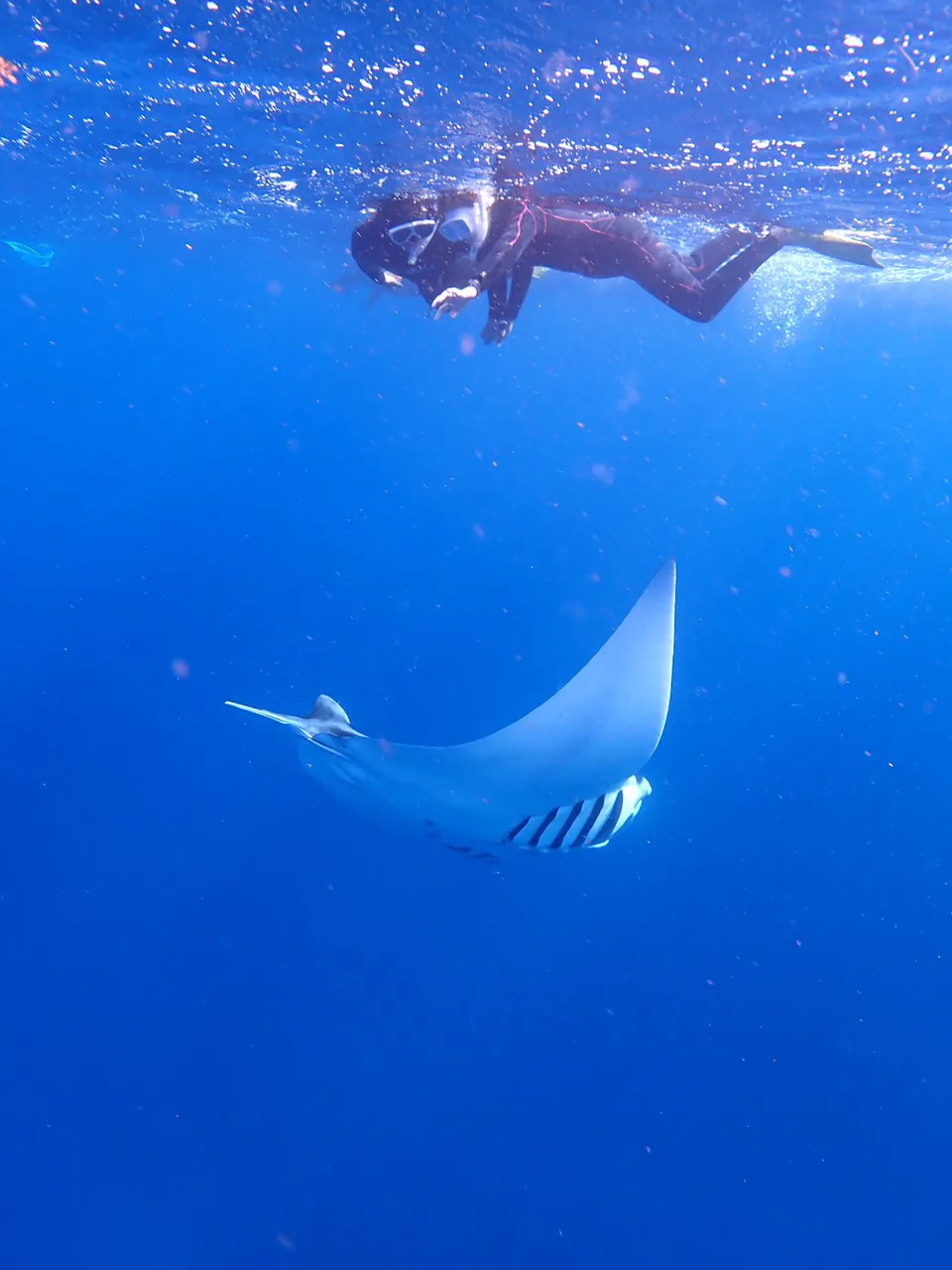
A manta-focused Ishigaki snorkel is a good purchase when the possibility of seeing a wild animal is the reason for the half-day. It is a poor purchase if the trip only feels worthwhile when a manta appears. Blue Cave offers a coastal swim and cave setting; Phantom Island pairs a tidal sandbar landing with reef snorkeling. Both still depend on sea conditions, but their central attractions do not hinge on one species. That is the choice to settle before comparing tour photographs or a small difference in price.
The Okinawa tourism guide says reef mantas occur around Ishigaki through the year, with July to mid-October giving the best broad chance. Its Manta Scramble dive-site information calls April to November especially favourable. Those statements describe different windows, not a promise for one boat departure. Wind and waves can also keep an operator away from a preferred point even in a good month. If the island sequence itself is undecided, place Ishigaki, Taketomi and Iriomote first; a wildlife half-day should fit a weather-flexible route.
The purchase depends on what would remain after a missed sighting
↔ Scroll table left or right
| Half-day | Main experience | Variable that can disappoint | Best fit |
|---|---|---|---|
| Dedicated manta-point snorkel | Guided chance to observe wild manta rays at sea | No sighting, or unsafe access to the desired point | The ray itself is an important objective |
| Blue Cave snorkel | Coastal cave, reef and fish | Conditions can alter the water route or cancel it | First snorkel or a group with mixed interests |
| Phantom Island and reef | Sandbar landing plus a snorkel stop | Tide, weather or boat route can change the experience | Open scenery and a first Ishigaki sea day |
| General coral or turtle snorkel | A broader marine-life outing | Any named animal remains uncertain | Good water time matters more than one species |
A snorkeler who would still enjoy coral, fish and a short boat trip when no manta appears can accept a dedicated tour's risk. Someone who would regard that same outcome as a wasted payment should choose an experience with a satisfying non-wildlife centre. Blue Cave remains a cave without a turtle. Phantom Island remains a sandbar, subject to tide and safe access, without a rare encounter. Blue Cave's shore-versus-boat decision adds another access question rather than a manta guarantee. The whale-shark activity comparison is a separate way to think about how much the named animal matters.
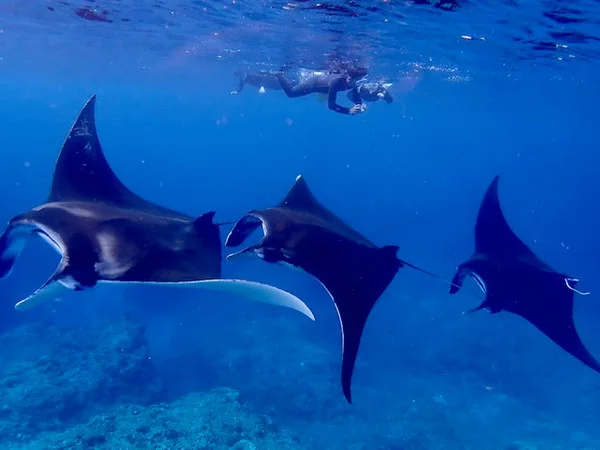
Three manta rays appear beneath a snorkeler in this image. It shows why the encounter is memorable, but photographs of wildlife cannot establish the probability for a particular booking. Neither an animal's presence in a previous photo nor an operator's name converts a wild sighting into a contracted result.
Compare the experience dimensions without invented scores
The original comparison used numbers out of ten for wildlife dependence, sea access, fallback value, bucket-list appeal and beginner predictability. Those are useful questions, but there is no measured dataset behind precise point differences. The qualitative comparison below preserves the decision dimensions without suggesting a scientific rating.
↔ Scroll table left or right
| Dimension | Manta point | Blue Cave | Phantom Island |
|---|---|---|---|
| Wildlife dependence | High: a manta is the headline outcome | Lower: setting and reef remain | Lower: landing and reef remain |
| Sea access sensitivity | Intended offshore site may be unreachable | Entry route and cave access can change | Boat operation and tide shape the visit |
| Value if no named animal appears | Depends on whether coral and boat time satisfy you | Cave and coastal snorkeling still matter | Sandbar and reef still matter |
| Special objective | Strongest for a manta encounter | Strongest for the cave setting | Strongest for sandbar scenery |
| First-timer comfort | Depends heavily on practice and guide support | Depends on entry, guide and conditions | Depends on boat, flotation and reef stop |
This is why a dedicated manta tour can be the most rewarding choice for one visitor and the least suitable for another. A first-time snorkeler should compare how the operator briefs the group, where they practise, what flotation is supplied, how the water entry works and what happens if someone becomes uncomfortable. An offshore animal is not a reason to push a frightened group member into deep water. Minna Island's water-versus-beach options are an example of choosing different levels of commitment within a sea day.
Two ¥8,800 half-days buy very different outcomes
As checked in October 2026, Sea Water Diving Service in Kabira listed a coral-and-manta snorkeling half-day at ¥8,800 including rental gear, wetsuit, basic practice, boat, drinks and staff support. Its Sukuji Beach departure was described as about five minutes by boat from the manta area, with an overall course of about three hours. It explicitly said encounters were not guaranteed and the site or programme could change with the sea. Pushynushima Ishigaki listed Phantom Island landing and snorkeling at ¥8,800 per adult. Equal headline prices do not make the outcomes equivalent. Recheck checkout totals, transport, pickup, cancellation terms and inclusions for the specific date before paying.
That price pair also shows why a fixed “manta premium” is unreliable. A different departure port may add boat time; a packaged tour may include more stops, photographs or transfers. The old comparison's US dollar estimate tied to an August 2026 exchange rate has no booking value now, so yen is the useful reference. If sea time is difficult for you, the five-minute Kabira transfer is a real comparison point, while a city-departure tour may take materially longer. Ask for the actual departure coast and estimated boat segment rather than assuming every product called “manta snorkel” moves alike. The Kerama seasickness decision explains why transit can dominate an otherwise attractive marine trip; a five-day Okinawa budget helps set a separate activity allowance.
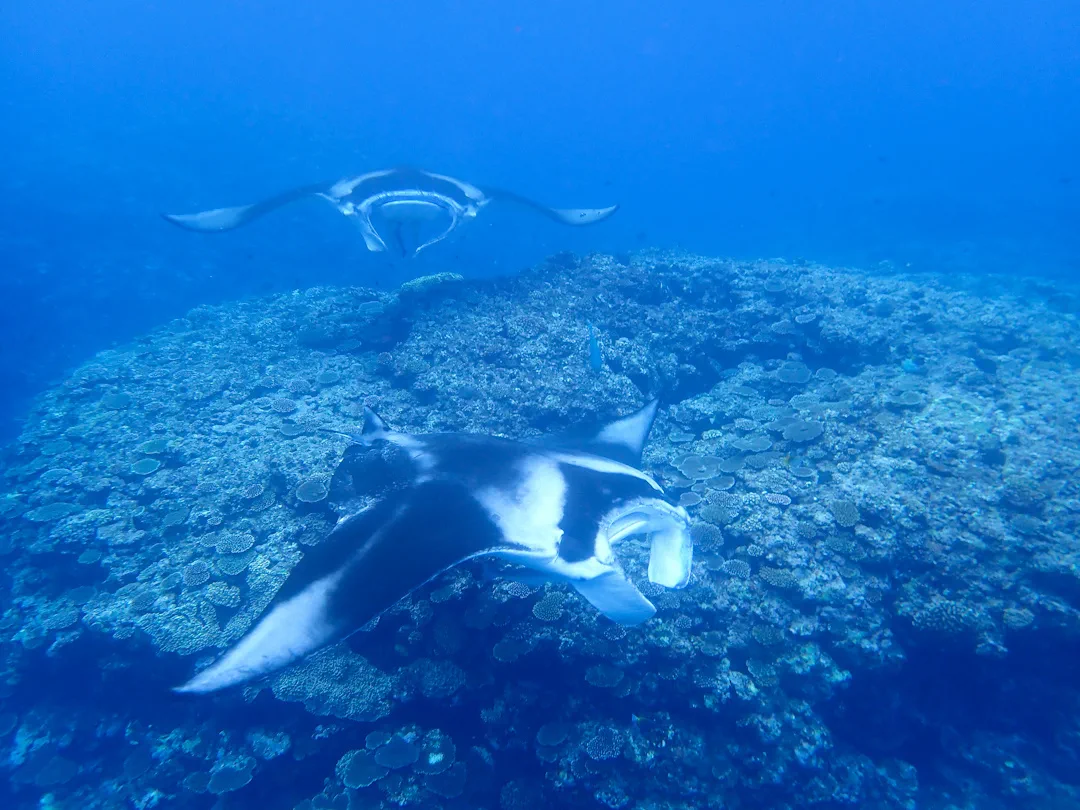
Two rays fill the foreground above a reef, with a third farther away. The image is an encounter example, not a promise of three rays or a particular water clarity. Compare operator safety and sea access even when a spectacular image is what attracted you.
Season improves odds only when the boat can reach the water
↔ Scroll table left or right
| Period | Planning implication |
|---|---|
| Spring and early summer | The dive-site guide's broad April–November window includes these months; ask which point the operator expects to use. |
| July to mid-October | The tourism guide identifies the strongest broad manta chance, while tropical weather can still disrupt boats. |
| Late autumn | A sighting remains possible within the broader dive-site window, but wind may limit a north or west-coast plan. |
| Winter | Mantas are not absent; access to classic points can be more difficult on some wind and sea patterns. |
These are planning tendencies. The intended point, current, wind, wave height and the operator's day-of safety decision outrank the calendar label. A rainy day may operate, while another day with a clear sky may be unsuitable at the point. Leave a second possible sea window when manta is a central trip goal, and keep a land-based swap ready. The Okinawa storm fallback is relevant when the problem affects multiple boats rather than only your chosen tour. For bookings that can move, compare the actual cutoff and refund terms; the hotel cancellation discussion shows the same weather-flexibility cost on the lodging side.
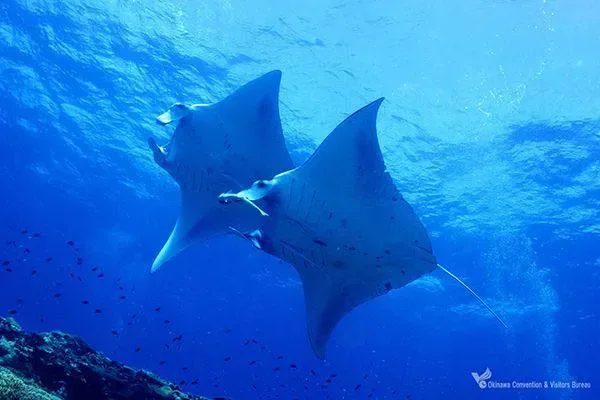
The photograph shows two rays over the reef; one is close enough to show the markings on its back. Avoid chasing, touching or crossing a ray's route when a guide permits an encounter. The operator's job includes choosing the appropriate water and briefing guests about observing the animals without interfering with them.
Manta Point requires a boat and an operator's judgment
The Kabira-area manta observation point is an offshore boat activity, not a shortcut to try by swimming from the beach. Boats operate nearby and currents can move swimmers toward open water. A guided booking pays for site access, instruction, flotation and the choice to change or cancel the point when conditions are wrong, not simply a mask and fins. At Sea Water, the sequence includes shallow-water practice with mask, breathing and fins before the boat departure, plus a board that the group can hold at the surface. Ask about age, swimming ability and health requirements before booking; a general “beginners welcome” label cannot answer every participant's needs.
Boat time matters especially to someone prone to seasickness. The short Sukuji departure does not mean the full three-hour activity is five minutes, nor does it describe every operator. Someone staying near Ishigaki Port may face a longer road transfer to Kabira in return for less time at sea. A land-transfer plan can make that trade-off clearer. If a member of the party is frightened of open water, consider a gentler guided coral outing first rather than asking them to tolerate the deeper manta environment for the rest of the group.
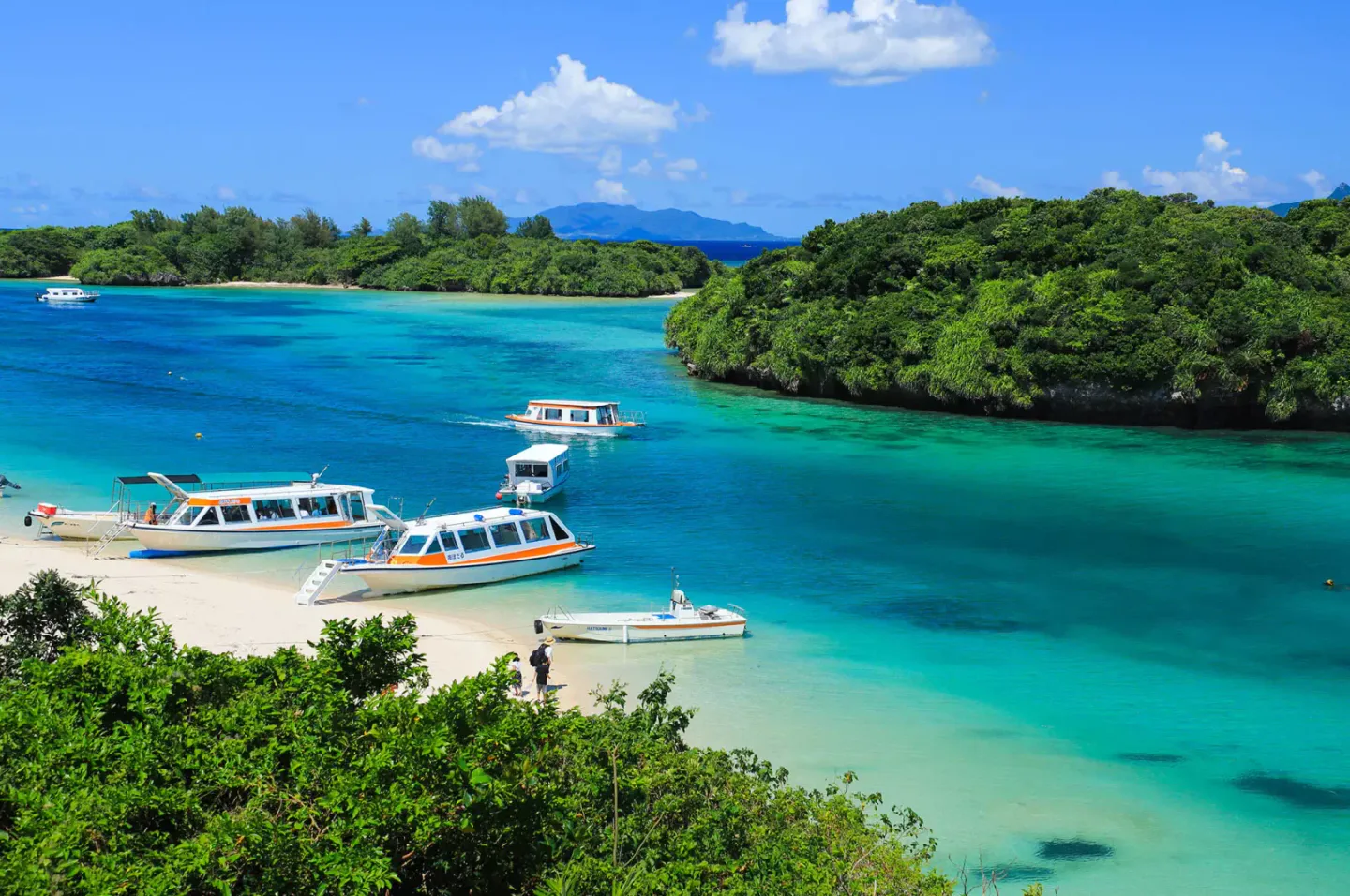
This last image is Kabira Bay's white beach and glass-bottom boats, not a photograph of snorkeling or of a manta departure. Glass-bottom viewing is another way to see water and reef scenery without entering the sea. The picture illustrates a land-side alternative when someone wants a lower-commitment outing.
Leave room for the rest of the Yaeyama trip
A half-day manta attempt is easier to move around a Kabira or Tamatorizaki land block than around a ferry or flight. On a four-day Ishigaki, Taketomi and Iriomote visit, place the sea day early enough to keep another possible weather window, but do not force it directly after an uncertain flight arrival. The flexible four-day route can absorb that swap. A dedicated manta half-day leaves the other half for Kabira Bay, Taketomi or a rest; a full-day combination earns its place only if you independently wanted both named parts. More activities in a title do not automatically improve manta odds.
A long Okinawa trip can quietly collect Kerama, Blue Cave, Ishigaki manta and Miyakojima turtle tours. They are different seas, yet they consume the same weather windows, boat tolerance, laundry capacity and half-days. Keep the manta tour if that species is the distinct reason for adding it. Otherwise Kerama's marine day, Miyakojima's four-day mix, or a broader Okinawa activities plan may already meet the group's goal. The first-time Okinawa route is useful if the islands have not yet been chosen. A first dive has separate training and flight-timing questions; that dive comparison should not be merged with an easy snorkel choice.
Do not book the manta trip if you have turned a wild animal into a guaranteed outcome; if a participant's open-water fear or seasickness has not been addressed; if it duplicates several sea days without adding a desired experience; or if the tour finishes immediately before a hard ferry or flight deadline. A no-manta outcome should still leave a worthwhile ocean half-day for the people who choose it. For visitors who care most about scenery rather than animal chance, an aerial view of the islands is a separate option with its own weather conditions.
The strongest reason to select Manta Point is simple: the chance of seeing a wild manta is worth the uncertainty to you. Blue Cave and Phantom Island are better matches when you want a cave or sandbar experience whose main value remains even without rare wildlife. Compare the actual operator, departure location, safety structure and forecast after making that choice. The two current ¥8,800 examples show why cost alone cannot decide it; the difference is what you are hoping the sea will provide.
After choosing the sea day and its weather fallback, compare Ishigaki rooms near your tour pickup rather than treating every beach address as equally useful.
Related island and sea decisions
VISIT OKINAWA JAPAN · VISIT OKINAWA JAPAN · Sea Water Diving · Pushynushima Ishigaki — · Okutama Rafting 2026: · Lake Kawaguchiko Bass · Fuji Speedway Driving · Oshima Island Fukuoka · Hiroshima Night Food · Abashiri Drift Ice · Daikoku PA JDM · Yokohama Night Walk: · Hilton Okinawa Sesoko · Hokkaido Dog Sledding