
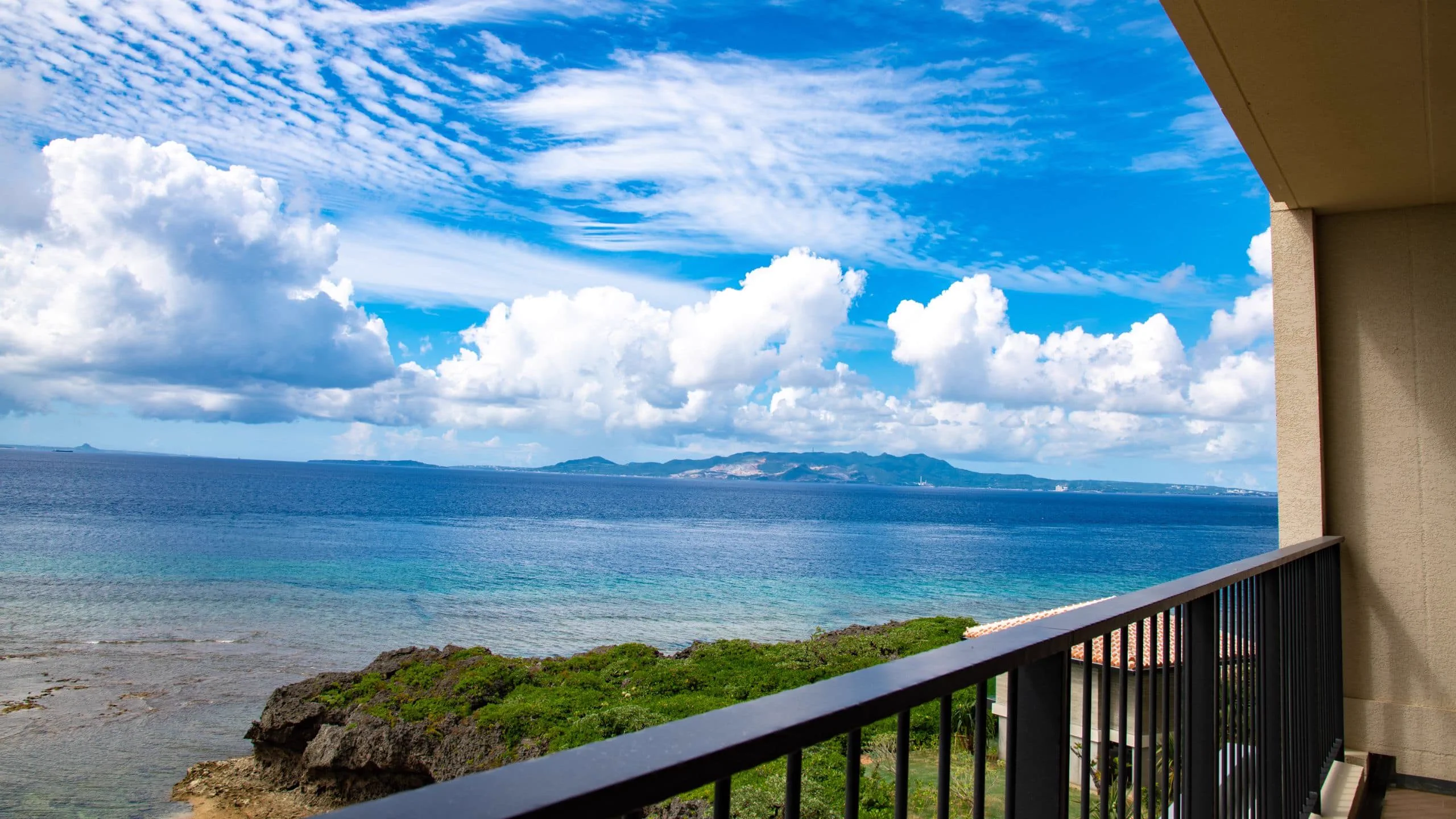
Hyatt Regency Seragaki Island Okinawa is worth its resort premium for two nights only when you protect several usable hotel windows—not merely one expensive bed. In the 2026 summer schedule, the outdoor pools can run from morning through 21:00 and the Night Pool runs 18:00–21:00 from June 19 to October 12; Seragaki Beach is also seasonal. If you arrive, go straight out, spend the only full day around Motobu and return after 21:00, much of that paid resort product disappears. If you keep an arrival afternoon, a late-afternoon reset or a pool/beach morning, the hotel can finally behave like a resort rather than a sleep stop.
My rule for two nights is simple: count hotel-use windows, not nights. Arrival afternoon, one protected late afternoon/evening, one pre-checkout swim and a Club cocktail window are four separate opportunities. If you can name at least two or three you will genuinely use, the premium has a job. If you can name only sleep and breakfast, compare a cheaper Onna base.
The 30-second decision
↔ Scroll table left or right
Your pattern | Verdict | Why |
Summer stay, arrival by mid-afternoon, at least one protected pool/beach block | Strong fit | You can use several seasonal facilities plus the room rather than paying only for location |
Both days 08:00-out / after-21:00-back | Compare again | The resort loses the hours in which its seasonal facilities and Club benefits operate |
Winter booking mainly for beach/outdoor pools | Skip for that reason | The outdoor product closes seasonally; winter value is room, dining and indoor facilities instead |
Family needing naps / shared living room | Consider Beach House | The 55m² One Bedroom buys a separate living area and kitchenette, not merely a higher room tier |
Two adults mostly outside | Start with The Island 38m² room | The standard room is already substantial; upgrade only for a function you will use |
Two nights can contain four hotel-use windows
A resort night should not be valued from midnight to midnight. Break the stay into usable blocks:
Arrival afternoon: check in, pool/beach, shower, dinner.
Full-day late afternoon: return from one Onna-area activity instead of stacking another distant stop.
Evening: Night Pool or Club cocktail hour during the dates when those products exist.
Departure morning: indoor pool, outdoor pool in season, breakfast or a slow room morning before checkout.
A two-night stay can therefore outperform a three-night stay where every daylight hour is booked away from the property. This is the most useful way to decide whether the hotel premium is actually being consumed.
The 2026 schedule makes July and January different hotel products
Hyatt’s current 2026 Marine & Activity schedule is explicit. Seragaki Beach operates March 20–November 30 and closes December 1–March 19. In July–September, the beach runs 09:00–18:00, while Gusuku Pool and Lagoon run 08:00–21:00. The Seragaki Night Pool is scheduled 18:00–21:00 from June 19–October 12. The indoor pool runs 08:00–21:00 year-round.
That produces a clear seasonal verdict. A July guest can turn 16:00–21:00 into a long resort sequence without giving up the whole sightseeing day. A January guest cannot use summer imagery to justify the same rate; the value shifts toward the room, food, indoor pool, ocean setting and slower stay.
If outdoor swimming is the main reason for booking, verify the exact date first. If the room and indoor facilities are the main reason, seasonality matters less.
Regency Club only has premium value if 17:00–19:00 survives your itinerary
The current Regency Club schedule is breakfast 07:00–10:00, tea/coffee 10:00–17:00 and 19:00–20:00, and cocktail time 17:00–19:00. That two-hour cocktail window is a perfect example of a benefit that looks valuable on a booking page but can be scheduled out of existence by the itinerary.
Before paying for Club access, write down where you expect to be between 17:00 and 19:00 on both nights. If both answers are “still driving back from Motobu” or “at an off-property dinner,” remove Club cocktail value from the comparison. If you plan a pool afternoon, shower and Club drinks before dinner, the benefit becomes real.
The Island vs Beach House: upgrade for in-room behaviour, not the word “suite”
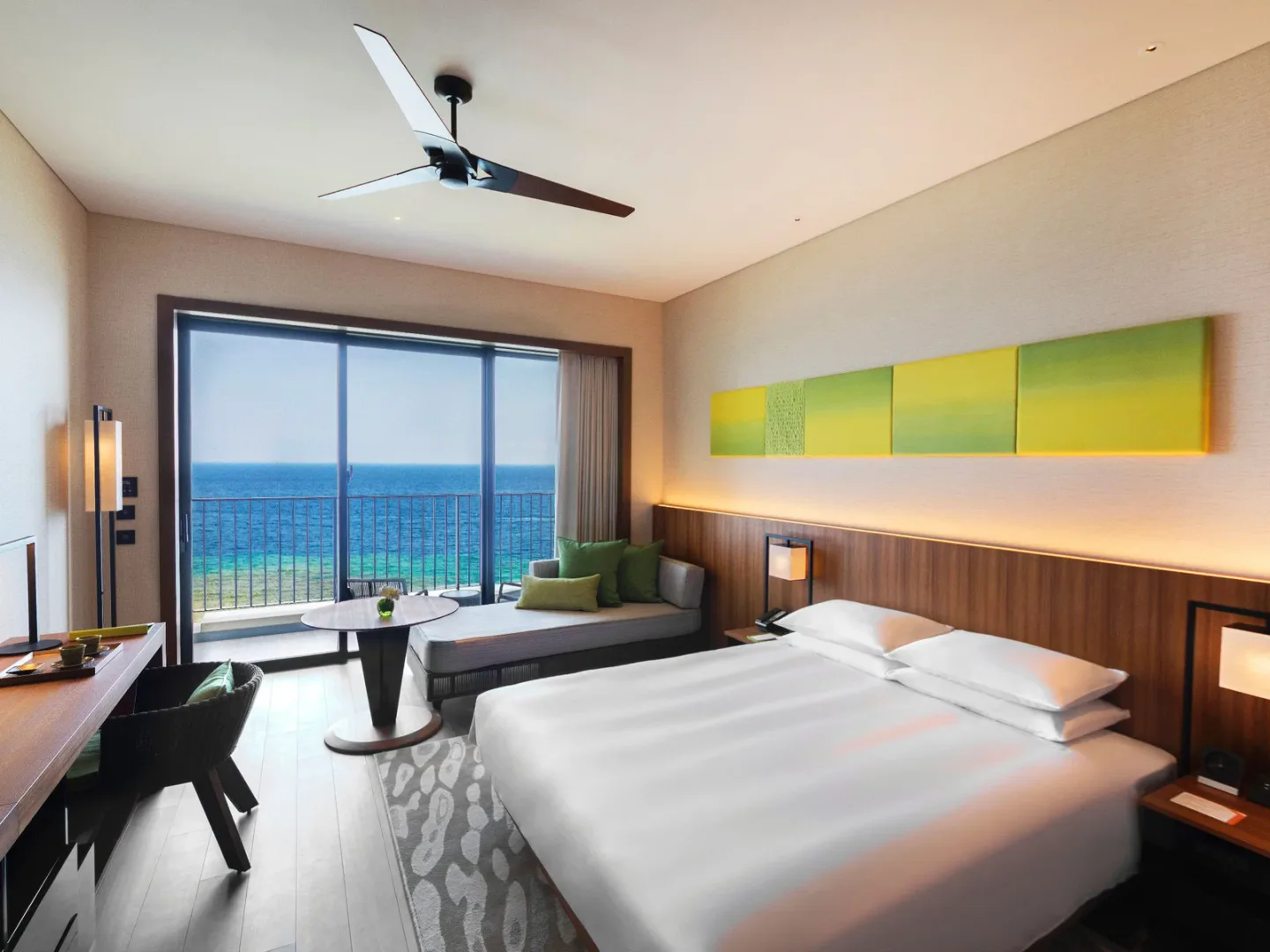
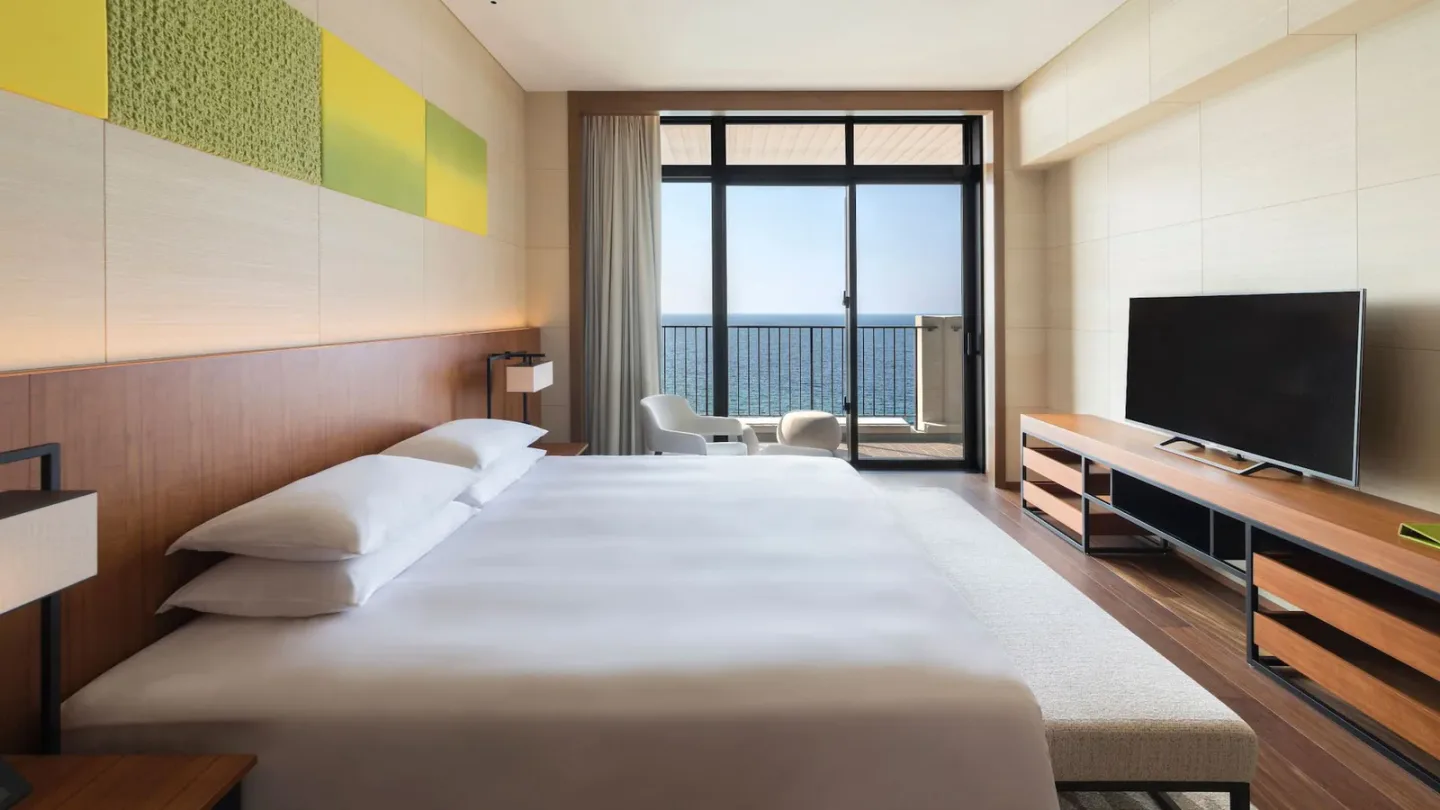
The standard Ocean Front Twin in The Island is 38m² and already works as a credible two-person baseline. The Beach House One Bedroom is 55m² with a separate living room and kitchenette. The Beach House Two Bedroom is 79m² with two bedrooms, shared living space and kitchenette.
↔ Scroll table left or right
Room | Published setup | When I would pay more |
Ocean Front Twin / The Island | 38m², ocean-facing room | Two adults, short stay, most hotel time around pools/dining rather than inside the room |
Beach House One Bedroom | 55m², separate living room, kitchenette | Child naps, takeaway meals, early returns or meaningful room time |
Beach House Two Bedroom | 79m², two bedrooms + living area | Larger family/group needing real bedroom separation |
The upgrade question is therefore behavioural. If everyone leaves after breakfast and returns only to sleep, 55m² can become low-use space. If a child naps while adults sit in a separate room, the layout solves a problem no ocean-view label can replace.
Parking makes frequent in-and-out driving more expensive in friction than it looks
Self-parking is on the main-island side rather than directly under The Island. The hotel provides a shuttle and also describes the walk at roughly five minutes. This is not a serious problem when you unload once, park and spend meaningful time at the resort. It becomes more noticeable when you leave and return several times a day.
The hotel therefore pairs best with a geographically disciplined Onna stay: one nearby activity, resort time, then dinner. It is weaker as a base for three separate long drives where the room is only a checkpoint.
Before booking, settle whether Onna is the right base with Where to Stay in Okinawa. A premium hotel cannot repair the wrong base.
No car is possible, but less spontaneous
Airport limousine routes serve the property, so a rental car is not mandatory. The trade-off is spontaneity. Scheduled bus access is unlike Naha’s frequent Yui Rail: flight timing, sightseeing and the final transfer all need more coordination.
A no-car Hyatt stay makes the most sense when the hotel itself is a large part of the trip or when excursions provide their own transport. It becomes less resilient when you want several independent stops along the coast.
Laundry is a mid-trip utility, not a reason to choose the hotel by itself
Hyatt currently lists 24-hour self-service laundry in both The Island and Beach House. The Island has eight washers and eight dryers; Beach House has three of each, and machine availability can be checked from the room TV.
That is useful after swimming or in the middle of a longer Okinawa/Japan trip, but it is not equivalent to HIYORI’s in-room washer-dryer model. If private, asynchronous laundry is a core requirement, compare HIYORI Ocean Resort Okinawa rather than assuming every resort laundry solves the same problem.
Breakfast, Night Pool and sightseeing compete for the same early/late edges
Breakfast and resort facilities are not free additions to the clock. An early northbound drive can consume the breakfast/pool morning; a late return can consume the Night Pool or Club window. The decision is therefore not “How many amenities are included?” but “Which time-sensitive amenity replaces something else in my itinerary?”
For a two-night stay, I would deliberately protect one edge of each day rather than trying to use everything: perhaps arrival-afternoon pool time and a relaxed departure morning, while the middle day gets one major outing. That produces a more coherent resort purchase than squeezing a pool, Blue Cave, Motobu and multiple dinners into the same 48 hours.
Bad weather does not erase the hotel, but it changes the premium
Severe weather can suspend outdoor swimming and marine activities. The indoor pool remains the more weather-resistant facility, but a booking made mainly for Night Pool, beach and outdoor-water time becomes weaker when the forecast deteriorates.
Use a red-team test: if beach and outdoor pools were unavailable tomorrow, would you still pay for the room, dining, indoor pool and location? If yes, the booking is resilient. If no, prioritise flexible cancellation and recheck weather rather than treating the resort rate as automatically sunk.
Final verdict
I would book Hyatt Regency Seragaki Island Okinawa for two nights when I can name at least two or three real hotel-use windows. In summer, an arrival afternoon plus Night Pool or a protected late afternoon can be enough. For two adults, I would start with a 38m² The Island room and only upgrade to Beach House when the separate living room/kitchenette solves a real in-room need.
I would compare again if both days are long road-trip days. I would not pay Club premium if 17:00–19:00 is already occupied. And I would not book a winter stay mainly for outdoor swimming, because the official 2026 schedule defines a materially different seasonal product.
Okinawa Blue Cave Snorkeling: Boat vs Shore Entry — Which Should You Book?
Okinawa Guys’ Trip Hotels: The Best Base Is Where You Can Stop Driving at Night
Sources
Hyatt Regency Seragaki Island Okinawa — official hotel page
Hyatt — 2026 Wellness and Activity Operation Hours
Checked August 25, 2026. Facility periods, hours, rates and weather operations can change; verify the live hotel notice for your exact stay.
Related guides: Early Shinkansen from Osaka: Should You Stay in Shin-Osaka or Move Only for the Last Night? · Sapporo Snow Festival: Odori vs Susukino — Where Should You Stay? · Hyatt Regency Naha Okinawa Review: Kokusai Street, Rooms, Pool & Club · Ueda or Bessho Onsen: Where Should You Stay for Two Nights? · Namba vs Umeda: Which Osaka Area Should You Stay In? · Tokyo Honeymoon Hotels: Don’t Pay for the View Until You Pick the Night You’ll Stay In · Tokyu Stay Okinawa Naha: Is It the Right Final Night Before Your Flight? · Fukuoka Long-Stay Hotels: What Starts Annoying You by Night 5—Laundry, Luggage or the Trip Back? · Happo vs Echoland: Where Should You Stay in Hakuba for Skiing? · Beppu vs Yufuin: Where Should You Stay?